For gen of Series S (gen 9), main changes are: better CPU, larger GPU and faster I/O, but it has fatal hardware design issue, separated different speed memory pool, if it's a unified 12gb ram, it would have less issue than it has now.
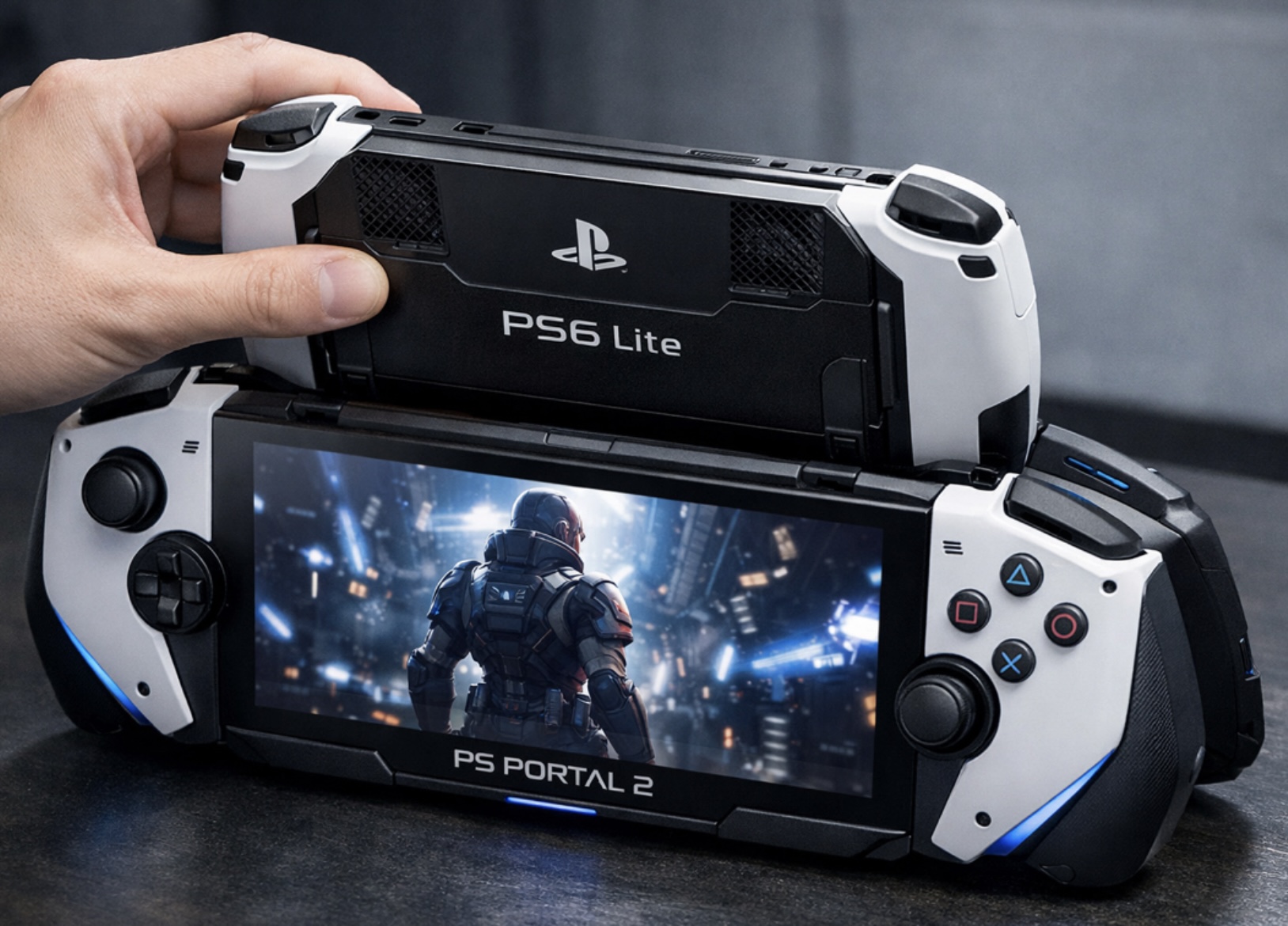
Switch 2 maybe (if you regard it as gen 10), if we do not include nintendo, for the next gen, imo, i don't really just take the raw power of PS6 handheld (~0.5 PS5) as a main factor, but all its next gen features sets just make it not a series s if you consider how ML grapchial technologies now define the video-game visuals:
- ML based PSSR (more sharper image by less rendered pixels, 540p->1080p for handheld)
- PSFR( PlayStaion Spectral frame-gen, make a game render at 40 fps~60 fps to target 120 fps),
- universal compression (better bandwidth, I/O speed and power efficiency)
- next gen raytracing cores (the handhled is still 2~3x PS raytracing power, better UE5 lumen support),
- better nanite support (hardware support take less CPU/GPU power)
- AMD&Sony version neural rendering support is also next gen exclusive features, and the big ram & AI power (TOPS in int8, FP8, FP16 and e.t.c.) to make game design involved with more vivid NPC and world generation possiable.
So in the end it depends the game development pipeline,
- 3rd parties and 1st party multi-players games will have way longer cross-gen, 3rd parties need consider the huge and various PC hardware, they need some legecy solution for raytrcing, texture quality, asset quality, lod and e.t.c.
- 1st party SP games of the first couple years will mostly be cross-gen titles and there will be some next gen only titles, when 1st party developers fully drop baken lighting to full use RTGI, use ML graphical technologies in their development and optimizations to make game development faster and more economic, leave more efforts and time on gameplay and stories, then it will dorp last gen.
P.S.: Let's look what "Road to PS6 family" next year will tell us about the next-gen game development pipeline, we may got a lot of ML-related stuffs and see examples how these next-gen feature become part of game development and game design