• Hey Guest. Check out your NeoGAF Wrapped 2025 results here!

Real Time Strategy (RTS) gaming classics for the PC (Reference Thread)

fatty

Member
Although I haven't played a lot of RTS games for the PC, I love the genre. Warcraft II got me hooked and Starcraft became one of my favorite games that I still go back to and play. For someone like me who is interested in learning about what other great RTS games are out there, I thought it would be nice to have a reference thread where we could come and get others' thoughts about some of the great games available.

We'll see how this goes, but the more people that contribute (and it can be just one game that you know quite a bit about), obviously the better reference that this thread can be. Here are some of the games that we can consider talking about. If you can take the time to fill us in on one that you know quite a bit about, I think it will be appreciated by many.

Note: Numbers in ( ) represent different write-ups for that game.

I. Starcraft
II. Rise of Nations (1) (2)
III. Company of Heroes
IV. Dawn of War
V. Supreme Commander
VI. Command and Conquer 3
VII. Age of Empires III
VIII. Total Annihilation
IX. Warcraft III
X. Battle for Middle Earth II
XI. Kohan: Ahriman's Gift
XII. Dune II
XIII. Knights and Merchants

I'll start with Starcraft and try to add more as I have time. Feel free to use my format or come up with your own. And if you think there should be other games included, don't hesitate to add to the list. Concerning each game I think the most important things to include are a summary, pros and cons, multiplayer play and how easy/difficult it may be for someone new to the genre.

RTS related threads:

Real Time Strategies for the PC
What's a good starting point to get into RTSs?
Freeware RTSs?
In this thread, we post awesome free PC games.
 
I. StarCraft

Year released: 1998

Real time strategy game with a sci-fi setting. The main highlight of this title is that it features three distinct races that all play really different from each other. Despite this, the game manages to be very balanced. Many other games will have different races, but will still play relatively similar to each other. Each race in StarCraft (Terran, Zerg, Protoss) is very unique.

To get a general idea about each race , a very simplistic characterization would be to say the Terrans are comparable to the marines in a movie like Aliens, Zerg are kind of like the creatures in Aliens, and the Protoss are more civilized and similar to something like the Predator because of the advancement in technology. It's a little bit of a stretch but it is more just to give you a general idea if you are very new to the game and you would like to know what to expect from each race.

Although StarCraft was released almost 10 years ago, it is still played by many today and it is hugely popular in South Korea where there are still competitions going on. Blizzard recently announced a sequel on May 19, 2007 in South Korea. (Click here for more information) A release date has yet to be announced.

While some aspects of the game are a bit dated, the core gameplay is very much intact and still a joy to play. The single player campaign has a good story that keeps you compelled to keep playing and also does a good job at introducing players new to the genre by getting their feet wet at first to eventually teaching them to swim. Multiplayer on Battle.net is still alive and well, though the majority of players that still play are very good since the game has been out for so long.

StarCraft has one expansion pack, Brood War, and it continues the story where the original left off and also introduces two to three new characters for each race. There were originally two expansions planned for release but ultimately only Brood War came out.


Typical Battle Lengths: 20 to 40 minutes.

PROS:

- Three distinct races, and very balanced gameplay
- Very deep, yet easy to learn. You can pick one race and get the basics down pretty easily.
- Interesting single player campaign. With RTS games, many rely on multiplayer but if you prefer to game alone there is still a great experience to be had.

CONS:

- Age is starting to show. Some of the features that you've now come to take for granted aren't there, such as zooming in/out of the map and unlimited unit selection.
- Pathfinding. Sometimes it can be frustrating after giving your units a command to have them getting stuck at a certain spot.
- Graphics. I don't have a powerhouse PC so I don't really mind the graphics but I can see how some can be turned off by them if you try to compare them to what is available now.

LEVEL OF COMPLEXITY (1-10) 1 being basic, 10 being hardcore detail: 5

With other RTS games such as Rise of Nations I found myself a little overwhelmed with all of the different available upgrades but with Starcraft there seems to be a perfect amount. You will have to be constantly managing your units throughout the game but more emphasis is place upon your attack strategy rather than worrying about constantly upgrading.

If you're wanting to see what real time strategy games are all about, StarCraft would be a great (and cheap) way to start.

Screen Captures:
ss01.jpg


ss02.jpg


ss03.jpg


ss04.jpg


Cinema Captures:

cin01.jpg


cin03.jpg
 
This is one of the better threads I've seen around these parts in a while. Good show, so here goes my entry for Supreme Commander and I'll probably throw up a couple for Rise of Nations and Age of Empires 3 later.

V. Supreme Commander

Release date : 20 February 2007

Set on the backdrop of a millennium-long galactic war, three distinct factions (the UEF, Aeon Illuminate, and Cybran Nation) are fighting each other for their own reasons. The player takes the role of the controller of an Armored Command Unit (ACU)-a mech whose sole purpose is to provide the logistics and command and control functions to allow for theater-level engagements with commanders of the other factions. ACU mechs are easily deployed through a galaxy spanning transportation network to any terrestrial locations and construct robot armies and bases quickly, filling the role of a mobile,efficient,portable, and low-manpower solution to intergalactic warfare.

Core gameplay is centered around broad strategies and larger scale tactics taking place on large scale maps. The command and control of your units is facilitated by the innovative Strategic Zoom interface, where you can use the mouse wheel to zoom all the way into the individual details of a unit, or zoom out to see the entire battlefield from a low-orbit positioning. Orders can be given to units from any position, allowing you to zoom out, quickly grab a fourty or so newly built units, and send them in formation to their target, and then go do something else. Individual unit micromanagement in combat situations is usually only rewarding in the first few minutes of a game.

The game has a strong emphasis on economy and automation. Engineers can have orders easily queued up for a good fifteen minutes, and assisting an engineer with another one is easy to speed up construction of the queued buildings. The game only has two resources-energy and mass, and the increasing collection and production of these two resources is key to staying competitive with your opponent in the game. Energy is generated from buildings, while mass can either be extracted from specific points in the map (rewarding territorial control) or produced at great energy cost through buildings. Managing your economy is challenging and requires a lot of attention to prevent generation of excess resources (which are wasted instead of spent) while not generating too few resources (which impedes overall construction).

Three types of factories exist-land, air, and naval-and each can be upgraded up to tech 3 to produce more powerful-yet more expensive-units. There is very little rock-paper-scissors in the game-instead, the game has counters but they are are not "hard" counters as you would expect in a game like Age of Empires. You can spam one type of unit prolifically and win, though if the opponent sees it coming developing an overall strategy (and not just spamming a counter-unit) to defeat it is doable provided you have the economy and time to roll out that strategy. In addition to factories, the game features a wide variety of buildings-short and long range artillery, shield generators, anti-aircraft batteries, land-based point defenses, radar to see unscouted units, and what not. Construction of forward bases with many of these tools allows the player to take control of the flow of the game and reduce the choices that the opposing player faces. Unlike most games, expansion bases rarely serve any point in terms of resource generation.

Units in the game are not extremely varied-you have mobile artillery, tanks and variants thereof, mobile anti-aircraft on the ground, fighters, bombers, and gunships in the air, and subs, cruisers and battleships on the sea. The factions do not vary a whole lot outside of some of the minor details of these units. Each faction also has a set of a few "experimental " units-large, extremely costly late-game units that can tip a battle one way or another if constructed, supported, and used effectively. These units are very unique to the factions and provide the only real diversity between the factions. All shots fired have their trajectories and speeds modeled and can interact with terrain, resulting in more tactical options than are available in a usual die-roll combat system. The game heavily rewards long-term goals such as ground control of a key area/chokepoint or naval/air superiority.

The game's single-player campaign is terribly uninteresting and tedious, by most accounts. It serves as a long tutorial to the units and strategies of the game, but does little to prepare you for a multiplayer match. The story line is very bland as well, and the campaigns are linear and in a classic mission-to-mission format. The only interesting thing about them is that they tell the events of the same time line differently and weave together pretty well, so by the conclusion of the last campaign all the encounters that occurred make sense. The game also features a skirmish mode, but the shipped AI with the game is not very good, though fan-made AIs have made much progress in this area and they provide a much more interesting challenge.

Multiplayer is where the game really is at its best-both players will develop and execute numerous plans and strategies during a match in order to win, and this entails both strategy and reflexes in the early game, giving way to more thinking and less reflexes as the match progresses into its middle and end phases. High levels of actions per minute and build orders are only marginally helpful and smart thinking and planning usually beats out both without too much problem, provided that you are basically competent at the RTS genre. Games can drag on a bit-team matches especially-and it is not uncommon to see a team game break the 90 minute mark or a one on one break over an hour.

PROS
*) Huge scale conflicts with an interface more than capable of easily managing them.
*) Multiplayer is not dominated by build orders and micro, even at the highest of levels of play.
*) Unique balancing breaks free of rock-paper-scissors designs. Strategies to counter other strategies are more varied than spamming the counter unit.
*) Territorial control and economic advantage are not necessarily linked, resulting in some interesting middle-to-end game scenarios.
*) The high health and firepower of the ACU makes early game rushes far easier to stop than in other games.

CONS
*) Game is extremely taxing and poor performing on non-dual core systems.
*) Single player anything in the game is very weak. Mods are starting to roll out to provide both decent AIs and single-player alternatives ("Tower defense" mods are all the rage right now).
*) Game is very complex, especially in multiplayer. It takes a while to learn, and has many strategies and mechanics that are not immediately apparent to the new player.
*) Economy micromanagement ramps up in the middle to late game pretty rapidly.
*) Factions are generally balanced, but hardly unique.

Level of complexity: 9. The game is shamelessly hardcore in its design and very deep in terms of strategic options. Unexperienced players will meet a very steep learning curve while starting out in multiplayer games.

Screens:

howtomakemass.JPG


Here's a shot of me in a team game. This is my base-I am building power plants and mass fabricators to bolster my economy in specific layouts to maximize efficiency. These sort of advanced strategies are all over the place and take a little learning to get used to.

holdtheline.JPG


Here I am, in red, repelling an assault. Note that I don't have a ton of a specfic unit built to counter the opponent, but I invested in shield generators and point defenses to provide more killing power per mass spent that my opponent to accomplish my goal of holding the territory.

 
Doytch said:
What the hell is Age of Kings doing off that list? That shit ruled, MSN Zone excluded.

A lot of the good and great RTSes from the '90s are missing from that list... to list some that I would consider worth mentioning that aren't on that list...

Age of Empires (Gold)
Age of Empires II: Age of Kings
Warcraft: Orcs and Humans
Warcraft II: Tides of Darkness/Beyond the Dark Portal
NetStorm: Islands at War
Warzone 2100
Conquest: Frontier Wars
Dune 2
Command & Conquer
Command & Conquer: Red Alert
Command & Conquer: Red Alert 2
Battle Realms
Rise of Nations: Rise of Legends (much more recent, but good...)

Blizzard's are by far the best, though. It's not even close. My most-played RTS games (and, other than Guild Wars, my most-played PC games for sure) are Starcraft and Warcraft III. After that it's probably NetStorm... after that I'm not sure. Warcraft II most likely. Beyond that who knows. They're probably pretty far behind. :)

And then there were ones that some people liked and got good reviews but I didn't like that much like Homeworld, Earth 2150/The Moon Project/the third game in that trilogy, Ground Control, and plenty more.

... and I actually liked, and used, the MSN Gaming Zone back when it was a real gaming service... Warcraft II (via their lan spoofing setup), Jedi Knight/Mysteries of the Sith, X-Wing Alliance/X-Wing vs. TIE Fighter, MechCommander, Age of Empires I and II, etc... :)

Anyway, it would be pretty easy for me to write up something for Netstorm for sure, if anyone actually cares about that somewhat obscure game.
 
I'll try to write one for Earth 2150 if I have the time. That game was far ahead of the curve back in 2000 in terms of depth and features, but most people simply ignored it. I still can't figure out why it wasn't more of a hit - at least it was quite popular here in central Europe. It still to this day has many features that haven't been replicated, not even by its own (not nearly as great) sequel.
 
Age of Empires is far from a classic. More like a disgrace.

Anyway here are some more RTS games:

Age 2 + Conquerors

Rise Of Nations

Battle Realms

C&C Red Alert 1+2

Dark Reign

Total Annihilation

Dune 2000
 
IV. Warhammer 40,000 Dawn of War

Release Date: Sept. 20, 2004 (core game), Sept 20, 2005 (Winter Assault), Oct 6, 2006 (Dark Crusade)

A Sci fi RTS game that marks one of the first in a new sub genre of RTS games, the "Action RTS". With the focus of the game on constantly pushing forward with intense combat almost from the get go, it was a breath of fresh air in a stagnating genre.

Set in Games Workshops Warhammer universe, Dawn of War brings to life a setting of incredible brutality and over the top violence. They key word in Dawn of War is intense. Everything is exaggerated and blown up to larger then life proportions. It was one of the first RTS games to focus on unit animations with the intention of making the combat look dynamic and exciting. Gone were the days of units standing in front of each other swinging away until one of them fell over. Now units would dramatically do battle, ducking and weaving, chopping and slicing, bodies flying through the air propelled by physics. Units would get torn apart in showers of blood and gore and many units would randomly pull off impressively over the top finishing moves on their foes. All around it painted a picture of chaos and brutality to a level never before seen in the genre.

Dawn of War also had some cool unique features that helped add some extra depth to the gameplay. The game had a morale system for one. Most infantry units had a morale bar in addition to their health. When the morale bar decreases, so does that units effectiveness and with the morale bar emptied they would die very fast. This led to some unique tactics with weapons that focused purely on Morale damage and on the other end buffs that would increase it. There was also a rudimentary cover system that saw 3 types of terrain cover (light, heavy and negative). The light and heavy cover areas would provide protection for your units often giving them the edge against superior numbers. Negative cover had the reverse effect and would increase damage taken, making those areas ripe for ambushes. Lastly DoW had a squad system for infantry. All infantry squads would come out with a small number of troops. You could then reinforce that squad in the field to not only get it up to full strength but to replace lost soldiers without having to build a whole new squad. As long as one trooper was left standing you could never count that squad out of a fight. Hand in hand with this was a weapon upgrade system where you could add special weapons to your squads. So you could for instance purchase a flame thrower for morale damage or a rocket launcher for anti vehicle power. This allowed you to customize your squads to your needs.

In addition to these things, Dawn of War made one very significant change to the RTS formula that really pushed its Action RTS gameplay to the limit. That is the way resources are collected. Gone are the mineral deposits, Gold Mines and Lumber fields of yore. To gain resources in Dawn of War you had to take territory. Scattered about the map were strategic points. Capturing one would provide you a constant stream of resources. The more strategic points you held, the more income you'd have. You could fortify the strategic points with listening posts that would act as turrets as well as increasing the income from said point. As well there were multiple types of points. The standard strategic point just provided income. Relic points were rare, often with only a couple dotting the map. Owning a Relic point would not only provide income but give access to the top tier units for your race, including the incredibly powerful super units. The final point is called a Critical point. These were used in a specific gametype where controlling more then 50% of these points would start a victory timer. They differed in that you couldn't build listening posts on them making them harder to hold on to.

By tying resource collection to territorial conquest Relic pushed players into a constant state of combat. Sitting back and collecting resources while teching up was impossible. If you wanted money, you had to fight for it. This constant combat is what sets Dawn of War apart from previous entries in the genre, a style of gameplay Relic would further develop in their phenomenal Company of Heroes game.


The core game shipped with 4 playable races:

- Space Marines: The most conventional of the 4 races the Space Marines fit the "Jack of All Trades, Master of None" mentality. Their units were known for their flexibility to meet any situation put in front of them but they tended to suffer in the late game where the other races more specialized powerful units would tip the scale against the Space Marines.

- Chaos Space Marines: In the main game they played quite a bit like the Space Marines but with an evil bent. They branched off by having powerful summoned demons that could wreak havoc upon their foes. The expansion packs further pushed the Chaos race away from the Space Marines giving them a better defined identity and play style.

- Orks: Yep a sci fi game with Orks. These guys focused on overwhelming numbers and powerful melee units. They are also notable for being the only race to be genuinely humorous. With some great voice talent for their units and a fantastic visual aesthetic, there were always moments of levity when playing the Orks.

- Eldar: The Eldar were a bit of a strange animal. Their focus was on hit and run tactics and guerilla warfare. What made them particularly suited to this was that each unit was fantastic at a single thing but terrible at all others. Proper unit use would give an Eldar player a significant advantage, but deploying a unit unfit to the current situation would have dire repercussions.

Winter Assault saw the addition of 1 new race.

- Imperial Guard: At first blush there was a wide array of disappointment when the new race was announced. Surely with a universe as diverse and rich as the WH:40k universe one could find something more compelling then the cannon fodder of the imperium? Relic shut the doubters up once the game hit shelves by providing a race that played wholly different then anything else in the game. The IG's focus is on turtling and defense. This is completely counter to what Dawn of War is all about and yet they not only fit in the game, but were incredibly effective when played correctly.

Dark Crusade saw the addition of 2 playable races.

- Tau: With 5 diverse playable races already in the game, trying to come up with a unique playstyle was a challenge for Relic, one they met with aplomb. The Tau bring a divergent playstyle to the table in that they have 2 completely unique development paths that focus on 2 wholly different play styles. One path is focused on extreme ranged firepower whereas the other leads to powerful melee combat. This divergence makes playing against a Tau player challenging as it hard to gauge and prepare for what they are going to do until the latter stages of the game when it may already be too late.

- Necron: Zombie robots from space, can't get much cooler then that! The Necron playstyle is one of a constant crushing tide of units. The Necron move slowly but their units are strong and have the annoying tendency to get back up and keep fighting when dropped. This meant that a Necron player could start pushing early and keep a never ending tide of death pushing on the enemy lines. A skilled Necron player is very hard to deal with.

Pros:
*) With the expansions you get 7 playable races, all with a unique feel and playstyle to them yet incredibly they remain well balanced.
*) Fantastic visuals and intense combat animations make the battles a joy to behold.
*) Great use of both terrain (in the form of a cover system) and morale.
*) Most infantry squads and many vehicles have upgrades you can apply in battle to customize them to your needs.
*) Tons and tons of content when you have the whole package.
*) Great interplay between infantry and vehicles. Even in the very end game, early infantry units still play an important role.

Cons:
*) Single player content was thin with only 1 campaign for both the core game and Winter Assault. This made it hard to learn the races not showcased in the campaigns. Dark Crusade addressed this with its dynamic campaign system for all 7 races, but it doesn't excuse the first 2 releases.
*) VERY fast paced, some people can find it a bit overwhelming when compared to other RTS games. You need to be on the ball from word go.

Level of Complexity: 7
- While Dawn of War is a pretty easy game to learn, it's breakneck pace and constant action can make it an overwhelming experience for new players. The campaigns do a good job of easing you in though so the curve isn't too bad.

1.jpg

3.jpg

1.jpg

2.jpg

3.jpg

11.jpg

14.jpg

bodies.JPG
 
Durante said:
I'll try to write one for Earth 2150 if I have the time. That game was far ahead of the curve back in 2000 in terms of depth and features, but most people simply ignored it. I still can't figure out why it wasn't more of a hit - at least it was quite popular here in central Europe. It still to this day has many features that haven't been replicated, not even by its own (not nearly as great) sequel.
Oh yeah, nice one. Looking forward to reading it.

Great thread btw. I'd write something for Total Annihilation or Homeworld 1, but I haven't got the time based on the reference size for these texts. Excellent stuff so far though.
 
Emperor: Rise of the Middle Kingdom - September 2002 - probally the most underrated of all Impressions Games city building RTS's, Emperor: Rise of the Middle Kingdom was to be Impressions last before they disbanded in 2004. It never attained the success of the Caeser series or of Pharoh or Zues, but for fans of city building city-building RTS's Emperor was a milestone as it added online play, and personally because of the online-play I spent alot more time with Emperor that with other city-building RTS's. The real problems that Emperor faced were that it was still using the same old 2d engine Impressions had always used, tweaked and improved with each itteration but hardly changed - I think this put alot of people off at a time when RTS's were moving more and more into 3d realms. Also, the game is very similar to previous Impression city-builders, the only real difference being that this time the games set in ancient China - the real draw to Emperor is that it's probally the most perfect example of an Impressions Games city-builder done right, and newer games from Tilted Mill (ex-Impressions guys) such as Children of the Nile and Caeser IV haven't lived up to their predecsors despite venturing into 3d.
 
Wow, I go to sleep and wake up and there are some great posts in this thread. Two games that I have been very curious about, Supreme Commander and Warhammer, already have write-ups for them. (I guess I know what I'll be reading this morning)

I stumbled upon the box for Supreme Commander when I was picking up CivIV at Circuit City. Before, I knew nothing about it but it looked pretty impressive. Then I noticed it mentioned around here and it's peaked my curiosity. I look forward to reading the write-up.

The Warhammer series is another that I see gets a lot of praise. The first time I saw anything about it was during an X-play review where they were glowing about it. Can't wait to read it.

Doytch said:
What the hell is Age of Kings doing off that list? That shit ruled, MSN Zone excluded.

In no way is this a comprehensive list. I just threw some out there for starters so if there is anything you'd like to add by all means please do so.

A Black Falcon said:
Anyway, it would be pretty easy for me to write up something for Netstorm for sure, if anyone actually cares about that somewhat obscure game.

Hey, I actually have that game! Picked it up at EBGames for around $5 back in the day but unfortunately, like a lot of my PC games it has been collecting dust (I'm getting back into PC gaming, though). I'd love to read something about it, it might motivate me to install that sucker on my machine. Same thing goes with Total Annihilation as I never got around to playing that either, but on my shelf it sits.
 
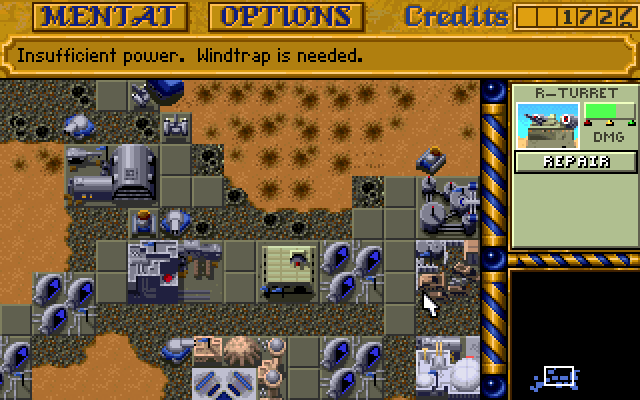
How could you write up that list and leave off the game that invented the genre, Dune II?

dune_2.gif

Dune_2mentat.png

windtrapneeded.gif


Great game, way ahead of its time. It's virtually unplayable today, but it was certainly a pioneer.
 
For my money, nothing tops AoEII in the RTS arena even though there of plenty of games I'd rank just a hair below. Some games did it first, or laid things out better, or had more options, or more eras, or whatever, yet I'd play AoEII 12 hours a night frequently around the time it came out. The balance between "pick up and play" and deeper complexities was perfect. Skirmish mode + huge map + hard AI + high pop cap = 6 hours of awesome.
 
VALIS clearly never played Rise of Nations

The game is/was awesome on every level. It tops every RTS before the game was released, and almost every single one after. It borrows core elements from Age of Empires, adds some Civilization touches, tweaks and finetunes all gameplay which was annoying on AoE and voila: the perfect RTS. Oh yeah, and it has a lot of customization built-in too. Many completely different ages and races, sets of 3 units instead of single ones, border system, a government to build and benefit from, extra resources as you progress (oil!), universities gathering intellect, and even building some big ass nukes as the map finishes. Better build up an army first, 'cause your market trading system will be closed down, and after 12 nukes have been fired, it's game over.

Rise_of_nations4.jpg


Edit: second img is imageshack, whoops
 
II. Rise of Nations (popular abbreviation: RoN)

Release Date: May 20th, 2003 Expansion: April 27th, 2004

Rise of Nations is a hybrid of the popular Civilization turned based series and popular RTS games like Age of Empires and Empire Earth.

Unlike Civilization, cities do not have a visible "rank" and there is less micromanagement of individual cities, but most of the other Civ elements such as National Borders, Rare Resources, Historical Leaders, and Nations with Special Powers remain.

Much of Rise of Nations play is based around its technology system. Nations start as weaklings with fishing boats and warriors throwing rocks in slings and progress to Navy Seals and Battleships. There are four individual technology areas;

Commerce: Allows for more resources to be stored...more on the resource gathering later
Civics: Gives the Nation the ability to expand and add more cities.
Military: Advances military technology, allows for certain units to be researched at the barracks- also increases the population cap
Science: This tech opens research options in many different buildings for faster resource gathering

Age: The age is the all encompassing tech. All commerce, civic, military, and science techs have to be gained before moving on to the next age. The age changes the appearance of your city, adds new resources to be gathered, and allows new techs to be researched.

Rise of Nations has fairly standard combat systems which compare to many RTS games in the empire building genre. One interesting feature is dynamic military formations. These formations allow the player to set up defensive positions with ease, you simply click the mouse button and drag out an arrow in the direction that you want your formation to face. You can also use this to move units while in their formation.

Resource gathering consists of the three basic resources at first, wood, food, and gold. Many resources are added onto this as the game progresses and enters new ages. These resources include Research and Stone. The resource gathering works by adding a certain amount to your total amount of a resource every second. This +# (eg. +102) describes the rate at which your resources are growing. There's a cap to this that can be expanded by moving up the commerce tech tree to allow extremely large amounts of resources to be gathered.

I don't remember all the nations in the regular game but I'll take a shot at listing them all
-English
-French
-Spanish
-Aztec
-Germans
-Inca
-Egyptian
-Japanese
-Russian
-Chinese


Pros:
*) Beautiful graphics engine that runs on almost any PC built in the past 5 years.
*) The popular Civ format in RTS style
*) Huge tech trees, which constitutes much of the strategy
*) Interesting and easy to use military formations
*) A Risk style 'conquer the world' mode as well as many other SP modes


Cons:
*) Basic RTS combat
*) Perhaps TOO tech heavy for some people.

Level of Complexity: 4
- RoN is a great RTS to start with for someone who is used to playing turn based strategy games like Civilization.

screenshots:
http://www.mobygames.com/game/windows/rise-of-nations/screenshots
 
Age of Empires III (AoE3)

Release Date: 10-18-05
Developer: Ensemble Studios

aoe3pic.jpg


Age of Empires III is one of my most favorite RTS game to date. I've been a follower of the series since the originals, and I played Age of Conquerors to death on the zone. I wasn't a huge fan of Age of Mythology (Ensemble's previous RTS) so personally, I was worried that AoE3 wouldn't deliver, but boy was I wrong.

Age of Empires 3 puts the player in a position to battle for the New World with the following civilizations:

- French
- Russian
- German
- British
- Dutch
- Spanish
- Portuguese
- Ottoman

Overview
This time around, each civilization plays very different from each other, unlike Age of Empires II where most of the civilizations were more or less the same. In AoE2, each civilization had a single unique unit and a handful of special bonuses, but in AoE3, there are many civilizations that don't even share some of the most basic units. This leads to a lot more depth and longevity by giving the player the opportunity to really experience a much different style of play depending on the civilization they choose to use.

This time around, the single player campaign isn’t historically accurate. The mood is set in a fictional environment with characters that have somewhat dissatisfying accents. The campaign mode consists of standard missions, much like previous Age games.

The multiplayer uses Ensemble Studios Online 2 (ESO2) which is basically Ensemble's own software to handle internet games. Unfortunately, they still have a lot to learn about how to make their client fair and easy to use. Basically, you have the option to play in a match making mode where ESO2 will hook you up with a random opponent for ranked games, although there is no way to tell how many people are in the current match making list, so you're only ever able to find 1v1 games. Then there is a list for all other online public games. Unfortunately, upon entering any public room, your winning percent and rank is visible to everybody, which was a terrible idea. Hosts are given the freedom to boot whoever they want, and they also tend to stack the teams by putting everybody who has the highest win percent on the same side.

Gameplay
In Age of Empires III, the resources to be gathered are food, wood, gold (no more stone) and experience. The newest addition, experience, is gathered, little by little, by performing almost any task. Each time you kill and enemy unit, build a building, or gather other resources, your experience will slowly go up until you've obtained enough where you are given a "home city card". These cards are what really set AoE3 apart from previous games. Home city cards allow the player to pick from a set list of cards that give the player an advantage in the current game. Depending on the card the player chooses to use, the player may receive free units, resources, advancements, or numerous other choices. At first, these cards seem like they don't fit with the "Age of" series, but they do add a nice level of strategy to the game.

Overall, I'm still happy with Age of Empires III. I've played only 100 or so online games, but I still find myself going back to it every now and again, though not nearly as much as AoE2. Also, the game looks beautiful, and doesn't require a spectacular PC to run it.

Minimum Specs:
- 1.4 GHz Processor
- 256 MB RAM
- 64 MB Graphics Card
- 2 GB Hard Drive

Pros:
- Single player campaign will keep you entertained for a good while.
- The graphics can be toned down to run decently on older machines.
- If you do have a powerful machine, the game looks great using the Havoc physics engine, especially watching cannons blow pieces of buildings off.
- Ensemble Studios already released one expansion pack (The War Chiefs) and is in the process of creating another pack.

Cons:
- The game has a few flaws in the way online games are played.
- The single player isn't historically accurate.

Level of complexity: 4
The game is easy to pick up and play, but still requires a little bit of getting used to the way home city cards work.
 
Fragamemnon said:
V. Supreme Commander

~~see post #3 for write-up~~

Excellent synopsis. I like that outcomes are based more on strategic planning rather than build orders and micromanagement. And that early game rushing is easier to stop is nice as well. When going into a RTS I actually want to get my hands dirty with each game, where strategy is involved with large quantities of units, and not a case where whoever has the quickest build order and rushes would win. That's the main reason I like to play "No Rush" games on StarCraft, it's more like a good game of Chess that way.

That being said you're going to have to devote some time to each match, but I don't think hour long (or 90 minutes for team matches) games are unreasonable for a good game.

The little I did know about this game before reading this summary was that Supreme Commander is THE game for showing off an intuitive interface for controlling your units, and it's nice to see how the mouse wheel gives you so much flexibility with zooming in to a unit to quickly dropping back to pan over the field. I've started playing Rise of Nations and noticed that the mouse wheel is used in the same way but it seems as though Supreme Commander gives you even more detail and flexibilty.

Since it is such a taxing game (and I don't have the fastest of computers) I will have to wait a while before I play it, but I'm ok with that. But if multiplayer is the big draw, I'm wondering if it will be too late by the time I can get around to playing it. But that's the price that I pay for always being late to the party. I will definitely keep an eye on this one, though.
 
I've got a couple large pieces I wrote casually a while back I could add. One on a sort of very niche Settlers esque game I adored for its visual economy, and another long piece on basically trying to illustrate what makes the RTS genre so great to someone that's never played it before.

I'll try get around to digging them up this weekend to see how they hold up yet.
 
KyanMehwulfe said:
I've got a couple large pieces I wrote casually a while back I could add. One on a sort of very niche Settlers esque game I adored for its visual economy, and another long piece on basically trying to illustrate what makes the RTS genre so great to someone that's never played it before.

I'll try get around to digging them up this weekend to see how they hold up yet.

Settlers-esque?
Cultures? The Nations? Knights & Merchants?
 
Peru said:
Anyone up for an Anno (A.D) write-up?

Of course. (Same goes for you KyanMehwulfe). The more information that we can get on good RTSs, the better. And if you see a write-up already for one you were planning on doing, don't let that stop you. It would be nice to have different in-depth viewpoints on the same game; with many different contributions, that's what can turn this into a very good thread.
 
Other: (niche)

Knights & Merchants

-Developer: Joymania
-Release: Fall 1998
-Wikipedia entry


Knights & Merchants. The media and critics were brutal and unrelenting on this title, though not unwarranted because the game was far from a total package, with poor combat, somewhat archaic (by even its day's standards) campaign design, and balance.

But it had one strength. An incredibly detailed base management system. Every single resource imaginable was represented and all resources had to be transported manually to worksites via player-built roads by peasants. None of which you controlled directly with traditional Move commands. You managed your city by laying traditional building orders and controlling resource distribution with tweakable meters. All the work and resource transportation was done by Peasants and Laborors automatically on their own.

If wanted to build a structure or train a unit, you'd need the realistic resources for the job. Let's say you wanted to field a small force of Militia. First, you'd need to secure some resources, so you'd build both a Lumberjack's Hut, a small Sawmill, and a Stonecutter's Shack. Once built, you'd need to train a Lumberjack, Woodworker, and Miner, each a unique unit type. The Stonecutter could gather and shape the stone himself, but the logs would have to be transported from the Lumberjack to the Woodworker manually by your peasants. From there, you'd transport the lumber to a Weaponshop, another unique building, and have him build shields and axes for your desired Militia.

At the same time, you'd want to establish a supply of food. This would start with simple Farms, each of which would require player-built wheat fields and grape vinards. Wheat is without much use by itself, though, so next you'd build a Windmill, Pig Farm, and Stables. However, we wouldn't need horses for our Militia infantry so with the aformentioned resource meters, we would tweak wheat to only go to the first two for now. At the Windmill, the wheat would get churned into flour, and the swine at the Pig Farm would get fed the wheat. The flour would then go to a Bakery to get turned into Bread. The pigs, once slaughtered, would yield both meat and hide. The meat would go to a Butcher to get turned into sausage, and the hide to a Tannery, and from there to a Armorcrafter.

Now it's important to note that this is all extremely visually detailed. You can see everything happen. Stacks of lumber or stone pile up outside of shacks, pigs grow and fatten, farmers go out into their fields and cut down wheat or sleep while it grows. Every single resource is visually gathered (and visually grows and/or depletes) from the world, is visually worked on (cut, eaten, shaped, etc), visually accumulates at the worksite (stacks of lumbers, rows of spears, etc), and is then visually transported to a new worksite in the hands of a Peasant and then used.

With all these resources established, they would be getting put to use as they became available. Stone would be used on new roads connecting all these worksites and buildings, lumber would be used for buildings or turned into spears and shields. Sausages, bread, and whine would be transported to the Tavern to be eaten by your peasants (every unit has a Hunger meter). Tanned hide to your Armorworker to be turned into leather armor, and your new armor and weapons would be transported to your Barracks. You'd then train a Soldier at the Academy, he'd walk over to the Barracks, and you'd equip him with that shield, eather armor, and axe you just had built.

This example is just that, : a single example. The game expands resource frontiers into multiple types of mining and ore as well. Expect to see gold and iron mined, melted into coin, crafted into plate mail and swords, and so forth. Furthermore, the audio is no different. Spend a few minutes listening to a bustling city and you can distinctively pick out saws cutting lumber, windmills creaking, grapes squishing between toes, forges being fired, and much more.

The game has its faults in the actual combat gameplay. But when I desire some focused and hardcore RTS base building, I still often go to Knights & Merchants, even with the game nearly a decade old. I can spend hours building a sprawling and living city, and an hour more just watching and listening to the city go about its veritable life. Sometimes I'll just leave the city to flourish for hours on end, like some sort of Tamagotchi pet, only to check up on it in the morning or after watching a movie, to see if I designed my city lanes and infrastructure well enough to survive on its own.

Its appeal is very niche, and much of its execution questionable or deplorable, but its singlular strength remains a diamond in the rough to my own tastes.

knm-1.jpg
knm-2.jpg

knm-3.jpg
 
The piece I wrote as an introduction to RTS has not aged well. One particular section, however, still illustrates the genre and what it means to me quite well.


My first RTS memory was of clearing out a small snowy forest of human scum with a tiny band of orc grunts, and then setting them into patrol-routes while I established a farming outpost with a barracks to house and train my soldiers. It was the Warcraft II demo, the very first map which could be beat within 10 minutes. It featured simple sprite-graphics on a 2D map circa the mid 90s, unimposing, yet I played it for hours upon hours those first weeks, immersed into that snow forest with detail and imagination years beyond the actual game.

I could visualize my orc patrols as snow fell from branches onto their patrol routes and they peered into the dark copses of timber thinking they saw the tell-tale slinted eyes of an enemy raid. I had a sense for my farms thick with horned pigs making a fuss over half-frozen feed from the south and nearby wagons stuck into the thick snow and ice by the barn, wisps of smoke coming out of the chimney for the barracks as soldiers bickered over slabs of pork, and a scout, frozen to the hide, sitting in front of open camp fire with his spear to his side and an update from the war front delivered to the camp warlord. All this from an immediatly uninspiring level of graphical quality and lacking realism.

It's the immersive nature of the RTS genre, like any non-linear RPG, which sparks that element of imagination and potential detail. It comes from that sense of immersion into the game world and the grasp of creation, molding the story and world to that potential of imagination. If you want it to be, the genre is more than just technical building and inputing tactics. It's about the creation and evolvement of a small world--whether a small snowy mountain forest or a sprawling metropolis upon a distant alien planet--and letting yourself get immersed into that environment.
 
I was sad last week-I attempted to replay some Rise of Nations again after playing a ton of Rise of Legends recently, and I just couldn't go back. :( I'm going to do a writeup for RoL later tonight, it gets no love for being such an amazing game.

I am going to try to do a different SP campaign of RoN this week to see if I can get into it again. That is if I can kick this monstrous Galciv2 habit, or if I don't Civ4 Warlords relapse since BtS is coming out in less than a month now.
 
Fragamemnon said:
I was sad last week-I attempted to replay some Rise of Nations again after playing a ton of Rise of Legends recently, and I just couldn't go back. :( I'm going to do a writeup for RoL later tonight, it gets no love for being such an amazing game.

I am going to try to do a different SP campaign of RoN this week to see if I can get into it again. That is if I can kick this monstrous Galciv2 habit, or if I don't Civ4 Warlords relapse since BtS is coming out in less than a month now.

Stop tempting me to get RoL!
 
I can't play Rise of Nations anymore either. I reinstalled it about 3 weeks ago, played a couple of rounds and then just stopped. Rise of Legends is much much better.
 
Dawn of War: Winter Assault had two campaigns where you could play every race except Space Marines (which could be played in the original anyway). :)
 
I would put Age of Mythology on there too. The game was great and refreshing on so many levels, plus the Myth part was nicely implemented. Also, it was ES's first foray into their own Online Gaming system.
 
Schafer said:
I can't play Rise of Nations anymore either. I reinstalled it about 3 weeks ago, played a couple of rounds and then just stopped. Rise of Legends is much much better.

wha-whatt?
Care to explain? I tought Rise of Legends didn't receive as much positive feedback as the original one did?
 
Jefklak said:
wha-whatt?
Care to explain? I tought Rise of Legends didn't receive as much positive feedback as the original one did?

The multiplayer for the game was plauged with stability/performance issues and the game didn't run that great on older hardware for when it came out over a year ago. The game's single-player also has a pretty weak storyline that doesn't do the incredible designs of the races and sides justice. Single-player is still tons of fun though thanks to the Risk-style map and skirmish is a good challenge at harder difficultly.

In terms of actual Rise of Nations style gameplay, Rise of Legends is a pretty drastic improvement over Rise of Nations. Pacing and dynamics of the game works better, tech is streamlined and more coherently designed, and the overall interface design is probably one of the best ever made. Not to mention the obvious, of course-the units and aesthetic design is simply to die for compared to RoN's comparatively-bland designs.

Just sucks that the multiplayer scene is dead. :(
 
KyanMehwulfe said:
Other: (niche)

Knights & Merchants

I totally loved that game as a kid. Finished the entire campaign mode a few times, but sadly never was able to play the title online. I loved how you could manage the position and stances of your armies. Sometimes you could take on armies much much larger than yours by just sheer strategy. :)
On average, your ability to churn out troops and support them economically often meant life or death. You didn't get much chances to win 'cheap'.
Excellent music and sound effects too!
 
cartoon_soldier said:
I would put Age of Mythology on there too. The game was great and refreshing on so many levels, plus the Myth part was nicely implemented. Also, it was ES's first foray into their own Online Gaming system.

..except all copies of AoM on the shelf nowadays all have one blanket CDkey that's locked out of the ESO gaming servers. So new customers get a strictly offline experience.

assholes.
 
MoxManiac said:
..except all copies of AoM on the shelf nowadays all have one blanket CDkey that's locked out of the ESO gaming servers. So new customers get a strictly offline experience.

assholes.

I've heard that too. I've been trying to get the Titans expansion for months at a decent price, since you can't just go and get the gold edition without getting a bad CD key out of the box and the distributor (NOT MS) telling you it's not their problem. Supposedly you can call MS directly to get a new key (link is over at AoM Heaven), but that's definitely going to be a YMMV sort of thing.

Totally lame.
 
fatty said:
I was reading the article and noticed they came out with a Playstation version as well (though I guess it didn't make it to the U.S.). Anyone know how well it played?

afair it was playable with the mouse
153fs892574.jpg


i seem to remember it being bundled with the game

:)
 
Fragamemnon said:
I've heard that too. I've been trying to get the Titans expansion for months at a decent price, since you can't just go and get the gold edition without getting a bad CD key out of the box and the distributor (NOT MS) telling you it's not their problem. Supposedly you can call MS directly to get a new key (link is over at AoM Heaven), but that's definitely going to be a YMMV sort of thing.

Totally lame.

Do you know if Rise of Nations authenticates the CDkey for online play too? Haven't tried it yet with mine yet so I was wondering . I noticed RoN Gold has started reappearing in stores, this time in a PC DVD case and no MS genuine product sticker. Probably the same distribution deal as AoM gold.
 
MoxManiac said:
..except all copies of AoM on the shelf nowadays all have one blanket CDkey that's locked out of the ESO gaming servers. So new customers get a strictly offline experience.

assholes.

I haven't kept up with happenings in the Age series every since I stopped working for Heavengames. I am sure the forum is full of complaints though if that is happening. That sucks.
 
cartoon_soldier said:
I would put Age of Mythology on there too. The game was great and refreshing on so many levels, plus the Myth part was nicely implemented. Also, it was ES's first foray into their own Online Gaming system.
Particularly the Norse. Their mythos and setting (snow anything, really) is one which suits my tastes to begin with, but their unique gameplay traits likely make them my favorite RTS army judged by just unique elements as a standard. I'm do enjoy how their infantry build, they earn Favor, and their [mobile] ox carts.

aom-norse-2.jpg
aom-norse-1.jpg
 
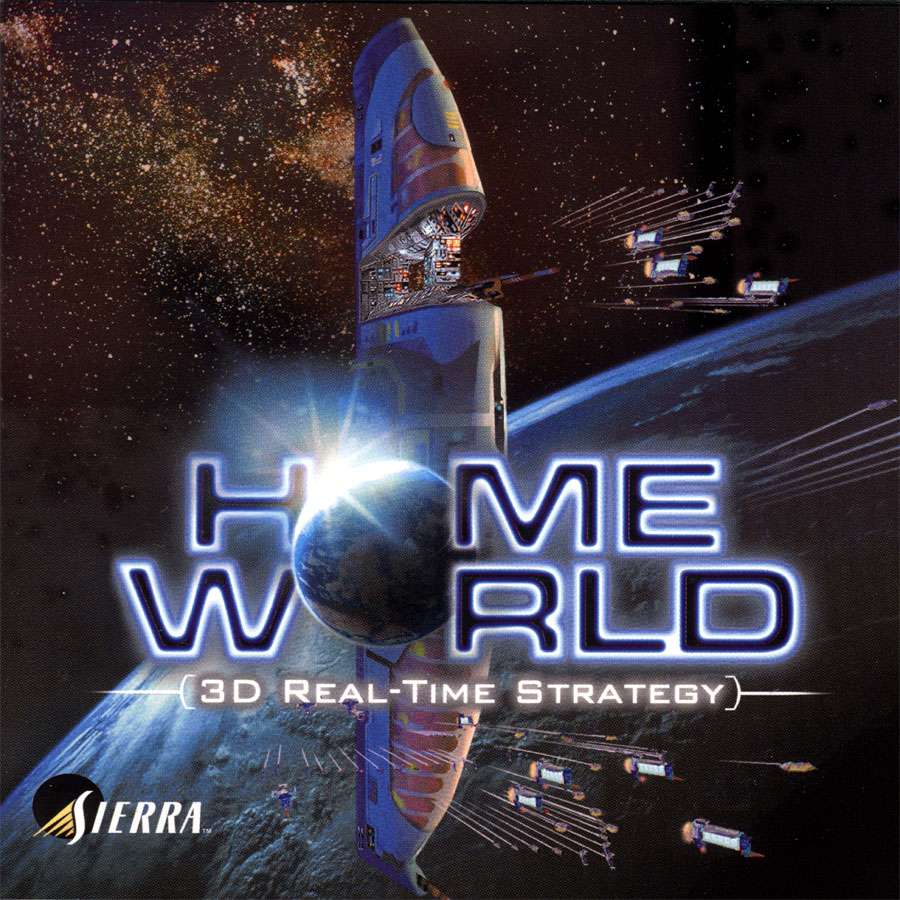
Im not writing anything but the fondest experiences ive had of rts games are age of empires 2 and of course, this epic masterpiece that i feel pity for anyone who missed out on it when it was the hot thing.

Homeworld-front.jpg
 
Nerevar said:
How could you write up that list and leave off the game that invented the genre, Dune II?

dune_2.gif

Dune_2mentat.png

windtrapneeded.gif


Great game, way ahead of its time. It's virtually unplayable today, but it was certainly a pioneer.
DS-version please!!
 
I'll write something up on Kohan: Ahriman's Gift soooon. Can't be a NeoGAF PC RTS thread without the Kohan pimping.
 
Quellex said:
YES!

It's a goddamn shame that Relics best created franchise they don't even own the rights to anymore. Relic could do magic with the homeworld universe today. Definately one of the most atmospheric games based in space.

And no Homeworld mention is complete without a reference to it's AMAZING concept art

http://shipyards.relicnews.com/hw2/concept.htm
homeworld was crazy awesome. I remember staying up late at night with the lights off harvesting empty spacefields with that music playing at 5 channel surround, it was like the greatest thing ever
 
Oh, I remember MAF used to rave about Conquest Frontier wars. Hell, I think I have that somewhere. Was it any good? I never actually played it.
 
MoxManiac said:
Oh, I remember MAF used to rave about Conquest Frontier wars. Hell, I think I have that somewhere. Was it any good? I never actually played it.

It was pretty good. I never got to play multiplayer for it but single player was really fun and pretty neat things for the time.
 
Quellex said:
YES!

It's a goddamn shame that Relics best created franchise they don't even own the rights to anymore. Relic could do magic with the homeworld universe today. Definately one of the most atmospheric games based in space.
Not true. Relic regained the Homeworld IP from Vivendi in 2006.

Nice writeup on DoW, Schafer. A lot of good memories in there. :)
 
Top Bottom