• Hey Guest. Check out your NeoGAF Wrapped 2025 results here!

Must read books of last decade ?

Status
Not open for further replies.

CiSTM

Banned
I have been doing tons of reading these past months but I just realised that I have only read handful of books from last decade (2000-2010) and I decided to start a list thread so maybe I will find something worth reading from those past years. List books that you think are worth and or must read. It would be nice to have plot summary of the book and optional amazon link and if you feel like it small review of the book too. edit: no fantasy.


So far I have read following:

Ian McEwan

Atonement - A
On a summer day in 1935, thirteen-year-old Briony Tallis witnesses a moment’s flirtation between her older sister, Cecilia, and Robbie Turner, the son of a servant. But Briony’s incomplete grasp of adult motives and her precocious imagination bring about a crime that will change all their lives, a crime whose repercussions Atonement follows through the chaos and carnage of World War II and into the close of the twentieth century.


Saturday - C+
Saturday, February 15, 2003. Henry Perowne is a contented man, a successful neurosurgeon, the devoted husband of Rosalind and the proud father of two grown-up children, one a promising poet, the other a talented blues musician. Unusually, he wakes before dawn, drawn to the window of his bedroom and filled with a growing unease. What troubles him as he looks out at the night sky is the state of the world, the impending war against Iraq, a gathering pessimism since 9/11 and a fear that his city, its openness and diversity, and his happy family life are under threat." "Later, Perowne makes his way to his weekly squash game through London streets filled with hundreds of thousands of anti-war protestors. A minor car accident brings him into a confrontation with Baxter, a fidgety, aggressive young man, on the edge of violence. To Perowne's professional eye, there appears to be something profoundly wrong with him." Towards the end of a day rich in incident, a Saturday filled with thoughts of war and poetry, of music, mortality and love, Baxter appears at the Perowne home during a family reunion, with extraordinary consequences.


Solar - B-
Michael Beard is a Nobel prize–winning physicist whose best work is behind him. Trading on his reputation, he speaks for enormous fees, lends his name to the letterheads of renowned scientific institutions, and half-heartedly heads a government-backed initiative tackling global warming. While he coasts along in his professional life, Michael’s personal life is another matter entirely. His fifth marriage is crumbling under the weight of his infidelities. But this time the tables are turned: His wife is having an affair, and Michael realizes he is still in love with her.

When Michael’s personal and professional lives begin to intersect in unexpected ways, an opportunity presents itself in the guise of an invitation to travel to New Mexico. Here is a chance for him to extricate himself from his marital problems, reinvigorate his career, and very possibly save the world from environmental disaster. Can a man who has made a mess of his life clean up the messes of humanity?


Cormac McCarthy

The Road - A+
A father and his son walk alone through burned America. Nothing moves in the ravaged, nuclear landscape save the ash on the wind. It is cold enough to crack stones, and when the snow falls it is grey. The sky is dark. Their destination is the coast, although they don't know what, if anything, awaits them there. They have nothing; just a pistol to defend themselves against the lawless bands that stalk the road, the clothes they are wearing, a cart of scavenged food - and each other. "The Road" is the profoundly moving story of a journey. It boldly imagines a future in which no hope remains, but in which the father and his son, 'each other's world entire', are sustained by love. Awesome in the totality of its vision, it is an unflinching meditation on the worst and the best that we are capable of: ultimate destructiveness, desperate tenacity, and the tenderness that keeps two people alive in the face of total devastation.


No Country for Old Men - C
Stumbling upon a bloody massacre, a cache of heroin, and more than $2 million in cash during a hunting trip near the Rio Grande, Llewelyn Moss removes the money, a decision that draws him and his young wife into the middle of a violent confrontation in which their only hope of survival is local sheriff Ed Tom Bell.

Khaled Hosseini

Kite Runner - B-
Twelve-year-old Amir is desperate to win the approval of his father and resolves to win the local kite-fighting tournament, to prove that he has the makings of a man. His loyal friend Hassan promises to help him - for he always helps Amir - but this is 1970s Afghanistan and Hassan is merely a low-caste servant who is jeered at in the street, although Amir still feels jealous of his natural courage and the place he holds in his father's heart. But neither of the boys could foresee what would happen to Hassan on the afternoon of the tournament, which was to shatter their lives. After the Russians invade and the family is forced to flee to America, Amir realises that one day he must return, to find the one thing that his new world cannot grant him: redemption.

A Thousand Splendid Suns - C
Mariam is only fifteen when she is sent to Kabul to marry Rasheed. Nearly two decades later, a friendship grows between Mariam and a local teenager, Laila, as strong as the ties between mother and daughter. When the Taliban take over, life becomes a desperate struggle against starvation, brutality and fear. Yet love can move a person to act in unexpected ways, and lead them to overcome the most daunting obstacles with a startling heroism

Max Brooks

World War Z - C
An account of the decade-long conflict between humankind and hordes of the predatory undead is told from the perspective of dozens of survivors--soldiers, politicians, civilians, and others--who describe in their own words the epic human battle for survival.

Junot Diaz

The Brief Wondrous Life of Oscar Wao - B-
Oscar is a sweet, fat nerd, who lives in New Jersey with his Dominican family and dreams of being the next Tolkien and finding true love; a funny, charming and totally original take on the US immigrant experience.

Haruki Murakami

Kafka on the Shore - A
Kafka Tamura runs away from home at fifteen, under the shadow of his father's dark prophesy. The aging Nakata, tracker of lost cats, who never recovered from a bizarre childhood affliction, finds his pleasantly simplified life suddenly turned upside down. This book follows the fortunes of two remarkable characters.

After Dark - B-
The midnight hour approaches in an almost empty all-night diner. Mari sips her coffee and glances up from a book as a young man, a musician, intrudes on her solitude. Both have missed the last train home. The musician has plans to rehearse with his jazz band all night, Mari is equally unconcerned and content to read, smoke and drink coffee until dawn. They realise they've been acquainted through Eri, Mari's beautiful sister. The musician soon leaves with a promise to return before dawn. Shortly afterwards Mari will be interrupted a second time by a girl from the Alphaville Hotel; a Chinese prostitute has been hurt by a client, the girl has heard Mari speaks fluent Chinese and requests her help.Meanwhile Eri is at home and sleeps a deep, heavy sleep that is 'too perfect, too pure' to be normal; pulse and respiration at the lowest required level. She has been in this soporfic state for two months; Eri has become the classic myth - a sleeping beauty. But tonight as the digital clock displays 00:00 a faint electrical crackle is perceptible, a hint of life flickers across the TV screen, though the television's plug has been pulled. Murakami, acclaimed master of the surreal, returns with a stunning new novel, where the familiar can become unfamiliar after midnight, even to those that thrive in small hours. With "After Dark" we journey beyond the twilight. Strange nocturnal happenings, or a trick of the night?

Mark Haddon

The Curious Incident of the Dog in the Night-time - B+
The Curious Incident of the Dog in the Night-Time is a murder mystery novel like no other. The detective, and narrator, is Christopher Boone. Christopher is fifteen and has Asperger's, a form of autism. He knows a very great deal about maths and very little about human beings. He loves lists, patterns and the truth.

Roberto Bolaño

2666 - A+
Santa Teresa, on the Mexico US border, is an urban sprawl that draws in lost souls. Among them are three academics on the trail of a reclusive German author; a New York reporter on his first Mexican assignment; a widowed philosopher; and a police detective in love with an elusive older woman. But there is darker side still to the town. It is an emblem of corruption, violence and decadence, and one from which, over the course of a decade, hundreds of women have mysteriously, often brutally, disappeared.
 
dpARz.jpg


I recently finished reading Kazuo Ishiguro's Never Let Me Go. It's an excellent novel, chilling in the way its harsh reality seems effortlessly intertwined with our own. I don't want to say much as I feel that the nature of the world it portrays, shown through the account of its seemingly ordinary protagonist, are best uncovered just as the book sees fit to reveal it.

Amazon review said:
All children should believe they are special. But the students of Hailsham, an elite school in the English countryside, are so special that visitors shun them, and only by rumor and the occasional fleeting remark by a teacher do they discover their unconventional origins and strange destiny. Kazuo Ishiguro's sixth novel, Never Let Me Go, is a masterpiece of indirection. Like the students of Hailsham, readers are "told but not told" what is going on and should be allowed to discover the secrets of Hailsham and the truth about these children on their own.
Offsetting the bizarreness of these revelations is the placid, measured voice of the narrator, Kathy H., a 31-year-old Hailsham alumna who, at the close of the 1990s, is consciously ending one phase of her life and beginning another. She is in a reflective mood, and recounts not only her childhood memories, but her quest in adulthood to find out more about Hailsham and the idealistic women who ran it. Although often poignant, Kathy's matter-of-fact narration blunts the sharper emotional effects you might expect in a novel that deals with illness, self-sacrifice, and the severe restriction of personal freedoms. As in Ishiguro's best-known work, The Remains of the Day, only after closing the book do you absorb the magnitude of what his characters endure.

Edit: I came into the thread intending to post The Road, so I'm glad you beat me to it. It'll undoubtedly be remembered as a core text of the decade, so it really should be more widely read.

Edit edit: Not sure about the film, but I like the film poster so I'll include that edition of the book cover.
 
All the blurbs are taken from Amazon.

Future Babble - Dan Gardner

Future%2BBabble.jpg


Gardner, a columnist and senior writer for the Ottawa Citizen (The Science of Fear), examines the misguided trust people place in media forecasters and "legions of experts" who make meaningless predictions about the future. He reviews the findings of psychologist Philip Tetlock, who had 284 experts from a range of disciplines make 27,450 predictions on political and economic trends, concluding they produced about the same results as random guesses. Biologist Paul Erhlich is one of his main targets. In 1968's The Population Bomb, Ehrlich predicted mass famines. In fact, Gardner points to America's "epidemic of obesity" and growing calorie intake worldwide. Gardner also probes economic and environmental worries, and warnings of wars, climate change, the Y2K hysteria, and the weather, which he says can be forecast with accuracy only at most two days out. Successful predictions are celebrated, Gardner says, while the wrong ones are forgotten. Yet he might have done well to remember more of those accurate predictions, and to focus more on Tetlock's conclusions about those experts who show greater accuracy and on how the public might recognize them. Instead, he writes off accurate predictions as "likely... a coincidence."

The Accidental Guerrilla - David Kilcullen

0195368347.01.LZZZZZZZ.jpg


Kilcullen, adviser on counterinsurgency to General Petraeus, defines accidental guerrillas as locals fighting primarily because outsiders (often Westerners) are intruding into their physical and cultural space, but they may also be galvanized by high-tech, internationally oriented ideologues. This interaction of two kinds of nonstate opponents renders both traditional counterterrorism and counterinsurgency inadequate. Kilcullen uses Afghanistan and Iraq as primary case studies for a new kind of war that relies on an ability to provoke Western powers into protracted, exhausting, expensive interventions. Kilcullen presents two possible responses. Strategic disruption keeps existing terrorists off balance. Military assistance attacks the conditions producing accidental guerrillas. That may mean full-spectrum assistance, involving an entire society. Moving beyond a simplistic war on terror depends on rebalancing military and nonmilitary elements of power. It calls for a long view, a measured approach and a need to distinguish among various enemies. It requires limiting the role of government agencies in favor of an indirect approach emphasizing local interests and local relationships. Not least, Kilcullen says, breaking the terrorist cycle requires establishing patterns of virtue, moral authority, and credibility in the larger society. Kilcullen's compelling argument merits wide attention.

The Perfect Swarm - Len Fisher

Perfect-Swarm.jpg


One of the greatest discoveries of recent times is that the complex patterns we find in life are often produced when all of the individuals in a group follow the same simple rule. This process of “self-organization” reveals itself in the inanimate worlds of crystals and seashells, but as Len Fisher shows, it is also evident in living organisms, from fish to ants to human beings. The coordinated movements of fish in shoals, for example, arise from the simple rule: “Follow the fish in front.” Traffic flow arises from simple rules: “Keep your distance” and “Keep to the right.”

Now, in his new book, Fisher shows how we can manage our complex social lives in an ever more chaotic world. His investigation encompasses topics ranging from “swarm intelligence” to the science of parties and the best ways to start a fad. Finally, Fisher sheds light on the beauty and utility of complexity theory. An entertaining journey into the science of everyday life, The Perfect Swarm will delight anyone who wants to understand the complex situations in which we so often find ourselves.
 
A Song of Ice and Fire in its totality.

But also

Mark Z. Danielewski (my current inspiration for truly postmodern writing in this day and age)

House of Leaves - B+
6a011570b57d1c970b0120a6bb7709970b-800wi


Publisher's Weekly said:
Danielewski's eccentric and sometimes brilliant debut novel is really two novels, hooked together by the Nabokovian trick of running one narrative in footnotes to the other. One-the horror story-is a tour-de-force. Zampano, a blind Angelino recluse, dies, leaving behind the notes to a manuscript that's an account of a film called The Navidson Report. In the Report, Pulitzer Prize-winning news photographer Will Navidson and his girlfriend move with their two children to a house in an unnamed Virginia town in an attempt to save their relationship. One day, Will discovers that the interior of the house measures more than its exterior. More ominously, a closet appears, then a hallway. Out of this intellectual paradox, Danielewski constructs a viscerally frightening experience. Will contacts a number of people, including explorer Holloway Roberts, who mounts an expedition with his two-man crew. They discover a vast stairway and countless halls. The whole structure occasionally groans, and the space reconfigures, driving Holloway into a murderous frenzy. The story of the house is stitched together from disparate accounts, until the experience becomes somewhat like stumbling into Borges's Library of Babel. This potentially cumbersome device actually enhances the horror of the tale, rather than distracting from it. Less successful, however, is the second story unfolding in footnotes, that of the manuscript's editor, (and the novel's narrator), Johnny Truant. Johnny, who discovered Zampano's body and took his papers, works in a tattoo parlor. He tracks down and beds most of the women who assisted Zampano in preparing his manuscript. But soon Johnny is crippled by panic attacks, bringing him close to psychosis. In the Truant sections, Danielewski attempts an Infinite Jest-like feat of ventriloquism, but where Wallace is a master of voices, Danielewski is not. His strength is parodying a certain academic tone and harnessing that to pop culture tropes. Nevertheless, the novel is a surreal palimpsest of terror and erudition, surely destined for cult status.

and

Only Revolutions - A
onlyrev.jpg
tumblr_kp94aysR4a1qzx0xqo1_400.jpg


Publisher's Weekly said:
A pastiche of Joyce and Beckett, with heapings of Derrida's Glas and Thomas Pynchon's The Crying of Lot 49 thrown in for good measure, Danielewski's follow-up to House of Leaves is a similarly dizzying tour of the modernist and postmodernist heights—and a similarly impressive tour de force. It comprises two monologues, one by Sam and one by Hailey, both "Allmighty sixteen and freeeeee," each narrating the same road trip, or set of neo-globo-revolutionary events—or a revolution's end: "Everyone loves the Dream but I kill it." Figuring out what's happening is a big part of reading the book. The verse-riffs narrations, endlessly alliterative and punning (like Joyce) and playfully, bleakly existential (like Beckett), begin at opposite ends of the book, upside down from one another, with each page divided and shared. Each gets 180 words per page, but in type that gets smaller as they get closer to their ends (Glas was more haphazard), so they each gets exactly half a page only at the midway point of the book: page 180—or half of a revolution of 360 degrees. A time line of world events, from November 22, 1863 ("the abolition of slavery"), to January 19, 2063 (blank, like everything from January 18, 2006, on), runs down the side of every page. The page numbers, when riffled flip-book style, revolve. The book's design is a marvel, and as a feat of Pynchonesque puzzlebookdom, it's magnificent. The book's difficulty, though, carries a self-consciousness that Joyce & Co. decidedly lack, and the jury will be out on whether the tricks are of the for-art's-sake variety or more like a terrific video game.

The latter is truly one of the most experimental novels of our time, or of all time, perhaps. It may not be very coherent or truly come together as something truly great, but what it does to the written page is innovative and mind-opening.

Dust to dust, and time only for US.
 
Will use this thread for reference because I've been looking for some good books to read.

I loved A Thousand Splendid Suns. Would give it a B+/A.
 
Asking neogaf not to include fantasy in past decade must reads, is like asking gramps to not include naps in his favorite pastimes.
 
I really enjoyed Revelation Space by Alastair Reynolds. I think that qualifies, released 2000.

dylp9i.jpg


It follows Dan Sylveste, an archeologist who studies the ruins of dead alien civilizations that humans keep finding on the planets they explore and colonize, the crew of an interstellar "Lighthugger" known as the Nostalgia for Infinity, and Ana Khouri, a sort of legal assassin that people hire to hunt themselves for the prestige they will receive upon surviving (if they survive).

Can't say much more without spoiling it. It starts slow but once it gets going it's hard to put down. Although I will say that the Reapers in Mass Effect were heavily inspired by this series (not the stupid organo-harvest wankery, the other bits).
 
One-Day-460x734.jpg


Maybe not everyones cup of tea but I loved it so meh!

"You can live your whole life not realising that what you're looking for is right
in front of you.
15th July 1988. Emma and Dexter meet on the night of their graduation.
So where will they be on this one day next year? And the year after that?
And every year that follows?

Each chapter covers the lives of two protagonists on 15 July, St. Swithin's Day, for twenty years."
 
amazon will be getting a big order from me very soon. I'm completely out of books to read currently :)
 
Both of Max Brooks are some of the worst reading that you can do, its an endless, pointless, cycle of events that transpire with the same result but only the names are different.

1."OH shit zombies"
2."Dumb americans hide the initial outbreak cos they are fat"
3. "Oh shit more zombies!
4. "Dumb Americans cant combat the zombies cos their modern guns were designed around the fact they are fucking fatties"
5. "Zombies win!
6. "Small awesome resistance mostly made of south americans and british fight the zombies successfully cos they are not fatties"
7."American learn to be not fat, win the battle"
 
Yoshiya said:
http://i.imgur.com/dpARz.jpg[IMG]

I recently finished reading Kazuo Ishiguro's [URL="http://www.amazon.com/dp/0307740994/?tag=neogaf0e-20"]Never Let Me Go[/URL]. It's an excellent novel, chilling in the way its harsh reality seems effortlessly intertwined with our own. I don't want to say much as I feel that the nature of the world it portrays, shown through the account of its seemingly ordinary protagonist, are best uncovered just as the book sees fit to reveal it.


Edit: I came into the thread intending to post The Road, so I'm glad you beat me to it. It'll undoubtedly be remembered as a core text of the decade, so it really should be more widely read.

Edit edit: Not sure about the film, but I like the film poster so I'll include that edition of the book cover.[/QUOTE]

I have tried to read Kazuo so many times but I just find his books utterly boring :D I might give Never Let Me Go another chance.

[quote]
[b]Only Revolutions[/b] - A
[img]http://30.media.tumblr.com/tumblr_kp94aysR4a1qzx0xqo1_400.jpg[img]


The latter is truly one of the most experimental novels of our time, or of all time, perhaps. It may not be very coherent or truly come together as something truly great, but what it does to the written page is innovative and mind-opening.

Dust to dust, and time only for US.[/QUOTE]

This sounds really interesting going by few reviews I found via quick google search. I will check it out asap.

[QUOTE=JDSN]Both of Max Brooks are some of the worst reading that you can do, its an endless, pointless, cycle of events that transpire with the same result but only the names are different.

1."OH shit zombies"
2."Dumb americans hide the initial outbreak cos they are fat"
3. "Oh shit more zombies!
4. "Dumb Americans cant combat the zombies cos their modern guns were designed around the fact they are fucking fatties"
5. "Zombies win!
6. "Small awesome resistance mostly made of south americans and british fight the zombies successfully cos they are not fatties"
7."American learn to be not fat, win the battle"[/QUOTE]
I admit I over scored World War Z. There was some really nice stories that I really enjoyed but too much crap too. I still think it's a good book and on a second read it's easy to skip the boring stories.
 
THE-KINDLY-ONES.jpg


The Kindly Ones
is a historical novel written in French by American-born author Jonathan Littell. The 900-page book became a bestseller in France and was widely discussed in newspapers, magazines, academic journals, books and seminars. It was also awarded two of the most prestigious French literary awards, the Grand Prix du roman de l'Académie française and the Prix Goncourt in 2006. As of December 2009 it has been translated into seventeen languages.

The book is narrated by protagonist Maximilien Aue, a former SS officer of French and German ancestry who helps carry out massacres during the Holocaust, but in the end flees from Germany to start a new life in northern France. Aue is present during several of the major events of World War II.


measuring-the-world1.jpg


Measuring the World

is a 2005 novel by German author Daniel Kehlmann. The novel re-imagines the lives of German mathematician Carl Friedrich Gauss and German geographer Alexander von Humboldt – who was accompanied on his journeys by Aimé Bonpland – and their many groundbreaking ways of taking the world's measure, as well as their travels in South America and their meeting in 1828. The English translation is by Carol Brown Janeway (November 2006). It was a bestseller, by 2009 it sold more than 1.4 million copies in Germany alone.
 
JDSN said:
Both of Max Brooks are some of the worst reading that you can do, its an endless, pointless, cycle of events that transpire with the same result but only the names are different.

When my buddy was trying to tell me about the plot to WWZ I just kept laughing. Zombie movies only work because you don't see how the zombies manage to beat the world's organized militaries (which are extremely efficient at slaughtering slow moving, tightly packed hordes of humanoids), but WWZ has all that stuff front and center, and I can't take it seriously because of it.
 
512oIYOh1WL._SL500_PIsitb-sticker-arrow-big,TopRight,35,-73_OU01_AA300_.jpg

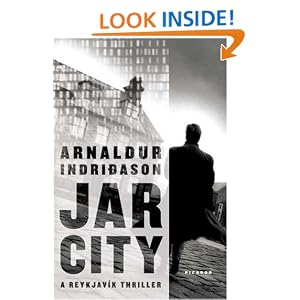
It's hardly surprising that there is a thriving crime-fiction scene in Iceland (insular worlds with forbidding climates breed crime quite nicely); it is surprising, on the other hand, that it's taken until now for any Icelandic mysteries to penetrate the U.S. market. We're off to a fast start with this gripping procedural starring Inspector Erlendur Sveinnson, a veteran detective with the Reykjavik police. Murder is relatively rare in Reykjavik, and it is usually solved easily (crimes of passion are the norm). This time, though, there are no easy answers. The brutal killing of a lonely pensioner seems inexplicable until Erlendur (Icelanders always address one another by first name) begins to track back through the man's life, uncovering not only a plethora of dirty secrets but also a genealogical trail whose tentacles appear to stretch throughout the country (in Iceland, "everyone seemed related or connected in some way"). There is a Ross Macdonald element to all this rummaging in familial closets, but the emotional pain Erlendur feels as he gets closer to the truth recalls Madeleine Nabb and Donna Leon. A powerful, psychologically acute procedural drama.
Scandinavia (and in this case Iceland) have produced a lot of good crime novels in the past decade. If I had to pick one, it would be Jar City by Arnaldur Indridason.
 
The Shadow of the wind by Carlos Ruiz Zafón was also great. I forgot to add it into op. Reminds me bit of Dan Brown's mystery novels but the writing is better and some of it's elements reminds me of Jorge Luis Borges writing. Great read.
fV3eb.jpg
 
Speaking of Roberto Bolaño, I'm working my way through his novels right now and The Savage Detectives is simply a must. Seven hundred pages of voices, Mexico City, sex, poetry and namedropping. It's like reading something that is everywhere at once, constantly moving and shifting. Simple yet complex. Overall it's a story stretching over twenty years about the two friends Arturo (who shares a lot of similarities with Bolaño) and Ulises, and how they affect the people they meet. Never read anything quite like it.

tumblr_lfrgoh5atL1qaouh8o1_400.jpg
 
Brother Sport said:
Speaking of Roberto Bolaño, I'm working my way through his novels right now and The Savage Detectives is simply a must. Seven hundred pages of voices, Mexico City, sex, poetry and namedropping. It's like reading something that is everywhere at once, constantly moving and shifting. Simple yet complex. Overall it's a story stretching over twenty years about the two friends Arturo (who shares a lot of similarities with Bolaño) and Ulises, and how they affect the people they meet. Never read anything quite like it.

http://29.media.tumblr.com/tumblr_lfrgoh5atL1qaouh8o1_400.jpg[IMG][/QUOTE]
I was going to add it into OP but hesitated since the original spanish print that I read came out in 1998 or something like that. Anyway it's a good book while not perfect and 2666 is lot more enjoyable if you have read Savage Detectives first. Some minor cameos and more background for Santa Teresa is always good.
 
Haruki Murakami's novels are abridged in English translation. His upcoming one is the 1st that won't be. Just so you know.

Skip both Saturday and Solar (the last isn't important or very good, so definitely cut that one).
World War Z is bad.
I don't like your Diaz choice, but I'm sure your average NeoGAF person would. Go for it!

I would recommend any Les Murray poetry, but if you want "prose," Fredy Neptune: A Novel In Verse is both fiction and the best thing he's done.
Peter Carey, My Life As A Fake is like a literary Frankenstein: Or The Modern Prometheus.
Orhan Pamuk's The Museum Of Innocence is the best novel of the decade and a stellar examination of Kierkegaard's 3 spheres.
 
GhaleonQ said:
Haruki Murakami's novels are abridged in English translation. His upcoming one is the 1st that won't be. Just so you know.


Wait, what???!!!! This is the first I've heard of this.
 
Help Me! said:
Wait, what???!!!! This is the first I've heard of this.

I was going to make a topic, but I'll wait until 1Q84 comes out here.

http://www.complete-review.com/reviews/murakamih/windupbc.htm
http://en.wikipedia.org/wiki/Underground_(Haruki_Murakami_book)
http://www.complete-review.com/authors/murakamh.htm
Edit: I can't find the one about Kafka On The Shore. I tried "edited," "abridged," "edit," "cut," but I can't recall.

They stopped publicizing it after the Wind-Up debacle and, as far as I know, no one's done an academic line-by-line study since. The translation of Japanese characters to Latin ones means that there's no easy way to compare, but there are just parts excised.
 
GhaleonQ said:
Haruki Murakami's novels are abridged in English translation. His upcoming one is the 1st that won't be. Just so you know.

Skip both Saturday and Solar (the last isn't important or very good, so definitely cut that one).
World War Z is bad.
I don't like your Diaz choice, but I'm sure your average NeoGAF person would. Go for it!

I would recommend any Les Murray poetry, but if you want "prose," Fredy Neptune: A Novel In Verse is both fiction and the best thing he's done.
Peter Carey, My Life As A Fake is like a literary Frankenstein: Or The Modern Prometheus.
Orhan Pamuk's The Museum Of Innocence is the best novel of the decade and a stellar examination of Kierkegaard's 3 spheres.

"Fredy Neptune: A Novel In Verse" I have actually read it and it was great felt bit short but I did enjoy it. I have read also Carey's "Parrot and Olivier in America" but didn't care for it that much but I will check out "My Life as a Fake". They are probably only australian authors that I have read besides Nick Cave, Patrick White and James Clavell. Gotta start checking out some more books from Australia.

I think the general consensus for Solar is indeed that it's Ian McEwan's weakest book but I belong in the small minority that actually likes it so I must recommend it no matter what other people say. Saturday is give or take, it's rather boring and the characters aren't interesting at all except for baxter and the doc. Still Ian can write and it's always to pleasure read his writing.
 
GhaleonQ said:
They stopped publicizing it after the Wind-Up debacle and, as far as I know, no one's done an academic line-by-line study since. The translation of Japanese characters to Latin ones means that there's no easy way to compare, but there are just parts excised.

This saddens me. I can't believe I never came across this fact.

Derrida follows us everywhere: "Translation is transformation."
 
CiSTM said:
"Fredy Neptune: A Novel In Verse" I have actually read it and it was great felt bit short but I did enjoy it. I have read also Carey's "Parrot and Olivier in America" but didn't care for it that much but I will check out "My Life as a Fake". They are probably only australian authors that I have read besides Nick Cave, Patrick White and James Clavell. Gotta start checking out some more books from Australia.

I think the general consensus for Solar is indeed that it's Ian McEwan's weakest book but I belong in the small minority that actually likes it so I must recommend it no matter what other people say. Saturday is give or take, it's rather boring and the characters aren't interesting at all except for baxter and the doc. Still Ian can write and it's always to pleasure read his writing.

Sure. I should say that it was harsh to fit the "must-read" criterion. I haven't read many of McEwan's apart from those 3, but I don't think he's actually written something bad.

I think that's Carey's worst, but I'm not sure if you'll like my suggestion unless I know why you disliked yours. Australia's actually PROBABLY stronger than it's ever been. The various newspapers and literary journals cover nonfiction, fiction, and poetry really well. I'm not from there; it's just good.

Help Me! said:
This saddens me. I can't believe I never came across this fact.

Derrida follows us everywhere: "Translation is transformation."

Yep! It sucks. I can MAYBE justify it as a way to get his discursive (apparently) writing to sell, but now that he's famous, publish the real things, right? At least they're starting.
 
GhaleonQ said:
I was going to make a topic, but I'll wait until 1Q84 comes out here.

http://www.complete-review.com/reviews/murakamih/windupbc.htm
http://en.wikipedia.org/wiki/Underground_(Haruki_Murakami_book)
http://www.complete-review.com/authors/murakamh.htm

They stopped publicizing it after the Wind-Up debacle and, as far as I know, no one's done an academic line-by-line study since. The translation of Japanese characters to Latin ones means that there's no easy way to compare, but there are just parts excised.


You mean I haven't read all of the Wind-Up Bird Chronicle yet?!! Fucccuckckckcuckckcu! Gotta learn Japanese brb


Everything I would mention has been said...but I'd rate After Dark higher than B-. B+, probably. Then again, I read it in the right mood (somber), at the right time (after midnight), and felt like it captured those late-as-shit hours perfectly. All the weirdest stuff happens then and everything just feels sort strange. It made me want to try to be an insomniac for a bit, but that would be counterproductive and a bit dumb :)
 
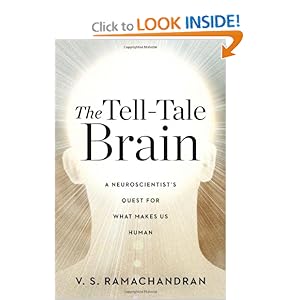
51Jqr4m-1dL._BO2,204,203,200_PIsitb-sticker-arrow-click,TopRight,35,-76_AA300_SH20_OU01_.jpg


This is a fascinating read. I had to read it after I happened to see one of his TED speeches.
Im only half way through though.
Did you know that your visual cortex fine tunes your motor cortex (and vice versa) when you balance that jug full of water on the table without a splash? Both signals fine tune each other until you get it right.

416MhqJ2SWL._BO2,204,203,200_PIsitb-sticker-arrow-click,TopRight,35,-76_AA300_SH20_OU01_.jpg


Oldie but goldie.

Check out the predicitions on the Wiki entry here
 
Help Me! said:
This saddens me. I can't believe I never came across this fact.

Derrida follows us everywhere: "Translation is transformation."

Wind up bird for example has some chapters in wrong order and it's missing at least two whole chapters. Original JP edition is around 1100 pages while english edition is around 600.
 
CiSTM said:
Wind up bird for example has some chapters in wrong order and it's missing at least two whole chapters. Original JP edition is around 1100 pages while english edition is around 600.


fuck. One of those pages said Rubin submitted a full translated copy to Knopf...um, does this circulate?

I am perpetually reading and rereading that book, so I'm wondering if there's any way to patch up my experience a little.

I guess you could say the book got hermeneutered. *rim shot*
 
the more I read Murakami the more I've gotten bored with him

I don't know, I think I've grown away from him as time goes on. definitely hasn't improved with age
 
Jenga said:
the more I read Murakami the more I've gotten bored with him

I don't know, I think I've grown away from him as time goes on. definitely hasn't improved with age


kind of understandable. he's got a style and writes a lot, so you could get burned out.

I am looking forward as fuck to IQ84 though. It's been a long wait.

and now I'm hoping his others get reissued in complete form.
 
Dresden said:
Wind Up Bird was a boring book even after the cuts, the Japanese version must've been a snore.

Murakami's style isn't for everyone. I admit that there was fat in Wind Up Bird that it could have done without. I especially had troubles with some of the chapters dealing with the war since it all felt so disconnected and pointless but usually the weak chapters were followed by strong chapters so I never lost interest and I finished it and ended up liking it very much.

I finished Kafka on the Shore just lately and while the story seems to be bit "out there" it was really good. It's much more straightforward then Wind Up and it's much easier to read. Give it a try ;) Probably my favorite after Hard-Boiled Wonderland.
 
Yeah, it's not for everyone. There's some really cool bits in his novels, but they're always surrounded by these hazy meandering narratives with no closure. I guess that might be the point, who knows; I just find most of them boring.

I liked Kafka on the Shore, mainly for Nakata.
 
Dresden said:
Yeah, it's not for everyone. There's some really cool bits in his novels, but they're always surrounded by these hazy meandering narratives with no closure. I guess that might be the point, who knows; I just find most of them boring.

I liked Kafka on the Shore, mainly for Nakata.

Nakata's and Hoshino's (was it hoshino?) adventures were really the best part of the book. I especially liked Hoshino, kinda simple yet interesting character.
 
I'm gonna post my favorite non-fantasy book of the last ten years here. Hopefully some of you will read it. It pretty accurately reminds me of what it's like to live in Maine, though I don't live in a place quite as destitute.

Richard Russo
Empire Falls A+

"I mean, if I were so unhappy, wouldn't I know?" asks Miles Roby, the hero of "Empire Falls," Richard Russo's fifth and most ambitious novel yet. The answer, of course, is not necessarily, and one of Russo's great talents is to make us understand how an intelligent 40-year-old man can fail to recognize his own quiet desperation -- and then make us believe that his life can change for the better. Along the way, Russo gives us a panoramic yet nuanced view of the imaginary town of Empire Falls, Maine, showing how the history of one powerful family can become the history of a place. It's the kind of big, sprawling, leisurely novel, full of subplots and vividly drawn secondary characters, that people are always complaining is an endangered species. Yet in part thanks to Russo's deft satiric touch -- much of the book is laugh-out-loud funny -- it never feels too slow or old-fashioned.
 
thestopsign said:
I'm gonna post my favorite non-fantasy book of the last ten years here. Hopefully some of you will read it. It pretty accurately reminds me of what it's like to live in Maine, though I don't live in a place quite as destitute.

Richard Russo
Empire Falls A+
That reminds me .. I don't know that I'd call it 'must read' but I thought it was so good that I went through it one day:


That Old Cape Magic by Richard Russo

Its nothing mind blowing and its a bit depressing but its an interesting glimpse into the rise and fall of a marriage.
 
Dresden said:
Yeah, it's not for everyone. There's some really cool bits in his novels, but they're always surrounded by these hazy meandering narratives with no closure. I guess that might be the point, who knows; I just find most of them boring.

I liked Kafka on the Shore, mainly for Nakata.

Have you read his stories? Try this:

blind-willow_20000_550.jpg


It's basically a collection of those cool bits that he hasn't worked into a novel, I think the lack of closure is more suited to a short story.
 
wind up bird is the only murakami i've read.. i really liked it, even though it was a bit too philosophical for me. since then i've bought a bunch of other murakami books i plan to read asap

++ agree regarding ian mcewan - atonement; it's a fantastic book. david mitchell - cloud atlas is good, but i actually prefer number9dream!

my personal favourite of the last decade:

wolfhall.jpg


hilary mantel - wolf hall. fucking awesome novel. if you like historical fiction, you will love this book, guaranteed

edit: review - http://www.guardian.co.uk/books/2009/may/02/wolf-hall-hilary-mantel

it was also the 2009 man booker winner..
 
Edit: Boo, missed the no fantasy!

In that case I'd recommend the Greatest Show on Earth by Richard Dawkins and Tony Blair's memoirs. Both are pretty fascinating.
 
Status
Not open for further replies.
Top Bottom