

-
Hey Guest. Check out your NeoGAF Wrapped 2025 results here!
You are using an out of date browser. It may not display this or other websites correctly.
You should upgrade or use an alternative browser.
You should upgrade or use an alternative browser.
80 years late, scientists finally turn hydrogen into a metal
- Thread starter Shard
- Start date
- Status
- Not open for further replies.

Yeah. I kept messing up radius and diameter.Suns diameter is 1392'000 km so it's smaller than the sun
So when are they turning lead into gold?
Not impossible, but easier with bismuth which was done in 1951. Not worth it either way.
Vaporizing something is far easier than compressing something not usually metallic to metal.Cool! Can't aluminum also be a gas?
Yeah, you can have aluminium gas but that doesn't have much use.
Hyperactivity
Banned
Vaporizing something is far easier than compressing something not usually metallic to metal.
Yeah, you can have aluminium gas but that doesn't have much use.
Yup. One of these things is a phase change, which you should basically be able to do with anything. The other thing is affecting what's typically considered a characteristic of elements.

Rest
All these years later I still chuckle at what a fucking moron that guy is.
That's unreasonably perfect.
TemplaerDude
Member
Fucking hilarious

I really wish they took a picture somehow I want to see this metallic hydrogen.
They did. I have access to the full article. They took a photo using an iphone camera. I am not making this up.
The dimensions of what they claim is the solid metallic hydrogen fleck is approximately 8-10 microns with thickness ~1.2 microns.
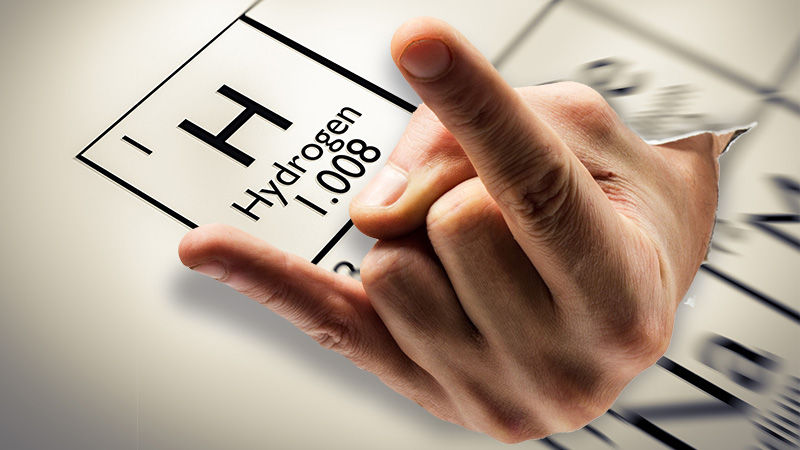
First Chimeras, now alchemy. You know scientists, you really are Fullmetal Alchemist: Brotherhood
Chimeras? What's that about?
I don't get that reference.GIF
You don't know that hand gesture? (associated with rock and especially metal). Or you don't know the symbol of hydrogen on the periodic table? (Between the horns)
Edit: probably the former since hydrogen is spelled out here.
*raises hand*Also, who the fuck thinks the sun is merely a giant fireball?
Beeb also have an article, with a pic!
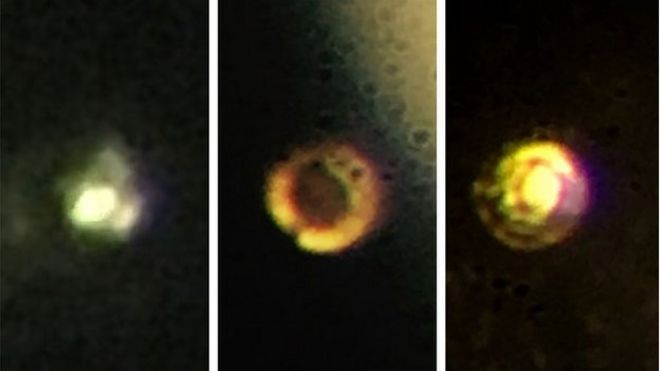
Sample went from transparent, to black, to shiny.
http://www.bbc.co.uk/news/science-environment-38768683
Sample went from transparent, to black, to shiny.
http://www.bbc.co.uk/news/science-environment-38768683
As we turned the pressure up, it went to a transparent molecular solid. And then as the pressure kept going up, it went black, and we think it goes black because it becomes like a semi-conductor and it can absorb light," he recalled on the BBCs Science In Action programme.
"And then we turned the pressure up higher and it started shining. It was very exciting. It's got extremely high reflectance. The reflectance we measured is about 90%. It's about the reflectivity of an aluminium mirror."
"Complete garbage," is how Eugene Gregoryanz from Edinburgh University described the research. "Like everybody else who works with hydrogen at high pressures, I am appalled by what is being published in Science."
"Complete garbage," is how Eugene Gregoryanz from Edinburgh University described the research. "Like everybody else who works with hydrogen at high pressures, I am appalled by what is being published in Science."


Brawndo Addict
Banned
For those wondering about the potential applications of metallic hydrogen, it could serve as a room-temperature superconductor (zero resistance energy) and much more powerful rocket fuel (3x increase).
"One prediction that's very important is metallic hydrogen is predicted to be meta-stable," Silvera said. "That means if you take the pressure off, it will stay metallic, similar to the way diamonds form from graphite under intense heat and pressure, but remains a diamond when that pressure and heat is removed."
Understanding whether the material is stable is important, Silvera said, because predictions suggest metallic hydrogen could act as a superconductor at room temperatures.
"That would be revolutionary," he said. "As much as 15 percent of energy is lost to dissipation during transmission, so if you could make wires from this material and use them in the electrical grid, it could change that story."
Among the holy grails of physics, a room temperature superconductor, Dias said, could radically change our transportation system, making magnetic levitation of high-speed trains possible, as well as making electric cars more efficient and improving the performance of many electronic devices.
The material could also provide major improvements in energy production and storage - because superconductors have zero resistance energy could be stored by maintaining currents in superconducting coils, and then be used when needed.
Though it has the potential to transform life on Earth, metallic hydrogen could also play a key role in helping humans explore the far reaches of space, as the most powerful rocket propellant yet discovered.
The most powerful fuels in use today are characterized by a "specific impulse" - a measure, in seconds, of how fast a propellant is fired from the back of a rocket - of 450 seconds. The specific impulse for metallic hydrogen, by comparison, is theorized to be 1,700 seconds.
About metallic hydrogen as a propellant:For those wondering about the potential applications of metallic hydrogen, it could serve as a room-temperature superconductor (zero resistance energy) and much more powerful rocket fuel (3x increase).
http://www.projectrho.com/public_ht...p#id--Chemical--Metastable--Metallic_Hydrogen
Recombination of hydrogen from the metallic state would release a whopping 216 megajoules per kilogram. TNT only releases 4.2 megajoules per kg.
It occurs to me that metallic hydrogen would make a pretty good explosive as well probably. Possibly propellant for hypervelocity ammo/rockets too, maybe.

Rentahamster
Rodent Whores
Dang, if we could make a room temperature super conductor out of metallic hydrogen, then we won't have to mine Pandora for unobtanium.
It also occurs to me that if metallic hydrogen is really a room temperature superconductor, and we can make it and use it for stuff, some genius is gonna try to blow it up.
Assume a metallic H superconductor cable... it is a basically an explosive cable should it destabilize and revert to gaseous state.
Assume a metallic H superconductor cable... it is a basically an explosive cable should it destabilize and revert to gaseous state.

But the big ghetti star let me cheat science tests how could this be
I need to see what at least a liter of the stuff looks like before I can get excited.
Probably no different from any other metal, ie metallic gray-silver, something like that. So far, only three metals (copper, gold, caesium) have "golden" color.
Though it could be pretty reflective, the scientists conducting the experiment claimed it had high reflectivity (note, presumably measured, not seen). But it probably won't look interestin.
- Status
- Not open for further replies.