soundahfekz
Member
Weird not to include the Xperia Z3c or Z3, which shits on everything battery life wise.
Great optimization though by Apple.
Great optimization though by Apple.

It drives home the point that Apple being in control of both hardware and software is what allows it to stay in the game. I get the feeling that Android is the weak link for all those other phones. No point having all that power under the hood if the OS itself is wasteful.
The geekbench tests also show a similar pattern to the intel vs amd divide. More cores in the competition but slower singled threaded performance and everything suffers because of this design.
It's already scaled back to 2 cores running at 1.2GHz after starting at 1.5GHz!


When also ran the Manhattan 1080p offscreen test, which uses the same 1080p resolution on every device. The iPhone 6 Plus still came out on top with a score of 18.7 fps. Next was the iPhone 6 (17.8 fps), the iPhone 5s (12.9 fps) and the Samsung S5 (11.9 fps).


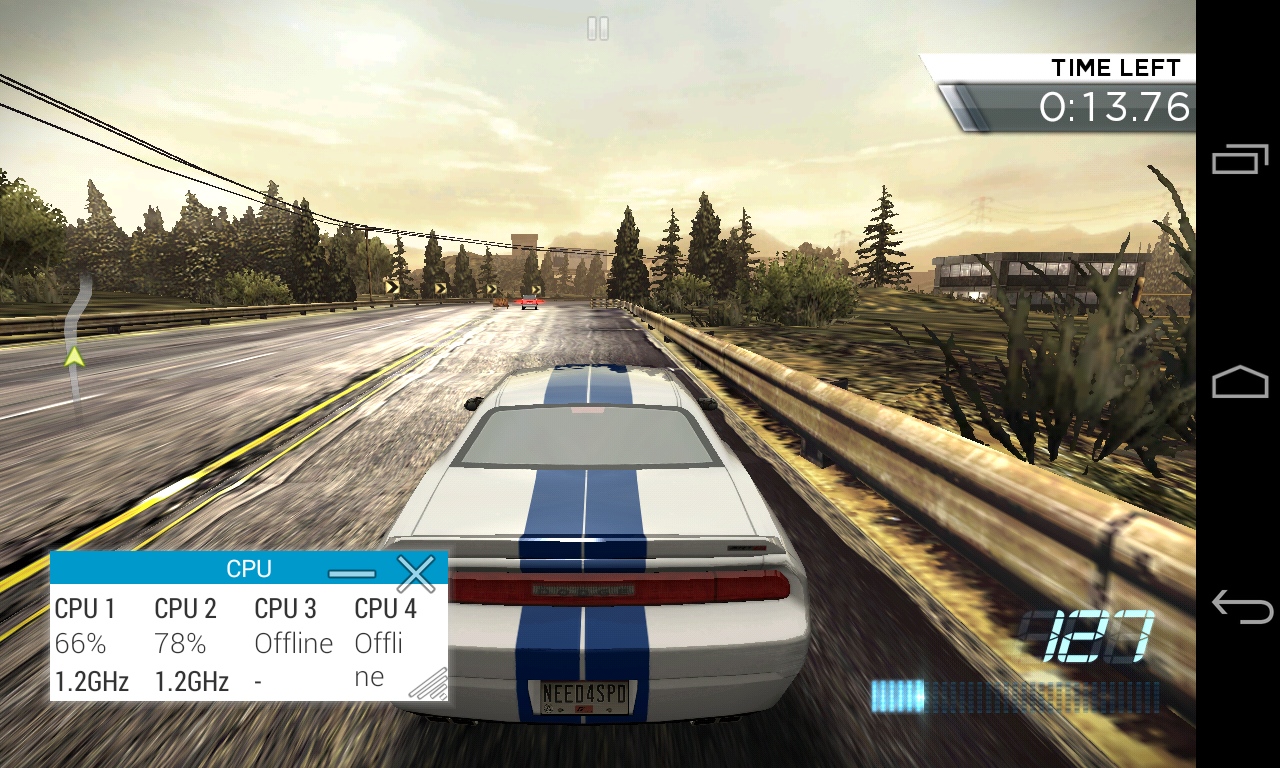
great summary. Yeah, apple is holding off on lengthening their cores until 14nm which likely(?) should hit next year. 14nm should allow them to lengthen the pipeline and hit higher clock speeds while not running into a major wattage or thermal issue.The biggest thing is that most of these 2+ GHz Krait designs are pushing past 4W and the typical phone chassis has trouble dumping that much heat. You can't really let the chip go all out on sustained multitasked workloads because it gets thermally limited within 5-10 minutes. Like take this from the Nexus 4. It's a screenshot of an N4 running NFS:MW after 5 minutes.
It's already scaled back to 2 cores running at 1.2GHz after starting at 1.5GHz!
Apple went really wide on the A7/A8 to improve single threaded performance significantly compared to the stock A53/A57 designs. Like ridiculously wide. But Apple also control the entire toolchain, write their own APIs, write their own god damned compiler. So the end result is that they can wring out every last bit of it that they can and it shows. Physics performance sucks because it only has two cores but web browsing benchmarks are stellar.
but i've heard constantly over the last week that iPhone 6 has the specs of a 2012 Android phone, yet the iPhone 6 beats these Android phones pretty handily.
Therefore, I presume the Android phones listed in the charts much be from 2012 or earlier
why are Toms Hardware benchmarks for ipHone 6 and Plus so different than Anandtech?
Why does Anandtech result show iPhone 6 plus have a much lower Manhattan benchmark score but Toms hardware has it as equal?
Holy shit that's bad. So in that case falling back to less cores at even lower speeds compounds the issue.
Apple went really wide on the A7/A8 to improve single threaded performance significantly compared to the stock A53/A57 designs. Like ridiculously wide. But Apple also control the entire toolchain, write their own APIs, write their own god damned compiler. So the end result is that they can wring out every last bit of it that they can and it shows. Physics performance sucks because it only has two cores but web browsing benchmarks are stellar.
Most people consider Apple a hardware company, but in reality they have a really, really, really good (and versatile) software foundation to build on. (Something they were sorely lacking in the '90s.)
Endless bitching about the UI aside, it's the stuff people don't see that they forget about.
It's not that terrible because most games don't really tax the CPU as much as you would think. But you can gain 20-50% in benchmarks just by telling the SoC to ignore thermal limitations while the benchmark is going.
*cough*Like Samsung have done in the past*cough*
this is also the case with people upgrading from 7 to 8 and people say, whats the change? I dont see any changes, not realising that in reality iOS 8 is a bigger change than iOS 6 to iOS 7 because it completely changes the layer underneath the UI

The biggest thing is that most of these 2+ GHz Krait designs are pushing past 4W and the typical phone chassis has trouble dumping that much heat. You can't really let the chip go all out on sustained multitasked workloads because it gets thermally limited within 5-10 minutes. Like take this from the Nexus 4. It's a screenshot of an N4 running NFS:MW after 5 minutes.
It's already scaled back to 2 cores running at 1.2GHz after starting at 1.5GHz!
Apple went really wide on the A7/A8 to improve single threaded performance significantly compared to the stock A53/A57 designs. Like ridiculously wide. But Apple also control the entire toolchain, write their own APIs, write their own god damned compiler. So the end result is that they can wring out every last bit of it that they can and it shows. Physics performance sucks because it only has two cores but web browsing benchmarks are stellar.

My iPhone 5 lasts about 3-4 hours on a good day with normal use. I qualify for the battery replacement program. Just have to drive over 100 miles to an Apple Store which sucks. My 5 had great battery life in the beginning too. Hopefully they learned their lesson this go around.
Weird not to include the Xperia Z3c or Z3, which shits on everything battery life wise.
Great optimization though by Apple.
On that note, I thought it was really interesting - and telling - that Apple called specific attention to this during the iPhone 6 announcement. They made a point of showing how the A8 can run at full blast with no throttling for a much longer length of time than the A7 or most other phones:
I'm sure Anandtech will do their own tests, but Apple basically implied the A8 will go for twenty minutes at full load without throttling, which is absolutely crazy in the smartphone world.
On that note, I thought it was really interesting - and telling - that Apple called specific attention to this during the iPhone 6 announcement. They made a point of showing how the A8 can run at full blast with no throttling for a much longer length of time than the A7 or most other phones:
I'm sure Anandtech will do their own tests, but Apple basically implied the A8 can go for up to twenty minutes at full load without throttling, which is absolutely crazy in the smartphone world.
It drives home the point that Apple being in control of both hardware and software is what allows it to stay in the game. I get the feeling that Android is the weak link for all those other phones. No point having all that power under the hood if the OS itself is wasteful.
The geekbench tests also show a similar pattern to the intel vs amd divide. More cores in the competition but slower singled threaded performance and everything suffers because of this design.
Theres no way I can be without a phone for that long. Unless they just send me a complete phone replacement and I mail the old phone back. How do you even go about that. The site only mentions taking your phone in person to a store.Dude, mail the phone in to them. I think they might even send you a box for it
It has nothing to do with the OS, and more to do with the methodology behind the processors.
Apple's CPUs have huge single core performance, but the caveat is that have a low upper performance limit. The chip has to basically be re-engineered every year to get more processor speed out of it. It is similar to the Wii U CPU in that regard, where it has huge performance for it's perceived specs, but is basically useless for scale. nVidia and Qualcomm build for scale so that they do not have to re-engineer their process too often. It is much easier and cheaper to add cores than it is to bump the frequency in a short pipeline. It has absolutely nothing in common with the Intel vs AMD debate. Intel's designs are not held back by limits, they are held back because they are obliterating the competition and have nothing to gain by extending that gap.
Nope. 2016 at the earliest unless apple goes Intel for the 6S, which is highly unlikely.great summary. Yeah, apple is holding off on lengthening their cores until 14nm which likely(?) should hit next year. 14nm should allow them to lengthen the pipeline and hit higher clock speeds while not running into a major wattage or thermal issue.
The designs of Apple's CPUs should not be underestimated.. and bringing Anand onboard was likely only done to strengthen that position. Next year's CPUs (provided that's when they'll go to 14nm) should be pretty insane.
Nope. 2016 at the earliest unless apple goes Intel for the 6S, which is highly unlikely.
All iphones batteries start out strong, then quickly degrade in the following months. My 5s had amazing battery life too, now I can barely keep it on. Maybe I'm just charging them wrong, but the same thing happened to my 5, 4s, 4 etc.
Here's hoping the 6 Plus's battery is easily replaceable.
This is much more realistic. Especially regarding my own experience with my iPhone 5.
This is much more realistic. Especially regarding my own experience with my iPhone 5.
Man Z3 is a beast. Sony is doing a really bad job in promoting this device.
Yes, the A7, despite being a year old, can still challenge today's SoCs.So what I'm getting is that my 5S is actually still pretty competitive
Yes, the A7, despite being a year old, can still challenge today's SoCs.
This is much more realistic. Especially regarding my own experience with my iPhone 5.
Dude, mail the phone in to them. I think they might even send you a box for it.
Aren't Sony's phones basically irrelevant from a sales standpoint? Guessing that's why they weren't included.
but i've heard constantly over the last week that iPhone 6 has the specs of a 2012 Android phone, yet the iPhone 6 beats these Android phones pretty handily.
Therefore, I presume the Android phones listed in the charts much be from 2012 or earlier
The fuck does sales have to do with benchmarks, which is what this thread is about?
You iPhone dudes are killing me right now. If no rebuttal or legitimate comment to make, then SALES SALES SALES SALES
Damn, Huwei and Z3C are beasts on battery life.
The Z3C hasn't been finished re-testing yet. That's the Xperia Z3 result.
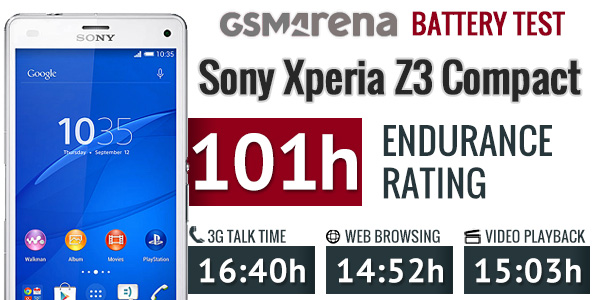
I was thinking that these tests have to be bullshit though because in the comments section, people were mentioning that the first time about Xperia Z3C clocked in at 14 hours and 44 mins.
But then I remembered what GSMarena tested just for the Wifi browsing portion:
The fuck does sales have to do with benchmarks, which is what this thread is about?
You iPhone dudes are killing me right now. If no rebuttal or legitimate comment to make, then SALES SALES SALES SALES
Damn, Huwei and Z3C are beasts on battery life.