No the phone call to make what became the 32X came from Sega Japan at 1st. But when it became clear not only was the Jaguar was a a dud but also the Saturn would make its date of Winter 1994 thats when SEGA America should have dropped the 32X and the Mega Drive and moved all its 1st party to Saturn and just leave 3rd parties produce software for the Mega Drive.
Yeah there's seemingly enough evidence to show the general idea of another Genesis add-on probably came from the SoJ side, though also, SoA could've pushed back on it a bit more if they wanted. They might've been worried about losing autonomy though, even though that ended up happening anyway (and that's well before SoJ side got a look at SoA's financial situation).
Atari's marketing hype must've really scared off SEGA, but I guess the 3DO also had some impact there, even tho it was lessened once the price was revealed. On the whole tho, I generally agree that SoA should not have pursued with the 32X. IMO a better idea would've been to release a cost-reduced Genesis/CD combo unit for $199 by end of '94. SoJ were already having a smaller team work on the CDX; they could've just taken that idea but pursued the lower-end side of the market.
By '94 the Sega CD had a decent library, and a new cheaper combo unit could've galvanized a reason to do more translations of Japan-only games to the American market, or make more CD-quality arranged OSTs for Genesis games to spur on additional game software sales. Let the West have a combo Genesis/CD unit for '94 and have Saturn release in Japan.
I would have gone for the Jupiter idea myself, if SEGA America was so worried over the price, but even then buy the time you buy a few games you lose out due to the high price of carts, but at least with the Jupiter plan, all the R&D and development tools could be shared and users had to the option to add a CD-Drive latter on. I would have no doubt bought the cart based versions of the likes of Die Hard Arcade to cut out the loading times too
This is where I will have to differ a bit. Like you said, Jupiter would have eventually lost out due to cart prices, tho they could've probably gotten the Saturn internals in there for $199 - $249 to undercut PlayStation.
Honestly, the best move for Saturn all together that gen would've been removing the 68000 CPU (since Saturn lacked BC anyway, it was a waste) and have the SH1 handle the CD-ROM drive accesses
AND audio processing for the Yamaha DSP. Remove the cartridge port; it was neat for a few upgrades but literally only a handful of games ever used RAM or ROM carts, the pinout was expensive and the Netlink went nowhere. They could've replaced it with a cheaper expansion-type port. They probably could've also gone with a cheaper 1x CD-ROM drive too while at it; they already had a 512 KB CD-ROM buffer; just increase the memory's clock a bit if needed and 1x drive would've been suitable and a lot cheaper (in exchange for what? Maybe a couple extra seconds of loading, big deal).
But what the Saturn really needed was a more robust BIOS to handle management of the two SH2s and some form of virtualized cache coherency. Make it a 1 MB high-speed BIOS chip and that right there would've simplified a lot of the Saturn's development difficulties. Add some pre-configured sine/cosine 3D function tables to the BIOS as well and that would've supplemented the SGL libraries (and had better support from devs) to close a big chunk of the gap between Saturn and PS1 when it came to real-world 3D performance. It wouldn't have addressed all of the problems (devs still had to manage what to send to which SH2, the SH2s still would have to share the same system bus, VDP1 would still have its quirks etc.) but it would've made Saturn a lot more competitive and negated the need to even worry about a 32X in the first place.
You could see in it various magazine game reviews, gaming shows and just with your own mates or calling into the game shop, we were getting bored with the same left to right scrolling 2D games and wanted something new and to move on
Well I mean, the Saturn did offer games beyond that even at launch. The problem is just that SEGA wanted a rush to market with 32X which was half-assed, and that distracted them from optimizing the Saturn in some cheap & very feasible ways to ensure a healthier market presence long-term. The things I suggested above could have all been done even after the late redesign began in very late '93/early '94.
But, SEGA of Japan got too scared over theoretical PlayStation specs and lost their composure.
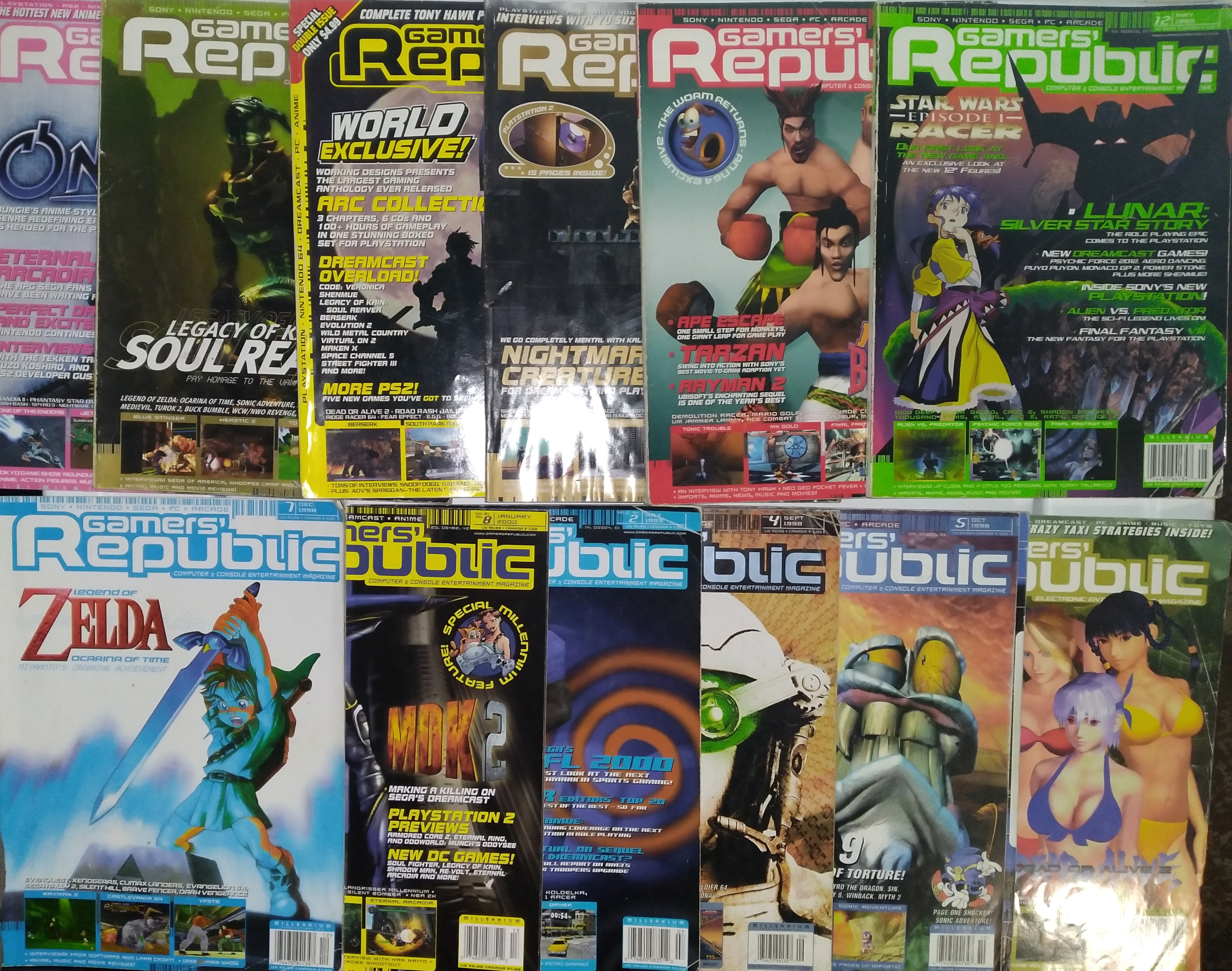
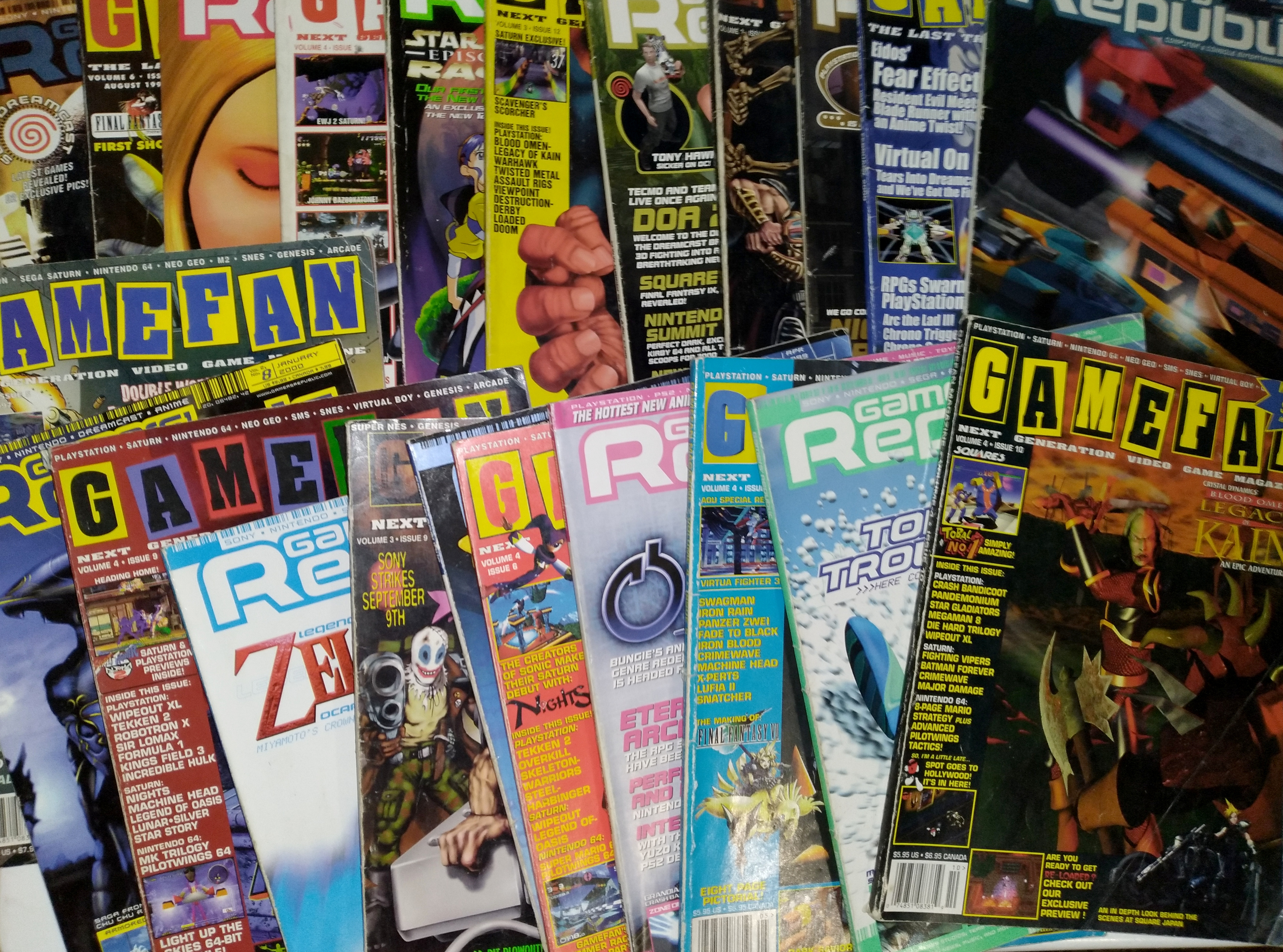
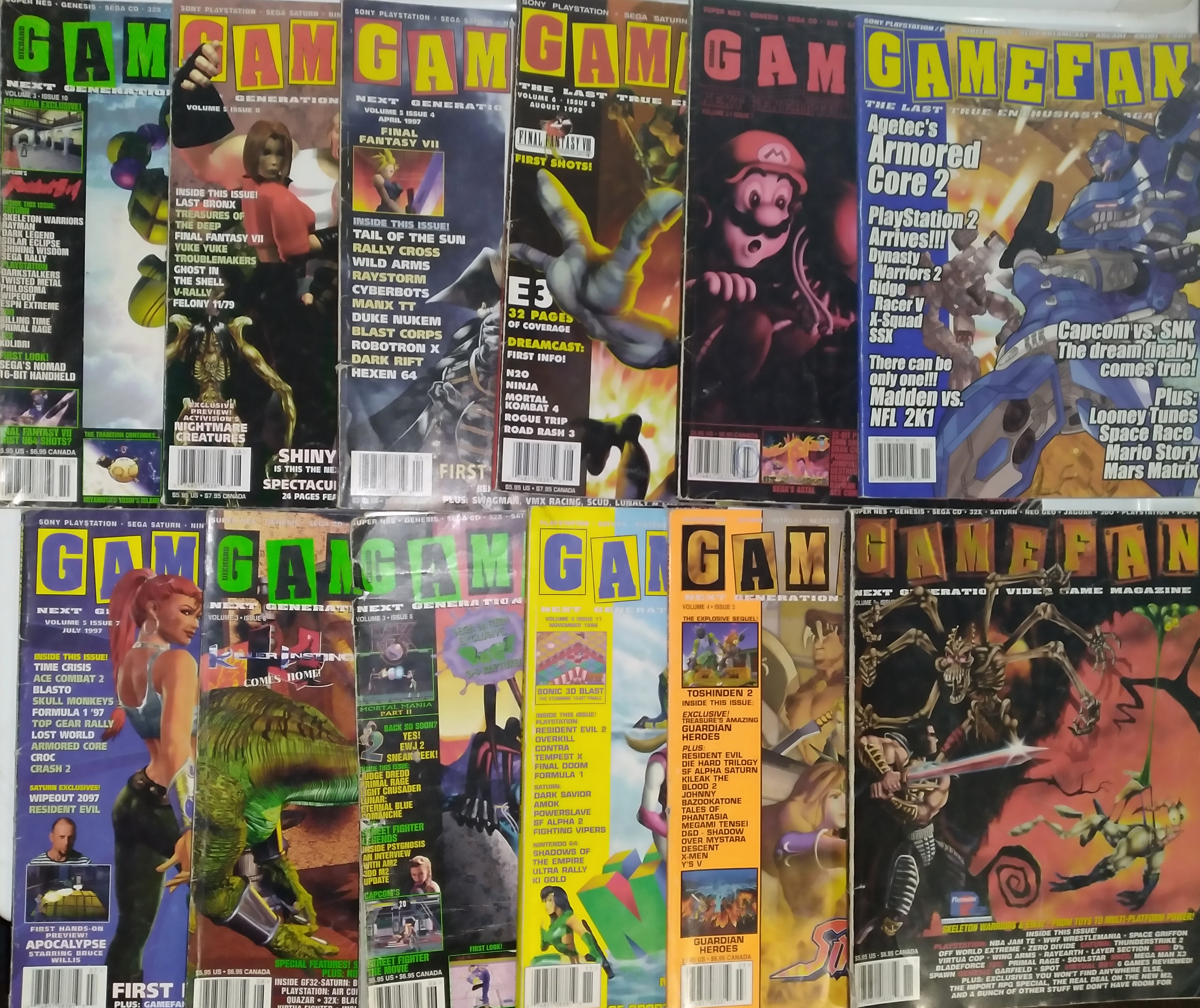
It wasn't Resident Evil 1.5 that was leaked exactly. It was a nearly complete copy of Resident Evil 2 that The Enforcer (Andrew Cockburn) brought home to do a preview on, and apparently a room mate or a friend or some one like that, who was notorious within various pirating circles got his hands on the disc and the next thing that happened was that it ended up in the Chinese black market around the time the Game Fan issue went to magazines stands (and it is the Quest 64 cover, which I oddly do not have, because my subscription was really messed up and I was not getting issues like I should have) .
That nearly complete RE2 pre-release contained all sorts of files and data from the cancelled RE1.5 that wasn't purged from that particular build of the game. But it was a nearly complete 'Leon and Claire' build. But yeah, it basically destroyed Andrew Cockburn's career as a games journalist/ reviewer.
Oh, so it was his roommate who did it? That makes a bit more sense. And I guess it'd make sense for a near-complete preview build of RE2 to have a bunch of RE 1.5 assets & code still stored away on it, since that isn't a version that's intended to be mastered and sent for pressing. With projects that size I guess you'd normally wait until work is complete before cleaning up older data so only the finalized stuff remains.
Sucks how it destroyed Andrew's career though, given it wasn't really his fault. I heard Capcom actually pressed charges against him, no? Did he ever clarify it was his roommate who did it? I'm trying to recall details from a (very long, but very good) RE 1.5 documentary I saw on Youtube many months back, and it went into a RE fan circle who were obsessed with obtaining that particular disc and building a complete version of 1.5 out of it.
The Game Fan as a whole was an insane magazine. From people doing acid in the editorial room, to Terry Wolfinger bring in firearms, and the general insanity around various personalities. Nick Rox and his crazy rants over blue shadows in Street Fighter Alpha. That was part of the joy of reading that magazine. It had a level of insanity to it that very few other gaming magazines had. Even when ECM took over the magazine, things were a total gong show.
I'd of loved to have been there to see all that crazy shit play out in person. Man, gaming journalism back then was just something else; some may call it "unprofessional" compared to today (while ignoring outlets like Next Generation & Edge also existed and I assume had none of those crazy shenanigans going on like GameFan), but it also had a
lot of genuine passion for the medium & soul.
You could tell reviewers and such back then actually cared about gaming for gaming's sake and were real gamers, and just had fun & enthusiasm for the industry & hobby. After 2009, I'd say that gradually started dying off for a multitude of reasons (pretentious art & literature/Hollywood types pushing into the industry, political activists getting into the industry, large corporate astroturfing (i.e Microsoft, etc.) buying off opinions to push FUD and puff pieces among mainstream outlets etc.), and I don't even wanna talk about the state it's in today.
Scott Bayless, Marty Franz and the late Joe Miller all said the phone call came from SOJ to make a counter to the Jag. That said SOJ was always looking at a 32-bit Mega Drive, I remember reading about the GigaDrive before the Mega Drive had even launched in the UK. I would imagine the Gigia was a going to be a counter to the PC Eng Super Grafx
IIRC, wasn't GigaDrive always planned as a direct successor to the Genesis/MegaDrive? I don't know why SEGA'd design it as a counter to the SuperGraphX, when that system failed almost immediately shortly after it's launch, and was designed to bring PC-Engine more up to par with certain features of MegaDrive & then-upcoming SNES.
And from what I'm to understand, GigaDrive was initially started in early 1992 design-wise; by then SEGA would have been finishing up and preparing to release the MEGA CD/SEGA CD, so they already knew CD-ROM was going to be their future in the home market. I think the original plan for GigaDrive was it to be CD-based but also have backwards compatibility with Genesis through the cartridge slot, but somewhere along the way back compat was dropped (probably in reaction to MegaDrive's poor sales in Japan) and the cart got changed into a high-speed type of expansion slot instead.




 ). They (SoJ) never "really" supported 32X at all, I mean it came out in Japan the same day as the Saturn!