

-
Hey Guest. Check out your NeoGAF Wrapped 2025 results here!
You are using an out of date browser. It may not display this or other websites correctly.
You should upgrade or use an alternative browser.
You should upgrade or use an alternative browser.
Books that are good deconstructions of genres, tropes, etc.
- Thread starter Slayven
- Start date
- Status
- Not open for further replies.
Spring Drive
Banned
Waiting for Godot
Peter S Beagle's The Last Unicorn
Lovely little spoof on fairy tales, though it does much more than that, too.
Lovely little spoof on fairy tales, though it does much more than that, too.
"I am a hero. It is a trade, no more, like weaving or brewing, and like them it has its own tricks and knacks and small arts. There are ways of perceiving witches, and of knowing poison streams; there are certain weak spots that all dragons have, and certain riddles that hooded strangers tend to set you. But the true secret of being a hero lies in knowing the order of things. The swineherd cannot already be wed to the princess when he embarks on his adventures, nor can the boy knock at the witch's door when she is away on vacation. The wicked uncle cannot be found out and foiled before he does something wicked. Things must happen when it is time for them to happen. Quests may not simply be abandoned; prophecies may not be left to rot like unpicked fruit; unicorns may go unrescued for a long time, but not forever. The happy ending cannot come in the middle of the story."
CapitalismSucks DonkeyBalls
Banned
Tough Guys Don't Dance by Norman Mailer
A quick cash-in of a novel that uses every trope of the detective/thriller genre to tell it's story. Maybe not as much a meta deconstruction of the genre, but one that has no qualms laying it's shit out on the table.
Considered his worst book, but I actually thoroughly enjoyed it.
A quick cash-in of a novel that uses every trope of the detective/thriller genre to tell it's story. Maybe not as much a meta deconstruction of the genre, but one that has no qualms laying it's shit out on the table.
Considered his worst book, but I actually thoroughly enjoyed it.
Captain_Spanky
Member

The First Law trilogy.
Sweet, my friend just loaned me that!
drtomoe123
Member

Haruki Murakami's Hard Boiled Wonderland and the End of the World
Solemn_In_Berlin
Member
- James Joyce: A Portrait of the Artist as a Young Man, Ulysses, Finnegans Wake
- Terry Pratchet's oeuvre
- Tristram Shandy
- One Hundred Years of Solitude
- Madame Bovary
- Nights at the Circus
- Kafka on the Shore
- The New York Trilogy
- House of Leaves
- If on a winter's night a traveler
- The Marriage Plot
- Terry Pratchet's oeuvre
- Tristram Shandy
- One Hundred Years of Solitude
- Madame Bovary
- Nights at the Circus
- Kafka on the Shore
- The New York Trilogy
- House of Leaves
- If on a winter's night a traveler
- The Marriage Plot
NotTheGuyYouKill
Member
House of Leaves
Morrigan Stark
Arrogant Smirk
My first thought, haha. First Law kicks ass, and later Abercrombie books are just as good if not even better.
The First Law trilogy.
A Fish Aficionado
I am going to make it through this year if it kills me
Blood Meridian by Cormac McCarthy.
No Country for Old Men as well, but I think the film works better.
No Country for Old Men as well, but I think the film works better.
radios shipping overview
Member
What is the definition of "deconstruction" as used in the OP?
Whiteblade999
Member
Malazan: Book of the Fallen. It takes genre tropes and consistently turns them on their head. Its also kind of an amazing read I recommend any chance I get.
What is the definition of "deconstruction" as used in the OP?
Taking apart an idea and premise and examine it. Like in Red Shirts, they deconstruct the idea of what if a Captain really lose a crew member per mission.
House of Leaves
That one, highly recommended.
War Peaceman
You're a big guy.
I feel like this thread is pointless if people don't discuss how these books de-construct xyz. I've read several of the books discussed and just don't see it.
Teriyaki Blues
Member
I get a kick out of this kind of thing, and a lot of good ones have been mentioned.
YA, but Enchanted Forest Chronicles by Patricia C. Wrede is good at picking fun at the silly side of it, and Diana Wynne Jones was pretty good at lampshading the ridiculousness of Fantasy tropes in many of her novels as well, the parody work Dark Lord of Derkholm in particular.
YA, but Enchanted Forest Chronicles by Patricia C. Wrede is good at picking fun at the silly side of it, and Diana Wynne Jones was pretty good at lampshading the ridiculousness of Fantasy tropes in many of her novels as well, the parody work Dark Lord of Derkholm in particular.
Haruki Murakami's Hard Boiled Wonderland and the End of the World
I love this book, but what do you think it deconstructs?
The only ones I can think of and accept as deconstructions right away would be House of Leaves and the Terry Pratchett books.
Nuklear Age is a good deconstruction of superhero novels/comics.
It's written by the guy behind Atomic Robo and 8-Bit Theater, and he wrote it over the course of his teenage and early adult life, and the most fascinating thing is you can actually see his writing style change as the story progresses and the author ages.
It basically goes through the different ages of comic books, starting as an earnest, silly romp with cliches and caricatures, and basically ends with an existential examination of nihilism. The story is also told from the perspective of the sidekick of the titular hero.
It's written by the guy behind Atomic Robo and 8-Bit Theater, and he wrote it over the course of his teenage and early adult life, and the most fascinating thing is you can actually see his writing style change as the story progresses and the author ages.
It basically goes through the different ages of comic books, starting as an earnest, silly romp with cliches and caricatures, and basically ends with an existential examination of nihilism. The story is also told from the perspective of the sidekick of the titular hero.
Messofanego
Banned
I haven't read any of these books and I'd like the explanation of each, might make want to read them even more. Thanks to Slayven and some others for doing the latter.I feel like this thread is pointless if people don't discuss how these books de-construct xyz. I've read several of the books discussed and just don't see it.
The First Law trilogy.
This was honestly my first thought.

Soon I will be invincible by Austin Grossman. Deconstruction of comic books. Uses alternating superhero/supervillan viewpoint chapters to great effect.
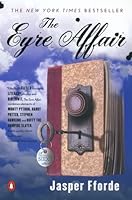
Tuesday Next series by Jasper Fforde. Deconstructs literature. The main character solves crimes committed in "Book World", a place where the characters in books actually act out the story. The world is literally deconstructed (words take on their meaning). I especially recommended the first book, the Eyre Affair, the rest are good but some miss.
The First Law trilogy.
I liked these books, I just wish they didn't spend SO much time on the torturer character. Every other sentence is about how crippled he is, we get it.
Solemn_In_Berlin
Member
Alright, then.
- A Portrait of the Artist as a Young Man - Deconstructs the perceived essence of the Bildungsroman/Kulsterroman. Joyce does away with the binary of immaturity/maturity or child/adult to present Stephen as not simply growing up. So we see that he is of multitudes. He is wise AND foolish, childlike AND childish, naive AND mature. Coming-of-age, after all, is not simply growing old or growing jaded.
- Ulysses - A deconstruction in so many ways. It takes place in one single day. It employs a myriad of styles. People are as people are (in Shakespeare, characters have their monologues. Characters here have them, too, only they pee, pick their nose, get distracted by noise, etc. simultaneously). Then we have the Homeric correspondence. Joyce makes use of the Odyssey to invest in his very ordinary people a very extraordinary actuality. So while Leopold Bloom isn't the hero Odysseus, we wonder if Odysseus was capable of the heroism of Bloom.
- Finnegans Wake - You clearly see it in the form itself. Here, Joyce plays not only with narrative but also with the very idea of language itself. And he just doesn't deconstruct language; he obliterates it and starts anew.
- Terry Pratchet's oeuvre - Accounted for.
- Tristram Shandy - Deconstructs the very idea of a novel. It consciously addresses the reader, digresses a lot (and digresses on his own narrative technique, no less), and spends most of its time being born. It's the finest piece of metafiction I've ever read.
- One Hundred Years of Solitude - I mean, it's magic realism so it's self-explanatory. Derrida wanted to destabilize boundaries, which is what magic realism does (destabilizes reality/fiction, natural/supernatural, West/Orient, past/present, etc.).
- Madame Bovary - Deconstructs the romantic novel and perfect womanhood by having its nineteenth-century middle-class woman protagonist who pulls a Quixote and gets intoxicated with the idea of order and beauty, luxury, peace, and pleasure after reading a lot of romance novels.
- Nights at the Circus - Deconstructs patriarchal authority and identity through the carnivalesque and the magic realist.
- Kafka on the Shore - In Murakami's own words, "Kafka on the Shore contains several riddles, but there aren't any solutions provided. Instead, several of these riddles combine, and through their interaction the possibility of a solution takes shape. And the form this solution takes will be different for each reader. To put it another way, the riddles function as part of the solution. It's hard to explain, but that's the kind of novel I set out to write."
- The New York Trilogy - The metaphysical detective story. Unlike Christie or Doyle, Auster isn't concerned with the "whodunnit?" Instead, he's concerned about questions that just leads to more questions: on identity, on being, on truth (or the lack thereof). Thus, this isn't a mystery about who did it. Rather, it's a mystery about not having answers. It's a mystery about mysteries.
- House of Leaves - Accounted for.
- If on a winter's night a traveler - The narrator relates a different number of stories only to drop them once he's on the verge of getting hooked. That's just part of it. I'll quote Wikipedia since I can't be bothered to do it myself.
- The Marriage Plot - A deconstruction of the love triangle as well as the marriage plot, that is to say any book which is about getting its protagonist married. Three post-grads feel threatened by the real world and it forces them to reconsider what they know or what they have learned about love and romance.
- A Portrait of the Artist as a Young Man - Deconstructs the perceived essence of the Bildungsroman/Kulsterroman. Joyce does away with the binary of immaturity/maturity or child/adult to present Stephen as not simply growing up. So we see that he is of multitudes. He is wise AND foolish, childlike AND childish, naive AND mature. Coming-of-age, after all, is not simply growing old or growing jaded.
- Ulysses - A deconstruction in so many ways. It takes place in one single day. It employs a myriad of styles. People are as people are (in Shakespeare, characters have their monologues. Characters here have them, too, only they pee, pick their nose, get distracted by noise, etc. simultaneously). Then we have the Homeric correspondence. Joyce makes use of the Odyssey to invest in his very ordinary people a very extraordinary actuality. So while Leopold Bloom isn't the hero Odysseus, we wonder if Odysseus was capable of the heroism of Bloom.
- Finnegans Wake - You clearly see it in the form itself. Here, Joyce plays not only with narrative but also with the very idea of language itself. And he just doesn't deconstruct language; he obliterates it and starts anew.
- Terry Pratchet's oeuvre - Accounted for.
- Tristram Shandy - Deconstructs the very idea of a novel. It consciously addresses the reader, digresses a lot (and digresses on his own narrative technique, no less), and spends most of its time being born. It's the finest piece of metafiction I've ever read.
- One Hundred Years of Solitude - I mean, it's magic realism so it's self-explanatory. Derrida wanted to destabilize boundaries, which is what magic realism does (destabilizes reality/fiction, natural/supernatural, West/Orient, past/present, etc.).
- Madame Bovary - Deconstructs the romantic novel and perfect womanhood by having its nineteenth-century middle-class woman protagonist who pulls a Quixote and gets intoxicated with the idea of order and beauty, luxury, peace, and pleasure after reading a lot of romance novels.
- Nights at the Circus - Deconstructs patriarchal authority and identity through the carnivalesque and the magic realist.
- Kafka on the Shore - In Murakami's own words, "Kafka on the Shore contains several riddles, but there aren't any solutions provided. Instead, several of these riddles combine, and through their interaction the possibility of a solution takes shape. And the form this solution takes will be different for each reader. To put it another way, the riddles function as part of the solution. It's hard to explain, but that's the kind of novel I set out to write."
- The New York Trilogy - The metaphysical detective story. Unlike Christie or Doyle, Auster isn't concerned with the "whodunnit?" Instead, he's concerned about questions that just leads to more questions: on identity, on being, on truth (or the lack thereof). Thus, this isn't a mystery about who did it. Rather, it's a mystery about not having answers. It's a mystery about mysteries.
- House of Leaves - Accounted for.
- If on a winter's night a traveler - The narrator relates a different number of stories only to drop them once he's on the verge of getting hooked. That's just part of it. I'll quote Wikipedia since I can't be bothered to do it myself.
The book begins with a chapter on the art and nature of reading, and is subsequently divided into twenty-two passages. The odd-numbered passages and the final passage are narrated in the second person. That is, they concern events purportedly happening to the novel's reader. (Some contain further discussions about whether the man narrated as "you" is the same as the "you" who is actually reading.) These chapters concern the reader's adventures in reading Italo Calvino's novel, If on a winter's night a traveler. Eventually the reader meets a woman named Ludmilla, who is also addressed in her own chapter, separately, and also in the second person.
Alternating between second-person narrative chapters of this story are the remaining (even) passages, each of which is a first chapter in ten different novels, of widely varying style, genre, and subject-matter. All are broken off, for various reasons explained in the interspersed passages, most of them at some moment of plot climax.
The second-person narrative passages develop into a fairly cohesive novel that puts its two protagonists on the track of an international book-fraud conspiracy, a mischievous translator, a reclusive novelist, a collapsing publishing house, and several repressive governments.
The chapters which are the first chapters of different books all push the narrative chapters along. Themes which are introduced in each of the first chapters will then exist in succeeding narrative chapters, such as after reading the first chapter of a detective novel, then the narrative story takes on a few common detective-style themes. There are also phrases and descriptions which will be eerily similar between the narrative and the new stories.
The ending exposes a hidden element to the entire book, where the actual first-chapter titles (which are the titles of the books that the reader is trying to read) make up a single coherent sentence, which would make a rather interesting start for a book.
The theme of a writer's objectivity appears also in Calvino's novel Mr. Palomar, which explores if absolute objectivity is possible, or even agreeable. Other themes include the subjectivity of meaning (associated with post-structuralism), the relationship between fiction and life, what makes an ideal reader and author, and authorial originality.
- The Marriage Plot - A deconstruction of the love triangle as well as the marriage plot, that is to say any book which is about getting its protagonist married. Three post-grads feel threatened by the real world and it forces them to reconsider what they know or what they have learned about love and romance.

WaffleTaco
Wants to outlaw technological innovation.
Game of Thrones/ASOIAF
Watchmen does this for comic books if you don't mind graphic novels.
This is what I came here to say. Watchmen is the definition of this.
The Awesomest
Member
Don Quixote
A deconstruction of stories about knights and castles and all that
A deconstruction of stories about knights and castles and all that
crooked spin
Member
- The New York Trilogy - The metaphysical detective story. Unlike Christie or Doyle, Auster isn't concerned with the "whodunnit?" Instead, he's concerned about questions that just leads to more questions: on identity, on being, on truth (or the lack thereof). Thus, this isn't a mystery about who did it. Rather, it's a mystery about not having answers. It's a mystery about mysteries.
Came to post ^
TVTropes has you covered. Also check all the related subtropes.
teruterubozu
Member
The Bible
A dick deity becomes somewhat compassionate by the second half, but still kinda cranky.
A dick deity becomes somewhat compassionate by the second half, but still kinda cranky.

Lightning Count
Member
America by Judge Dredd, by framing the story of a terror group against the backdrop of ultra right wing fascist regime, John Wagner tips the genre on it's head.
Game of Thrones/ASOIAF
I don't think this is very accurate. I mean I enjoyed the books but I don't really think of them as deconstructions of the fantasy genre. They're just unfantastical fantasy fiction, if anything its almost a fantasy version of the War of Roses.
TVTropes says this (First few book spoilers):I don't think this is very accurate. I mean I enjoyed the books but I don't really think of them as deconstructions of the fantasy genre. They're just unfantastical fantasy fiction, if anything its almost a fantasy version of the War of Roses.
George R.R. Martin's A Song of Ice and Fire is generally seen as being a deconstruction on romanticized, medievalesque societies in fantasy. Martin himself made a comment along the lines of "If a real-life stable-boy talked back to the Princess, he was likely to lose a tongue in the process." He's also fond of developing characters that fit many of the fantasy archetypes, then showing how difficult it would really be for them under more realistic circumstances. Eddard Stark is a premier example of the "noble lord" type of character, being honorable, just, and sympathetic, a good father and skilled leader in battle, but his positive qualities spell disaster for himself and his family and later, the entire kingdom of the North. He also deconstructs the typical Evil Overlord, such as the Lannisters and Boltons, on how being excessively cruel is counter productive, and that they would not last long for being Stupid Evil. Being the most hated houses in the realms means everyone is aiming for their heads, which includes the allies they need to survive.
I liked these books, I just wish they didn't spend SO much time on the torturer character. Every other sentence is about how crippled he is, we get it.
Pffft, get out of here. Glokta was my favorite character.
Vincent Alexander
Member
Malazan Book of the Fallen
The series plays with, deconstructs and subverts many common fantasy tropes, but my favorite is the 'Sealed Ancient Evil' one.
Big bads that escape millennia-long prisons to wreak havok on the modern world are often unceremoniously worked.
My friend loves these books and lent me the first book. I couldn't get into it, simply because there were way too many characters, and only a few that I actually enjoyed. It frustrated me when I went from following a character I loved to 2-3 chapters of characters that I found boring or completely un-interesting. Maybe someday I'll give it another shot.Malazan: Book of the Fallen. It takes genre tropes and consistently turns them on their head. Its also kind of an amazing read I recommend any chance I get.
Morrigan Stark
Arrogant Smirk
Shush youI liked these books, I just wish they didn't spend SO much time on the torturer character. Every other sentence is about how crippled he is, we get it.
Damn rightPffft, get out of here. Glokta was my favorite character.
TVTropes says this (First few book spoilers):
I guess I can see that but then again I have read tons of fantasy and sci fi that have done those ideas he mentions in your quote a dozen time over so it doesn't come off as much as a deconstruction of the fantasy genre but more of just a harder more realistic fantasy which there is an abundance of. Like I can't even remember the number of books where the cruel shitty king gets nothing done and shows that to be very counter productive or the noble lord has gets his despite being what everyone loves in a hero of these kind of stories.
Well, it's the classic deconstruction-reconstruction combo.I guess I can see that but then again I have read tons of fantasy and sci fi that have done those ideas he mentions in your quote a dozen time over so it doesn't come off as much as a deconstruction of the fantasy genre but more of just a harder more realistic fantasy which there is an abundance of. Like I can't even remember the number of books where the cruel shitty king gets nothing done and shows that to be very counter productive or the noble lord has gets his despite being what everyone loves in a hero of these kind of stories.
Before clicking on thread: "REDSHIRTS! It's the king of deconstructions"
Oh.
Like Redshirts, that gets meta as fuck about Star Trek.

Oh.
Wowfunhappy
Member
The ending to one of Brandon Sanderson's Mistborn books is a fantastic riff on a bunch of common Fantasy tropes.
...but to say which one would be a massive spoiler.
<-- Seriously, don't click this if you haven't read/finished the series!
...but to say which one would be a massive spoiler.
Well of Ascension. The prophecies were created by Ruin so that he could break free. Vin was supposed to be selfish and take the power for herself. Her selflessness destroyed everything.
drtomoe123
Member
I love this book, but what do you think it deconstructs?
The only ones I can think of and accept as deconstructions right away would be House of Leaves and the Terry Pratchett books.
The detective novel. The post-modern novel. The brain. Reality. It's a better question to ask what it doesn't deconstruct haha.
WaffleTaco
Wants to outlaw technological innovation.
The entire series is about deconstructing tropes...like I could go into it more, but it would be spoiling it.I don't think this is very accurate. I mean I enjoyed the books but I don't really think of them as deconstructions of the fantasy genre. They're just unfantastical fantasy fiction, if anything its almost a fantasy version of the War of Roses.
- Status
- Not open for further replies.