• Hey Guest. Check out your NeoGAF Wrapped 2025 results here!

But a rushed game is forever bad...

Of course this quote was from a different time. It's still true in a sense though. Patches won't always be available.

To a lot of people it won't matter. If patches are released within about a month of the game, most players will get those benefits and not give it a second thought.

But the patches won't be available immediately or forever. So you have these other groups of people, the ones who play the game many years after release, and the ones who go through the game quickly before a patch has been released (excluding day 1 patches though, those still work for this latter group) that don't benefit from the patches. What's on the disc/cart is still important.
 
It's a generalized saying at this point, like "the early bird catches the worm" (but the second mouse gets the cheese).

First impressions still matter, and ensuring a game is quality at launch definitely saves time, money, and headaches if there's little to fix, instead of a Destiny situation which basically just turned into a post-release development period of patches and fixes.

Games can always eventually become good, but then you also have the risk of whether people will stick around that long. If a game is hyped enough like Destiny or Fallout, they can fall back on years of post-release patches as they got enough sales to warrant it. But a game that doesn't get the sales of those games, that didn't have the hype to elevate its early success, often results in a situation like Evolve or Battleborn, where no matter how many improvements they make, the audience just isn't there.

Marketing hype can make or break a game, for better or worse. Sometimes the hype gets too high and the game disappoints (No Man's Sky, Fable), but I'm sure companies would rather get a game that's disappointing but sold a lot at launch than a game with little hype that falters as retail, because being successful at least affords them the investment to fix their mistakes and work to bring back players.

Best case scenario remains releasing a great, feature-complete game at launch and building from there rather than wasting months if not years getting it back to square one.
 
What about delayed games that never seem to come out? Like Gran Turismo?

How do we categorise those?
 
In addition to some good examples posted already, Diablo 3 had a massive overhaul in pretty much everything but the core combat to get the game in the state that it is today. Not only did it have one of the worst launches ever for an "online" game, but most things centering around difficulty and loot(in a loot game) were extremely player-unfriendly. It was so bad that Jay Wilsoning something became a meme/insult. The game was slowly fixed over time, which culminated with Loot 2.0 and the RoS launch shaping what the game is today.


It wasn't rushed, but another game that had the Destiny effect of becoming much more than it was (and directly influenced Destiny's expansion) would be Diablo 3, and how they handled Reaper of Souls.

I think in today's era of patches adding on entire systems, it's a little less true that a rushed game is forever bad, but I do think that you have to build the game on a solid foundation. With D3 as an example, there were a lot of bad systems at play, but the core moment to moment gameplay was fantastic. It was visceral, it felt powerful, and the systems that were originally panned (skill switching, skill runes) ended up being the best parts of the game. RoS just built on all of that, and it's a much better game now for it.

Agreed. They took out so many fun Runes and Passives that had interesting use but were broken though, instead of buffing everything around them. Now a lot of the best Runes/Passives are just stat sticks, and that's no fun. To this day there's nothing like Critical Mass, and Nether Tentacles and Living Lightning are worthless, to name a few.
 
Back when console games didn't get patches it meant a lot because you release a buggy/broken/bad game and there isn't much you could do about it but now even terrible games can be fixed either through patches for the bugs or updates that tweak the game into something more fun and polished.

The thing you can't get away from though, is public perception. Like Driveclub had problems at launch and even when those issues were fixed and multiplayer worked right and it got a bunch of free DLC, some people still look at it as that broken game that doesn't work and isn't worth it (not saying anything of how it plays). Like FFXIV 1.0 was pretty much a disaster throughout and even though ARR/HW is great it doesn't erase that 1.0 was a fuck up.

You release a bad game and you will still get shat on and even if you make it better and fix the problems, you still would have released a bad game, it's just you managed to make it better after being told it was bad.
 
Seeing how a game that needs patches is essentially still in development, the statement remains correct. What really changed is that games can now be in the hands of gamers while being months, or sometimes years, away from being "finished".
 
Yeah I think a lot of people don't take this into account when they refer to being able to fix the game with a patch at a later date.

I'll add to that, that the percentage of games that had or will get patches that takes them from bad to good is minimal.

One swallow does not a summer make.
 
Yeah I think a lot of people don't take this into account when they refer to being able to fix the game with a patch at a later date.

For sure BF4 and D3 are outliers. Driveclub has had some of the best post launch support ever(BF4's was also great) and it's ASP is terrible due to the disappointing launch after the year delay.


I'll add to that, that the percentage of games that had or will get patches that takes them from bad to good is minimal.

One swallow does not a summer make.

I think we end up equating light on content(Destiny, Splatoon) with bad sometimes. And I agree.
 
Still shitty from a consumer perspective when they promise fully functioning game off the bat with all the features advertised. Buy a $60 broken game now or wait a year and get it for $10 in the bargain bin when it is 10x better is not a model I'd really like to see us have to adopt as consumers.
 
this was always a bullshit marketing line. fanboys began to cling to it anytime their favorite game got delayed, praying it would turn out better as a result.

in reality, delays usually mean the game is in development hell and in the end the game is still shit lol

and before you attack me of COURSE there are cases where delays help the game. duh.
 
I've never agreed with that picture. Plenty of games end up in development hell and never come out of it better for the extra time invested.

Well, there's a difference between delaying a game for years and delaying it for 6 to 12 months. With some exceptions, delaying a game for years often means there's some serious fundamental problems or that the team has lost sight of the game they're making (these issues often go hand in hand). When a game has been delayed for multiple years that dev team needs to either hit the reset button or scrap the project entirely (or in the case of Eternal Darkness, SK just needed Nintendo to finally light a fire under their ass). That's part of what makes FF15 so interesting to me as Square basically did all the above with that game. Versus 13 died only to be reborn as FF15. It'll be really interesting to see how FF15 turned out and this is coming from someone who isn't really an FF fan.
 
That saying used to mean a lot more in the days when a game couldn't be patched. Now games can have a complete disastrous launch (Driveclub, FFXIV) and still be seen fondly after patching and fixes

Driveclub is an amazing game

I enjoyed Driveclub but didn't it pretty much kill the studio? I know it wound up selling decent, but not initially at the $60 price point, but later to people like me who got it ~1/2 off........
 
Well, there's a difference between delaying a game for years and delaying it for 6 to 12 months. With some exceptions, delaying a game for years often means there's some serious fundamental problems or that the team has lost sight of the game they're making (these issues often go hand in hand). When a game has been delayed for multiple years that dev team needs to either hit the reset button or scrap the project entirely (or in the case of Eternal Darkness, SK just needed Nintendo to finally light a fire under their ass). That's part of what makes FF15 so interesting to me as Square basically did all the above with that game. Versus 13 died only to be reborn as FF15. It'll be really interesting to see how FF15 turned out and this is coming from someone who isn't really an FF fan.

The one thing for ffxv that's had plenty of time to mature and is sounding excellent, is the soundtrack. That's going to be something else. I've genuinely no idea how the game itself is going to come together. Could go either way. It's a unique case for sure.
 
Counterpoint

header.jpg
 
A rushed launch can make an ok game look bad but it cannot make a truly excellent game look bad. Especially today with patches,mods and rereleases.

New Vegas had a terribly launch but it didn't take long for the excellent game design and storyline to shine through the jank.
 
Driveclub and Destiny are both games that got drastically better over time. Battlefield 4 was shaky at launch too, but it eventually became a really good game. Diablo 3 is another one. Those are all off of the top of my head.

Unfortunately there are also games that go in the reverse direction with this.

That statement is really dated, however, and no longer appropriate for a digital world like this one.
 
That was true in the past, but nowadays in the industry where patches aren't even accidental any more but instead a core element, it's different now. You can release a shit game at launch (I wouldn't recommend it, lol), but then patch the crap out of it until it's good. Battlefield 4 comes to mind, when it launched in 2013 it was riddled with bugs and other issues, but for over a year now it's an amazing game. It's just a shame that, speaking with zero experience, this patch culture seems to have made publishers too impatient by just rushing the game out, and then when consumers are angry for the state it shipped, they start patching it.
 
Again, I don't feel like FFXIV is really a good example. That game wasn't fixed solely on post-game patching, it's literally another game. It's like saying Majora's Mask is just a patch fix for Ocarina of Time


Why would you fix something that's not broken

Actually there is a lot of design, names, quest system, areas that are the same as before or changed a bit.
It is not 100% New.
 
Are you thinking of stuff like CTF? That did get added quite a bit later.

Nope! I feel like CTF was different because hey, the original version was just a mod anyways. People were definitely waiting for it but I don't remember if people were pissed about its absence in the same way they were pissed about the original release's issues. My memory is foggy about this period and it's hard digging up internet articles from this era, but my recollection was that Quake 2 literally launched with no dedicated multiplayer maps--that is, if you wanted to play multiplayer, you were playing on single-player maps instead?

Quake 2 was technically rough as well. Netcode issues and poor balancing were two things I remember being issues, but more generally I thought there was a perception that Quake 2 wasn't actually "solid" until 3.20 came out, or at least the so-called "point release" that fixed a ton of stuff. That said, Quake 2's campaign was playable start to finish from what I remember, so perhaps not the same as the stuff that happens nowadays.
 
If patches didn't exist then this would be true.

Doesn't mean it's not bad. Because things like that latest batman get fucking released.
 
The way that I have always looked at that quote is this. There is something to be said to taking the time to have something of quality in the hands of the people. No game when first released will be prefect, there many things that a developer would likely improve or develop if they had more time to do so with. With that said, gaming as gone in the other direction... basically tossing out a game about as fast as possible for others to consume without concern for completeness or stability. And frankly, from my armchair... it is looking to get worse.
The truth is that we have more games out there than had ever been recorded, but many of them are neither polished, completed or stable. Look at the vast dirth in the PC market. Sure you have lots of good stable, completely developed games, but even with services like Steam it becomes rather obvious that you are looking at the tip of the iceberg. Look at Stream GreenLight, that is only a sampling of what it out there and it's vast. And most of it isn't very good. I don't usually hear of good things from that service mostly because of that fact.

As much as the quote seems to be no longer valid, I think that it has some validity. You get only one shot to make an impression with, and as much as you can fix things later with patching, that impression is the only chance you get with a consumer. You don't mess with that. You don't allow the consumer to remotely assume that what they are buying isn't of good quality. If you do that, they (and their money) are lost... maybe forever.

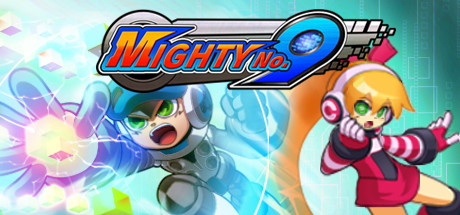
Might No.9 was the result of the creator of Megaman not actually knowing what Megaman fans want. Also, I think he was floored by the amount of money he received for the project and felt he had to do more than he actually needed to.
Not really, I look at Might No. 9 as a very apt example of why "hype" is a very dangerous term now. We wanted a megaman game, at the very least we got that... but expectations with Mighty No. 9 were so high, that I don't think that if it was a quality game (which it very much isn't) would have every sated the frothing desires of some unless it was something like the "Coming of Christ." And Kenji is partly responsible for that for basically saying everything that a Megaman fan wanted to hear.

And then falling short.
 
The perception is forever bad.

My own game launched a bit too early, got terrible reviews. So took all that feedback, worked really hard on improving the game, made a patch with loads of new features to boot.

No one cared. The game was judged on launch and that was it.

Same thing nearly happened to a game I recently helped with, too. It takes a lot of work - and insanely fast - to come back from a wobbly launch.

The guys on that project had to pull 20 hour days to try and correct the couple of mistakes which led to a 10% drop in review feedback within a couple of days of launch. In this case VR was the culprit. Nearly fucked it.
 
0TPD4Kc.jpg


this. miyamoto was talking about pure game design not bugs. you cant redesign the core of a game after release it has to be okay from day one. games like destiny, sfv and drive club played fine at launch, they just lacked the content needed.

Yep. The quote is being taken out of context. It was originally used when talking about why Ocarina of Time had such a long development cycle and kept changing so drastically from the early footage. Specifically, he was talking about the very heavy prototyping process EAD uses to design games. Ocarina of Time first resembled Mario 64, then became a first person adventure game, and then slowly became the game that it is today once they implemented the Z-targeting system.

95rnl5.jpg


oot-beta-aria-not-restored.jpg

It was not referring to "crunch time" polish that is used to iron out bugs and performance in the last few months of development.
 
Miyamoto's quote is more relevant today than it ever was.

We think that because a game is updated or a patch is released that fixes problems with the game that we are safe. But what happens when that patch is no longer available for download? What happens when they take the servers down?

Still rings true.

Games that are broken, but fixed with a patch, are still broken games.
 
It's always been a meaningless quote though. A rushed game isn't bad: a bad game is bad.

Sure, the reason a game could be bad could be because it was rushed but there are tons of rushed and unfinished games that come out and are still great. Vice versa, no amount of delays will save a bad game.
 
Destiny has more content but the story is still god awful, and the gameplay was always amazing.

And the content Destiny had was expansions, that cost a lot for what they provided, not patches.
 
I understand that patching can make a bad game good, but I don't want to go to the store, buy a game, have a miserable experience, and then say "Well, here's hoping they patch it... *flask*"

Miyamoto's statement is still valid.
 
I actually think this still holds true, in a certain way. Someone else said at some other time that the first impression is the one that matters that most. And like you've pointed out, all of the games that start out bad usually retain their bad reputation and harm the developers image. It is true the developer can try to fix it through future updates and patches, but people never forget about the initial launch. Newcomers are really the ones that reap the rewards later on with the fresh restart. Then again, those fixes may never come, even if the infrastructure exists to make it possible. Good examples of this are Destiny and more recently Slain. In the other hand, we have games like No Man's Sky, which I doubt Hello Games will turn into what it promised. But even if they did bring as close as to what we all originally envisioned, would we just forget and forgive? No, our trust in the company would still be damaged and we would be wary of any future release. As we've seen, games like these are an endless source of jokes and butthurt. Heck, there are people still complaining about and bashing on Destiny because of its pathetic state upon release, but imo I think its a damn fine game now (with still a few questionably bad design choices, ie. not matchmaking for raids -_-), but I really think no one can deny that game has come a very long way since release. I do think that this helps in restoring the devs name and good graces with its audience, but like I've said, there are long term repercussions that will make gamers think twice before jumping in right away for future releases, if at all.
 
I think first impressions still matter. Game reviewers don't re-write reviews in retrospect, unless the entire game is repackaged as a "remaster" and released again.
 
I think the bigger problem with that quote is the first part, the claim that delayed games are eventually good.

History has shown that games tend to suffer from massive delays when there's something seriously wrong with them, and that those problems tend not to be worked out by release.
 
It's idealistic, and not ultimately true for every single game. Most games these days are mediocre experiences at best.
 
Day-one patches essentially are digital games disguised as retail.

I mean Activision shipped the game and then rushed to "finish" it before people bought it at launch and essentially had the entire game as an update to the useless disk.
 
I think the bigger problem with that quote is the first part, the claim that delayed games are eventually good.

History has shown that games tend to suffer from massive delays when there's something seriously wrong with them, and that those problems tend not to be worked out by release.

I think there is a difference between games caught in development hell (Duke Nukem Forever) and games that are delayed a year or less to polish them (like Ocarina of Time)
 
I think the bigger problem with that quote is the first part, the claim that delayed games are eventually good.

History has shown that games tend to suffer from massive delays when there's something seriously wrong with them, and that those problems tend not to be worked out by release.

I think that's a different issue. There's giving a game the development time it needs, and there's painstakingly trying to get a game finished when it has everything going against it, and might as well just be scrapped.
 
Miyamoto mostly speaks for himself and Nintendo. And for Nintendo games it remains true for now, I guess. At least I don't recall any of their latest titles (AC Amiibo, Tri Force Heroes, MPFF, Devils Third, SF Zero,...) that got fixed after launch.
 
The perception is forever bad.

My own game launched a bit too early, got terrible reviews. So took all that feedback, worked really hard on improving the game, made a patch with loads of new features to boot.

No one cared. The game was judged on launch and that was it.

Sry bro that sucks.
 
Top Bottom