Hadoukens
Member
I figure this is relevant to the gaming forum due to everything currently going on with skyrocketing prices and AI swallowing up supply away from the consumer market
Article below and I think it's worth the read.
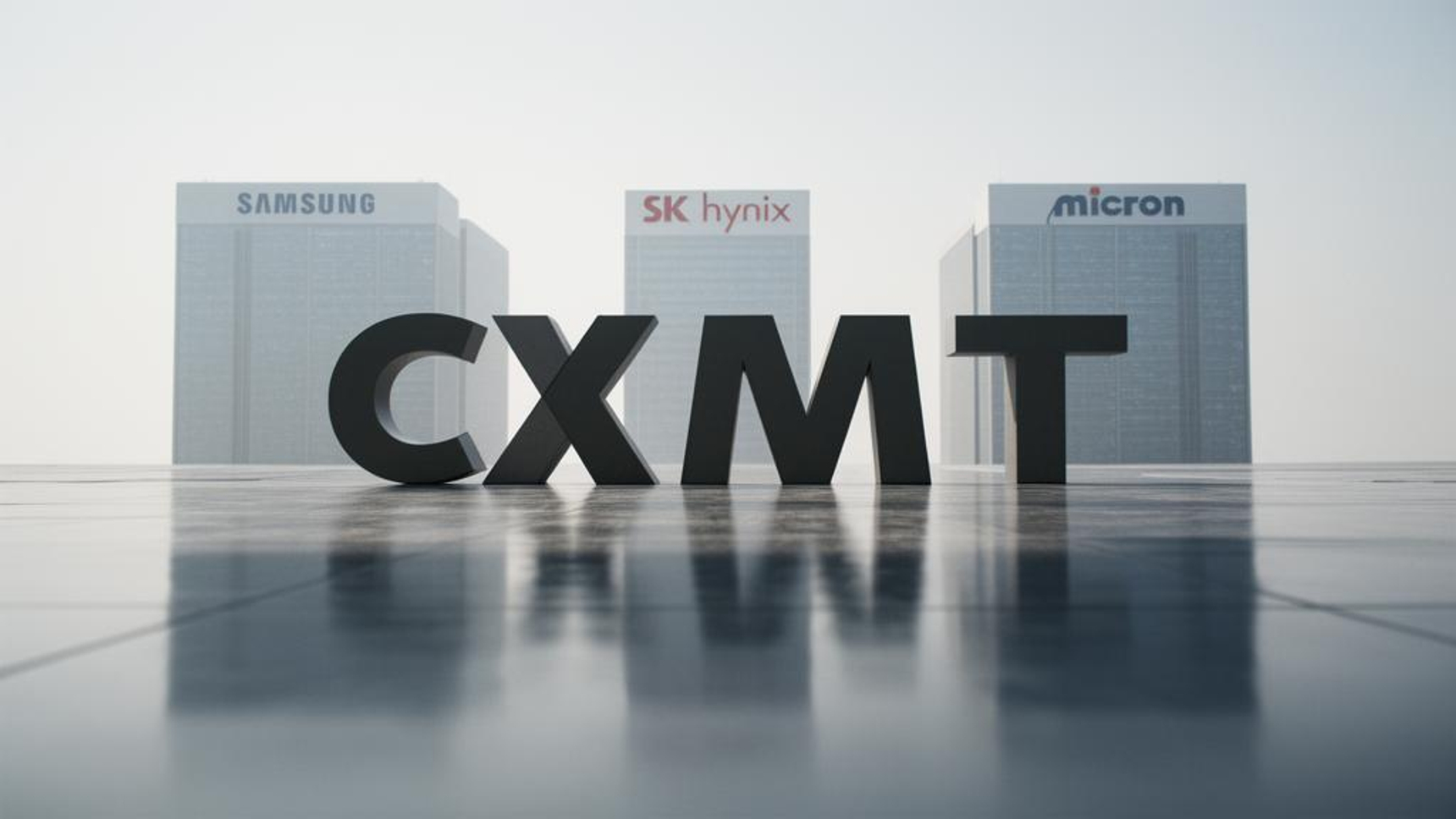
China's Memory Chip Makers Surge Ahead: CXMT's DDR5 Hits 8000 MT/s, Half-Year Revenue Tops $17.6 Billion
 finance.biggo.com
Article below and I think it's worth the read.
China's Memory Chip Makers Surge Ahead: CXMT's DDR5 Hits 8000 MT/s, Half-Year Revenue Tops $17.6 Billion
China's Memory Chip Makers Surge Ahead: CXMT's DDR5 Hits 8000 MT/s, Half-Year Revenue Tops $17.6 Billion — BigGo Finance
China's memory chip manufacturers are rapidly closing the gap with global leaders. ChangXin Memory Technologies (CXMT) has launched DDR5 DRAM modules reaching s
2026-05-17 09:36 (GMT-4)
China's memory chip manufacturers are rapidly closing the gap with global leaders. ChangXin Memory Technologies (CXMT) has launched DDR5 DRAM modules reaching speeds of 8,000 MT/s, with performance approaching that of Samsung Electronics, SK Hynix, and Micron Technology. Meanwhile, CXMT's parent company, racing toward a listing on Shanghai's STAR Market, disclosed stunning financials: first-half 2026 revenue is projected to reach approximately $17.6 billion (CNY 120 billion), wiping out its cumulative loss of approximately $5.4 billion (CNY 36.65 billion) since inception in just six months. A global memory supply crunch has created a strategic opening for Chinese firms, with the U.S. even lifting restrictions on CXMT and YMTC, paving the way for their products in Western markets. However, CXMT still lags significantly behind top-tier international players in production scale, gross margin, and customer concentration.
Key Elements
China's Memory Chip Makers Surge Ahead: CXMT's DDR5 Hits 8000 MT/s, Half-Year Revenue Tops $17.6 Billion
The global memory market is experiencing a historic bull run, and Chinese memory chip manufacturers are catching up at a breathtaking pace, rapidly narrowing the technology gap with top-tier global players while delivering explosive financial growth.
According to international media reports, Chinese memory makers led by ChangXin Memory Technologies (CXMT) are accelerating the development of next-generation DDR5 memory. Their DRAM modules have reached speeds of 8,000 MT/s, gradually approaching the performance levels of global giants Samsung Electronics, SK Hynix, and Micron Technology. At the same time, newly disclosed financial data from CXMT's parent company shows its first-half revenue could surpass CNY 100 billion this year, erasing all cumulative losses accumulated since the company's founding in a single stroke.
Technology Catch-Up: Chinese DDR5 Memory Module Performance Nears Global Top-Tier Levels
Market intelligence indicates that the three dominant memory makers—Samsung, SK Hynix, and Micron—have so far been unable to effectively resolve the global memory supply crunch. Although these companies continue to invest heavily in building new DRAM production capacity, new production lines are not yet fully operational, creating an ideal window of opportunity for Chinese manufacturers.
CXMT has taken the lead in this wave of technology competition. The company has launched DRAM modules with capacities of 16Gb and 24Gb and speeds reaching 8,000 MT/s, performance levels now competitive with major rivals. While 32Gb capacity products have entered the consumer market, their prices remain relatively high.
Other Chinese memory makers are also actively moving forward. Sources indicate that Powev recently launched DDR5 RDIMM memory modules based on the Powev Sniker architecture, offering 64GB capacity and 5,600 MT/s speeds, providing Chinese artificial intelligence companies with new options for expanding computing capacity. The same company also supplies DDR5 memory to the domestic consumer market, with module performance continuing to improve since mass production began in 2024.
Financial Leap: CXMT's Half-Year Revenue Projected at Up to $17.6 Billion
As news of the technology catch-up emerged, CXMT's parent company, racing toward a listing on the Shanghai STAR Market, updated its prospectus on May 17, disclosing staggering financial data.
The company projects first-half 2026 revenue to reach approximately $16.1 billion to $17.6 billion (CNY 110 billion to CNY 120 billion), representing year-over-year growth of 612.53% to 677.31%. Net profit attributable to parent company shareholders is expected to fall between approximately $7.3 billion and $8.4 billion (CNY 50 billion to CNY 57 billion). More strikingly, as of the end of 2025, the company's accumulated losses stood at approximately $5.4 billion (CNY 36.65 billion). This means that, propelled by this historic memory chip cycle, CXMT wiped out all its cumulative losses since inception in just six months.
Looking at the first quarter alone, CXMT posted revenue of approximately $7.5 billion (CNY 50.8 billion), surging 719.13% year-over-year, with net profit reaching approximately $4.8 billion (CNY 33.01 billion). For comparison, South Korean memory giant Samsung Electronics reported first-quarter revenue of approximately $89.4 billion (₩133.87 trillion), while SK Hynix posted revenue of approximately $35.1 billion (₩52.58 trillion).
The prospectus states that CXMT, founded in 2016, is China's largest, most technologically advanced, and most comprehensively positioned integrated DRAM R&D, design, and manufacturing enterprise, operating three 12-inch DRAM wafer fabs in Hefei and Beijing. According to Omdia data, the company has become China's No. 1 and the world's No. 4 DRAM manufacturer by capacity, shipment volume, and sales revenue. Based on DRAM sales in the fourth quarter of 2025, its global market share has risen to 7.67%.
Strategic Opportunity Amid Global Supply Crunch
The global memory supply crunch has not only brought substantial profits to Chinese manufacturers but has also unexpectedly opened doors to international markets.
International media reports indicate that mounting supply chain pressures led the U.S. government to lift relevant restrictions on CXMT and Yangtze Memory Technologies Co. (YMTC). This policy shift paves the way for Chinese DRAM and DDR5 products to enter the U.S., European, and other major markets, with these products potentially priced below comparable offerings commonly available in the market.
The strategic rationale of Chinese manufacturers is also quite clear: rely on domestically produced DRAM and memory to avoid external disruptions from tariffs, supply controls, and transportation costs.
Additionally, Samsung's gradual phase-out of older LPDDR standards—critical for entry-level smartphones and PCs—has provided a rare opportunity for Chinese DRAM suppliers to expand LPDDR4 production capacity. Related products are understood to have generated significant revenue for Chinese manufacturers over the past few months.
CXMT and YMTC are currently pursuing what is described as a "massive expansion" plan, committing billions of dollars to upgrade existing production lines while preparing for future new fabs. CXMT currently holds roughly 10% of the global market share, but with its aggressive production pace, that footprint could expand further.
Risks and Challenges: The Gap with Global Leaders Remains
Despite its rapid growth, CXMT's prospectus also candidly acknowledges its shortcomings and the risks it faces.
The company explicitly notes that its production capacity still lags behind the top three international DRAM industry leaders—Samsung Electronics, SK Hynix, and Micron Technology—and that its capacity remains far below China's massive domestic market demand.
In terms of gross margin, from 2023 to 2025, CXMT's core business gross margins were -2.19%, 5.00%, and 41.02%, respectively. The company explained that this was partly due to substantial ongoing fixed asset and R&D investments, resulting in high depreciation and amortization costs, with economies of scale yet to fully materialize. Additionally, its process technology level still trails the top three international players, and its product mix remains in a state of continuous optimization, keeping gross margin levels relatively low.
CXMT also flagged the risk of elevated customer concentration. From 2023 to 2025, sales to its top five customers accounted for 74.12%, 67.30%, and 68.08% of core business revenue, respectively. While its end customers include prominent names such as Alibaba Cloud, ByteDance, Tencent, Lenovo, Xiaomi, Transsion, Honor, OPPO, and Vivo, its direct customers are primarily well-known distributors in the semiconductor industry. If future market demand from key customers declines significantly due to adverse external factors, this could negatively impact the company's ongoing operational capability.
Fundraising and R&D Outlook
According to the prospectus, CXMT aims to raise approximately $4.3 billion (CNY 29.5 billion) through this offering, allocated across three major projects: a memory wafer manufacturing mass production line technology upgrade and renovation project ($1.1 billion, or CNY 7.5 billion), a DRAM memory technology upgrade project ($2.6 billion, or CNY 18 billion), and a dynamic random-access memory advanced technology research and development project ($1.3 billion, or CNY 9 billion). The total investment for these projects amounts to approximately $5.1 billion (CNY 34.5 billion). If successful, this approximately $4.3 billion fundraising round would rank as the second-largest STAR Market IPO financing in recent years, behind only SMIC's approximately $7.8 billion (CNY 53.2 billion) offering in 2020.
On the R&D front, from 2023 to 2025, CXMT's R&D expenditures were approximately $685.9 million (CNY 4.67 billion), $931.2 million (CNY 6.34 billion), and $1.4 billion (CNY 9.59 billion), respectively, with cumulative R&D spending reaching approximately $3.0 billion (CNY 20.61 billion), accounting for 21.67% of total operating revenue over the period.
CXMT stated that as the construction projects funded by this listing's proceeds advance steadily, the company will accelerate process upgrades, achieve lower unit costs, stronger market competitiveness and profitability, more effectively meet robust future global downstream demand, and help secure a more favorable position in the global DRAM market.