

INC
Member
Minecraft didnt do it for you?
Actually that's good sound, that was impressive. But I have p interest in playing

Minecraft didnt do it for you?

Aye it's the best tech demo you can get.Actually that's good sound, that was impressive. But I have p interest in playing

I see what you're saying, and I agree with this.
It's why the RTX vs with this game in particular was just BS as a litmus for modern 3D game development when it took 1 step forward and 2 steps back removing basic features from other non RT games.

absolutely... but with that being said, I am so happy that RT is now a thing... like... I really have an irrationally big hate for SSR and SSR nowadays is 99% of what we see in modern games... when even N64 games were more clever with reflections than that. Castlevania 64 did exactly what I said in my post, with the reflection just being the same room rendered multiple times.
and with this scene being set in a square room surrounded by a black void, there is so much room for easy to implement trickery and they just didn't bother

Pristinely reflective surfaces like that aren't suited to SSR and getting them to look right with cube maps would require a lot of manual tweaking not to mention would need to be used in conjunction with other effects.It wasn't consistent. This is one example, and there are many others far worse in other spots.


Off, your ass gets a black wall of nothing. It's a wonder RT reflections or transparencies look "so amazing" in these various scenes.
Cant even be fucked to add any shimmer or even low SSR. Honestly it's a joke, and very misleading with "RTX vs What We Have Now", considering there are many games that use zero RT that can render scenes exactly like this with low overhead.
Pristinely reflective surfaces like that aren't suited to SSR and getting them to look right with cube maps would require a lot of manual tweaking not to mention would need to be used in conjunction with other effects.
You're weaving a conspiracy theory that isn't there.
Well, if you wanna keep pretending to know shit about shit, have at it.Conversation moved on from your defense of laziness and has been settled. And not just SSR, you don't even need that. Thanks.
Well, if you wanna keep pretending to know shit about shit, have at it.

Pristinely reflective surfaces like that aren't suited to SSR and getting them to look right with cube maps would require a lot of manual tweaking not to mention would need to be used in conjunction with other effects.
You're weaving a conspiracy theory that isn't there.
Of course there are quite a few ways to get an "acceptable" result (acceptable being relative to the individual), but you're comparing a transparent reflective surface to an opaque one, so you have more leeway with the former in regard to artifacts.look at the video I embedded from Hitman 2... the reflections you see are even in the base Xbox One version
that's called render to texture, it's basically the same thing Portal uses for its portals but here it displays a mirror image instead of the other side of a portal.
Racing games also use this for the car's mirrors. (basically like a splitscreen that is displayed as a texture instead)
given that this specific scene in Control is set in a tiny room with almost nothing in it, surrounded by a black void, this technique would have certainly been an option.
faking a reflection by simply placing copies of the room outside of it, and spawning mirror versions of the main character would have been another way.
since there is a black void surrounding the room there's not only nothing in the way that could give you clipping issues, there's also almost nothing to render making this not at all taxing to the GPU or CPU
Of course there are quite a few ways to get an "acceptable" result (acceptable being relative to the individual), but you're comparing a transparent reflective surface to an opaque one, so you have more leeway with the former in regard to artifacts.
Point being, there are plenty of rational explanations to choose from before delving into conspiracy.
render to texture has been used by early 360 games for bathroom mirrors at really high resolutions even in many cases.
look at the very beginning of the original Prey for example.
that game famously used render to texture also for its then revolutionary portals.
many games used this in the past for perfectly reflective surfaces or for slightly transparent ones.
and again, given the extremely simplistic nature of the scene there is no way they couldn't have used it there to dramatically enhance this scene even with no RTX.
if Duke Nukem Forever can do it on 360 and old PCs, then Remedy can surely do it on current gen and modern PCs
That's not the way it works.
You can't just say "hey, this other game did that and this" because each game has a vastly different rendering load that prioritizes different things.
It's why games like Dead or Alive 3 were doing deformable snow meshes back in 2001 on the original Xbox, but it isn't until this current gen when such effects are now becoming commonplace.

also I feel the introduction of SSR made developers lazy as fuck... how come games before SSR became popular had better reflections than games today... weird right? because that took a bit of effort... now they can just set a checkmark in UE4 and be done with it.
SSR is just the worst... if I had the magic power to ban it I would ban it from ever being used again.

Those reflections were static and in the form of a low-res cube map. I'm ok with SSR actually.
I think he meant stuff like in PS2 god of war floor reflections and mirrors in some games (like Detroit recently). But yeah, before SSR cube maps covered 99% of games reflections.

Yep cause that's what we will get more graphical bells n whistles, 60 fps should have been the target even back in the ps1 era, its actually quite depressing by this pointReady for another generation of sub 30 frames and fake 4k but with nicer shadows and reflections?!


Funnily frustum traced shadows in shadowlib actually ray trace shadows, albeit only for small distance, as usually it's combined with shadow maps. (similarly to what Control does.)My guess is that shadows for small objects like nose for example could be disabled because shadowmap resolution is too low and they would look like Mass Effect 1 self shadows (horrific). But this is my guess only, I created this SS months ago and maybe game has proper shadows for nose and stuff that I just didn't capture but I posted this pictures to show you that there are self shadows in AC games (as you can see on the neck of Alexios).
But you can have high resolution face shadows and don't need RT for that, here is FFXV with Nvidia shadow libs on and off:
off
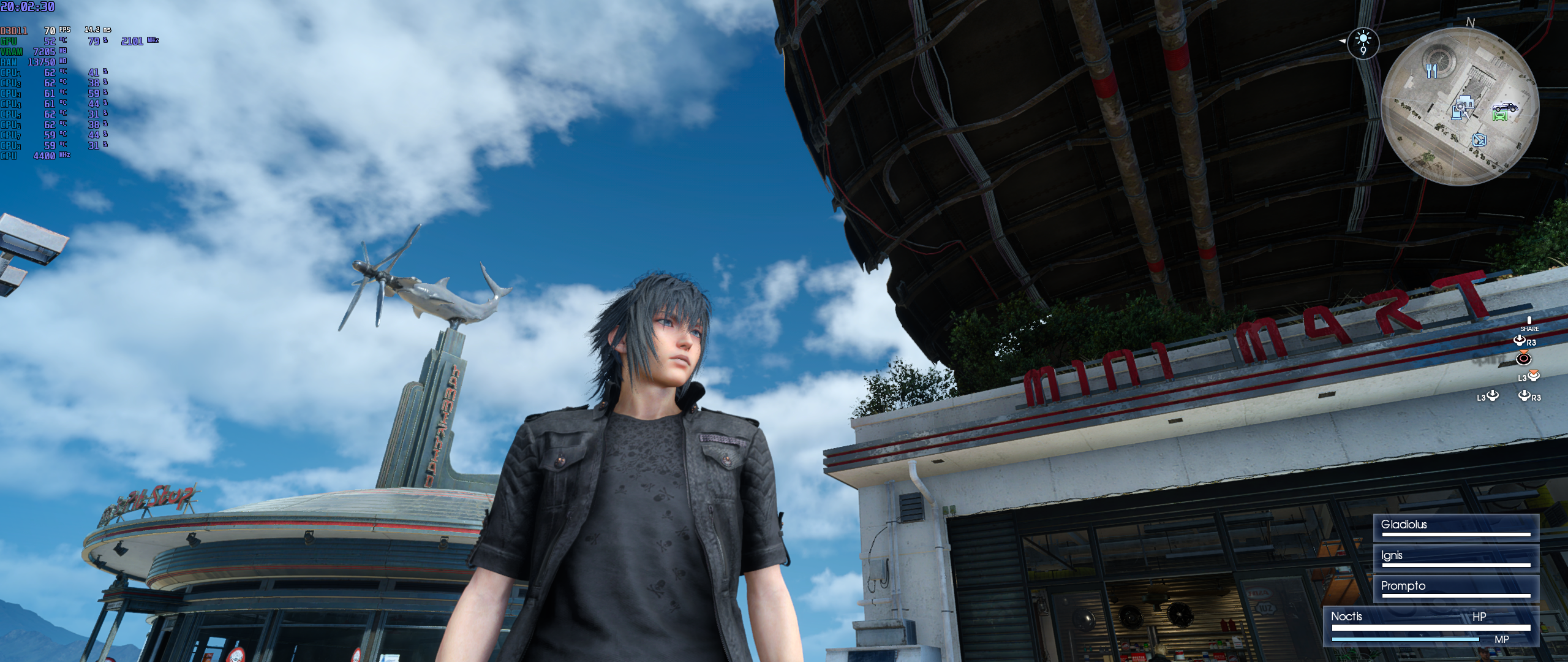
on
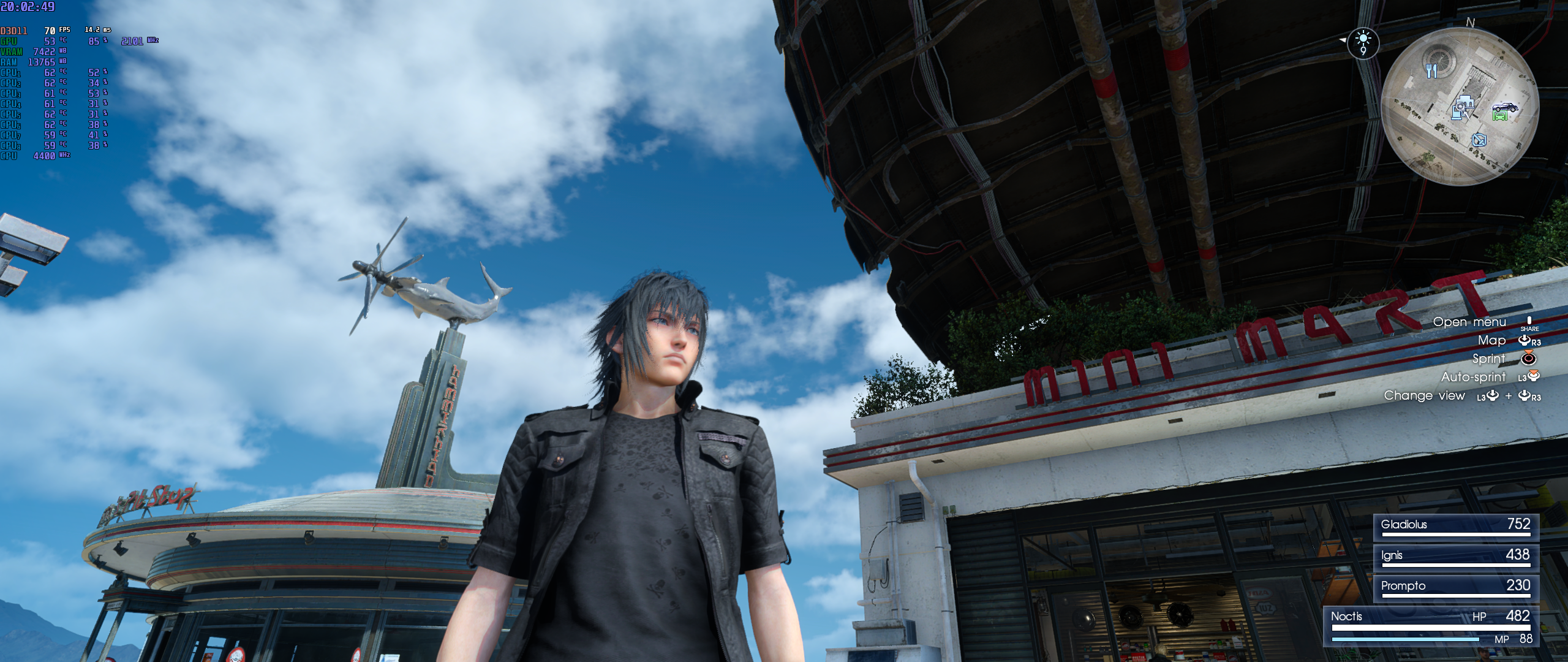

You're not kidding. Man, that's night and day to me.


Have you made photography on an overcast day? Shadows can be non existant to very obvious depending on the conditions (as you illustrate, but do not demonstrate against like for like.That's how it looks like in real life. Notice shadows under the eyes, hair and nose. You can fill the shadows with a flash or reflector like on the 2'nd comparison picture, but normally people have deep shadows like on the left picture.


RT is not about looking better, this is about realism and dynamism.Left is RTX off and right on? RT shadows in MW could end up looking worse
Have you made photography on an overcast day? Shadows can be non existant to very obvious depending on the conditions (as you illustrate, but do not demonstrate against like for like.
Anyway, I don't get why you think the light on the characters comes from below, the guy in the first pic has it coming slightly above/right and the lady has the light source clearly above her if you look at how the shadows are in her facial features.
I expect Ampere to offer MASSIVE RT improvement. 2x more RT cores (and maybe even faster on top of that). If certain RTX games already can run at 1440p 60fps, so Ampere GPUs should finally deliver RT at 4K 60fps.

Yes, I know clouds acts like a giant soft box, however as shown in the first Assassins Creed screenshot there's a sunny day, so deep shadows should be there.Have you made photography on an overcast day? Shadows can be non existant to very obvious depending on the conditions (as you illustrate, but do not demonstrate against like for like.
Anyway, I don't get why you think the light on the characters comes from below, the guy in the first pic has it coming slightly above/right and the lady has the light source clearly above her if you look at how the shadows are in her facial features.
A picture from someone in an overcast day:
Also, a picture of some lady in dim lighting conditions:
Anyway, I don't get why you think the light on the characters comes from below,
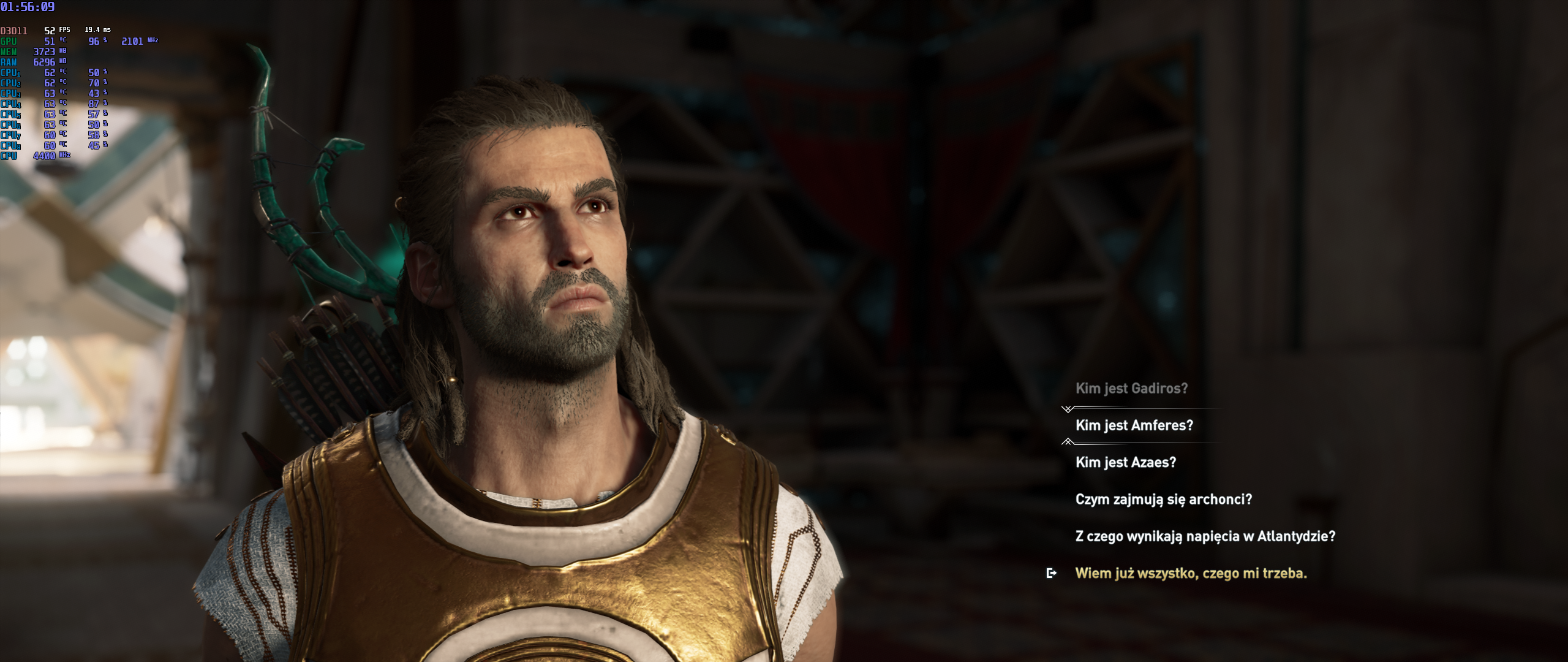
 . So there are obvious inconsistencies here, chin shadow suggest light was coming from above, yet eyes suggest light was coming from below.
I havent played Control with RTX, so I need to ask you guys something. This is gameplay screenshot or cinematic screenshot? If character face in Control has shadows like these during normal gamplay then this is a MASSIVE improvement compared to other games. Many AAA games has self shadows during cinematics but not during gameplay.
Wow, so there's really nothing to compare here, because people are comparing fake selfshadows used only in cinematic sequence (assassins creed) to real gameplay screenshot from Control. Gameplay screenshot from AC would look much worse.yes it's gameplay so the comparisons to AC are completely pointless

I did try to point this out earlier.Wow, so there's really nothing to compare here, because people are comparing fake selfshadows used only in cinematic sequence (assassins creed) to real gameplay screenshot from Control. Gameplay screenshot from AC would look much worse.
Where those pics done in cutscenes or dialog? Because most games use spot lightning in cutscenes and dialog as well as increasing the strength of or even adding other techniques such as shading, lod, textures, character models, etc.
It looks like that control shot was done during gameplay to me. Looks like an idle animation when you watch the clip.
And the video compares an enhanced Quake 2 Build with enhanced assets + RT vs the base build (without the enhanced assets) to show how good it looks with RT. Does not really make sense to compare that.Wow, so there's really nothing to compare here, because people are comparing fake selfshadows used only in cinematic sequence (assassins creed) to real gameplay screenshot from Control. Gameplay screenshot from AC would look much worse.

So basically speaking lighting in Control during gameplay looks far superior than AC even during cutscens! That's a huge milestone when it comes to real time graphics in games.I did try to point this out earlier.
 , or "RT is a gimmick".
People are just going to dodge the point and say that it isn't worth the hit in performance. Which is a perfectly subjective view to hold when speaking of preference. But not when comparing whether one objectively looks more natural or correct than the other, let alone what it took to get there. On one hand, you are needing to tediously employ tons of tricks in every dang scene and on the other, if it's true that the devs where being "lazy" and not implementing all the features that other games do to make faces look better, just rtx. And not even full rtx at that.So basically speaking lighting in Control during gameplay looks far superior than AC even during cutscens! That's a huge milestone when it comes to real time graphics in games.
Obviously RT makes a big difference even in it's current limited form, but I bet people still will say "there's no difference"


Is this bait? He really bought a 2080Ti to play games at 1080p60?A friend of mine has a 1080p monitor that is 60hz, he uses a 9700k and a 2080ti and he loves ray tracing and isn't aware of the technology being resource intensive.


Is this bait? He really bought a 2080Ti to play games at 1080p60?
Thanks for the chuckle.I have the same system but I run on a LG C9 and he said he wanted the exact same pc. I picked the parts and he built it!
He has said his next upgrade will be the monitor but its quite fun to imagine his pc running at 25 percent most of the time.
At least ray tracing will turn his fans on.

I expect it to suck less.
But 2x is too much. RT is bottlenecked by a random memory access. No hardware will change that. Only some clever software tricks.
Can you elaborate on what you mean by RMA being a bottleneck in RT?


Yup, it's not a surprise modern raytracing renderers have taken long time to develop into what they are.It's simple. Ray casts are incoherent. You have no way to know in advance where your ray will end up.
This results in a totally random memory access pattern in a naive approach.
And RMA in modern GPUs is slow, like really slow.
Sometimes CPUs can have a better RMA than GPUs.
You can do some clever software (and sometimes hw-assisted) tricks like hashing ray directions to detect coherency.
Or using tiled renders to localize memory access.
But in the end it's all RMA if your scene is complex enough...
Yup, it's not a surprise modern raytracing renderers have taken long time to develop into what they are.
Search for performance has lead to solutions like sorted deferred shading and so on.
There will be very interesting years for GPU raytracing in both realtime and offline workloads.
Yup, should be interesting.Sounds similar but actually tradeoffs will be different for online renderers. The bandiwdth/latency relationship for the GPU-realtime path has almost nothing in common with the CPU-offline one...
We'll see.
