

-
Hey Guest. Check out your NeoGAF Wrapped 2025 results here!
You are using an out of date browser. It may not display this or other websites correctly.
You should upgrade or use an alternative browser.
You should upgrade or use an alternative browser.
Has there any books that made you rage quit?
- Thread starter Sapphire Dreams
- Start date

It's smooth sailing from here on out, enjoy!Book 10 wasnt great, definitely the worst of the series so far. I'm on page ~220 of book 11 and its been great so far.
PS. There's a thread for once you finish A Memory of Light as well from way back.

Patrick S.
Banned
A Kevin J. Anderson Star Wars novel was the only book I have ever given up on a few pages in and thrown in the trash. I don't even remember its title.

iclash
Member
Terry Goodkind Sword of Truth series, I think starting around the 6th or 7th novel Terry Goodkind kept having Richard spew forth all sorts of nonsense Ayn Rand philosophy, I couldn't take it. The main character even built a statue that could cure communism..... But the book I rage quit on was Naked Empire with the whole nonsense about how pacifism is evil and how preachy the novel got.
Came to say this, not only is all of the above accurate but the writing is a whole other level of awful. There is a website somewhere that makes light of this series and is worth a visit for a good laugh. Also a hilarious Amazon review on the fort book wizards first rule. So I guess I'm ok with this series because of the laughs got out of it.
Chmpocalypse
Blizzard
What? This is the first time I've heard about this. I haven't finished the 4th book yet (been reading it on and off for the last 2 years and a half, I really need to pick it up once and for all), but I didn't know the 5th one was supposed to be bad.
Oh sweet child, the crushing heartbreak that awaits you. I'm sorry.
It's not that it's incompetent, so much as an utter "fuck you for caring about this universe and its characters I clearly don't give a shit about anymore" from Adams.
Funyarinpa
Member
It honestly feels like the third book is a long drawn-out denouement for the first two.I've been going through all of Murakami's works and I'm leaving this one for last because I consistently hear about how bad the third book is. :/
Still worth reading through- I found it to be immensely enjoyable, regardless.
Ooh, I got one.
When the Laundry Files series gave finally gave up on being about modern day zany cthulhu stuff mixed with spy novels and became about the meme du jour served in a thin faux-lovecraftian broth.
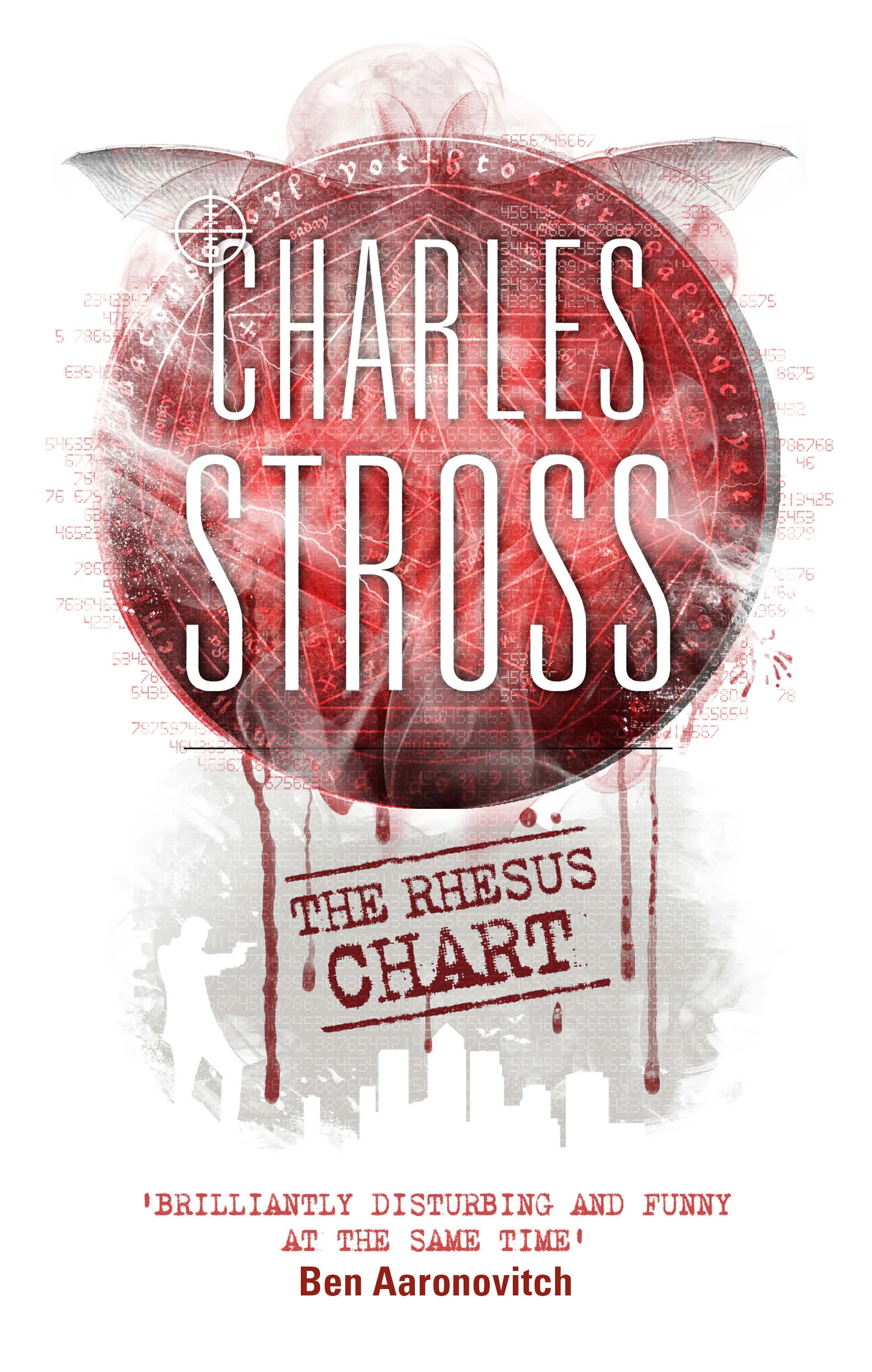
When the Laundry Files series gave finally gave up on being about modern day zany cthulhu stuff mixed with spy novels and became about the meme du jour served in a thin faux-lovecraftian broth.
Yeah. When I was in high school/college I was consuming almost every big fantasy sci fi or fantasy series uncritically.Malazan. Too many characters, no gateway character, too many different terms that are hard to pronounce and remember, too much history thrown at you, it doesnt explain anything that's going on, really hard to follow, I couldn't finish it. I'm not going to say it's bad but it's just not for me.
But Malazan just felt impenetrable to me and I remember reading some RPG lore handbooks front to back.
A Kevin J. Anderson Star Wars novel was the only book I have ever given up on a few pages in and thrown in the trash. I don't even remember its title.
Lol was it The Jedi Academy series? I was pretty young but even I was frowning about one of the main characters being stated as having amazing, unheard of potential with the Force (notably saying he's stronger than the Skywalkers and the story confirms this with him succeeding at the test Luke failed on Dagobah), immediately befriending Han Solo who shills for this guy with weird, insistent enthusiasm, and who eventually easily seizes control of a massive bigger Death Star called the Suncrusher. Without support of some other army or whatever, he seizes it and controls it by himself.
Geez. Hadn't run into something that was published that felt so irritating blatant until Elizabeth Hayden's Rhasphody series.
I think a significant favor was Kvothe transitioning from underdog to hyper talented vagabound wanderer? It was foreshadowed that he was going to get there, but it seemed to have less opportunities to no brute force a solution. One of my most distinct memories of WMF was the mystery of the sick nobleman. The stakes were identifiable, there was a strong tension and the twist ending regarding the perp was a pleasant surprise in how it came from a place of concern rather than malice.That's fair. Personally, I liked WMF more than TNotW. It does a lot of things that are just more interesting for me than the first book did, which was more traditional in how it told its story.
The magic and fighting and misc world building is hazier. Not saying I rage quit or nothing, I thoroughly enjoyed it in the moment but apparently, I'm a sucker for those traditional heros journey formats.
I think a significant favor was Kvothe transitioning from underdog to hyper talented vagabound wanderer? It was foreshadowed that he was going to get there, but it seemed to have less opportunities to no brute force a solution. One of my most distinct memories of WMF was the mystery of the sick nobleman. The stakes were identifiable, there was a strong tension and the twist ending regarding the perp was a pleasant surprise in how it came from a place of concern rather than malice.
The magic and fighting and misc world building is hazier. Not saying I rage quit or nothing, I thoroughly enjoyed it in the moment but apparently, I'm a sucker for those traditional heros journey formats.
The strength of this series is something that I think is something that throws off a lot of first time readers: It's diversity.
The nature of Kvothe's adventure is that he keeps getting wrapped up in one thing or another at different times. One moment, he's just trying to pass his exams, then his rival poisons him so now he's trying to find a way to guard himself against magic, then he realized his rival stole his love's rings so then it becomes a heist, then he goes to Vint where he has to play games of political intrigue, then he's hunting bandits, then he's in a kung fu movie learning martial arts.
I agree with you that him trying to solve the mystery of the Maer's sickness was the most intriguing part of the book for me personally. But then, all of a sudden, he's on this nature trek with a dumb mercenary hunting bandits. For me, that swerve made it the only part of WMF that I disliked...but on my second reread, seeing it coming, it helped me better understand what the purpose of that section was. The way you describe it, about not being clear on what the stakes are, is actually pretty good. Every time Kvothe's adventure changes, the paradigm of the narrative shifts. The stakes from before are still important, but put on the backburner while something new is developed.
I'm of the belief that there aren't really any bad parts, but the diversity of the types of stories that Kvothe goes on means that one is going to be your favorite, so you're going to be upset when that part ends. You and me, we love the political intrigue episode, but some people hated it, while others found Adem to be their favorite part. I think I've heard each part of the series described as someone's favorite and most hated part, because how much a given thing appeals to you innately depends on what kind of reader you are.
But this is one of those books that improve on a second reading. You get a clearer picture of whats going on and why it matters and why the part you liked before had to end. And while you might not like this new adventure as much, I've gone over this series with a fine tooth comb and it mostly checks out in terms of technical standards of good writing. Every part develops Kvothe's character in some way, it builds the world, it progresses the plot, it's often really well written in temrs of prose, and so on. It's just harder to see as a first time reader because what Kvothe is doing at any given time can change at any given moment, and if you don't like it and would prefer to go back to what he was doing before, it can be harder to see that.
The Wise Man's Fear

FUCK THIS SHIT, it started really well, then it became a fucking clusterfuck.
"what if Kvothe was really good at everything and also overpowered?..... I'M A GENIUS!" Patrick Rothfuss
I still finished it, but even in high school, writing and consuming wish fulfillment myself, it still felt too much like wish fulfillment.
I feel like that's all popular fantasy is. Eragon, Kingkiller, Ready Player One-- stories where some dude that's nicer and smarter and more powerful than everyone else gets more power and does cool stuff
I'm one of those people that try to read books everyone is saying are awful before I will comment.
...
So I made it through book one of the Twilight series, and ragequit after a few chapters of book two. I couldn't take the moping. I just couldn't do it.
I read parts of 50 Shades and didn't repeat my mistake with Twilight.
...
So I made it through book one of the Twilight series, and ragequit after a few chapters of book two. I couldn't take the moping. I just couldn't do it.
I read parts of 50 Shades and didn't repeat my mistake with Twilight.

Rabid Dwarf 76
Member
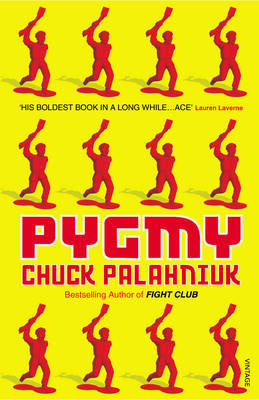
I tried. Maybe it gets good but reading through broken English was not enjoyable enough to find out.
Rushersauce
Banned
I still finished it, but even in high school, writing and consuming wish fulfillment myself, it still felt too much like wish fulfillment.
I feel like that's all popular fantasy is. Eragon, Kingkiller, Ready Player One-- stories where some dude that's nicer and smarter and more powerful than everyone else gets more power and does cool stuff
It is! It feels like it's EVERYTHING Patrick Rothfuss wanted to be.
Ravensmash
Member
I feel bad for slating Republic of Thieves by Scott Lynch earlier.
I read the final 150 pages or so in a day and actually really enjoyed it.
Its certainly different from his other books, and I don't feel that the split narrative worked as well as intended but... I do want more Locke.
I guess, sometimes it can be worth sticking with things.
Now as for a book I really didn't like... Middlemarch.
Holy... That was boring.
I read the final 150 pages or so in a day and actually really enjoyed it.
Its certainly different from his other books, and I don't feel that the split narrative worked as well as intended but... I do want more Locke.
I guess, sometimes it can be worth sticking with things.
Now as for a book I really didn't like... Middlemarch.
Holy... That was boring.
God I fucking hate this book so much. Shitty thing is, when the third comes out (lawl, as if), I'll probably grab it just to see how it all ends. Wouldn't be the first time I've read something out of curiosity knowing it would be shit. I mean, I stomached Divergent and Twiligiht (all four of them).
I don't dislike the series, but I'm ready to be disappointed by the third book because I think there's still too much left unresolved for everything to be wrapped up nicely without at least one part feeling rushed or forced. Unless the book will be 2000+ pages long, that is, and it won't be.
Man The Davinci Code was such a page turner that I think I finished it like 2 days or something, and then immediately got Angels and Demons and read that quick. Bought The Lost Symbol when it came out and devoured it fast too.
I never read Inferno.
Despite Dan Brown using the same setup, there's just something about how he creates this shrouded mystery that's usually begun with a death and then mixes it with history, architecture, art, religion, science, literature, etc... into this grand conspiracy that's been hidden right in front of our faces that I just love.
This thread made me look up his next book, and it seems he has another Robert Langdon book called Origin about to drop in October.
I guess I need to read Inferno in anticipation of it now.
Have you read Foucault's Pendulum by Umberto Eco? If you like Brown's stuff, you should give it a try. A similar, but also very different book.
Terrible, terrible book.
Agreed. I'm on the road. Now I'm on the road again. Despite being constantly on the move, it's a stagnant piece of work that repeats 3 times. There are a few interesting parts, typically when he settles down for a period of time, but even those parts are obfuscated by his thoughts of wanting to be on the road again. It's just a lot of nothing that is probably attributed to the beats lack of want for self-editing.
I read the Twilight books(stopped at Eclipse) when I was in 7th-8th grade and LOVED them, but I was also an angst hound back then. It was also because I liked Jacob a whole lot.I'm one of those people that try to read books everyone is saying are awful before I will comment.
...
So I made it through book one of the Twilight series, and ragequit after a few chapters of book two. I couldn't take the moping. I just couldn't do it.
I read parts of 50 Shades and didn't repeat my mistake with Twilight.
Nowadays, I'd probably hate them. Especially after know how Breaking Dawn ends

Matrix XII
Member
The only book I can think of this happening was The Great Hunt by Robert Jordan.
I feel like giving it another try though.
I feel like giving it another try though.
FairFriend
Member
Never rage-quit a book, but I remember I skimmed through the second part of 1Q84, having found the first one juvenile and boring.

T.v
Banned
I still finished it, but even in high school, writing and consuming wish fulfillment myself, it still felt too much like wish fulfillment.
I feel like that's all popular fantasy is. Eragon, Kingkiller, Ready Player One-- stories where some dude that's nicer and smarter and more powerful than everyone else gets more power and does cool stuff
Kvothe is just a shit character. Way too special and good at everything. I remember someone asking Rothfuss about it and he said sonething along the lines of "And you believe him?"
It might just turn out Kvothe is a lying blowhard, but that does not make the story good retroactively. And that sure as hell isn't something you say when you can't even finish your writing.
The last thing I expected when I came into this thread was to discover that I'm the only person on GAF that loves The Catcher in the Rye.
Nah, I enjoyed it too. I wouldn't say I loved it, but I had fun reading it.