• Hey Guest. Check out your NeoGAF Wrapped 2025 results here!

How do you define continents?

Status
Not open for further replies.
There is no right way to define continents, but there are many different ways to organize them. Some people say there are 7. Others say there are 4. Some people don't include Antarctica. Others split The Americas in half. Socioeconomic tendencies. Geography. What is your way of definining continents and why?

To start off, I define continents as a large mass of land with its own continental shelf that doesn't have a significant amount of land connecting it to another continent. So, with that definition, there would be 5 continents. North America, South America, Eurasia, Africa, and Australia. No Antartica because it is just a chain of islands covered in ice.
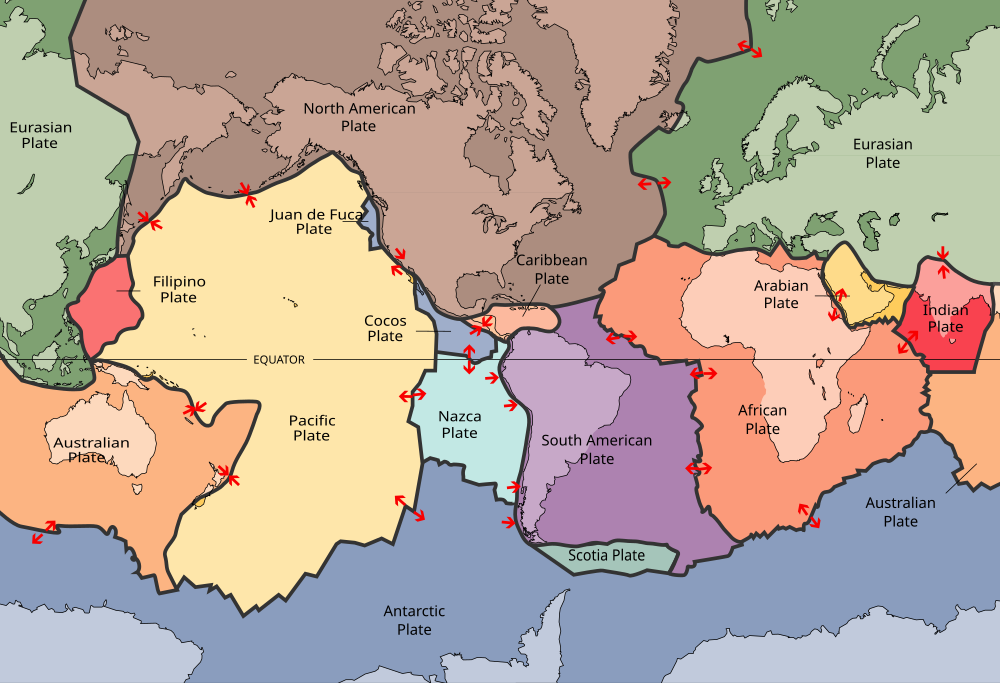
 
like so

1000px-Plates_tect2_en.svg.png
 
you sure about that?
Yep. Some people think Europe is a continent because of socioeconomic tendencies but others group it with Asia due to geography. Many people in Latin America say the America's are one continent while most people in the US say there are North and South America.
 
Yep. Some people think Europe is a continent because of socioeconomic tendencies but others group it with Asia due to geography. Many people in Latin America say the America's are one continent while most people in the US say there are North and South America.


Plate tectonics how do you work?!
 
I don't understand why you don't consider Antarctica to be a continent. It fits your definition and is larger than Australia.
 
Any large body of land (at the least the size of U.S., China, or Australia) not significantly connected to another.

Europe is part of Asia.
 
It depends. Technically, Alaska is part of the Continental United States, but a lot of companies charge higher shipping there even though they say the same rates apply for all of the Continental US.

But generally, I'd say North America, South America, Australia, Asia, Africa, Europe, then the Arctic and Antarctic.
 
I don't understand why you don't consider Antarctica to be a continent. It fits your definition and is larger than Australia.

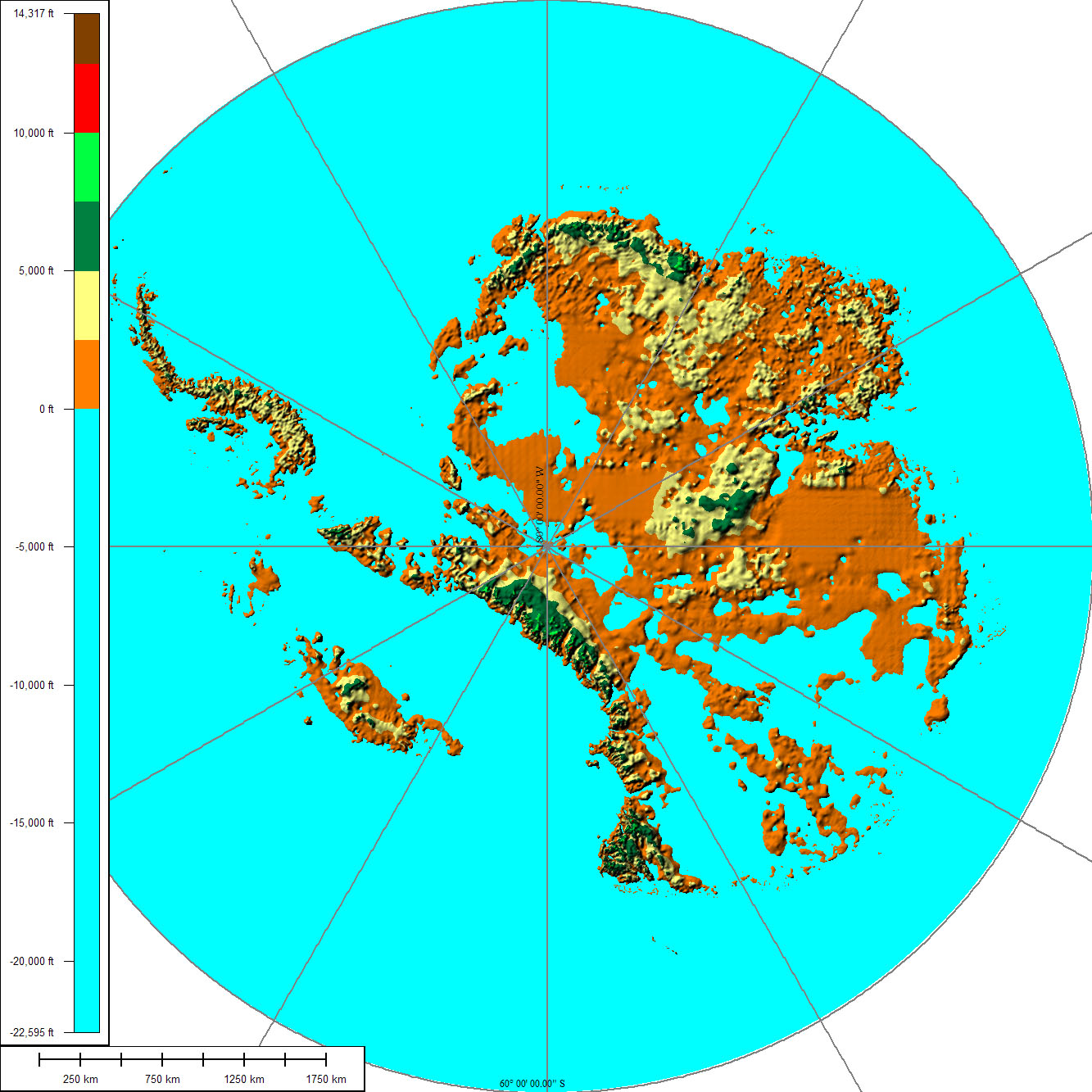
I thought Antarctica was a cluster of much smaller islands grouped together under a glacier, and that it's actual shape is closer to this:

AntarcticBedrock2.jpg
 
Was taught the 7 in school. Europe, Asia, Australia, Antarctica, North America, South America, Africa.

Also, I love seeing our world displayed in different ways, like this:

bwOdDeT.png
 
I don't see a huge distinction between Europe and Asia. For me the most logical set of continents is North America, South America, Eurasia, Africa, Australia/Oceania and Antarctica. I'm not sure why you ruled out Antarctica, it's significantly larger than Australia and is basically the single most distinct large, separated landmass.

EDIT: I see your point about Antarctica, but it's still distinct and significant enough for me. The projection in the post above shows it really well (it's also my favourite map projection :P)
 
It's an arbitrary definition, just like the difference between a planet and an asteroid. Pluto was considered a planet, but not anymore. India is often called a sub-continent, because it's pretty huge, but it's usually considered part of Asia.
 
Man, just think about how much cool shit there would be to find if we could move Antarctica somewhere farther north.
 
I just had this conversation a few days ago with some Russian friends of mine. They could not believe that Americans are typically taught that there are 7 continents, specifically that Europe and Asia are separated. "How can my country be on two separate continents?!"
 
I thought Antarctica was a cluster of much smaller islands grouped together under a glacier, and that it's actual shape is closer to this:

AntarcticBedrock2.jpg

Yes, currently but you have to recall that the glaciers weigh an absolutely massive amount. If the glaciers melted then Antarctica would look more like this after the rebound, even with sea level rise.
Antarctica_Without_Ice_Sheet.png
 
Status
Not open for further replies.
Top Bottom