• Hey Guest. Check out your NeoGAF Wrapped 2025 results here!

How do you judge scientists that are also religious?

Status
Not open for further replies.
Surely that's focusing a little bit on the negative side of things, especially when dealing with religious art as opposed to scripture. Is the atomic bomb a monument to scientific advancement in physics?


I'm not sure I'd equate the two. The development of the atomic bomb is a monument to scientific advancements in physics, but unlike a church it would already be a monument to that once it works on paper.

Also, the general, popular evaluation of the atomic bomb is the polar opposite of that of a church, few people would call it beautiful or great.

And ywhile my opinion may discount the positive side, you're way too focussed on it. Just because something has positives doesn't mean the negatives don't count. To use a not-too-great illustration, the Nazis built the greatest highway system in the world. Not to equate the two, but to get my point across.

Also, I might not be fully coherent here, I've slept too little and I'm sitting in class right now. I stand by my original point, even if I'm not sure THIS post makes complete sense ;-)
 
I do think evolution conflicts with Christianity, for many reasons- mostly logical ones.

  • The earth is 6 billion years old. Why did your god only start to make himself known a few thousand years ago?
  • At what point in evolution did god start handing out souls. If it was from day one, then everything has souls and thus anytime you eat meat, you're committing murder. If it was later on, what happens to the poor sods who weren't given a soul... are they to just be forgotten; that's hardly fair?
  • Why did your god make himself known then and has not since indicated his existence?
  • The bible was written by many authors (whom we have no idea of they were). It has many conflicting stories. It's full of moral teachings that today would have you imprisoned. It is clearly written by men and it is clearly morally flawed.
  • If the bible is the word of god, he isn't a very smart god.
  • There is no contemporary evidence that corroborates the existence of jesus.
  • Can you honestly say that your belief in intelligent design would not have any bias in your approach to a scientific study.
  • Believing in something without evidence is highly unscientific.
 
As long as it doesn't get in the way of their job, I don't see it as a problem. Actually, Professor Robert Winston comes to mind. He has done a series of interesting documentaries for the BBC. He is a scientist and also a practicing orthodox Jew. He actually did a three-part documentary exploring the concept of god.

Quite a good documentary series actually. Here's the first episode of it if you're interested.

http://www.youtube.com/watch?v=2zBakH-6uiU
 
I'm not sure I'd equate the two. The development of the atomic bomb is a monument to scientific advancements in physics, but unlike a church it would already be a monument to that once it works on paper.

Also, the general, popular evaluation of the atomic bomb is the polar opposite of that of a church, few people would call it beautiful or great.

And ywhile my opinion may discount the positive side, you're way too focussed on it. Just because something has positives doesn't mean the negatives don't count. To use a not-too-great illustration, the Nazis built the greatest highway system in the world. Not to equate the two, but to get my point across.

Also, I might not be fully coherent here, I've slept too little and I'm sitting in class right now. I stand by my original point, even if I'm not sure THIS post makes complete sense ;-)

I wasn't trying to say the negatives didn't count. I wouldn't be an atheist if I didn't think there were negatives. I'm just constantly surprised at the vitriol people direct at historical religion as a concept entirely, or the way people refuse to find any beauty in theology works at all, or think that different scriptures can't still be incredibly interesting to read even if you don't subscribe to any of it.

Keep in mind, I'm in an artistic field, so I'm probably biased.
 
I wasn't trying to say the negatives didn't count. I wouldn't be an atheist if I didn't think there were negatives.

Right :-)

I got carried away there. My opinion on religious artefacts has just grown more ambivalent-to-negative over the past few years.

Edit: Regarding your edit: I can enjoy theological works as long as no one tries to deduce any real world implications from them.
 
I would want to say something about this but then I don't know the exact contents of every religion. From the little I read and how every book seems to imply don't believe the fools who don't believe in this religion, I'd say religion is poison for science. Some poisons don't kill, but it's still not a healthy thing to take in.

But I don't have a problem with religions that only tell you how to live peacefully with others and stuff like that. But I hate made up facts and I really dislike mobs of people who try to pass made up facts as facts.

I also hate it when courageous acts, heroics acts and brilliant acts (science would be this) are unrewarded and instead people thank some kind of God instead the actual people who make the world a better place.
 
I do think evolution conflicts with Christianity, for many reasons- mostly logical ones.

  • The earth is 6 billion years old. Why did your god only start to make himself known a few thousand years ago?
  • At what point in evolution did god start handing out souls. If it was from day one, then everything has souls and thus anytime you eat meat, you're committing murder. If it was later on, what happens to the poor sods who weren't given a soul... are they to just be forgotten; that's hardly fair?
  • Why did your god make himself known then and has not since indicated his existence?
  • The bible was written by many authors (whom we have no idea of they were). It has many conflicting stories. It's full of moral teachings that today would have you imprisoned. It is clearly written by men and it is clearly morally flawed.
  • If the bible is the word of god, he isn't a very smart god.
  • There is no contemporary evidence that corroborates the existence of jesus.
  • Can you honestly say that your belief in intelligent design would not have any bias in your approach to a scientific study.
  • Believing in something without evidence is highly unscientific.

while I agree with what you're saying, the reasons listed aren't all to do with evolution like you say
 
There is more to being christian than simply believing in a higher power. Do you actually believe in the stories told in the bible?
 
while I agree with what you're saying, the reasons listed aren't all to do with evolution like you say

Agreed, some of them don't. But they do relate to my final point of believing in something without evidence and I feel that does have an influence in your approach to science.
 
There is more to being christian than simply believing in a higher power. Do you actually believe in the stories told in the bible?

So, nothing in the bible is factual? So then you don't believe in jesus christ? Then how are you a christian.
Do you only believe some of it? Then you might as well throw the bible away and live by your own morals.

Tell me where I'm going wrong here. What is it that makes you a Christian?
 
So, nothing in the bible is factual? So then you don't believe in jesus christ? Then how are you a christian.
Do you only believe some of it? Then you might as well throw the bible away and live by your own morals.

Tell me where I'm going wrong here. What is it that makes you a Christian?

You're going wrong by positing too may "so then" questions. There isn't a chain of logic that holds up between "not everything in the Bible is accurate" and "if you believe that, then you're not Christian."

Believe (or do not believe) in whatever you'd like, but that's just faulty logic.
 
Op it doesn't sound like your believes get in the way of your work because you're not one of the hardcore fundamentalists. On a personal level i think you're still doing the splits mentally with believing in evolution _and_ a masterplan. Both ideas are mutually exclusive imo. Or at least the chance that both is true is extremely minuscle.
I prefer religious folks who do this mental split over the fundies but in the end it's inconsequent to stick with both ideas.
 
There is more to being christian than simply believing in a higher power

but thats the foundation of it
having a few morals that are in line with what is acceptable in modern civilization doesn't warrant ritualistic worship
 
but thats the foundation of it
having a few morals that are in line with what is acceptable in modern civilization doesn't warrant ritualistic worship
No, to be a christian I think you have to believe that Jesus Christ was the son of god, died for our sins and got resurrected after being dead for 3 days. That means you should also believe in the original sins story or else the whole thing falls apart and then it is not really Christianity but something else.
 
You're going wrong by positing too may "so then" questions. There isn't a chain of logic that holds up between "not everything in the Bible is accurate" and "if you believe that, then you're not Christian."

Believe (or do not believe) in whatever you'd like, but that's just faulty logic.

At what point when you start dismissing parts of the bible are you no longer a christian. Is it the case that you can pick and choose whatever you want out of it? If that's the case, then surely there is some correlation with your selective beliefs and those of another religion.
 
So, nothing in the bible is factual? So then you don't believe in jesus christ? Then how are you a christian.
Do you only believe some of it? Then you might as well throw the bible away and live by your own morals.

Tell me where I'm going wrong here. What is it that makes you a Christian?

Most christians already do this. Long as you have personal relationship with Jesus and/or God you are fine and tandy. You can tell them they are not real Christians but that doesn't matter, they see themselves as Christians and that's about it.
 
Yup. If they can leave their religious beliefs at the door then there is no problem. Just don't let your religion color your results or affect how you attack a problem and you're fine.

This in pretty much EVERY facet of anything important or unimportant.
 
Reading this thread makes me feel very strange. I'm an atheist, but I find religion and theology beautiful and fascinating, particularly religious art. I feel like a lot of it is like reading our early attempts at explaining how the world works, and while it's sad that some people still cling to ideas that are clearly outmoded I still really love reading and looking at religious things. Is that so strange? I just find this outright contempt for anything remotely religious as rather odd.
I have similar sentiments, I absolutely love religiously-inspired films and literature for example. (though you could make a argument that all art has roots in religion to a extent). Personal experience makes me hate religion sometimes tho, which I'd imagine is what informs these feelings of outright contempt for the concept of religion for many atheists.;p
Most christians already do this. Long as you have personal relationship with Jesus and/or God you are fine and tandy. You can tell them they are not real Christians but that doesn't matter, they see themselves as Christians and that's about it.
I don't think there is a such a thing as REAL christians honestly, I mean maybe you could make a case that christians who outright contradict jesus teachings aren't true christians, but I honestly find the whole concept silly otherwise.
 
You are completely wrong. Even the link says "Mutations are Random", not evolution.

Edit: To clarify a bit more. When you combine something random (mutations) with something non-random (natural selection), the result is non-random.

How am I "completely wrong"?

The mechanism of evolution relies on randomness. Without random mutations, useful traits won't exist. These useful traits are then selected ("natural selection") because they confer some advantage to a species. So, natural selection is what is non-random, as you've stated, because it preferentially selects a trait but your oversimplification is incorrect.

It all comes down to what has a greater effect. Is it natural selection? Is it gene flow? Is it genetic drift?

What the underlying factor to all these mechanisms is random mutation. Without random mutation, there would not be any preferred traits for natural selection to act upon. Without random mutation, there wouldn't be any differences between populations to have any real effect when there is crossbreeding.
 
The mental gymnastics required to buy into the concept of non-overlapping magistera, or the idea that science and religion can operate independently, should not exist in a rational mind. Science is based upon belief only in the presence of evidence, while religion requires belief in the absence of it. How can that exist in the same mind? With self-deception.
 
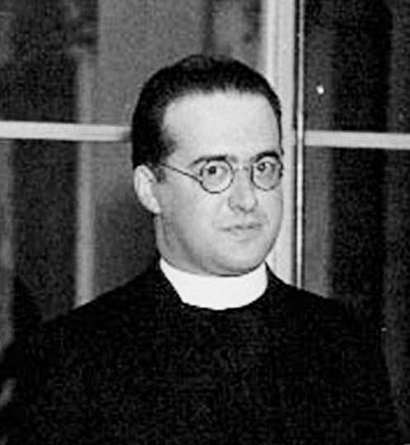
This guy was key in the whole Big Bang theory thing:

410px-Lemaitre.jpg


Astronomer, physics professor, priest.

https://en.wikipedia.org/wiki/Georges_Lemaître

Glad you know this. It makes me proud that you do. =D

by their works.

.
 
How am I "completely wrong"?

The mechanism of evolution relies on randomness. Without random mutations, useful traits won't exist. These useful traits are then selected ("natural selection") because they confer some advantage to a species. So, natural selection is what is non-random, as you've stated, because it preferentially selects a trait but your oversimplification is incorrect.

It all comes down to what has a greater effect. Is it natural selection? Is it gene flow? Is it genetic drift?

What the underlying factor to all these mechanisms is random mutation. Without random mutation, there would not be any preferred traits for natural selection to act upon. Without random mutation, there wouldn't be any differences between populations to have any real effect when there is crossbreeding.
Evolution is not equal to mutation so you're still wrong.
 
dads a scientist and was brought up strict catholic... renounces most of it now but went religious for a while after his heart attack so its still there... i think he has more issue with religous people but he wont admit that

i think its a nice balance to have both

aparently theres a bunch of quantum physicists that are religous to boot so im sure, while not the majority, its common enough that people would just find it interesting

edit: hes a meterologist/ mathematician
 
My department has a lot of faculty who are Christians. By a lot I mean a handful - more than I'd expect in a biology department of a major public university. But it's not a problem. Their religion in no way has ever gotten in the way of their scientific integrity and they all fully support evolution. This evidence suggests that Christianity and evolution and science are not incompatible with each other.
 
Quite plainly, I compartmentalize these conflicting ideas; I believe God "laid out the plan" for evolution to occur, amongst other things. Basically, I believe that God had some hand in forming the origin of the existence as we know it and laid it out in a manner that would lead to where we are now. Owed to this sort of belief, I don't think my being religious negatively affects my research. The more I study, and the more I learn about the world around us (and, hell, the world no where near us, thanks to exploration by NASA), the more I realize just how little humanity really understands about existence.

So, what does GAF think of this; am I acting in a dishonest or immoral fashion by being religious but also working in research? Is it a non-defensible situation where I'm basically wrong no matter what?
I think so, but more so toward your religious views than your scientific views.

Belief in God isn't necessarily unscientific, it just has no evidence. You can go about trying ways to scientifically discover him till you die. So long as you are honest with your results, it would still be scientific. Only... that would be weird to do and most people would probably rather just be atheist than slam their head against that wall for all their days.

Your belief in God, and specifically Christian God, however... There are some unavoidable implications. Say what you want about the physical mechanics of it or however you resolve conflict with scripture, but realize this: When you say God intended evolution, you say that he designed all of reality in such a way that suffering and savagery are the primary forces that shape life.

I mean when looking at the raw elements of the universe and evolution of celestial bodies and materials, I wouldn't much care. However, once this extends to lifeforms, the ethical issue kicks in. The idea is that the world is going to tear people to shit, and this will also cause a competition of tearing each other to shit, and only the strong survive, but only for a limited time then they die all the same.... and God designed this wheel of violence as the base principle of physics?

I couldn't reconcile this, among other things. Now I'm an atheist.
 
I thought this was an interesting talk by Neil DeGrasse Tyson on the topic.

Basically arguing how religion has historically placed a cap on our quest for knowledge. That trying to solve why the public is so eager to accept intelligent design is secondary to why 15% of our most brilliant minds still do by believing in a personal god. Because whatever unknowns you attribute to that personal god is intelligent design. You are placing god at the limit of your knowledge just like so many have before.
 
Hard to take them seriously.


You only believe in any of these things because you've been indoctrinated from birth to believe them. If you happened to be born a few decades ago, or on the other side of the world, or maybe even to the family next door, you'd likely believe something completely different. Once you understand that, the rest is easy.

Also, you can't believe in evolution and the biblical God at the same time. There's no way to reconcile them. Instead of trying, you should ask yourself why you're trying.

This, so much. The only reason anyone ever holds any specific set of religious beliefs is that they were raised in a certain part of the world at a certain point in time. They get indoctrined with the beliefs of their community and grow up believing that's the absolute truth and everyone else is wrong, for no other reason than that being the popular thing to believe in that community at that point in time. Meanwhile, someone else is growing up in another part of the world, getting indoctrined with the beliefs of their community, and ends up just as certain that what they believe is the truth.

It's just so ridiculous if you take a step back and think critically about it for two seconds. But as we're all aware, critically questioning your beliefs is exactly what religiously indoctrined people are taught not to do.

To answer the original question: I'm sure religious scientists can still do good work, but I can never respect them in the same way as atheist ones. Holding religious beliefs means you're refusing to think critically and rationally about certain things, and that's not a good trait for a scientist.
 
Here's another video by Neil as well.

http://bigthink.com/ideas/13148

And an excerpt from that talk:

DeGrasse Tyson: Most religious people in America, fully embrace science. So the argument that religion has some issue with science applies to a small fraction of those who declare that they are religious. They just happen to be a very vocal fraction so you got the impression that there are more of them than there actually is. It’s actually the minority of religious people who rejects science or feel threatened by it or want to sort of undo or restrict the… where science can go. The rest, you know, are just fine with science. And has been that way ever since the beginning.

The thread took a fairly predictable turn, but I don't think God plays dice with theist vs. atheist debates.

This, so much. The only reason anyone ever holds any specific set of religious beliefs is that they were raised in a certain part of the world at a certain point in time. They get indoctrined with the beliefs of their community and grow up believing that's the absolute truth and everyone else is wrong, for no other reason than that being the popular thing to believe in that community at that point in time. Meanwhile, someone else is growing up in another part of the world, getting indoctrined with the beliefs of their community, and ends up just as certain that what they believe is the truth.

It's just so ridiculous if you take a step back and think critically about it for two seconds. But as we're all aware, critically questioning your beliefs is exactly what religiously indoctrined people are taught not to do.

What about converts?

Also I find it funny people going on about respecting scientists (who are religious), as if that actually means something in comparison to the work that they do.
 
but thats the foundation of it
having a few morals that are in line with what is acceptable in modern civilization doesn't warrant ritualistic worship

that's kind of a chicken egg thing there though, because the morals of modern civilization today would not be what they are without that different style of ritual worship. I would even say the de-centralization of that worship changed civilization forever, for the better. God no longer belongs to a giant temple where you make a tribute of gold or grain to the king/god/state religion.

And really I would say that that ritual worship differs greatly in practice from what is written, so there's a lot of synergy that comes with religion that isnt necessarily focused on ritual. Rituals, like guns, are just a tool.

by their works.

"by their love", right?
 
To answer the original question: I'm sure religious scientists can still do good work, but I can never respect them in the same way as atheist ones. Holding religious beliefs means you're refusing to think critically and rationally about certain things, and that's not a good trait for a scientist.
Are you sure those atheist scientists think critically and rationally in every aspect of their personal lives outside their work? ;p
 
What about converts?

From one religion to another? Well, such people are obviously under the strong influence of people and ideas leading them to make that conversion. It's really not much different than what makes a person form their religious beliefs in the first place, it just happens later in life.
 
The only real problem is if you are a fundamentalist. Plenty of Jewish, Muslim, and (non-fundamentalist) Christians are scientists. Funny enough, most engineers I know are religious. My theory is that in the quest to get shit to work you need to employ all allies real or imagined.
 
Here's another video by Neil as well.

http://bigthink.com/ideas/13148

And an excerpt from that talk:
"First, of all, I don’t agree that most Americans “fully embrace science.” That’s certainly not true as far as my own field, evolution, is concerned. Only 16% of Americans embrace the scientific view of evolution as a mindless, materialistic process, one that takes place without divine guidance. 40% of Americans (not a “tiny minority,” as implied in the talk) accept a fully Biblical view of creationism ex nihilo by God, and 38% believe in a God-guided process of theistic evolution. Americans are scientifically illiterate in many other ways, with that scientific illiteracy highly correlated with religious belief. And don’t forget the global-warming deniers and the antiscience Republicans." - Jerry Coyne

Tyson is just kissing ass so his new FOX show won't get bad reputation. I do agree with you on the part that work is what counts not person behind the work.
 
Are you sure those atheist scientists think critically and rationally in every aspect of their personal lives outside their work? ;p

Well, no, of course not. Nobody can be 100% rational and critical all the time. But being religious is such a big thing, and it's so clear why it doesn't make sense if you step back and really think about it, so I have a harder time respecting that in a scientist. Science is all about being rational and critical and questioning things, and that goes so completely against what religion is all about.
 
From one religion to another? Well, such people are obviously under the strong influence of people and ideas leading them to make that conversion. It's really not much different than what makes a person form their religious beliefs in the first place, it just happens later in life.

That's quite an assumption! I believe there are people in Muslim far who converted from atheism, call me crazy, but I don't think they were so enveloped in Islamic culture that they would be influenced in the way you say. Basically I'm calling your assessment bunk, because there are plenty of converts who do think or spend time with the thought of believing in a higher power by themselves in private, that they come to their conclusion by themselves. That's not to say they won't poke around and see what believers think themselves and assess from there, but it certainly doesn't have that indoctrination spiel going on.

"First, of all, I don’t agree that most Americans “fully embrace science.” That’s certainly not true as far as my own field, evolution, is concerned. Only 16% of Americans embrace the scientific view of evolution as a mindless, materialistic process, one that takes place without divine guidance. 40% of Americans (not a “tiny minority,” as implied in the talk) accept a fully Biblical view of creationism ex nihilo by God, and 38% believe in a God-guided process of theistic evolution. Americans are scientifically illiterate in many other ways, with that scientific illiteracy highly correlated with religious belief. And don’t forget the global-warming deniers and the antiscience Republicans." - Jerry Coyne

Tyson is just kissing ass so his new FOX show won't get bad reputation. I do agree with you on the part that work is what counts not person behind the work.

I posted it in response to another poster who used Neil as an example, and since I know of him better than Jerry Coyne, I wanted to give another side of his perspective. Also really, the only modern scientific discovery/field that's controversial is evolution (when it really shouldn't be), physics and other fields draw up far less animosity. So I still think Neil's original quote was apt.
 
"First, of all, I don’t agree that most Americans “fully embrace science.” That’s certainly not true as far as my own field, evolution, is concerned. Only 16% of Americans embrace the scientific view of evolution as a mindless, materialistic process, one that takes place without divine guidance. 40% of Americans (not a “tiny minority,” as implied in the talk) accept a fully Biblical view of creationism ex nihilo by God, and 38% believe in a God-guided process of theistic evolution. Americans are scientifically illiterate in many other ways, with that scientific illiteracy highly correlated with religious belief. And don’t forget the global-warming deniers and the antiscience Republicans."

Tyson is just kissing ass so his new FOX show won't get bad reputation. I do agree with you on the part that work is what counts not person behind the work.

You are confusing "belief in a theory in which they don't really give a shit about" to "hating science". Tyson said that most religious people have no problem with science. It doesn't matter if they don't believe in evolution, as long as they don't care that scientists believe in it. Tyson is right.
 
That's quite an assumption! I believe there are people in Muslim far who converted from atheism, call me crazy, but I don't think they were so enveloped in Islamic culture that they would be influenced in the way you say. Basically I'm calling your assessment bunk, because there are plenty of converts who do think or spend time with the thought of believing in a higher power by themselves in private, that they come to their conclusion by themselves.

Nobody suddenly becomes religious all by themselves. They might come to the conclusion on their own, but the original thoughts and ideas leading them up to that conclusion are always due to outside influence.

Again, just look at all the different religions in different parts (and eras) of the world, who all think they're right and everyone else is wrong. It's so obvious.
 
I posted it in response to another poster who used Neil as an example, and since I know of him better than Jerry Coyne, I wanted to give another side of his perspective. Also really, the only modern scientific discovery/field that's controversial is evolution (when it really shouldn't be), physics and other fields draw up far less animosity. So I still think Neil's original quote was apt.

What you posted doesn't seem to have much to do with the combination of religion and scientists. He pretty clearly argues that it is not a healthy combination, as it places a limit on what someone strives to understand. Great scientists can and have been religious, but the question is how much more they could have discovered had they not been.
 
Nobody suddenly becomes religious all by themselves. They might come to the conclusion on their own, but the original thoughts and ideas leading them up to that conclusion are always due to outside influence.

Duh. We call it the being inspired by a higher power. Really, I don't think it's as you say, people think of things all the time and run with it.

What you posted doesn't seem to have much to do with the combination of religion and scientists. He pretty clearly argues that it is not a healthy combination, as it places a limit on what someone strives to understand. Great scientists can and have been religious, but the question is how much more they could have discovered had they not been.

Was that in the first video posted? What I remember from Neil is essentially "don't allow it to stop your work" ergo, the first reply from this thread. Also I think most of those great religious scientists were hindered not by their beliefs but by their lack of proficient tools. So the question would be, how much more effective would they be with better tools, as opposed to their belief in a higher power.
 
I believe that religion hinders one's ability to reach his/her maximum potential as a scientist, because as has been noted the core tenet of science and faith are complete opposites of each other. That said, there are so many other factors which affect a scientist's potential that it is perfectly possible for someone who is religious to accomplish good scientific work.

Humans are all fundamentally flawed in some ways, and contradictions in thoughts, beliefs, and actions is simply an unavoidable part of humanity.
 
Was that in the first video posted? What I remember from Neil is essentially "don't allow it to stop your work" ergo, the first reply from this thread. Also I think most of those great religious scientists were hindered not by their beliefs but by their lack of proficient tools. So the question would be, how much more effective would they be with better tools, as opposed to their belief in a higher power.

Following scientists were the ones who thought up the mathematical tools that were used to explain what preceding scientists attributed to god.

As soon as you attribute anything to a god, you've given up in trying to explain it without a god.
 
Following scientists were the ones who thought up the mathematical tools that were used to explain what preceding scientists attributed to god.

Following scientists who were also religious were the ones who thought up the mathematical tools that were used to explain what preceding scientists attributed to God. It's easy to build off of someone else's work where you're a fresh mind ready to learn, I don't think it's as nearly as cut and dry as its been made out.

As for your edit: "I believe God made X, but I must know how it happened" is the counter to that 'retardation of progress' you all seem to be on.
 
At what point when you start dismissing parts of the bible are you no longer a christian. Is it the case that you can pick and choose whatever you want out of it? If that's the case, then surely there is some correlation with your selective beliefs and those of another religion.

It's called Protestantism. Why are you trying to criticize Christianity when you apparently don't know the most fundamental things about it?
 
Duh. We call it the being inspired by a higher power. Really, I don't think it's as you say, people think of things all the time and run with it.

Well, with you believing in magic that can neither be proved nor disproved, and me talking about a very well understood phenomenon (people getting influenced by their social context), we might just as well end this discussion here. Our points of view are incompatible, and there is probably nothing either of us can do to make the other see things our way.
 
Status
Not open for further replies.
Top Bottom