
Is that kid in the video Bill Clinton? Serious question.
Looking at the comments, there is someone saying it is his father, thus not Bill Clinton.

Is that kid in the video Bill Clinton? Serious question.
wasn't 8th grade education in the 19th century equivalent to like college courses now a days
I don't know about that example specifically, but I have read that the curriculum given to middle class students in Shakespeare's day (so, late-sixteenth century) would've given students about the same rhetorical training and familiarity with Latin (and to a lesser extent Greek) that a classics major would have with a university education today.
It had long been a commonplace that Shakespeare was largely ignorant of Latin and especially Greek, and it wasn't until the publication of Baldwin's William Shakespere's Small Latine & Lesse Greeke in 1944 that it was conclusively debunked. Today you can read books that discuss his use of Ovid (including stories that weren't translated until well after his death), his use of a whole range of classics, or his application of particular techniques of the Roman rhetorical tradition to particular characters, where their failure or success in properly using these techniques contributes to their characterization and tips off the discerning audience.
Please don't put words in my mouth. My point is that geniuses have existed for millennia. "Standards" of incredible intellect haven't skyrocketed in the last 90 years. What we do have are different methods of quantifying intelligence though, for better or worse.
Totally agree. That's why I find Archimedes or Euclid so impressive. They had nothing to work with and yet came up with extremely impressive mathematics and solutions to real world problems.
My personal favorite as an engineer has always been Pierre-Simon Laplace:
https://en.wikipedia.org/wiki/Pierre-Simon_Laplace
Sure but most of you westerners are clueless about south east asian geniuses like Satyen Bose and Ramanujan:
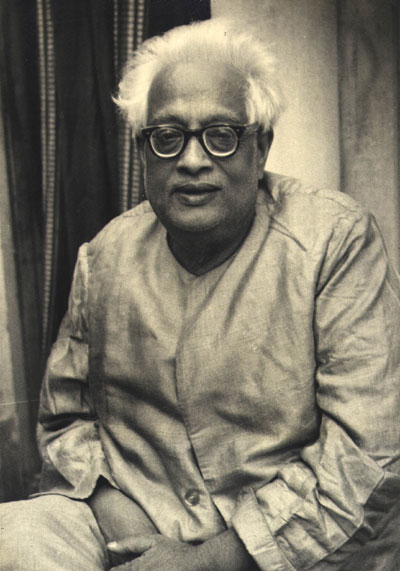

And frankly, that's embarrassing.
Not exactly. You're mixing up individual intellect and capability with society's broad ability to grow through generational communication and collected history. Just because society has advanced more thanks to our collective history, doesn't mean that individuals themselves are "smarter" than previous generations. At least not on this short of a timescale.
Gödel and Grothendieck were better
Edit: of course, if we're talking about a combo of best and most influential mathematician of all time, that would likely be Riemann. Even Gauss was impressed by him. Shame about his integral though
I feel like some millenials this is all they care about.... ranking people in useless lists that mean nothing to anyone. Usually it is sports but it extends to many subjects.
Thread starts off good, and then quickly descends into some moronic greatest of all time BS. LOL.
we are a hierarchical species, we naturally rank things
This thread isn't that bad, I was just saying.... Now the sports threads OMG they are so bad.
We are also a rational species, or at least we would like to think so, and this means ranking random people with different levels of expertise in different eras is actually mostly impossible and useless.
It's imprecise
although alot of ranking is subjective, you can still make solid, rational conclusions
not many mathematicians of the 20th century can really compare to what Grothendieck did for example...same with physicists and Einstein
Hmmm, IDK, that is very highly up for debate what you just said.
Physics has many different disciplines, and right now people specialize more than anything. And what happens in the future when Einstein's stuff has a high probability to be overturned. Then people will reevaluate a lot of the things he has done.
Same thing with math. It ridiculous to assign one person a role of GOAT. It's impossible. There are too many disciplines within the overarching subject.
Neumann was certainly on a short list of about ten people though.
String Theory is the future to overturn both QM and General Relativity
Impressive anecdotes. Dude sounded crazy smart. Wonder if we'll ever get a mind as incredible as his in our time.....time will tell.
Statistically there are probably quite a few of them alive right now.
Why wouldn't we know about them?
An occasional heavy drinker, Von Neumann was an aggressive and reckless driver, supposedly totaling a car every year or so. According to William Poundstone's Prisoner's Dilemma, "an intersection in Princeton was nicknamed "Von Neumann Corner" for all the auto accidents he had there." (p.25)
His colleagues found it "disconcerting" that upon entering an office where a pretty secretary worked, von Neumann habitually would "bend way way over, more or less trying to look up her dress." (Steve J. Heims, John Von Neumann and Norbert Wiener: From Mathematics to the Technologies of Life and Death, 1980, quoted in Prisoner's Dilemma, p.26) Some secretaries were so bothered by Von Neumann that they put cardboard partitions at the front of their desks to block his view.
And what happens in the future when Einstein's stuff has a high probability to be overturned. Then people will reevaluate a lot of the things he has done.
I am an algebraist so I actually use results of people like Grothendieck and Hilbert, while I'm quite familiar with the work of most of the other mathematicians mentioned in the thread. Both had amazing contributions for sure.
I can definitely appreciate the mathematical prowess of Von Neumann as well as his extremely wide range. The latter is what I find mostly commendable: people seem to think that mathematics are quite similar all across the board, but I would say that specific mathematical fields need different ways of thinking to excel to. Of course basic premises are the same, but you need a different type of intuition to work with Geometry than what you need to work with Stochastic Calculus. That's one reason why it is so rare to find universal mathematicians (the other reason for today is that specialization is much more extreme).
With that in mind I would say that the guy with the best ideas (not necessarily "most intelligent") in the field was probably Riemann or Archimedes. Riemann has papers that gave birth to whole branches of mathematics and his ideas, when you understand them, are amazingly beautiful and simple yet ingenious.
As for Archimedes, the guy was using Riemann integrals on a time when 0 was not a number.
I exepect it takes a lot more to stand out from the crowd now. How many mathematicians and physicists are there today compared to 90 years ago? How much greater specialisation do you require to be pushing the edge of your field than 90 years ago?
What if we discover an alien civilization and it turns out they're all actually really dumb?
Why wouldn't we know about them?
Sure but most of you westerners are clueless about south east asian geniuses like Satyen Bose and Ramanujan:
And frankly, that's embarrassing.
I mean, if you look into younger people, Peter Scholze is already a name to be remembered for generations to come in the math community, and he finished high school like 12 years ago. There are many young bright minds, but their 'fame' is usually localized within their field.

Stephen Hawking?Impressive anecdotes. Dude sounded crazy smart. Wonder if we'll ever get a mind as incredible as his in our time.....time will tell.
I mean, if you look into younger people, Peter Scholze is already a name to be remembered for generations to come in the math community, and he finished high school like 12 years ago. There are many young bright minds, but their 'fame' is usually localized within their field.
Impressive anecdotes. Dude sounded crazy smart. Wonder if we'll ever get a mind as incredible as his in our time.....time will tell.

We would know of what they have accomplished.
It's like saying "There must be someone faster than X athlete out there!", well, no, not until they actually train and compete and beat their record.
who is the genius of our time? Elon Musk?
Thank you very much for posting this. I'm not a mathematicians, but this is close enough to what I do that I can even understand the research stuff. It's fascinating!One of today's most "genius" (for lack of better term) mathematician is Terence Tao. I highly recommend his blog as well: https://terrytao.wordpress.com. Although obviously most of the entries are research-level stuff, he has some more general posts about mathematics and mathematicians, as well as some entry-level posts. I find that he writes extremely clearly and makes you think that you understand everything (you probably don't).
Strange coincidence I started reading Prisoner's Dilemma from William Poundstone last week... Loving the mix of biographical/historical and technical info about John Neumann work on Game Theory. Also I must recommend Dan Carlin's Hardcore History episode The Destroyer of Worlds not limited to Truman/Neumann but also about the start of the atomic era, game theory, and what it entailed in terms of geopolitic dynamics evolution and to some extent the human species evolution. Can't recommend it enough.
The Computer and the Brain is another great work from Johnny, although it was left unfinished, when he was diagnosed
what Teller says about Von Neumann is heart pounding
https://www.youtube.com/watch?v=Oh31I1F2vds
you can feel the emotion he has talking about him
Now he wasn't the greatest pure mathematician of the 20th century
I would put Hilbert or Grothendieck in front of him
but he is no doubt the greatest applied mathematician to ever live, i don't think that can really be disputed
Uh, Gauss?