I hadn't been paying too close attention, but I didn't know that. Huh.
Hm. I usually like adhering to Ultima/DQ/Wizardry/DnD/etc mechanics when it comes to RPGs, so number-crunching is the sort of thing I usually really like. That's what I come to RPGs for, and if I don't have a lot of numbers and stats to crunch, my interest tends to wane. If there's not a sense of progression in terms of gathering battle experience, it'll be interesting to see how they try to give the player a sense of "progression" with respect to getting new armours. Regardless, I'm rather wary of the concept.
It almost makes me question what they're trying to aspire to with respect to the game's design here. I wonder if it's going to have that sort of "sense of identity" issue that FF13-2 had to me. It looks like they're trying to create a mix of an action game with an ARPG with an open world experience to cater to audiences that seemed to have moved to other types of RPGs to satiate their playstyles/newfound playstyles this generation, or even to cater to a brand new audience.
I'd said this before somewhere, but I'd started to feel that Squaresoft's RPGs were the leaders in innovation in the past whenever they put their first Final Fantasy game on a system from the PS1-onwards. PS1 had it with a more cinematic approach/using prerendered environments/using better models especially with FF8, etc in FF7, and PS2 had it with making even more of a cinematic experience with making voice acting a mainstay with better environmental approaches in terms of scenery. Scene blocking and better cinematic direction for story elements was another thing that felt solidified for the generation on that console because of FFX to me. Of course, this is purely anecdotal, as there were games prior to those games being released on those respective consoles that did the same thing, but I felt like FF refined and popularized the concept so far as to have other developers try to follow suit.
Right now, it feels like they're trying to catch up and are trying almost every ingredient they can think of in order to chase after many different audiences, but it's a tactic/game design blueprint that seems rather hit-or-miss. Even when I played FF13 in late 2009, it felt like it was trying to capture an audience which wasn't incredibly familiar with the genre, and while that's alright, the breakneck pacing and reliance on cinematic fixtures seemed to have made for a rather divisive game in the end.
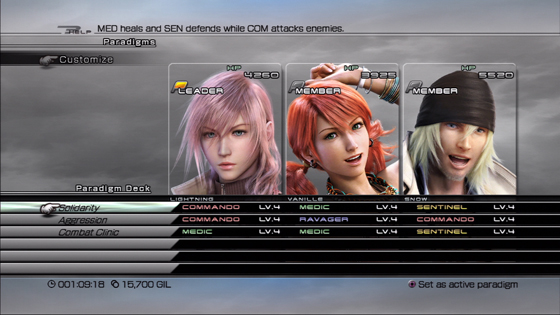
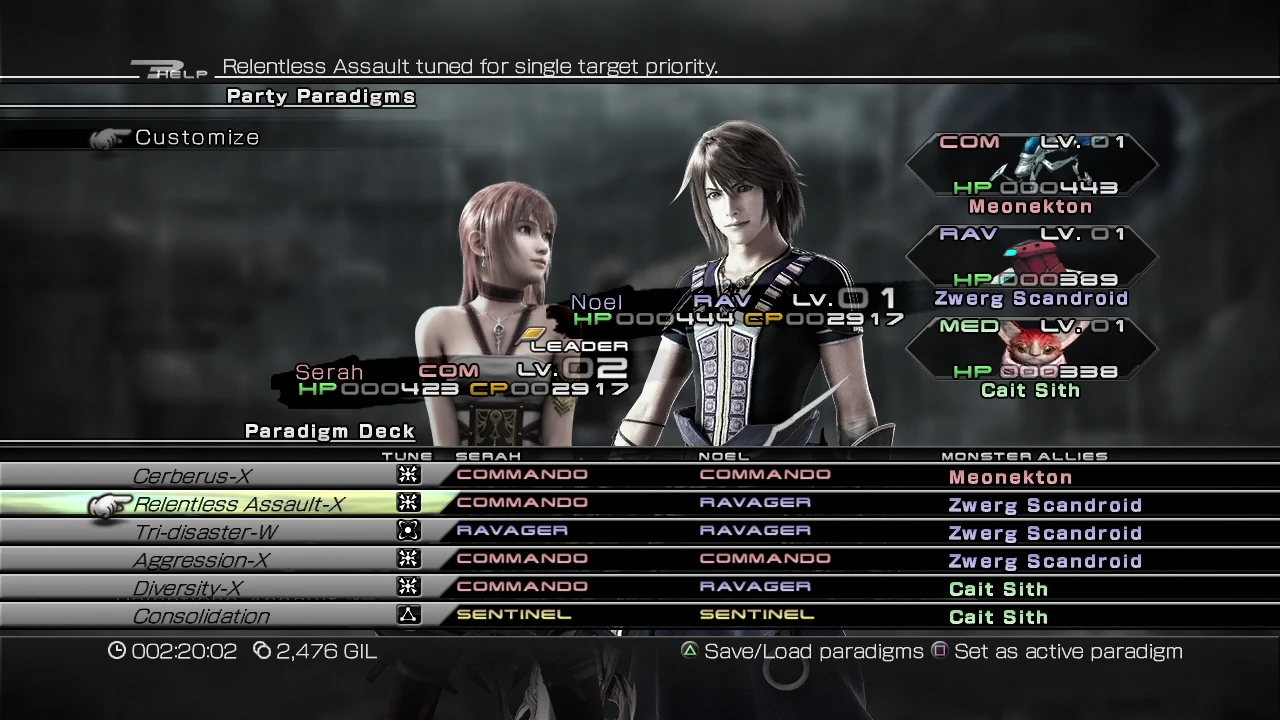
The problem with this approach is that the end-product tends to lack any sort of cohesion, with a follow-up question from a player thinking about game design: "Why are they doing this and in terms of game design, what is the reason for this approach in the game?" That's what I kept asking myself in Final Fantasy XIII-2, despite many people believing it to be the better game (though I suspect that having more diversity in terms of playable options would have been what people were looking for, regardless of the fact that it didn't feel cohesive, nor did it seem to have its own sense of identity in terms of design).
I'll be interested to see whether or not this game's design and approach, and what it includes, will be cohesive or not, but I can't help but to feel like it's taking a similar approach as FF13-2 did in that it's trying to take many different options that we've seen in RPGs of this era and past, and is trying to craft a game that will attempt to cater to several different audiences yet again but is going to miss some semblance of cohesion and originality/sense of individuality in the sea of RPGs that have come out on not just the consoles, but also the handhelds (which, regrettably, tend to be forgotten when discussing RPGs in general).
In short, I'm skeptical. It'll just be interesting to read impressions out of Japan for that region's release as to whether or not all of the ingredients will mix into a cohesive product, or if it'll feel like some things are suited to the game while others are not.