

Since the breakout success of the GTA series, game development has shifted more and more towards an open-world model. This movement has taken hold of not only action/adventure games, but also less likely genres such as racing (Burnout: Paradise) and platforming (Jak II). The problem with this approach to game design is that it takes a great deal of skill (and a little luck) to nail the formula. Rockstar has proved time and time again that they do it better than anyone else, while other developers put out imitations that feel monotonous and empty when compared to the vibrant, immersive, and involving worlds that the Rockstar's games offer to the player. I'm looking at you: Spiderman 2, True Crime series, inFamous, Saints Row... etc.
So that's one approach to offering freedom of choice to the player, but what about linear games with open-ended gameplay? In such games, the plot guides you down a predetermined path but still allows you to be creative with the core mechanics of the game. These types of games can be just as difficult to design as a good open-world game, because nailing core gameplay is what separates the great developers from the rest.
Here are some examples of linear games with open-ended gameplay:

Psi-Ops: The Mindgate Conspiracy - Here's a game that is completely linear, guiding you down narrow hallways from one confrontation to the next. Despite the straightforward progression of the game's design, it's flexible combat makes it incredibly open-ended. This is one of those games where you can replay the same section repeatedly and have it play out differently every time. Especially once you had acquired all of the psychic powers, finding new ways to dispatch the hapless foot soldiers was incredibly fun and flexible. There's nothing like throwing a crate at someone, setting them on fire while stunned, lifting them up into the air with your mind as they flail about in agony, and then tossing their flaming body at another soldier hiding behind an explosive barrel.

Metal Gear series - There's no denying that the Metal Gear games are linear, plot-driven experiences, but their subtly open-ended gameplay is the result of a designer (Kojima) who still knows what's important when you're done watching cutscenes. I spent hours on end playing and replaying MGS2's demo section, alone. Since the games give you a plethora of different military instruments, there are always dozens of ways in which you can progress through any section of the game. Of course, you can always go pure stealth and not harm anyone throughout the entire game. If that's not your style, you can go full-on homicidal: attaching C4 to guards' backs, chasing them around with the Nikita missile, sniping them from afar, tranq'ing them and then blowing their brains out while they're unconscious, holding them up at gunpoint and torturing them, distracting them with nudy magazines, snapping their necks, tossing a venomous snake in their face (MGS3), waiting for them to walk over a well-placed claymore mine... the list could go on and on. Without a doubt, the MGS series is one of the best examples of open-ended gameplay in an extremely linear game.

Devil May Cry 1 and 3 - I'm excluding 2 and 4 because these two games are the ones that really nailed the gameplay for me. I can't think of another linear action game that I dissected as thoroughly as DMC1. I must have played through it on every difficulty five times over, and I loved every second of it. How many linear action games lend themselves to making full-fledged combo videos? That's the sign of incredibly satisfying and flexible core gameplay. Of course, DMC3 ratcheted up the complexity even further, letting you switch guns and melee weapons with a quick button-press. To this day, I think these games still represent the best in pure-action gameplay.

Any mainline Mario game - The Mario platformers might not seem open-ended at first glance, but allow me to explain. While the 2D Marios might seem to be incredibly linear (run to the right until you get to the flag), it's Nintendo's trademark attention to design that elevates the experience to something much more flexible. The fluid, momentum-based controls are instantly satisfying, and it's just as fun to simply run and jump with Mario as it was 25 years ago. The Mario games are a testament to the power of tight, responsive controls in a videogame, and it's exactly that responsiveness that allows the player to navigate through the mind-bending levels in a variety of ways. Just watch any speedrun through a Mario game, and you'll see that there is legitimate grace on display in the hands of an expert player who is in tune with the game's mechanics and familiar with each and every level of the game. And while the 3D Mario's are a little more wide-open than their 2D counterparts, the core gameplay is still just as flexible. Mario Galaxy 1 and 2 are more linear than 64 and Sunshine, but search Youtube for "jump compilations" to see how the player can use the game's gravity physics to navigate the environments in ways not readily apparent during the first playthrough.
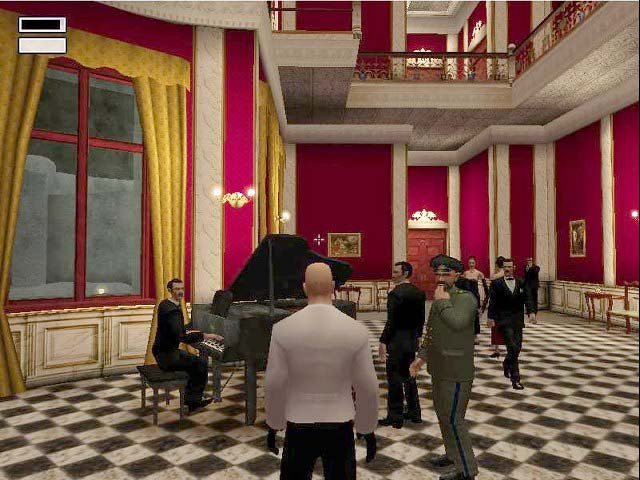
The Hitman series - Yes, the environments in the Hitman games are large, but the game is still linear in terms of progression. The player must complete each self-contained level in order to advance the story and continue through the game, but how they complete their objectives is incredibly open-ended. Hitman 2 was another example of a demo that had me captivated for hours, and I immediately went out and bought the full game based on my enjoyment of that single level (Anathema). The ranking system encourages players to experiment with different approaches when replaying levels, and the large selection of sleek weaponry that must be procured on-sight appeals to the collector in us all. The games tend to fall slightly short when it comes to production values, but their rewarding gameplay makes up for it in spades. Of course, the trial-and-error nature of the Hitman games keeps them from being enjoyable for everyone, but it really clicked for me.
----
What are some other games that achieve the holy grail of offering fun, open-ended gameplay while sticking to a linear design?
So that's one approach to offering freedom of choice to the player, but what about linear games with open-ended gameplay? In such games, the plot guides you down a predetermined path but still allows you to be creative with the core mechanics of the game. These types of games can be just as difficult to design as a good open-world game, because nailing core gameplay is what separates the great developers from the rest.
Here are some examples of linear games with open-ended gameplay:
Psi-Ops: The Mindgate Conspiracy - Here's a game that is completely linear, guiding you down narrow hallways from one confrontation to the next. Despite the straightforward progression of the game's design, it's flexible combat makes it incredibly open-ended. This is one of those games where you can replay the same section repeatedly and have it play out differently every time. Especially once you had acquired all of the psychic powers, finding new ways to dispatch the hapless foot soldiers was incredibly fun and flexible. There's nothing like throwing a crate at someone, setting them on fire while stunned, lifting them up into the air with your mind as they flail about in agony, and then tossing their flaming body at another soldier hiding behind an explosive barrel.
Metal Gear series - There's no denying that the Metal Gear games are linear, plot-driven experiences, but their subtly open-ended gameplay is the result of a designer (Kojima) who still knows what's important when you're done watching cutscenes. I spent hours on end playing and replaying MGS2's demo section, alone. Since the games give you a plethora of different military instruments, there are always dozens of ways in which you can progress through any section of the game. Of course, you can always go pure stealth and not harm anyone throughout the entire game. If that's not your style, you can go full-on homicidal: attaching C4 to guards' backs, chasing them around with the Nikita missile, sniping them from afar, tranq'ing them and then blowing their brains out while they're unconscious, holding them up at gunpoint and torturing them, distracting them with nudy magazines, snapping their necks, tossing a venomous snake in their face (MGS3), waiting for them to walk over a well-placed claymore mine... the list could go on and on. Without a doubt, the MGS series is one of the best examples of open-ended gameplay in an extremely linear game.
Devil May Cry 1 and 3 - I'm excluding 2 and 4 because these two games are the ones that really nailed the gameplay for me. I can't think of another linear action game that I dissected as thoroughly as DMC1. I must have played through it on every difficulty five times over, and I loved every second of it. How many linear action games lend themselves to making full-fledged combo videos? That's the sign of incredibly satisfying and flexible core gameplay. Of course, DMC3 ratcheted up the complexity even further, letting you switch guns and melee weapons with a quick button-press. To this day, I think these games still represent the best in pure-action gameplay.
Any mainline Mario game - The Mario platformers might not seem open-ended at first glance, but allow me to explain. While the 2D Marios might seem to be incredibly linear (run to the right until you get to the flag), it's Nintendo's trademark attention to design that elevates the experience to something much more flexible. The fluid, momentum-based controls are instantly satisfying, and it's just as fun to simply run and jump with Mario as it was 25 years ago. The Mario games are a testament to the power of tight, responsive controls in a videogame, and it's exactly that responsiveness that allows the player to navigate through the mind-bending levels in a variety of ways. Just watch any speedrun through a Mario game, and you'll see that there is legitimate grace on display in the hands of an expert player who is in tune with the game's mechanics and familiar with each and every level of the game. And while the 3D Mario's are a little more wide-open than their 2D counterparts, the core gameplay is still just as flexible. Mario Galaxy 1 and 2 are more linear than 64 and Sunshine, but search Youtube for "jump compilations" to see how the player can use the game's gravity physics to navigate the environments in ways not readily apparent during the first playthrough.
The Hitman series - Yes, the environments in the Hitman games are large, but the game is still linear in terms of progression. The player must complete each self-contained level in order to advance the story and continue through the game, but how they complete their objectives is incredibly open-ended. Hitman 2 was another example of a demo that had me captivated for hours, and I immediately went out and bought the full game based on my enjoyment of that single level (Anathema). The ranking system encourages players to experiment with different approaches when replaying levels, and the large selection of sleek weaponry that must be procured on-sight appeals to the collector in us all. The games tend to fall slightly short when it comes to production values, but their rewarding gameplay makes up for it in spades. Of course, the trial-and-error nature of the Hitman games keeps them from being enjoyable for everyone, but it really clicked for me.
----
What are some other games that achieve the holy grail of offering fun, open-ended gameplay while sticking to a linear design?


