• Hey Guest. Check out your NeoGAF Wrapped 2025 results here!

Multiple platforms hurt gaming and gamers - We need a single console future.

It's ridiculous how something so anti-consumerist is considered normal just because we are used to it.
The current model is in fact unsustainably pro-consumer. At least as far as games go as a separate industry.

Microsoft and Sony have both made net losses for the last decade on games consoles, including all royalties back on game sales.

They have subsidized your gaming hobby to try and control an industry in the hope they can leverage it to become the dominant force in home entertainment computing. So far it hasn't paid off for either company, as once they finally started making profits, they had to start the cycle again with the next round of consoles. The one exception may be the PS3's role in winning the Bluray format war.

No-one has done that in DVD players etc, ever.

Everyone's loving their cheap PS4, but if you had to pay what it would cost without the positioning advantages Sony are paying for by releasing it, you'd be paying at least double for your hardware. More than that, the higher prices of hardware would slow adoption rates to a crawl, and the market would stagnate or die.

The only hardware manufacturer to make money in the last decade has been Nintendo.
 
No, we do not need a single console future.
Without competition companies get lazy, this is just how it is, it is what brings out the best in designers.

nah competition results in a better experience for consumers.

Come on GAF read the damn OP, making blanket statements based on just the title is sad.

Somet people think that this "would kill competition, wich is good" but I rather think that it would redirect the competition in a beneficial way: it would be all about the software. I agree that competition is crucial, but I rather have it on the games side, pushing devs to make better games and publishers to not screw with us (because we probably will find an alternative because we could play whatever we want instead of being limited to what each console offer us). Others would arge that companies such as Nintendo or SCE would not make games as good without the need of prividing system sellers. But SCE and Nintendo still have business to run and they only know to make games.
 
I like the idea of multiple consoles on the market.

I've seen arrogance hurt Sony last generation because of previous generations of success and Microsoft fell into the trap pre-180 of the Xbox One because Microsoft thought we were all going to eat whatever they wanted to feed us.

Competition is a great thing, a one console market would not only harm our hobby and wallet but it would be dull too.
 
Competition. Without competition keeping people in check, MS would have kept their shitty DRM policies.

It's a nice sentiment, everyone working to simply make better games for one accepted platform, but it's not how the world works.
 
Anyway, PC gaming is awesome, I hope that Valve will manage to shake things up and make Windows less and less mandatory for the years to come. PC gaming is great, but being stuck on Windows kinda sucks.

You have a very good point and about something I've been thinking lately. I mainly play on consoles because of Windows. I can't stand it. Many PC-exclusive gamers bash console gaming forgetting that they are playing within a Microsoft environment, one that is unstable, expensive and highly overrated IMO. Hopefully, with steamOS and probably streaming capabilities, we will start to see a different (unrestricted) kind of gaming.
 
No, you don't want a single console future.

Hardware-wise it'll be consistently outdated, as there's no other competition. If the consortium is to decide on when the new system comes out, well, it's in the best interest for them to drag on as long as they could.

The bigger issue though, will be software. It's funny that people think hardware equilibrium would result in competition in software; this gen we've seen the elimination of NFL games save Madden thanks to licensing deals, and a stagnation / homogenization of FPS's to a CoD style that sells, not to mention a CoD that hasn't evolved in years since it found the winning formula. Titles that have stayed, for the most part, top notch throughout the generation have been exclusives -- Uncharted, Mario Galaxy, Xenoblade, Halo3, etc. These are the games that have become killer apps for those specific consoles, and so much effort were poured into them because much more than software sales were at stake. A stagnant ecosystem will mean the biggest players don't have vested interest to start something radically new, as long as they have that market already covered.
 
Some people want to mock the idea that "competition is good", but really, it is.

Do you think a next gen console would be $500 or less without competition? Do you think you would have seen the 180 of policies like we saw with the Xbox One without competition? Do you think we'd get as fast paced an evolution of hardware as we currently get without competition?

What incentive would a single console have to keep hardware and software prices down? What incentive would there be to put the millions and billions of R&D required to create new hardware? What incentive would there be not to put in put in completely anti consumer policies like what the original Xbox One plan was, or worse?

I really fail to understand how anybody thinks this would be a good thing.

Oh and yes I get it, people hate exclusives. But really, exclusives are a small price to pay to avoid all the downsides a single console/non competitive future would bring.
 
If the majority of people really wanted what the OP says is good for gaming, we'd likely have it by now. Every time that we do have utter domination in the gaming marketplace by one platform, however, the playing field is always reclaimed by competitors and the fragmentation and fight for domination begins again. This is the reason why things haven't gone completely shit on the console or dedicated gaming device side yet. Gamers benefit from that resistance of the market to coalesce around one standard even if gaming has become very homogeneous in its approach with so many versions of the same games made available across the platform spectrum every year. Most games reach most relevant platforms, anyway, and any exclusives that don't make the jump are a very small part of the total game output into market, but they are absolutely necessary to keep things from being locked up generation after generation, leading to less not more when it comes to options for the consumer. How less options are better, I don't know.
 
Some people want to mock the idea that "competition is good", but really, it is.

Do you think a next gen console would be $500 or less without competition? Do you think you would have seen the 180 of policies like we saw with the Xbox One without competition? Do you think we'd get as fast paced an evolution of hardware as we currently get without competition?

What incentive would a single console have to keep hardware and software prices down? What incentive would there be to put the millions and billions of R&D required to create new hardware? What incentive would there be not to put in put in completely anti consumer policies like what the original Xbox One plan was, or worse?

I really fail to understand how anybody thinks this would be a good thing.

Oh and yes I get it, people hate exclusives. But really, exclusives are a small price to pay to avoid all the downsides a single console/non competitive future would bring.

It sounds like you're assuming the OP meant that a one console future would mean only being able to choose a "Sony PS5" or a "Microsoft X2". The OP edited in this:

EDIT: THIS IS NOT ABOUT HAVING A SINGLE CONSOLE MADE BY A SINGLE COMPANY, IT'S ABOUT HAVING A DEVICE ANY ELECTRONICS MANUFACTURER CAN MAKE THAT PLAYS ALL GAMES RELEASED AFTER IT IS LAUNCHED AKA KILL CONSOLE EXCLUSIVES AND FOCUS THE COMPETITION ON GAMES RATHER THAN HARDWARE.

So it would be more like the Sony GameBox, MS GameBox, Nintendo GameBox. Competition would still be there, and I agree, competition is good for both the consumer and developer. It's just, in this single console world, competition would become more of a software based thing.
Some good things: I know that developers would probably love to not have to waste time and money on ports. Consumers would probably like being able to buy once, and have it play on all devices, like a DVD or Blu Ray does. Some maybe bad things: I don't know what the differences in hardware would be? If the whole point was to decide on a spec and go with it, what would be the point of buying a Sony over a Microsoft? More importance would be placed on a controller and OS than ever. Not sure how that would pan out...
 
Software is tied to hardware, and by hardware I mean control methods, not specs, those are almost irrelevant as the Wii showed.

And that is why gaming is still not mainstream or culturally relevant enough, this industry is completely stagnant in that regard, any change besides specs is met with derision and outright hate, from the "bananarang" to the Wii remote, to the Wii U game pad. The industry wants to play with the same old toy, deluding themselves it is not a toy, but they are, all consoles are toys, they are meant to be played an interacted with, which is why the one console future doesn't work, it's like every single toy should be tied to a certain way to enjoy it.
 
It seems to me that OP is describing how the PC industry works. You can buy a PC game and be confident it works on any PC hardware that's powerful enough to run it. The console indsutry is different in that you have three major players making their own hardware that only plays proprietary discs. It's the way it has always been because console makers want people to buy their hardware if they wanted to play certain games.

This is actually not a terrible thought, but I don't see it ever happening unless the console market completely dies, and if that happens then there's no point in making a single unified console anyway.
 
Once infinite horsepower is discovered or we reach a point where power can suit every game development need, having multiple consoles would be stupid.
I don't buy Disney branded DVD's, I wouldn't want to buy a game tied to one console if there's no more power difference.
 
gaben.jpg


Just wait until the Steambox comes out and unites console and PC gamers at last.
 
All DVD players play any movie you like and still there is no monopoly. This should work just like that: any electronics company can make their console, but they need to be able to play all games. If this happened I think competition would be redirected to the sofware side, making us the winners of this whole thing.
It's called the PC
 
Its the same thing as asking for a single phone or a single car. Doesn't work that way.

Not that id really have a problem with only one console.

PC
 
PC on Linux.

But seriously - no, that would be a disaster. The market must consist of at least three players.
 
Hell no. It's because of console competition that we have PS+.

Well to be fair, in the OP scenario things like PS+ would actually be more prevalent. With console makers not being able to compete on things like hardware and exclusives, extra services like PS+ would be the only differentiating factors. A one console future like the OP wants doesn't necessarily mean the end of competition, it just means console makers will need to find different ways to compete.

I personally would love a one console future, from the point of view that I'd love to have just one box under the TV. I don't think it will happen as a console though, as the economic model for them relies heavily on the license publishers pay to the console holder to be able to release games on the box. That obviously wouldn't happen for something like the OP wants to be successful (see Steam Box) so prices would most likely have to go up, and in that case consoles lose a lot of their appeal.

As for a one console future where only Sony or MS exist in a model identical to the one we have now: hell no. (But again, that's not what OP wants.)
 
You can go into a store and buy a book, a film and the latest album from your favorite band and you don't have to worry about if they are compatible with your reading skills, your DVD player or your audio equipment. They only "culture container" that puts a restriction around what you can access are museums, but that makes sense since the objects exposed are unique and only and can't be on all museums at the same time, and require security and manteninance labors to be preserved. But this does not apply to games. And still we are forced to choose pay a museum ticket that costs between 250 to 600 $/€ to be allowed to just play a fraction of the existing games they have on display, and you have to stick to it until it stops working unless you have money to spare or you are willing to make a scrifice in your personal economy because you like games so much (what I did). How can so much people consider videogames art if the first choice you have to make regarding them is discriminating wich you won't play, even if you would like to? Would you imagine yourself crossing things out of a list like that with other media? "I bouth a phillips DVD player so I won't be able to see Warner movies" "I bought a Kindle so I wont be able to read P.D. James novesl" "I'm using Firefox, so making a gmail account is out of the question".

You see, this is the defining point why your approach simply doesn't work. Unlike books, music & movies, all of them can be re-iterated and compacted into alternative forms of devices as long as they can run their intended media from a fundamental level. It works because all of these mediums are PASSIVE.

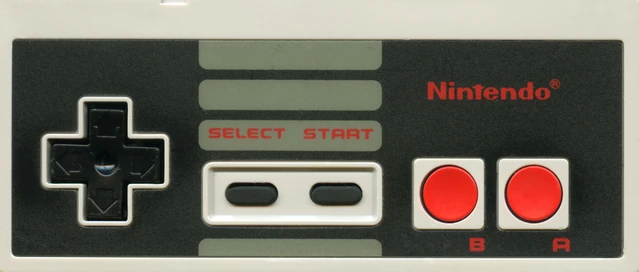
Video games on the other hand, are at the opposite end of the spectrum. They are an ACTIVE type of entertainment, which means, you have to participate before the game can fully open itself up to the player. And unlike the other mediums, video games have a very specific type of requirement before a game is played - it is NOT the console but....

639px-Reg-NES-COntroller.jpg


This is one of the factors that is blatantly overlooked when it comes to video games. The controller DEFINES how the game is played, and to have a singular monopoly on console-to-do-all would mean innovation and gameplay would be affected only catering to the least restrictive input system, in this case: the 360/PS3 pad.

In your case: Touchscreen. Why? Because theoretically speaking, most smartphones/tablets could pack enough power to run every game from the Atari all the way to the PS2 (possibly some very early PS3 launch titles). It is the closest possible factor that fulfills your criteria - but think about it - we are already seeing emulators running well in those devices but why did it not encompass the masses the same why traditional consoles would? Put it simply, there is no universal input to play all the games even if you had the technology to run them. Having a 3rd party device would only segregate your audiences, worse, you have to don't have a target point to which you can design your game. Until a system that can allow such a market to thrive, there is no way it can possibly work well for both consumers & developers.

This is why we need different systems. Each of the system provide an experience differing to the others changing gameplay and gamestyle. The only motivation for a company is to deliver the best possible experience on their platform whether it's providing a service (XBL/PS+) or introducing a unique way to play (3DS/NDS/Wii). No one console, not even the PC is capable of having the backing required to push that innovation.

 
i think this is the best time for multiple platforms actually. Unlike previous years both consoles are running off very similar parts to stock PCs so the amount of porting devs have to do is minimal compared to the years when KRAZY KEN ruled with his bizarre Emotion Engines and Cells and whatnots.

Multiple platforms are awesome, if you want a single platform future. Just get a PC and ignore console news. Done.

Edit: For me, as I have NO MORE TIME. I will just get the consoles near the end of their life and have an awesome amount of cheap exclusives to play.
 
This has probably been mentioned several times already, but what you basically want is a pc which also plays all the console exclusives, which doesn't come with the hassles usually tied to pc gaming and which also has the convenient and appealing form factor of a console.

Yeah, that's not here yet, but I can see something of that nature coming in the not so distant future. The Steam Machines might be a forebear to this.
 
No offense but this is a ridiculous statement given what Microsoft was attempting this gen.

If we only had one console we'd have a $599, always-online, no used games console that may or may not have motion controls as a requirement

There also isn't any benefit to Sony, Microsoft, Nintendo, Apple, Samsung, etc. to have a single device. They need that ecosystem to be controlled individually in order to squeeze every dime out of the userbase.
 
Not so much a single console, but a standardized hardware configuration and format that runs everything. Perhaps console manufacturers like Nintendo or Sony can make their own versions with some exclusive features, but the games should be available to everyone.
 
I think Trip Hawkins beat you to it by a few generations with 3D0.

Part of the problem there was without guaranteed revenue from game licensing, hardware manufacturers had to sell consoles at a profit, which shot them up into to $500-700 range (which was a lot back then!).
 
This has probably been mentioned several times already, but what you basically want is a pc which also plays all the console exclusives, which doesn't come with the hassles usually tied to pc gaming and which also has the convenient and appealing form factor of a console.

Yeah, that's not here yet, but I can see something of that nature coming in the not so distant future. The Steam Machines might be a forebear to this.

Microsofts maybe, but Nintendo and Sony first party exclusives NEVER show up on PC, so you are flat out wrong here.
 
Some of you guys seriously need to read the OP properly before posting statements about monopolies and stuff, as that's not what the OP is getting at.

Microsofts maybe, but Nintendo and Sony first party exclusives NEVER show up on PC, so you are flat out wrong here.

Err, I'm talking a hypothetical situation here. As in, what IF there was a pc that could play all that first party stuff.
 
Not so much a single console, but a standardized hardware configuration and format that runs everything. Perhaps console manufacturers like Nintendo or Sony can make their own versions with some exclusive features, but the games should be available to everyone.

how would that work? if a game required Nintendo's gamepad, or Microsoft's Kinect? etc etc. Even in the mobile phone world you have fragmentation. Games only available on this manufacturers tablets, or this phone companies handsets, etc etc. each manufacturer would want to differentiate *their* version of the system. we'd end up with things like PhysX and exclusivity deals.

all without the tangible benefit we get today of drastically reduced prices for the initial hardware.
 
Hopefully most people realize the opposite of the OP; just for a quick example (out of dozens): PSN would not be what it is today without LIVE being in the picture.

Plus, with console gaming arguably entering "mature market" status now, it needs compeitition now to keep it moving forward and growing, or it will see a quick decline to disruptive market forces (which are already happening but competition in the Console space are partially mitigating).
 
Microsofts maybe, but Nintendo and Sony first party exclusives NEVER show up on PC, so you are flat out wrong here.

He's not saying "A PC will eventually play all exclusives" he's saying "What you want, conceptually, is something like a PC which also hosts all exclusives"
 
Some of you guys seriously need to read the OP properly before posting statements about monopolies and stuff, as that's not what the OP is getting at.


Err, I'm talking a hypothetical situation here. As in, what IF there was a pc that could play all that first party stuff.

DVD being one single format didn't prevent multiple people coming forwards to try and succeed it. I bet you that right now there are films I can buy from iTunes that I cannot buy on DVD or Blu-Ray. it's just not true to say DVD players play all the films. they don't. they play all the films available on DVD which is far from all the films.

Avatar 3D was a timed exclusive on Panasonic hardware for like, two years. Something similar happened with How to Train Your Dragon 3D.

We wouldn't get all the games on every platform. No single platform standard could provide the variety of exclusives we saw between Wii, 360 and PS3 last gen due to hardware and interface realities.

who would serve the market looking for something low end and cheap? who would serve the high end looking for something much more powerful? if your generic one size fits all format fails to do that, other companies will come in and target those markets.

if you let the hardware vary a lot... then you lose a lot of the advantages of being a standardized format in the first place.

it's one of those utopian ideas that just can't practically come into being. it can only ever happen for a few years at a time if consumers decide to strongly favor one platform or format. it never lasts when it happens.
 
This would be horrible if it happened, and I read your edit,this will the hurt the consumer more. With only one master console, they would most likely release new versions every 6 months to keep making profit.
 
He's not saying "A PC will eventually play all exclusives" he's saying "What you want, conceptually, is something like a PC which also hosts all exclusives"

Thank you!

Also, I really don't think it's that outlandish of a concept honestly. Sony is already slowly but surely moving towards a mostly digital distribution platform like Steam, though it's still tied to just PS3, PS4 an PSV for now. Same for MS of course. Even Nintendo is making more and more strides into that area.

What if Sony in the future decides to turn PlayStation in nothing more than a digital distribution platform, with the PS4 just one of the options for offering their games on? I've heard yosp contemplating about something exactly like that during an interview with Giantbomb at the PS4 US prelaunch press event.

Think about it. They would be able to push their games to an ever broader audience, by also offering their games on tablets, phones, pc's and any other digital media device. Sure, there's still the hurdle of input devices you need to tackle, as well as different hardware configurations; but at least the hardware issue might be tackled by streaming the games within ten years or so. By then, you wont really need a dedicated physical machine anymore. You more or less just stream the game to any device in your living room.

It would save Sony a lot of money. They wouldn't really need to market, develop or produce a dedicated machine anymore, with all the costs and risks involved with that. They would simply profit from their very own digital distribution platform and competition comes from other platforms like Xbox Live and Steam.

Honestly, in about ten years time I could see this working.
 
This would be horrible if it happened, and I read your edit,this will the hurt the consumer more. With only one master console, they would most likely release new versions every 6 months to keep making profit.

It would probably have the opposite affect. Having a group of companies maintain a standard will SIGNIFICANTLY slow progress. We'd be stuck with the same standard for 10+ years and companies would focus on bringing costs down.

Just look at other 'standards' like DVD.
 
A more unified fanbase would also benefit developers. Exclusives usually happen because of money spent upfront to make them exclusive. Imagine the upfront money going away, lowering the cost of production. Then, more people would be able to buy the now non-exclusive game, increasing the profit.
 
Top Bottom