I'm studying to be a computer programmer/software engineer.
We've already automated studying.

I'm studying to be a computer programmer/software engineer.
I have one. Mothers
Are we anywhere close to the kind of AI that can abstract the concepts of a desired components of a program and generate both efficient and readable code? A big part of code is maintenance, and it would seem like a really bad idea for a computer to generate the code if a human isn't able to maintain it if it produces cryptic syntax for everything.You start by turning common programming tasks into APIs and macros. Eventually, you get to the point where project managers can input specifications and an application comes out.
Even if some programmers remain, we can get rid of the vast majority of programmers.
Well humans aren't exactly cheap, either! If zoos are strung on cash that's all the more reason for them to automate than not, really. It won't happen before automation is cheaper than human labour, but it'll probably happen once it's "good enough" rather than perfect. You could argue that animal care has a social component similar to that of child care that can't be automated, however you would probably need a lot fewer zookeepers employed.Crazy. Well I can atleast rest easy knowing that it's probably way too expensive to install all this stuff in every animals enclosure. Most zoos don't have enough money to do half the stuff they want.
I LEARN FROM YOU AND YOU ARE DUMB TOO
We'll never reach full automation for anything other than entry level/part time retail jobs. There will be too much pushback from colleges who rely on exploiting college age teens into expensive degrees at 4 year schools which can easily be done by automation. Lose the jobs, lose the pursuit of education, lose the cash. Hurts banks and colleges.
Can't keep people in the hole when robots are busy trying to pave over it.
Aircraft pilot
Well, you say specialize. That word implies that while some chains will use human workers as part of their unique selling proposition, but that also means a lot of them won't. The thing about automation isn't that it immediately wipes out all human jobs, it's that a lot of jobs can be done by a significantly lesser amount of people.
I'm a translator and automation to me means I can do some jobs a lot faster thanks to translation memories, but on the flipside a client pays me less if a certain string is a 100% match in the memory they provided or even when there is only a 60% match. This number can be fairly arbitrary as it could mean I could have to make an entirely new translation, but I'm still getting paid less for that word string.
In translation a lot of people obviously still value the human touch, but more and more humans are used to post-edit machine translation. For a lot of businesses free machine translations are preferred over quality translations because they don't think it's worth the cost to have someone translate their texts.
Huge corporations like Tripadvisor, Glassdoor and Yelp machine translate all user reviews, because they did a cost-benefit analysis and they deem the auto-translations are good enough for the purpose they serve on their site. Content mills are another good example. There are plenty of sites that pump out machine translation for how-to guides that are completely nonsensical, but presumably the ad money's good enough so they don't really care about the quality.
Obviously, translation will still be around and no serious author is going to machine translate their book for instance, but for a lot of use cases in which a company would have consulted a professional translator, they prefer an automated solution or something like crowdsourcing simply because it costs less.
Sure, but passengers would still want a human pilot to take over in case the automated system is having malfunctions.Aircraft pilot
Bittersweet.[position] 28. [probability] 0.0055 Human Resources Managers
I think the further down the ages you go, the less likely it is to be automated. Then I think about how kids are amazing at adapting new technology. You will probably (inevitably) end up requiring fewer kindergarten teachers as well. You need someone to plan activities and keep an eye on how the kids are developing. Wiping their bums and making sure the kids don't run into stuff probably won't need humans for long.Teachers at the elementary and high school level are safe for awhile. Even though you could do online courses for everyone, you still need teachers for the babysitting aspect alone.
This is from 2015:
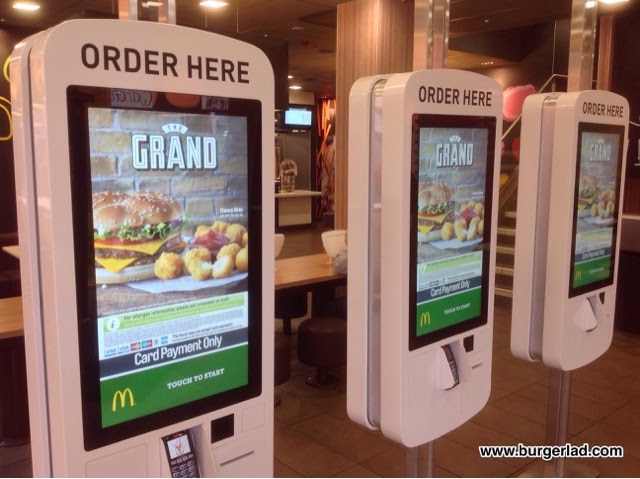
Now imagine 2030.
Clergy. I dare someone to explain how religious people are going to turn around and accept the Papal Mainframe as the voice of God.
It's not just a matter of practicality in some cases, actual humanity is intrinsic to some jobs.
Maintenance tech. Like in our Pressroom. No way you can automate fixing broken machines. Figuring out what went wrong and where exactly is a huge part of it. How on earth would a robot be able to do that?
Podcaster
Unless you want some really shitty podcasts.
Well humans aren't exactly cheap, either! If zoos are strung on cash that's all the more reason for them to automate than not, really. It won't happen before automation is cheaper than human labour, but it'll probably happen once it's "good enough" rather than perfect. You could argue that animal care has a social component similar to that of child care that can't be automated, however you would probably need a lot fewer zookeepers employed.
Clergy. I dare someone to explain how religious people are going to turn around and accept the Papal Mainframe as the voice of God.
It's not just a matter of practicality in some cases, actual humanity is intrinsic to some jobs.
It'll require some human input, sure. But that's not to say that it can't be automated at all. Today they have administrative tasks that have been automated to some degree, which will only improve with time. Then you have the "human" bit, where the clergy perhaps takes a lot of time to prepare a ceremony, select texts, prepare a speech, and so on. Just creating a database from the bible isn't a huge task, though a smart machine would need to analyze a lot of cases to see how say, a speech, is received by a group of people. After a while you can free up a lot of time for a clergyman to do other tasks, either new ones or by replacing another worker. And who knows, maybe the church of tomorrow doesn't have a human head.Yeah, a lot of jobs are basically predicated on a shared human experience.
And I, for one, support improved animal care! You'll likely have a golden age where you won't need to do the menial tasks and can focus on improving the wellbeing of the animals instead.I could see us getting downsized sometime in the future. It would actually be pretty awesome to not have to clean or feed assuming I would not be on of the staff getting cut.
According to this website, my job has a 3.2% of being automated.

If we automate too many jobs, there won't be enough people to buy the things the companies who use automation produce.
Unless we really start to think about how the increased production and yield can be used for the benefit of all. If it's basic income, sharing of jobs (the ones that are left) with shorter work days, or what have you. Keep in mind that a lot of the jobs that are getting replaced, like healthcare, care of elderly, transportation etc., are within the government. You'll be freeing up a lot of resources for the state in the future. Disregarding the promises of increased lifespans, even if we just continue like usual, that will change society a lot.If we automate too many jobs, there won't be enough people to buy the things the companies who use automation produce.
You still have to learn how to use the APIs and solve the immense number of problems that come up when designing and implementing a project.
EDIT: Also, to automate you need to program the automation. When does not exist without the other.

Code:[B]for[/B] post <- forum.posts filter (_.timestamp > lastCheck); user <- post.user [B]do[/B] [B]if[/B] user.name != "ElTorro" && random.nextInt(100) == 0 [B]then[/B] moderator.ban(user)
[B]for[/B] post <- forum.posts filter (_.timestamp > lastCheck); user <- post.user [B]do[/B]
[B]if[/B] user.name != "ElTorro" [B]&& user.name != "moka"[/B] && random.nextInt(100) == 0 [B]then[/B] moderator.ban(user)they are gone as soon as middle//small business go ahoy..stockroom worker.
Mandatory viewing for this thread
https://www.youtube.com/watch?v=7Pq-S557XQU&nohtml5=False
Just in case anyone else is debating watching -- it's not a good documentary and the core thesis is comparing humans to horses and how horses are no longer used... Which might be true if robots weren't essentially property to produce human-driven demands. Taking care of our basic demands via robots primarily free up even more human time and resources on things that are not easily automated, like every technological change since before the Industrial Revolution.
Nuclear tech. My job is to test/repair systems that are automated. Think I'm safe.
Nah. They'll replace you with a more intelligent, more efficient, more polite and more handsome robot as soon they can. My advice is sleeping with the management. Especially if they're a robot - they can't fire you after that or they'll risk turning you into a martyr for robosexual liberation.

Just in case anyone else is debating watching -- it's not a good documentary and the core thesis is comparing humans to horses and how horses are no longer used... Which might be true if robots weren't essentially property to produce human-driven demands. Taking care of our basic demands via robots primarily free up even more human time and resources on things that are not easily automated, like every technological change since before the Industrial Revolution.
HR has a ton of administrative work. Cut all that away and you'll only need a handful of HR managers compared to how it is today. Scheduling, wage administration, recruitment (sifting through applications, already automated), legal advice, they can all be automated. The more difficult stuff, like the long term strategic planning, is more difficult. Still, even a lot of that work is collecting surveys and doing statistical analysis, economics and whatnot, which can also be automated, an it’s already happening! Somewhere down the line you might find a couple of tasks that can't ever be automated, but the total amount of labour required will be less, which means fewer jobs, even disregarding fewer jobs due there not being as many humans to manage.- HR
I think these would be hard to automate

Teachers at the elementary and high school level are safe for awhile. Even though you could do online courses for everyone, you still need teachers for the babysitting aspect alone.

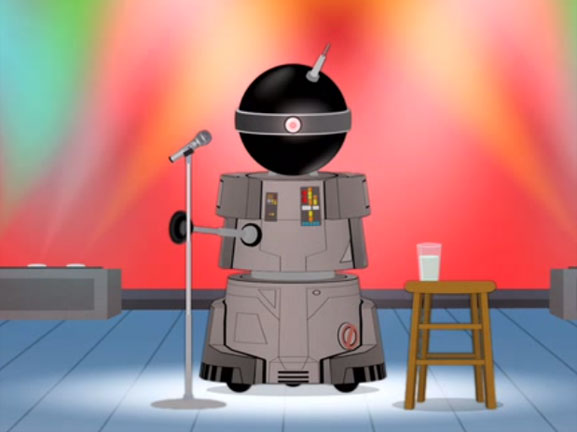
Comedian.
I teach at a prep school and trust me, our admins are working hard to make us an "iPad school," which basically means the iPads babysit the students. They want the faculty to do as little as possible.
I teach at a prep school and trust me, our admins are working hard to make us an "iPad school," which basically means the iPads babysit the students. They want the faculty to do as little as possible.
I guess we could all become sports stars and be safe.
If we automate too many jobs, there won't be enough people to buy the things the companies who use automation produce.
Any job that has to do with animals and farming is horrible if automated. You get the produce/production, but the animal gets to be mistreated more.
And really, anyone who has been to a really good restaurant will know how awesome really good passionate service is.
If you think that can be automated, then so can friends. And if friends can be automated, then why even have humans?