• Hey Guest. Check out your NeoGAF Wrapped 2025 results here!

Nonfiction Book Recommendations

Status
Not open for further replies.

Justin85

Member
So I like to read a fiction book followed by a nonfiction book and right now my list of fiction books is a lot longer than my list of nonfiction books. Can you help me rectify that GAF by recommending some great nonfiction reading? I'm not usually into memoirs or biographies but I can be persuaded. Here are some of my favorite ninfiction that I've recently read:

Hellhound on His Trail - about the assassination of MLK
The Fatal Shore - the founding of Australia
In the Garden of Beasts - US ambassador to Germany in the late 1930s
Game Change - 2008 presidential campaign
The Emperor of All Maladies - biography on cancer
Guns, Germ, Steel - why history is why it is
Steve Jobs
Destiny of the Republic - assassination of James Garfield
 
beevor.jpg
 
guns-germs-and-steel.jpg


This is a must if you're into history. It's one of the best books I've ever read.
Already in OP with different sub title. Or is it the same book? Well any way, Collapse: How Societies Choose to Fail or Succeed from the same author is another great book.
 
Postwar - Tony Judt
Read it earlier this year, fantastic book. Lots of interesting information, but not at all a tough read like many non-fiction books tend to be.
Wikipedia said:
In Postwar, Judt examined the history of Europe from the end of World War II (1945) to 2005. Writing on such a broad subject was something of a departure for Judt, whose earlier works, such as Socialism in Provence and Past Imperfect, had focused on challenging conventional assumptions about the French Left. Weighing in at nearly 900 pages, Postwar has won considerable praise for its sweeping, encyclopedic scope[20] and was a runner up for the 2006 Pulitzer Prize for General Non-fiction.[21] Postwar was described by the BBC in Judt's obituary as "acclaimed by historians as one of the best works on the subject" of modern European history.[22] The book was named as one of the ten best of 2005 by the New York Times Book Review[23] and, in 2009, the Toronto Star named it the decade's best historical book.[24]
I really like Freakonomics, it's a very enjoyable read. .

Yes, I agree. I'd recommend Superfreakonomics as well. Interesting yet accessible reads.
 
Anthnony Bourdain's Kitchen Confidential and Medium Raw

Proust Was a Neuroscientist by Jonah Leher

The God Delusion by Richard Dawkins

God is not Great by Christopher Hitchens

An Anthropologist on Mars by Oliver Sacks

Musicophilia by Oliver Sacks

Under the Loving Care of the Fatherly Leader: North Korea and the Kim Dynasty by Bradley K. Martin

Ghost Rider by Neal Peart
 
If you like adventure stories and stories of survival try these:

Endurance: Shackleton's Incredible Voyage (this story is really incredible)
Into Thin Air - John Krakauer
 
Bill Bryson's At Home: A Short History of Private Life, and his A Short History of Nearly Everything...I think they'd be a particularly good fit given some of the books on your list.
 
Unbroken by Laura Hillenbrand

It's narrative nonfiction about a WWII bomber crew that crashed into the Pacific during the war. It is, without a doubt, one of the most incredible stories I've ever read.
 
37438.jpg


Hokkaido highway blues, by Will Ferguson. It's about this guy who decided to go hitchhiking up Japan from the south to the North, and how every driver that picks him up along the way tells him that Japanese people never ever pick up hitchhikers and he's really lucky. It's very entertaining and gives a good insight into modern Japan outside the big cities, I think.
 
Poisoners-Handbook-cover.jpg


Fascinating and practical!

You never know when you need to figure out if someone swallowed cyanide or arsenic.
 
I like The Things They Carried, and Invisible Man. Blink by Malcolm Gladwell is also good. ummmm if you like basketball, check out The Book of Basketball by Bill Simmons, but if you get this, do not read it straight through. Jump around the chapters.


edit; also if you consider the Bible nonfiction, it's got some pretty good stories in it.
 
If you like adventure stories and stories of survival try these:

Endurance: Shackleton's Incredible Voyage (this story is really incredible)

I was gonna post this. The book Endurance by Caroline Alexander (I think that's the author's name) is fantastic, and has some great photos as well. Really an awe-inspiring story.


Also, if you liked In the Garden of the Beasts, which I haven't read, Devil In the White City, which I have read and is by the same author, was enthralling, and is supposedly the author's best book.

Will also second Kitchen Confidential. I found that book way more interesting than I expected.
 
4180h%2By0bCL._BO2,204,203,200_PIsitb-sticker-arrow-click,TopRight,35,-76_AA300_SH20_OU01_.jpg


About the Mossad team that tracked down and caught Adolf Eichman in 1969, before illegally smuggling him out of Argentina to try him in Israel.

9780007225651.jpg


Then of course this should be self-explanatory.

Love me some real-life covert ops.
 
I don't really nearly as much nonfiction as I do fiction (or as I should), but here are some I particularly liked:

6415965.jpg
391661.jpg
1362454.jpg

108295.jpg
433281.jpg
1098417.jpg

352957.jpg
984782.jpg
102920.jpg

1051091.jpg
1630665.jpg
119723.jpg

13214.jpg
159760.jpg


And some with smaller images:

125947.jpg
2293314.jpg
1275265.jpg
3753955.jpg

298925.jpg
 
If you liked The Fatal Shore, as I did, I would also recommend:

mOLzs.jpg


The Trial of the Cannibal Dog: Captain Cook in the South Seas - By Ann Salmond
It's not really a biography of Cook as much as the study on the impact of his discoveries on the Islanders (including the Aborigines in Australia). Although she does have a fascinating theory that Cpt. Cook became a Colonel Kurtz (Apocalypse Now) type character towards the end of his life. I've read tons of books on this subject and this is easily the best.


Y3PQa.jpg

The Bounty - By Caroline Alexander
Many movies have been made abou the most famous mutiny in history, but what really happened? Also traces the lives of the mutineers who escaped to Pitcairn Island and started their own colony.

FK8hR.jpg

A Voyage Long and Strange: Rediscovering the New World - By Tony Horwitz
Americans know the dates 1492 (Columbus) and 1620 (Plymouth), but what happened for nearly 150 years in between? Tony Horwitz traces the adventures of Conquistadors in full armor, trekking through deserts and swamps and other fascinating stories that shatter the American Discovery myth.

m8qjy.jpg

A Short History of Nearly Everything - By Bill Bryson
A hilarious and highly informative book on "nearly everything." If you haven't been exposed to this fantastic writer, this is the best place to start.
 
GBUBu.jpg


On July 1, 1959, at Ypsilanti State Hospital in Michigan, the social psychologist Milton Rokeach brought together three paranoid schizophrenics: Clyde Benson, an elderly farmer and alcoholic; Joseph Cassel, a failed writer who was institutionalized after increasingly violent behavior toward his family; and Leon Gabor, a college dropout and veteran of World War II.The men had one thing in common: each believed himself to be Jesus Christ. Their extraordinary meeting and the two years they spent living together serves as the basis for this poignant and often hilarious investigation into the nature of human identity, belief, and delusion. With novelistic momentum and insight, Rokeach takes us into the lives of these three incredible and, despite their common claim, altogether singular personalities who find themselves “confronted with the ultimate contradiction conceivable for human beings: more than one person claiming the same identity.”In scenes of remarkable power and vividness (“I'm telling you I'm God!” “You're not!” “I'm God, Jesus Christ and the Holy Ghost! I know what I am. . .”) we see the three Christs argue, proclaim, and soliloquize about the nature of their contentious divinity, and are given a window onto one of the most remarkable psychological case studies on record
 
I really need to start reading more non-fiction too. I suggest Godel Escher Bach; EGB if you haven't already read it.
 

A lot of the ideas in The Tipping Point have been heavily criticized in other works. Recently it seems like anything to with randomness takes time to rip into it. Basically it's a bunch of interesting ideas that sound good but that quickly fall apart when you take into account Gladwell's failure to consider things like the countless examples of products that are extremely similar to the ones that "tipped" in his book but failed. I like Malcolm Gladwell, but I usually stick to his essays that are published in the New Yorker. He has a book called "What the Dog Saw" that is a collection of some of them that's really good.

Someone already mentioned it, but I'll second "Proust was a Neuroscientist" by Jonah Lehrer. Each chapter examines how an artist incorporated some insight into how our minds work into their art, it's really interesting. His other book "How We Decide" is a really good introduction to cognition, too.
 
A lot of the ideas in The Tipping Point have been heavily criticized in other works. Recently it seems like anything to with randomness takes time to rip into it. Basically it's a bunch of interesting ideas that sound good but that quickly fall apart when you take into account Gladwell's failure to consider things like the countless examples of products that are extremely similar to the ones that "tipped" in his book but failed. I like Malcolm Gladwell, but I usually stick to his essays that are published in the New Yorker. He has a book called "What the Dog Saw" that is a collection of some of them that's really good.

I think there's a part in the book where he addresses that kind of issue of certain things and not others things, I think with the example being Paul Revere and some other guy who both went on midnight warning rides during the American revolution, but Paul was successful and remembered and the other guy wasn't.

At the least I thought it had some interesting ideas to think about.
 
Oh I just remembered:

cJ1m5.jpg


Covering a span of sixty years, the graphic novel Logicomix was inspired by the epic story of the quest for the Foundations of Mathematics.

This was a heroic intellectual adventure most of whose protagonists paid the price of knowledge with extreme personal suffering and even insanity. The book tells its tale in an engaging way, at the same time complex and accessible. It grounds the philosophical struggles on the undercurrent of personal emotional turmoil, as well as the momentous historical events and ideological battles which gave rise to them.

The role of narrator is given to the most eloquent and spirited of the story’s protagonists, the great logician, philosopher and pacifist Bertrand Russell. It is through his eyes that the plights of such great thinkers as Frege, Hilbert, Poincaré, Wittgenstein and Gödel come to life, and through his own passionate involvement in the quest that the various narrative strands come together.


Even if you hate math or worry you won't grasp the topics this is a compelling read.
 
Lots of good stuff. Thanks, guys. I'll go ahead and also recommend some of the books mentioned in here:

In Cold Blood
Devil in the White City
Unbroken
 
Devil-in-the-White-City.jpg


My sister recommended this book to me, and everybody I recommended it to has loved it. Absolutely engrossing book, it simultaneously chronicles the 1893 Chicago World's Fair, which seems almost too large a thing to be real, and the most insane serial killer you've never heard of. You have to read this book.
 
Devil-in-the-White-City.jpg


My sister recommended this book to me, and everybody I recommended it to has loved it. Absolutely engrossing book, it simultaneously chronicles the 1893 Chicago World's Fair, which seems almost too large a thing to be real, and the most insane serial killer you've never heard of. You have to read this book.

I wouldn't really say it's non fiction since the author includes his own ideas how the characters thought and felt.
 
If you're into cinema, I'd really recommend these two books by Peter Biskind:

biskind.gif
down-and-dirty-pictures-by-peter-biskind-mobile-wallpaper.jpg

The first is an account of Hollywood in the 60's and 70's, and depicts the rise (and sometimes fall) of Scorsese, Coppola, Spielberg, Friedkin, Altman, etc.
The second one talks about the 90's, the rise of independent film, and specific topics such as Sundance, Miramax, Soderbergh, Tarantino, etc.

Both are great read, with tons of surprinsingly candid interviews, and very well documented details about major films (Jaws, The Exorcist, Star Wars, Pulp Fiction...) and events (how Disney bought Miramax for instance).


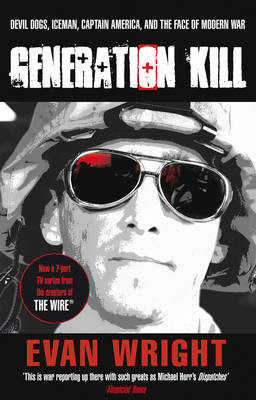
I'd also recommend Generation Kill by Evan Wright, an account of the first month of the second invasion of Irak. It's a bit different from the HBO show, and probably one of the best military-themed non-fiction book I've ever read.

9780552158930.jpg
 
Status
Not open for further replies.
Top Bottom