• Hey Guest. Check out your NeoGAF Wrapped 2025 results here!

Not This Again : Ebert : Video games can never be art

gerg said:
The concept of "art" can mean something significant without relying on a particular quality which is present in a piece.

That's not what I'm saying. What I'm saying is that if people are going to expand the definition of 'art' to mean, "Anything I think of as art, is art" - if it's going to be used in such a flexible, all-encompassing manner - then (a) there is no reason to be upset when someone says something isn't art, and (b) it makes the term meaningless because it lacks any true definition.

A word without definition, or one so in flux as to include anything ever, is worthless.
 
Vinci said:
That's not what I'm saying. What I'm saying is that if people are going to expand the definition of 'art' to mean, "Anything I think of as art, is art" - if it's going to be used in such a flexible, all-encompassing manner - then (a) there is no reason to be upset when someone says something isn't art, and (b) it makes the term meaningless because it lacks any true definition.

A word without definition, or one so in flux as to include anything ever, is worthless.

Fair enough. (Although I'm not sure that that's what the better posters in this thread is doing.)

And please don't say "true definition". : )

mugwhump said:
OK, my definition of art: a creative expression that can effectively communicate meaning or emotion. Broad enough?

A well-designed car can effectively communicate emotion. Is it art?

Heck, a well-designed sudoku puzzle effectively produces some kind of emotional response (such as intrigue, a desire to solve it, and so on). Is that art?

Timber said:
i don't see any problem with assigning a subjective meaning to something that is so inarguably subjective as art.

Because, I would argue, when we label something as "art" we mean to say that the object in question is objectively art, and that anyone who doesn't call it art is wrong. (That is, we mean more than "I think this object is art.") Such an objective description would seem to demand an objective set of guides and limits as to what is and what is not art.
 
Vinci said:
and (b) it makes the term meaningless because it lacks any true definition.
if this were true then the term would have been meaningless long before any discussion about whether it can encompass games ever took place.

i don't see any problem with assigning a subjective meaning to something that is so inarguably subjective as art.
 
Art is what we determine it to be. If what was art was always determined by the older generations, it would never have gone anywhere. New forms of art are never accepted instantly, it takes some time.

Videogames will be accepted in our lifetime. Probably not in his.


Oh, and the fact that Ebert used quality as part of several of his arguments is foolish. Bad art is still art, so poor writing means nothing for his argument. A scribble on a napkin is art. A TV soap is art. And unfortunately, even the Twilight novels are art.
 
Timber said:
if this were true then the term would have been meaningless long before any discussion about whether it can encompass games ever took place.

i don't see any problem with assigning a subjective meaning to something that is so inarguably subjective as art.

Then why such a stiff defense of games in regards to this subject? Whenever someone suggests that games are not art, people on this forum often start throwing feces. There's an emotional investment in whether games are considered art for many people - but would there be such investment if they recognized art as purely subjective in all honesty?

I think the reason people get upset about this is because they do perceive something being considered 'art' to have inherent value, and they don't want their favorite hobby to lack that value.
 
plufim said:
Art is what we determine it to be. If what was art was always determined by the older generations, it would never have gone anywhere. New forms of art are never accepted instantly, it takes some time.

Videogames will be accepted in our lifetime. Probably not in his.

Oh, there's no doubt about that. There was a guy on this board not too long ago telling us about a video game exposition he's putting together for the Smithsonian - it's already happening.
 
Its funny to think that a little over 100 years ago film was in exactly the same position.

I'm sure the leading theatrical critics of the late 19th and early 20th had an equally dim view of cinema.

The simple truth is that if Film can be considered "Art", so can interactive media. Essentially the impulses (creativity, expression, and the depiction of "truth") are the same, but the medium is different.

Interactivity is neither here nor there, because in fine art there's no velvet rope separating works that are passive (painting, sculpture, etc) from dynamic installations.

The main barrier that holds games back from acceptance is that due to their complexity they are collaborative creations, so its hard to pin the "genius" on a single visionary creator or "auteur".
 
LegendofJoe said:
Oh, there's no doubt about that. There was a guy on this board not too long ago telling us about a video game exposition he's putting together for the Smithsonian - it's already happening.
Excellent. A decade from now, this whole argument will look silly. And the old guard will be whinging and whining about "how art has been ruined forever". Just like film ruined art. And photography. And impressionism.
 
Art is completely subjective. Art is the process of transforming an idea into a form that can be fully realized by others. A work of art could be a wonderful flank orchestrated by a commander on the battlefield, or the process of a chef baking a wonderful cake. In the same way, I see no reason why wandering through someones imagination in the form of Shadow of the Collosus can't be seen as a form of art either.

Some are going to argue "THEN FUCK IT ART IS EVERYTHING THEN"...and they'd mostly be right. The fact is that there are many words in the english language that are absolutely subjective in every way. Is the Chefs baking of that cake going to be comparable to the greatest artistic works in italy or the great structures of the world? To a small few maybe, but to the vast majority of course not. At the end of the day what Ebert is claiming to be art are going to be far more appreciated by the majority of people as actual art, while the others may or may not. It doesn't really matter.

It's like the word "beautiful". She's "beautiful". No she isn't. Yes she is. What the fuck? No she isn't idiot. Look up the word in the dictionary!

See what I mean?
 
1) Someone tell me why they think Video Games are outside the definition of Art? Feel free to give your definition of art, but remember that every art student, every art professor, and every book has their own definition.

2) If there was "one " definition of art right now, but people wanted to alter the definition of it to allow video games to fit into it, what is wrong with that? The definition of art has changed since it was first recognized, why do you think it shouldn't be allowed to change again?

3) Interactive art is not a new thing. It's long been recognized as such. Performance art, art with buttons, levers, and cranks. One example is a piece of artwork at the hirschorn had a projector facing a wall that was just a circle of light. It was up to you to figure out to stand in front of it and find the correct distance in order for it to focus the image it was projecting. Regardless of whether it's a great piece of artwork or not is beside the point as it is clearly recognized as art already.

Half-joke/half-serious: I wonder if the art students on this board that refuse to label what we call "video games" (encompassing all of its genres and experimentations) are sticking to their guns purely because they are tired of discussing what art is to begin with. "What is art?" is the first question an art student is asked on Day 1, and no one with their own definition likes discussing it, unless they enjoy headaches and flaring tempers. :P
 
LegendofJoe said:
Oh, there's no doubt about that. There was a guy on this board not too long ago telling us about a video game exposition he's putting together for the Smithsonian - it's already happening.

Meh.

Most games are design, not art.

taoofjord said:
1) Someone tell me why they think Video Games are outside the definition of Art? I dare you to come up with a definition of art, anyway, because every art student and every art professor has their own definition.

As I said above, most games are products of design, and are not art. (This is true of most aesthetic commercial products.)

IMO, art is defined by an attitude to the product which doesn't emphasise a goal to which the aesthetic elements have to work.
 
gerg said:
Because, I would argue, when we label something as "art" we mean to say that the object in question is objectively art, and that anyone who doesn't call it art is wrong. (That is, we mean more than "I think this object is art.") Such an objective description would seem to demand an objective set of guides and limits as to what is and what is not art.
sure, there's no denying that. but i can't subscribe to the idea of calling something objectively art.

Ebert mentions Poetics wherein Aristotle argues that art, like many human endeavours through which we learn, is based on imitation of the natural world. a bit further on Ebert offers his own interpretation of the meaning of the word. Ebert's definition isn't the same as Aristotle's, and in between lies over 2000 years' worth of other varying definitions. to deny the elusiveness of art is to deny history.

Vinci said:
Then why such a stiff defense of games in regards to this subject? Whenever someone suggests that games are not art, people on this forum often start throwing feces. There's an emotional investment in whether games are considered art for many people - but would there be such investment if they recognized art as purely subjective in all honesty?

I think the reason people get upset about this is because they do perceive something being considered 'art' to have inherent value, and they don't want their favorite hobby to lack that value.
a stiff defense? i don't know, man. i read an article on a subject that interests me that i saw several flawed arguments in, so i felt the impulse to weigh in. others are doing the same. i don't think many people are getting as emotional and aggressive as you think. if Ebert's article doesn't sit well with people, it's largely because of its condescending tone as well as Ebert's ignorance of the subject.
 
gerg said:
Meh.

Most games are design, not art.


As I said above, most games are products of design, and are not art. (This is true of most aesthetic commercial products.)

IMO, art is defined by an attitude to the product which doesn't emphasise a goal to which the aesthetic elements have to work.

In the same sense as a building is right? I guess you wouldn't consider the Sistine Chapel art then.
 
Timber said:
sure, there's no denying that. but i can't subscribe to the idea of calling something objectively art.

In which case (and if you want to have a consistent theory), you can't call something "art", or discuss the matter with people.

Ebert mentions Poetics wherein Aristotle argues that art, like many human endeavours through which we learn, is based on imitation of the natural world. a bit further on Ebert offers his own interpretation of the meaning of the word. Ebert's definition isn't the same as Aristotle's, and in between lies over 2000 years' worth of other varying definitions. to deny the elusiveness of art is to deny history.

Our ability to understand art (and our receptiveness to it) should not reflect on what actually is art.

LegendofJoe said:
In the same sense as a building is right? I guess you wouldn't consider the Sistine Chapel art then.

Architecture is as much of an art form as anything else. I imagine that art and design inhabit some kind of scale, with most objects sharing designed qualities and artistic qualities; only a few are "purely art" or "purely design". Giving the matter a very rough consideration, I'm not sure that I would call the Sistine Chapel art. The decorations inside? Of course.
 
I think the argument is wholly unnecessary and pointless, however I find it humorous he is willing to entertain the idea that chess might be art, but video games can never be. Strange absolute.

as useless as "love" and "god"
you need a hug
 
gerg said:
Architecture is as much of an art form as anything else. I imagine that art and design inhabit some kind of scale, with most objects sharing designed qualities and artistic qualities; only a few are "purely art" or "purely design". Giving the matter a very rough consideration, I'm not sure that I would call the Sistine Chapel art. The decorations inside? Of course.

When I first quoted your post you said it was a product of both design and art, which would apply to video games as well. I view interactive media as a collaborative, creative effort and to me that is art; but you don't see it that way. Which is why I didn't really want to be pulled into this discussion, because the definition of what "art" is, is purely dependent on subjective perspective.
 
LegendofJoe said:
When I first quoted your post you said it was a product of both design and art, which would apply to video games as well.

I had a mistaken memory of the Sistine Chapel.

I view interactive media as a collaborative, creative effort and to me that is art;

A car is a collaborative, creative effort. Designing a toothbrush is a collaborative, creative effort. Is a toothbrush art?
 
eznark said:
I think the argument is wholly unnecessary and pointless,

Exactly.

The whole thing depends on the individual and how they wish to define what "art" is. It's all subjective.

Obviously, Mr. Ebert has more restrictions in his definition. I can respect that.
 
blame space said:
it means for "video games" to be Art, an environment of true choice needs to exist. something a participant experiences needs to be created solely by the player, but also in the context of the game. basically, you have to create God.

and isn't that what games try to do? a game gives you control over a variety of inputs. it lets you manipulate your environment in a way that is supposed to be considered "fun" by players. until you can manipulate your environment in any way you see fit to achieve any goal you desire, games are merely distractions with pleasurable feedbacks.

if games were art, games wouldn't exist. Game would exist.
Huh? You're not making any sense at all...
 
SonicMegaDrive said:
Exactly.

The whole thing depends on the individual and how they wish to define what "art" is. It's all subjective.

Obviously, Mr. Ebert has more restrictions in his definition. I can respect that.
I don't understand the weight some people give the word, as if calling it "art" somehow makes video games more important.

Amir0x, I disagree. Braid is a perfect example of contemporary art. Pretentious, annoying, unimpressive and just downright tripe.

Oh, and if chess and video games get the magical art moniker, then so does baseball!
 
gerg said:
A car is a collaborative, creative effort. Designing a toothbrush is a collaborative, creative effort. Is a toothbrush art?

Again, this is why i didn't want to be pulled into this discussion because what we're really arguing is semantics and personal opinion.
 
gerg said:
In which case (and if you want to have a consistent theory), you can't call something "art", or discuss the matter with people.
sure you can. if one person thinks something is art, and another person thinks the same, then they can discuss it. if one person thinks something is art, and another person disagrees, then they can still discuss it. subjectivity doesn't magically prevent discussion.

Our ability to understand art (and our receptiveness to it) should not reflect on what actually is art.
and one of the virtues of subjectivity is that nothing can reflect on what art actually is.

there's no consensus on what art precisely is, but that doesn't deter a great many people, many of whom learned and educated, from stating that "art is something that...". if that's what art is to them they should by all means be allowed to theorise all they want, as long as they realise that subjectivity is something that cannot be excluded from any discussion regarding art.

Is a toothbrush art?
if said toothbrush has aesthethic or emotional value to someone, or fits whatever criteria that person wants from a piece or art, then yes, it absolutely is.
 
I think whatever he thinks about games as art, the summarized end of his commentary is the right point of view:

Why are gamers so intensely concerned, anyway, that games be defined as art? Bobby Fischer, Michael Jordan and Dick Butkus never said they thought their games were an art form. Nor did Shi Hua Chen, winner of the $500,000 World Series of Mah Jong in 2009. Why aren't gamers content to play their games and simply enjoy themselves? They have my blessing, not that they care.

Do they require validation? In defending their gaming against parents, spouses, children, partners, co-workers or other critics, do they want to be able to look up from the screen and explain, "I'm studying a great form of art?" Then let them say it, if it makes them happy.

Why do they care? When did they start caring? Games are about fun, and if I'm not having fun with these toys, I probably don't want to have it. Who cares if it is defined as art!

I think games can be art, or at least aspects of games can be art, but even if you would call games "art", it doesn't matter.

Because most games... probably all games... are abysmal art atm. Ebert's fault is in suggesting quality is the defining line of art. If you accept that art can be terrible, than games can fall in that category.
 
Ebert said:
Let me just say that no video gamer now living will survive long enough to experience the medium as an art form...

Those are things you cannot win; you can only experience them.[/B]

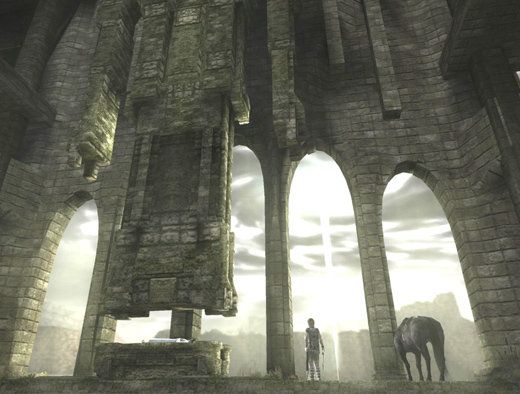
sotc_1.jpg


Fuck you Ebert.
 
Even if there were some rigid definition of art that everyone agreed upon and videogames were excluded, why does anyone care? Does that make you enjoy them less? This isn't the evolutionary tree, being classified as one thing or another doesn't actually change anything.
 
LegendofJoe said:
Again, this is why i didn't want to be pulled into this discussion because what we're really arguing is semantics and personal opinion.

Inasmuch as all philosophy is semantics...

Timber said:
sure you can. if one person thinks something is art, and another person thinks the same, then they can discuss it. if one person thinks something is art, and another person disagrees, then they can still discuss it.

Yes, but (and unless I'm misrepresenting you) according to you neither of them would be wrong.

subjectivity doesn't magically prevent discussion.

It prevents discussion when any one of the views presented is considered wrong.

and one of the virtues of subjectivity is that nothing can reflect on what art actually is.

I'm not quite sure what you mean here.

there's no consensus on what art precisely is, but that doesn't deter a great many people, many of whom learned and educated, from stating that "art is something that...". if that's what art is to them they should by all means be allowed to theorise all they want, as long as they realise that subjectivity is something that cannot be excluded from any discussion regarding art.

You seem to be using "subjectivity" to mean "everyone has an opinion". But that's not what it means.

if said toothbrush has aesthethic or emotional value to someone, or fits whatever criteria that person wants from a piece or art, then yes, it absolutely is.

In which case, everything is art, and the term has lost all meaning and significance.
 
Crewnh said:
How long did it take for films to be recognized as art?
that depends. it's impossible to pinpoint the first time that the majority opinion saw films as art. but there were people, be that joe public or members of the intelligentsia, who saw film as a form of art as far back as the 1920s, possibly even the 1910s.
 
well this thread has well and truly descending into the anus of self-loathing versus the over-intellectualising of topics which have little bearing on the foreseeable future's events, and it stinks

this is one of those discussions that I can't help but sit up on a high horse and look down on and shake my head. both sides both end up looking... ugly. this is a non-discussion. there is no measurable point to defining this entertainment medium as an art or not at this point in time.
 
gerg said:
Yes, but (and unless I'm misrepresenting you), according to you neither of them would be wrong. It prevents discussion when any one of the views presented is considered wrong.
and what's wrong with that? if person a thinks a toothbrush is art, while person b doesn't, they can both still explain their positions to each other as cogently as humanly possibly. what else is there to talk about? there aren't objective criteria by which to dictate whether something is art or not.

You seem to be using "subjectivity" to mean "everyone has an opinion". But that's not what it means.
nom you are misconstruing me. i meant that every work of art, and also the meaning of art, is open to interpretation.

In which case, everything is art, and the term has lost all meaning and significance.
i am repeating myself, but how can a term lose its meaning when that meaning has never been clearly defined in the first place?
 
Rez said:
this is a non-discussion. there is no measurable point to defining this entertainment medium as an art or not at this point in time.
haha

"this is a non-discussion, and here's my take on it!"
 
Rez said:
well this thread has well and truly descending into the anus of self-loathing versus the over-intellectualising of topics which have little bearing on the foreseeable future's events, and it stinks

this is one of those discussions that I can't help but sit up on a high horse and look down on and shake my head. both sides both end up looking... ugly. this is a non-discussion. there is no point to defining this entertainment medium as an art or not at this point in time.
I tend to agree.

I will say, however, that Ebert invalidates his opinion by not even bothering to properly sample the medium he's critiquing in the context it's made to be experienced. It's like going to a symphony without actually hearing it, and then proclaiming "Well, I don't see the value in this!"
 
Timber said:
haha

"this is a non-discussion, and here's my take on it!"
earlier, I posted in response to Ebert's position, rather than the general 'are games art' discussion, which is what this thread has mutated into.

that sentence doesn't make any particular judgement on the validity of either position in this argument, so no, that is not 'my take' on it.
 
Timber said:
and what's wrong with that? if person a thinks a toothbrush is art, while person b doesn't, they can both still explain their positions to each other as cogently as humanly possibly. what else is there to talk about?

Whether or not one of them is wrong.

there aren't objective criteria by which to dictate whether something is art or not.

Not would only would I argue that there are, I'd argue that there has to be in order to support how we use the term "art".

nom you are misconstruing me. i meant that every work of art, and also the meaning of art, is open to interpretation.

Sure, in the same way that everything is open to interpretation. It's a bit of a truism, but whatever floats your boat.

i am repeating myself, but how can a term lose its meaning when that meaning has never been clearly defined in the first place?

A vaguely defined term can still be meaningful or significant.
 
wait, is he saying the definition of art is what's created by an artist(s)? then what's an artist? Someone who creates art? then what's art? something created by an artist? Should I go on? That's not a definition, that's a loop.
 
hey Rez about my earlier post, you're right, "engaging" is a better word to use than "fun". i was drunk and i usually am only engaged by a game if i'm having fun with it, but i can sort of understand how there's a separation there.
 
That presentation was bad, but getting Ebert to 'see the light' is a poor quest to begin with.

The first problem is that, as some posters have pointed out, to deconstruct games you have to be versed in the language of games. This is true of all the forms of expression. I can appreciate architecture, but as someone unversed in the language of architecture I cannot fully analyse it.

The second problem is that games look like movies, so the incorrect assumption that games can be viewed through the language of movies is an easy one to fall into. Many people on the internet examine games this way too. Games are bad at being movies, and Ebert's responses to the games he was shown accurately reflects this.

Thirdly though, and as people have pointed out, the language of games extends beyond the movie aspect and into mechanics and the metaphors they create. Ian Bogost has written some very good books on this subject. I wouldn't recommend them to everyone, but they are a very thoughtful take on the medium. Because of this a simple viewing will often not convey the message a game is trying to convey.

So the presentation Ebert is criticising was destined to fail. But who cares? Games are already being used to make arguments, and they are already eliciting thoughtful, analytical, deconstructionist responses. I'm not suggesting that this makes them art, but that whether or not a person considers them art is completely meaningless. They are already being used and analysed as any other expressive form is. They have their own language, they have their own tools. Games are an expressive medium. Discussing it is meaningless. Arguing about it is moot.

edit: A semantic note. I'm using games interchangeably with interactive media. Here I mean specifically video games, so I mean computerised interactive media. Just to side step the 'is it a game' argument.

edit 2: Also the are games art discussion is fundamentally flawed anyway. If art is the group of things accepted as art and video games isn't one of those things, it becomes a discussion of how video games are the same as the things inside the group. This is pointless because games aren't exactly the same as anything already inside that group, if they were they wouldn't be a separate form of expression. On top of that, no member of that group is exactly the same as any other member either. Again, it's a meaningless discussion.
 
I'm curious, how much gaming does Ebert do? Anyone know?

Now on a video game forum we can come up with ignorant uninformed opinions all the time, but one would think he'd want to at least play a current gen game...
 
I think the question is not "Are video games Art?" but rather "Are games Art?"


PS

IIT: We Unnecessarily Seek Our Fathers' Approval
 
TheBranca18 said:
I'm curious, how much gaming does Ebert do? Anyone know?

Now on a video game forum we can come up with ignorant uninformed opinions all the time, but one would think he'd want to at least play a current gen game...

now we're getting somewhere. did games become art this gen? if not, which generation?
 
blame space said:
now we're getting somewhere. did games become art this gen? if not, which generation?
i think he just meant that eberts not kept up with games and might be extending his experiences from the era of pacman and pong into the present.
 
gerg said:
A vaguely defined term can still be meaningful or significant.
it has been vaguely defined in many a way, though, and i can vaguely define art in a way that would make a toothbrush fit the bill.

edit: i forgot to mention: you would say that my definition is wrong. and that's okay, because my view is that it doesn't matter :P
 
Top Bottom