
This follows the line of thinking that the ability to generate capital through work=Intrinsic value. Machines will quickly dominate a vast amount of things that generate capital, but that doesn't mean humans will be obsolete, we will still do things but it won't be tied to generating capital.I don't think humanity will suddenly make itself obsolete. Of course automation will have a huge impact, but we haven't wiped ourselves out yet.
Gaf likes to scaremonger about automation though, so what do I know.

-
Hey Guest. Check out your NeoGAF Wrapped 2025 results here!
You are using an out of date browser. It may not display this or other websites correctly.
You should upgrade or use an alternative browser.
You should upgrade or use an alternative browser.
Obama asked about basic income, says policy must be updated because of automation
- Thread starter typist
- Start date
- Status
- Not open for further replies.
I'm lieu of this kind of situation with automation, could there likely be a ban on certain forms of automation that could take work out of humans' hands?
Like if it's a task that a human could do, you can't automate it completely?
It'd have to take a lot of oversteps of power from a lot of different world governments, and probably cut into a lot of corporations profits so be highly unlikely but, it would be a potential solution.
Like if it's a task that a human could do, you can't automate it completely?
It'd have to take a lot of oversteps of power from a lot of different world governments, and probably cut into a lot of corporations profits so be highly unlikely but, it would be a potential solution.
humansarehorses
Member
To feed several thousand people at McDonald's, there are several people and a manager. If they became busier, would they hire another entire staff? Nah, they'd hire one or two more people.
Of course consumption goes up, but it only takes so many people to run a business. Last place I worked, they became five to ten times busier during the holidays, and they hired a single part time dude to help.
Individual stores have very real space constraints. Fast food restaurants especially so you see multiple locations popping up, typically not very far from each other.
This only bolsters my point.
Polioliolio
Member
Individual stores have very real space constraints. Fast food restaurants especially so you see multiple locations popping up, typically not very far from each other.
This only bolsters my point.
For the last 25 years at least, we've had the same two McDonald locations, the same two Burger Kings, and Wendy's, etc. for every human being born in the last 2 or so decades, these guys haven't made more jobs. They cut jobs if anything. We used to have two k marts next to the walmart. Now it's just the walmart, and the two malls we had that were booming 20 years ago are all but dead. There are way fewer jobs around here.
Most of the jobs people keep in a town like this are retail, service, food, etc. low paying corporate jobs. As these jobs become automated, people who were already getting paid next to nothing are going to be out of work.
humansarehorses
Member
For the last 25 years at least, we've had the same two McDonald locations, the same two Burger Kings, and Wendy's, etc. for every human being born in the last 2 or so decades, these guys haven't made more jobs. They cut jobs if anything. We used to have two k marts next to the walmart. Now it's just the walmart, and the two malls we had that were booming 20 years ago are all but dead. There are way fewer jobs around here.
Most of the jobs people keep in a town like this are retail, service, food, etc. low paying corporate jobs. As these jobs become automated, people who were already getting paid next to nothing are going to be out of work.
I don't have the historical number of locations of McDonald's but it has been growing over time. I don't care about your city because there could be plenty of reasons why there isn't growth of those businesses in that particular city (Kmart in general is going out of business).
So nothing you said counters my point.
The Maverick
Member
30 years from now, we can say that we adjusted to this the easy way or the hard way. I have a feeling that America is going to choose the hard way.
The goal shouldn't be to slow automation, because automated tasks ultimately benefit society. The goal should be to properly adjust to the change. I don't think a displaced worker tax solves the issue.Displaced worker tax. For every job automated implement a tax at 50% the annual salary of the position. Will raise the cost and slow automaton and fund basic income when automation is ubiquitous.
I don't think we'll ever get a dystopian future where the few high skilled workers are the only ones living a good life, while all the low skilled workers live seperately in less than slums trying to scramble for food.
Aren't we already at that point? Doctors and other wealthy people live and shop in separate communities. Alot of what poor people eat can't even be considered to be food. We have a 'we aren't all in this together' world.
I'm lieu of this kind of situation with automation, could there likely be a ban on certain forms of automation that could take work out of humans' hands?
Like if it's a task that a human could do, you can't automate it completely?
It'd have to take a lot of oversteps of power from a lot of different world governments, and probably cut into a lot of corporations profits so be highly unlikely but, it would be a potential solution.
How do you do it without giving yourself a competitive disadvantage as a nation?
At least long term?
It seems like eventually the cost of a ban will be too overwhelming and you just won't be able to survive in that industry without adapting it in some capacity.

Christopher
BDE (Big Dad Energy)
Aren't we already at that point? Doctors and other wealthy people live and shop in separate communities. Alot of what poor people eat can't even be considered to be food. We have a 'we aren't all in this together' world.
What are these poors eating that isn't considered food??
What are these poors eating that isn't considered food??
food deserts etc, all over the nation where nutrition is scarce.
Ether_Snake
å®å®å®å®å®å®å®å®å®å®å®å®å®å®å®
Displaced worker tax. For every job automated implement a tax at 50% the annual salary of the position. Will raise the cost and slow automaton and fund basic income when automation is ubiquitous.
Yeah let's stop robots from healing the sick.
Fact is programs have now learned to do research and draw conclusions from their research, so there is no stopping this train because the benefits are going to be huge. The problem is there's too many people, and too little infrastructure in place to organize massive rapid re-education to allow people to reorient their careers be it for the private sector or for big public sector projects like space colonization.
Free market capitalism has made us less prepared to enact measures necessary to make the shift toward a world where labor is less oriented by market growth needs than by humanity's needs. It will inevitably come, but the less prepared we are the more hurt there will be before we get there, or worst, will leave us unprepared and unable to deal with a major catastrophe such as a major meteor strike or natural phenomenons.
I recently got a job at a new warehouse in my area. It's owned by C&S Wholesale Grocers, a giant company that distributes to Target and various grocery stores. The billionaire owner of this company also bought a robotics company called Symbotic, and so this new warehouse (actually a converted Walgreens building but whatever) has a giant metal structure in the back that holds over 100 robots inside it, as well as a bunch of specialized robots on the outside. When it's all working (that's still something we're working on achieving) the operator feeds a pallet into the one machine. It separates all the individual boxes, registers them, orients them, and sends them down to a lift and stacks them onto the lift. The lift then deposits these boxes on various floors in the structure, whereupon the aforementioned 100 bots on the inside each pick up a box and place it on a shelf somewhere inside. Later, when a customer wants that product, they go pick up some and drop them off on a different lift, which takes the boxes to a conveyor that shuttles them to a pallet-building robot which builds the pallet and wraps it for outbound transport. This structure can hold somewhere around 660,000 cases at a density far higher than the normal side of the warehouse. It ideally will have a few maintenance people, a few operators that feed in and take out pallets, and somebody who runs the whole show from a computer hooked up to a bunch of screens (me).
This whole installation is one of the first few that is designed to eventually replace all the poor schlubs who are working in the normal side of the building. There's already an installation for Coke, and I think a few for Target. Also I think a second Coke one is on the way. There's always going to be the hard to handle special edge cases, but the vision that these billionaires have is the eventual decimation of their payrolls. My section, when running at full capacity, will probably be able to handle, with just like 10 people on a shift, what hundreds of people do elsewhere in the same location (probably, we still haven't seen it running at full power yet). Eventually the technology is going to be good enough that those people will be no longer needed and they will find themselves out of work. This is the world envisioned by business, and unless we have a huge change to how our society works with this we're going to be in big trouble. Because it's coming. It's not an if, it's a when.
This whole installation is one of the first few that is designed to eventually replace all the poor schlubs who are working in the normal side of the building. There's already an installation for Coke, and I think a few for Target. Also I think a second Coke one is on the way. There's always going to be the hard to handle special edge cases, but the vision that these billionaires have is the eventual decimation of their payrolls. My section, when running at full capacity, will probably be able to handle, with just like 10 people on a shift, what hundreds of people do elsewhere in the same location (probably, we still haven't seen it running at full power yet). Eventually the technology is going to be good enough that those people will be no longer needed and they will find themselves out of work. This is the world envisioned by business, and unless we have a huge change to how our society works with this we're going to be in big trouble. Because it's coming. It's not an if, it's a when.
Yeah let's stop robots from healing the sick.
Fact is programs have now learned to do research and draw conclusions from their research, so there is no stopping this train because the benefits are going to be huge. The problem is there's too many people, and too little infrastructure in place to organize massive rapid re-education to allow people to reorient their careers be it for the private sector or for big public sector projects like space colonization.
Free market capitalism has made us less prepared to enact measures necessary to make the shift toward a world where labor is less oriented by market growth needs than by humanity's needs. It will inevitably come, but the less prepared we are the more hurt there will be before we get there, or worst, will leave us unprepared and unable to deal with a major catastrophe such as a major meteor strike or natural phenomenons.
Robots that are doing work humans aren't or can't doing aren't displacing people and wouldn't be subject to tax.
Once we figure out General Artificial Intelligence there isn't really anything humans are able to do better than machines. Space colonization? Why would squishy humans do that than robots that live forever and don't need superfluous life support.

Hari Seldon
Member
Step #1 is to get rid of these global corporate tax havens. Can't have this all on the backs of those that still work.
hipbabboom
Huh? What did I say? Did I screw up again? :(
I giggle every time I hear the words Obama and deficit. I just don't understand how people can be so evil as to take an outright lie and use it to vilify and discredit someone's effort of which they've benefitted from. When it comes to the deficit and debt, they talk about how the debt increased during his presidency without talking about how much he's done to dramatically reduced an inherited out of control deficit. It's like giving a doctor a patient with a gaping wound and the doctor through great effort manages to close the wound and save the patients life but instead of praise, the doctor is condemned for all the blood the patient lost.

Christopher
BDE (Big Dad Energy)
We don't even have enough money to stabilize social security - this will never happen, ever.

Step #1 is to get rid of these global corporate tax havens. Can't have this all on the backs of those that still work.
The US itself is one of the biggest tax and secrecy havens, but yeah, easier said than done.
Ether_Snake
å®å®å®å®å®å®å®å®å®å®å®å®å®å®å®
Robots that are doing work humans aren't or can't doing aren't displacing people and wouldn't be subject to tax.
Once we figure out General Artificial Intelligence there isn't really anything humans are able to do better than machines. Space colonization? Why would squishy humans do that than robots that live forever and don't need superfluous life support.
You are jumping ahead. Humans will still be needed, especially when it comes to new challenges. The machines won't figure everything out on their own any time soon, and humans are needed to do research (using AIs to help), development, etc. Everything will be AI or robot assisted but there is plenty to do, but certainly not for six billion people or more. Don't equate space colonization with the ISS.
It's not automation, we already have lots of that, but robotics that will replace workers. I see people saying "not in my lifetime" but my company already has plenty of robotics in place and in planning to replace people who we currently pay about $15/hour (~$20 after benefits). My company is very aware of the negative social side effects that this can have so we are training current staff to operate and maintain multiple robots. However, many people just don't have the desire to learn these skills and don't see how quickly they are going to be replaced. This is going to cause major problems within 10-15 years.
No, it won't make itself obsolete in a sudden manner. But that is clearly where we're headed. Today it's factory workers. Tomorrow it's drivers. The day after that it's fast food restaurants. The bar for what automation is solving will keep rising, and a solution should be found before it's too late, not long after.
Yep. People also forget that even a small percentage reduction in jobs can have noticeable effects on an economy, especially local but also at large.
In NYC there are about 15k taxi drivers. Even if half become out of work, that's 7k jobs and families affected. It's not a trivial amount despite the hugeness of the city.

Pagusas
Elden Member
Its weird seeing this slowly happen, its so slow that it doesnt even register.
For example, Chase remodeled one of their banks near me, and launched its prototype tellerless banking machines. At first they kept 4 tellers at the counter and 3 machines at the entrance. That was 2 years ago. Today the bank employees a single teller and added 2 more machines and a "greeter" at the door who makes sure people dont have issues using it. These arent ATM's, they are full banking units you can do anything at that you'd do at the teller window.
You better believe that will be rolling out to banks nationwide as time goes on.
For example, Chase remodeled one of their banks near me, and launched its prototype tellerless banking machines. At first they kept 4 tellers at the counter and 3 machines at the entrance. That was 2 years ago. Today the bank employees a single teller and added 2 more machines and a "greeter" at the door who makes sure people dont have issues using it. These arent ATM's, they are full banking units you can do anything at that you'd do at the teller window.
You better believe that will be rolling out to banks nationwide as time goes on.
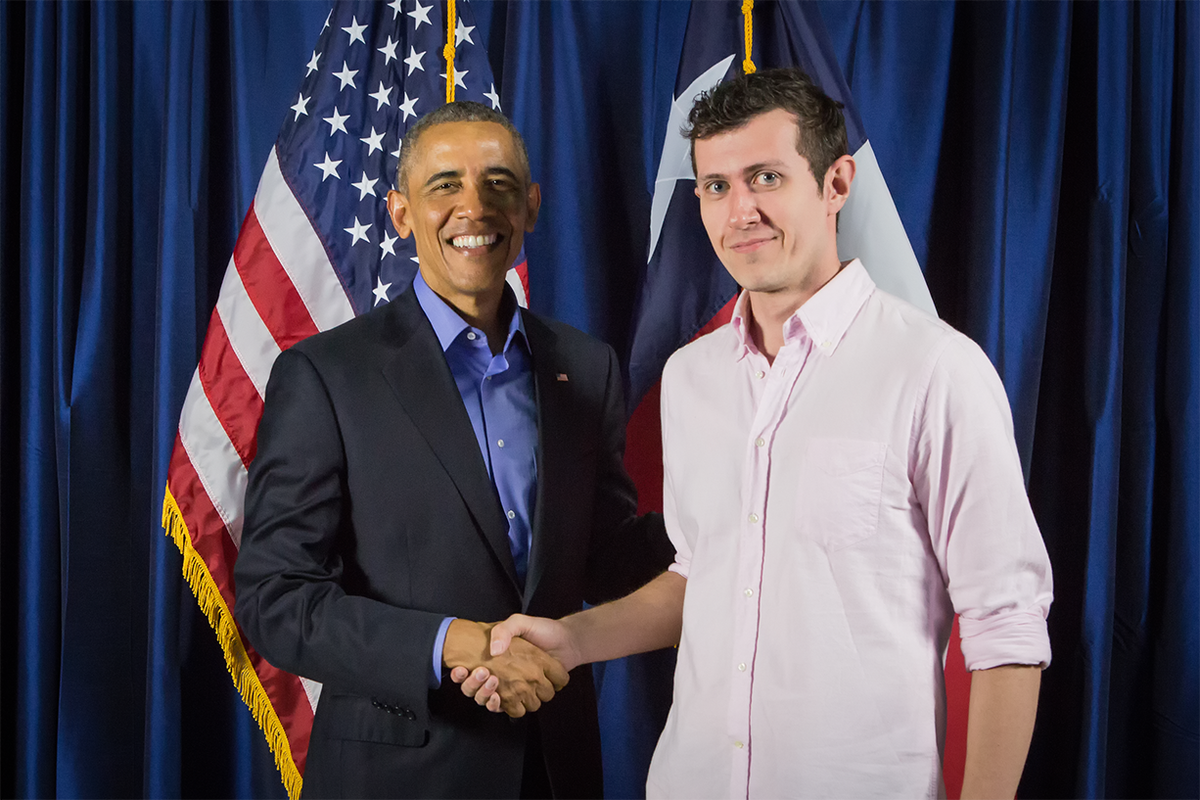
You never know...
Evilore is a handsome dude.
Automation is dangerous. I just finished a software solution that will probably wipe put 25 jobs at minimum in the following months as it makes their manual job obsolete and redundant. Just imagine how many more will be lost to things like this? But it's part of how business runs and operates. People need to reinvent themselves I am still not sold on the basic income line of thought.
demosthenes
Member
The writing is in the wall. We need to figure out how we're gonna feed people in 20 years time.
:lol
This statement reads like thinking what computers will be like in the year 2000 back 40 years ago.
The actual implementation for this technology and actually REPLACING humans is going to take a lot longer than 20 years. Hell, BMW will be TESTING their driverless semi for at least the next decade.
We don't even have enough money to stabilize social security - this will never happen, ever.
This is incorrect. Social Security is fine until 2037. If nothing happens after that, then benefits will shrink to 75% of what they were and be fine going into the future. Something will most likely happen like raising the amount that social security can be taxed on.
T
thepotatoman
Unconfirmed Member
A company called Y Combinator is starting out tests few dozen residents in Oakland for this. It'll be interesting to see the results, particularly if they can keep expanding it into something very wide scale.
There have been tests before about giving poor people money with no strings attached, but those were about trying to make poor people productive, which in america it didn't quite work out in that way.
But if basic income doesn't care about unproductive people staying unproductive, the question should be how many people that are just making by would stop working, instead of choosing to become richer by combining the free money with the money they make in whatever mid to low class job they have.
No way would a person making $10,000 a month choose to quit working because he's getting an additional $2,000 a month for free, especially if he's paying an additional 2,000 a month in taxes to pay for the program itself, but what about someone already making $2,000 a month? And would that differ from people making $500 a month or $4,000 a month?
There have been tests before about giving poor people money with no strings attached, but those were about trying to make poor people productive, which in america it didn't quite work out in that way.
But if basic income doesn't care about unproductive people staying unproductive, the question should be how many people that are just making by would stop working, instead of choosing to become richer by combining the free money with the money they make in whatever mid to low class job they have.
No way would a person making $10,000 a month choose to quit working because he's getting an additional $2,000 a month for free, especially if he's paying an additional 2,000 a month in taxes to pay for the program itself, but what about someone already making $2,000 a month? And would that differ from people making $500 a month or $4,000 a month?
Very happy to see him directly asked this question, as I knew he was aiming in this direction.
His arguments for this are very obvious to see. Firstly, consider his argument for wage insurance, which is probably dipping toes in the water in this direction. Second, consider how, according to his own economic committee, roughly 87% of present jobs making under $20 an hour are already in a high range of automation. Finally, considering the remarks and concerns of technology and automation from the former advisor to Innovation to then-Secretary of State Clinton, Alex Ross, one can see how people in office are clearly in 'the know' about this. The growing rise of the precariat probably adds fuel to this flame.
I wish we allowed a third term for President. Obama has been hot fire on many issues, lately.
His arguments for this are very obvious to see. Firstly, consider his argument for wage insurance, which is probably dipping toes in the water in this direction. Second, consider how, according to his own economic committee, roughly 87% of present jobs making under $20 an hour are already in a high range of automation. Finally, considering the remarks and concerns of technology and automation from the former advisor to Innovation to then-Secretary of State Clinton, Alex Ross, one can see how people in office are clearly in 'the know' about this. The growing rise of the precariat probably adds fuel to this flame.
I wish we allowed a third term for President. Obama has been hot fire on many issues, lately.
Just because we find ways to employ people doesn't make the jobs fulfilling, career-building, or sustainable.
You don't need to wait for self-driving cars to observe this, you can see it right now. It's at the root of most of the bizarre political events of the moment, from Trump to Brexit. GDP is growing, unemployment is dropping, and goods and services are getting cheaper, but there's still a good number of people willing to vote for totally insane policies. At least partially this is because the economy isn't helping them.
We're in the middle of a Gilded Age right now -- if you live on the coast, or you work in tech, you're doing fine and everything's pretty much okay. If you live in Appalachia, you're broke or on disability. If you're in the Rust Belt, could go either way.
We need to start creating real social programs and services (and that means moving in the direction of basic income) to deal with the ongoing obsoleting of human manual labor.
You don't need to wait for self-driving cars to observe this, you can see it right now. It's at the root of most of the bizarre political events of the moment, from Trump to Brexit. GDP is growing, unemployment is dropping, and goods and services are getting cheaper, but there's still a good number of people willing to vote for totally insane policies. At least partially this is because the economy isn't helping them.
We're in the middle of a Gilded Age right now -- if you live on the coast, or you work in tech, you're doing fine and everything's pretty much okay. If you live in Appalachia, you're broke or on disability. If you're in the Rust Belt, could go either way.
We need to start creating real social programs and services (and that means moving in the direction of basic income) to deal with the ongoing obsoleting of human manual labor.
freethoughtbubble
Member
I don't think humanity will suddenly make itself obsolete. Of course automation will have a huge impact, but we haven't wiped ourselves out yet.
Gaf likes to scaremonger about automation though, so what do I know.
It sounds outlandish--"Robots took our jobs," basically--but I can't see how the rise of cheap robotic labor and artificial intelligence won't make a large swath of the workforce obsolete over time. Will new jobs be created? Sure. Will they be enough to offset those lost? I don't see a reason to assume that other than wishful thinking.
Ether_Snake
å®å®å®å®å®å®å®å®å®å®å®å®å®å®å®
It will have a big impact on the short term, but future generations will have most of their careers oriented towards programming and engineering. It's the people born in the 20th century that are screwed.
In the near future there will be huge demand in making it possible for an AI to be able to do urban planning consulting, architectural consulting, etc. Basically AIs will need to be coded and fed massive amounts of data so that they can give us their recommendations on various topics, be it in the private or corporate sector. It's going to be a very silicon-valley-like job market out there, lots of short term projects that necessitate workers for short periods of time, and engineers to carry them out.
In the near future there will be huge demand in making it possible for an AI to be able to do urban planning consulting, architectural consulting, etc. Basically AIs will need to be coded and fed massive amounts of data so that they can give us their recommendations on various topics, be it in the private or corporate sector. It's going to be a very silicon-valley-like job market out there, lots of short term projects that necessitate workers for short periods of time, and engineers to carry them out.
A company called Y Combinator is starting out tests few dozen residents in Oakland for this. It'll be interesting to see the results, particularly if they can keep expanding it into something very wide scale.
There have been tests before about giving poor people money with no strings attached, but those were about trying to make poor people productive, which in america it didn't quite work out in that way.
But if basic income doesn't care about unproductive people staying unproductive, the question should be how many people that are just making by would stop working, instead of choosing to become richer by combining the free money with the money they make in whatever mid to low class job they have.
No way would a person making $10,000 a month choose to quit working because he's getting an additional $2,000 a month for free, especially if he's paying an additional 2,000 a month in taxes to pay for the program itself, but what about someone already making $2,000 a month? And would that differ from people making $500 a month or $4,000 a month?
The main issue I see with this experiment is that it's not large enough. If this were truly large (total) scale, the basic flow of that amount of money would affect the economy as a whole.
That said it's an interesting conversation around basic income (everyone gets it - earned 1000 plus the new 2000) vs. guaranteed minimum income (don't get it if your income is above the threshold - earned 1000 plus 1000 to bring you to minimum). Or do I have those two backwards?
The main issue I see with this experiment is that it's not large enough. If this were truly large (total) scale, the basic flow of that amount of money would affect the economy as a whole.
That said it's an interesting conversation around basic income (everyone gets it - earned 1000 plus the new 2000) vs. guaranteed minimum income (don't get it if your income is above the threshold - earned 1000 plus 1000 to bring you to minimum). Or do I have those two backwards?
A basic income and a minimum income are pointing to the same things. The latter thing you are thinking of may be something like a negative income tax?
It's just how the program is devised that is the current situation. Here's one model that proposes it in America.
I think the current battle is to get people to accept the inevitable necessity of this, for it's then when we have all hands on the table to come up with ideas.
I don't think humanity will suddenly make itself obsolete. Of course automation will have a huge impact, but we haven't wiped ourselves out yet.
Gaf likes to scaremonger about automation though, so what do I know.
This is the exact opposite of scaremongering. They are talking about something thats literally already happening now. Many jobs have already been replaced by automation RIGHT NOW. And it will continue. Those jobs will leave and never come back. Pretending that its not happening, or that its some fancy fictional doomsday overreaction is how we end up with tons of people with no work and no way to make a living as we scurry to lay groundwork to fix it after the fact.
This is the exact opposite of scaremongering. They are talking about something thats literally already happening now. Many jobs have already been replaced by automation RIGHT NOW. And it will continue. Those jobs will leave and never come back. Pretending that its not happening, or that its some fancy fictional doomsday overreaction is how we end up with tons of people with no work and no way to make a living as we scurry to lay groundwork to fix it after the fact.
nah dude tho global warming is a myth until i'm dead because of it
A basic income and a minimum income are pointing to the same things. The latter thing you are thinking of may be something like a negative income tax?
It's just how the program is devised that is the current situation. Here's one model that proposes it in America.
I think the current battle is to get people to accept the inevitable necessity of this, for it's then when we have all hands on the table to come up with ideas.
I found a wikipedia page that details the difference:
"Basic income means the provision of identical payments from a government to all of its citizens. Guaranteed minimum income is a system of payments (perhaps only one) by a government to citizens who fail to meet one or more means tests. While most modern countries have some form of GMI, a basic income is rare."
It's a subtle difference but one is a tide that raises all boats, the other just makes sure everyone floats.
The Oakland experiment is a basic income approach as far as the news describes it, where a flat payment is given to all regardless of current income.
- Status
- Not open for further replies.