• Hey Guest. Check out your NeoGAF Wrapped 2025 results here!

Please recommend the best Sci Fi novels or series

Status
Not open for further replies.
I'm currently having a sci fi craving and I'm looking for for recommendations for novels or series of anything from hard sci fi to space thrillers to space operas. I'm interested in comics as well if you have anything to recommend.

Did a search and the last thread on this dates from 2005, so I thought it might be interesting to poke OT gaf again.
 
A Fire Upon The Deep - Vernor Vinge
A Deepness in the Sky - Vernor Vinge
Rendezvous With Rama - Arthur C. Clarke
Dune Chronicles - Frank Herbert
Foundation Trilogy - Isaac Asimov
Ringworld - Larry Niven

Tons more obviously, but that should get you started.
 
When you say series, do you mean TV shows? If so, Stargate SG-1. I loved it so much I wish I could erase my memory just to watch it all over again.
 
Childhood's End - Sir Arthur C. Clarke
Contact - Carl Sagan
Oryx and Crake - Margaret Atwood
Neuromancer - William Gibson
The Gods Themselves - Isaac Asimov
Starship Troopers - Robert A. Heinlein
The Forever War - Joe Haldeman
Ringworld - Larry Niven
I Have No Mouth, and I Must Scream - Harlan Ellison
The Hitchhiker's Guide to the Galaxy - Douglas Adams
Roadside Picnic - Arkady and Boris Strugatsky
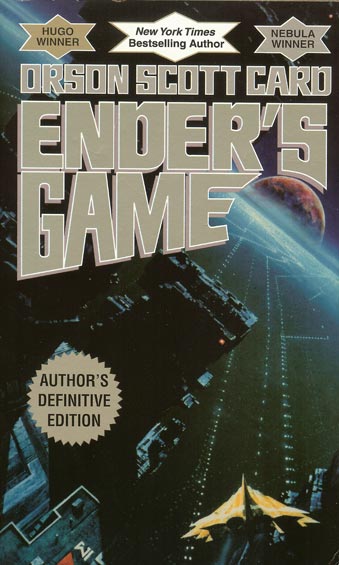
Ender's Game - Orson Scott Card

enjoy.
 
Peronthious said:
A Fire Upon The Deep - Vernor Vinge
A Deepness in the Sky - Vernor Vinge

Witchfinder General said:
The Night's Dawn Trilogy - Peter F Hamilton

Came in to post these. Good advice, listen to these men.

A Fire Upon The Deep is one of my favorite novels.
 
A Canticle for Leibowitz - Walter M. Miller Jr.
Contact - Carl Sagan
Childhood's End - Arthur C. Clarke
Imperial Earth - Arthur C. Clarke
Rendezvous With Rama - Arthur C. Clarke
1984 - George Orwell
Brave New World - Aldous Huxley
Hard Boiled Wonderland and the End of the World - Haruki Murakami
I, Robot - Isaac Asimov
Foundation books - Isaac Asimov
The Hitchhiker's Guide to the Galaxy - Douglas Adams
 
If you want real hard sci-fi:

Blindsight by Peter Watts

I must say i haven't read something like that in a loong time. Vernor Vinge is also nice, but it's just usual stuff.
 
- Dune (Frank Herbert)
>> Dune Messiah
>> Children of Dune
>> FULL STOP

- The Forever War (Joe Haldeman)
- Gateway (Frederik Pohl)
- Solaris (Stanisław Lem)
- Starship Troopers (Robert Heinlein)
 
Let's see...
  • Anything by Orson Scott Card
  • Battlefield Earth
  • Shatner's TekWar series
  • McCaffrey's Pern series

That's all I have for now.
 
(Alien Invasion)
War Against the Chtorr by David Gerrold

(Horatio Hornblower in space)
The Vorkosigan novels by Lois McMaster Bujold


Startide Rising by David Brin
 
hyperion.jpg


The Hyperion Cantos by Dan Simmons
  • Hyperion
  • The Fall of Hyperion
  • Endymion
  • The Rise of Endymion
 
I remember a bunch of friends loved Hyperion while I was in college, might be a good fit.

And what is the best entry point if I want to get into Neal Stephenson?
 
There are so many options... I'm a huge sci-fi reader.

-Peter Hamilton (Night's Dawn series could have used an editor, but it's awesome and great bang-for-buck. Also get Fallen Dragon.)

-Iain M. Banks (Get his culture novels, not the other stuff. Great reads.)

-If you include fantasy, read China Mieville, Perdido Street Station. It's not a Tolkien ripoff at ALL. Very mature, kind of dark.

-If fantasy: R. Scott Bakker's Prince of Nothing series. Also dark, extremely good.

-Piers Anthony's Biography of a Space Tyrant series. Some of the best sci-fi I've ever read. Very unlike his other work.

-Greg Bear, Blood Music.

-Neal Stephenson, Anathem.

-C.J. Cherryh, Cyteen

-Read some Michael Crichton books. Most of them have a sci-fi element. He wrote Jurassic Park, Sphere, Andromeda Strain, Congo, etc.

-Read anything by Philip K. Dick.

-Buy the Sci-Fi short story collections compiled and edited by Gardner Dozois.

-Alastair Reynolds. Read it all.

-Richard Morgan's Takeshi Kovacs series.

-Dan Simmons' work.

-Charles Stross, Accelerando.

-David Weber's 'March' series. Nothing else by him.

-Anything here: http://en.wikipedia.org/wiki/Hugo_Award_for_Best_Novel

-Anything here: http://en.wikipedia.org/wiki/Nebula_Award_for_Best_Novel

That'll be enough books for the next ten years or so. Have fun.
 
Soulcatcher said:
If you want real hard sci-fi:

Blindsight by Peter Watts

I must say i haven't read something like that in a loong time. Vernor Vinge is also nice, but it's just usual stuff.
its very, very good...it's also extremely abstract. i mean, just to wrap your head around the idea...anyway, excellent recommendation for a uncommonly excellent and unknown sci fi novel.
 
Is Frank Herbert's Dune any good? I picked it up at a second hand bookstore on the weekend.

Mind you, before I do that, I've got to finish Atlas Shrugged, which I picked up as trashy beach reading. My girlfriend bought Bridget Jones' Diary for this same purpose. I'm not sure which of us will end up with the better read.
 
Soulcatcher said:
As i said, it's hard sci-fi. It's different from simple 'adventures in space' which is what 99% of sci-fi is.
Yes, so hard that it's got vampires in it.

Sorry, I shouldn't stick my nose in; maybe the guy asking for recs will love it. This book just irritated the hell out of me. For much the same reason The Unincorporated Man did: I felt like I was being evangelized. And I had enough background knowledge to feel talked down to.

But hey, clearly other people liked it as well. I'll butt out... this time. :)
 
Dangerous Visions....A great collection of short stories edited and the brain child of Harlan Ellison. 90% Sci-fi.

Full on novels....
Starship Troopers
Any Dan Simmons.
Under the Dome
 
The Culture Series - Iain M. Banks

Consider Phlebas
The Player of Games
Use of Weapons
The State of the Art
Excession
Inversions
Look to Windward
Matter

I've read them all and I consider this the best Sci-Fi series ever.
 
It's all about knowing when to stop.

For example:

Dune
Dune Messiah
Children of Dune
<stop>

Ender's Game
<stop>

Foundation Series
(minus the Prelude to Foundation)
<stop>

Also the Hyperion series is OK if you really REALLY have a hard-on for Yates.
 
chesspieceface said:
And what is the best entry point if I want to get into Neal Stephenson?

I'm behind on my Stephenson - I haven't read Anathem or the Baroque Cycle - but based on his earlier works I'd say you have two choices. The novel that really put Stephenson on the map was Snow Crash, which takes the piss out of cyberpunk while having a great time building a wildly postmodern future. It's a blast, but the ending isn't the most coherent thing you'll ever read. Now, Cryptonomicon, that has an ending, even if it's a somewhat abrupt one. Cryptonomincon intertwines a modern day attempt at building a data haven with the story of an Allied unit in WWII dedicated to misdirection and subterfuge. It's daunting at around 1200 pages, but once you get a couple hundred pages in and things really kick in, man, what a read.

There are a ton of great suggestions in this thread. I'll second two in particular:

First, Vernor Vinge's two Zones of Thought novels - A Fire Upon The Deep and A Deepness In The Sky - are superb. It would take a bit of explanation to really explain what they're both about, so I'll just say that they both won the Hugo for best novel, they both thoroughly deserved those Hugos, and you will not be disappointed. If you are, I'll offer you triple your time spent asking for recommendations on the internet back.

Second, my absolute favorite SF series is the Miles Vorkosigan novels by Lois Bujold. The Horatio Hornblower comparison only goes so far, really, as the Vorkosigan Saga covers a coming of age story, military SF, political intrigue, mysteries, and at least one romantic comedy. If we're going by Hugos - not an absolute guarantee of quality, but pretty close - Bujold has quietly racked up four for best novel (tying her with Heinlein), so, trust me, she knows what she's doing. If you wanted to read a good space opera series, here you go.

Finally, for a series that I don't think has been recommended yet in this thread, John Scalzi's Old Man's War is a top-notch story about a galactic society that recruits their elderly to go off and fight as space marines. Yes, there's a reason why, and finding out makes for a damn fine read, with more books in the same universe waiting for you when you're done.

And there you go. Good luck!

FnordChan

 
ronito said:
Dune
Dune Messiah
Children of Dune
<stop>

I'd love to know why people are so against everything after the first three Dune books. Maybe it's just because I was a naive middle school kid/high school sophomore when I originally read it/reread it, but I remember really enjoying the bits of philosophy coupled with looking at the unique diplomatic and domestic issues in God Emperor. Chapterhouse was its own thing, but I remember it being a fun book if only for the action.

I can understand not reading anything outside of the original series, though. The efforts by his son are barely passable.
 
The Dune series. Just read the whole thing, although the first few are way better then the rest. The first Dune is still the best of the series.

I enjoyed Saga of Seven Suns, might want to pick that up. It is not that great, but a fun read anyway.

Oh, and you must read The Forever War. Great book.
 
ronito said:
It's all about knowing when to stop.
...

Ender's Game
<stop>
...

Why on earth would you stop before Speaker for the Dead, which is even better than Ender's Game. Such an amazing book.
 
Santiako said:
Why on earth would you stop before Speaker for the Dead, which is even better than Ender's Game. Such an amazing book.
Agreed! I always come into these threads praising Speaker for the Dead but everyone is too obsessed with Ender's Game.
 
Santiako said:
Why on earth would you stop before Speaker for the Dead, which is even better than Ender's Game. Such an amazing book.
Same problem with the last 3 books of the Dune canon (the stuff that Herbert's kid wrote are absolutely horrid). It just gets into metaphysical psychobabble. While some love it, most will do better without it.
 
If you're into post-nuclear war stuff:

Warday by Whitley Strieber and James Kunetka is a documentary style book about the years following a nuclear war in the US, sort of like the film The Day After. The premise is that two reporters are traveling across the US interviewing people (a group of orphans, a soldier, a guy who was working for the President at the time, some townspeople who were rescued by the RAF) and so on. It's a good read but is probably the most depressing book I've ever read.

200px-Warday_Hardback_Cover.jpg


The Postman by David Brin is a far better book than movie. This one takes place in Oregon about 30 years after the attack. A group of fascist/survivalist in the Pacific Northwest and conquer a bunch of small towns which somehow survived the war and try to set up a new country; the title character raises a militia to stop them. It's a fun book; just don't watch the movie.

The Miocene Arrow by Sean McMullen is probably my favorite, though:

200px-The_Miocene_Arrow.JPG


This one is a little different: It takes place in the US a couple thousand years after the war, and no one remembers what it was like beforehand. A feudal society has developed with nobles and rules of chivalry, except wardens in diesel-powered flying machines fulfill the role of knights on horseback. Resources like metal are scarce in this world, so no one can spend a lot of money on war -- so all conflicts are settled by dogfighting duels between each nation's respective wardens. Over the course of the book, the wardenate system breaks down and you see total war for the first time in hundreds of years. It's one of my favorite books but I've never met anyone else who's read it. Technically it's the middle book in the Greatwinter Trilogy but it really stands alone.
 
ronito said:
Same problem with the last 3 books of the Dune canon (the stuff that Herbert's kid wrote are absolutely horrid). It just gets into metaphysical psychobabble. While some love it, most will do better without it.
It's not until Xenocide that the Ender quadrilogy starts going downhill. Speaker for the Dead is every bit as great as Ender's Game, and more.
 
Speaker for the Dead is what I personally consider my favorite book. of all time. ever.


....read Ender's Game and Speaker for the Dead

Orson Scott Card's other work is hit and miss. I mean, I'm a huge fan, and I love just about everything he puts out, but I get how some other people are less so. I love Xenocide and Children of the Mind (as kooky as CotM started to get) So, the only other thing I'll recommend by him is Pastwatch. But I'll really really really recommend it.

Also, Ringworld is awesome (tho the sequels turn to shit pretty fast)

Dune is, IMO, overrated. A decent read once, but it didn't do a lot for me.
 
Speaker for the Dead is what I personally consider my favorite book. of all time. ever.


....read Ender's Game and Speaker for the Dead
Yeah speaker doesn't get enough love. Its fantastic. BTW, I only like Ender and Speaker...his other books....BLAH.
 
The Many Colored Land by Julian May.

I think it was nominated for both a Hugo and Nebula award but didn't win either one. It is the first in a series of books for "THE SAGA OF PLIOCENE EXILE".
 
I finished reading Mockingbird by Walter Tevis a couple of weeks ago. Right now I'm reading The Lathe of Heaven by Ursula Le Guin and I found Naked Sun by Isaac Asimov and The Demolished Man by Alfred Bester at the local used book store for about $3 total.

Some movies I'd recommend are The Quiet Earth and Solaris.
 
ElectricBlue187 said:
The Culture Series - Iain M. Banks

Consider Phlebas
The Player of Games
Use of Weapons
The State of the Art
Excession
Inversions
Look to Windward
Matter

I've read them all and I consider this the best Sci-Fi series ever.
This is correct
ronito said:
It's all about knowing when to stop.

For example:

Dune
Dune Messiah
Children of Dune
<stop>

Ender's Game
<stop>

Foundation Series
(minus the Prelude to Foundation)
<stop>

Also the Hyperion series is OK if you really REALLY have a hard-on for Yates.
and all of this is correct, too.

And I don't see Kim Stanley Robinsons Mars Trilogy here, great stuff if you like hard science fiction, it is basically a future history of the colonisation of Mars. Some of the dates are a bit off now, but hey, we can deal with that, right?
 
Status
Not open for further replies.
Top Bottom