

-
Hey Guest. Check out your NeoGAF Wrapped 2025 results here!
You are using an out of date browser. It may not display this or other websites correctly.
You should upgrade or use an alternative browser.
You should upgrade or use an alternative browser.
So i just took this sweet astrophotograph
- Thread starter Tornado Condor
- Start date
- Status
- Not open for further replies.
I need to try this with my SLR tonight.
You absolutely should. Grab your sharpest/fastest lens, set it to f/4 or thereabouts (maybe even f/6), shutter speed of ~5 or ~8 seconds and ISO of say, 1600. Set your lens zoom to its widest and snap away at any old part of the sky (even better if you have a remote cable release, or if use the 2sec delay). It's amazing what cameras will reveal with these lengthier exposures.
You'll no doubt end up with a bunch of great photos that have tonnes more detail than they first reveal. Which is where stacking and associated mucking around comes in, or you might say "the real astrophotography starts here"!

You absolutely should. Grab your sharpest/fastest lens, set it to f/4 or thereabouts (maybe even f/6), shutter speed of ~5 or ~8 seconds and ISO of say, 1600. Set your lens zoom to its widest and snap away at any old part of the sky (even better if you have a remote cable release, or if use the 2sec delay). It's amazing what cameras will reveal with these lengthier exposures.
You'll no doubt end up with a bunch of great photos that have tonnes more detail than they first reveal. Which is where stacking and associated mucking around comes in, or you might say "the real astrophotography starts here"!
Cheers for the tip on how to do it.
I love stargazing, my small but growing town an observatory, but unfortunately the town is growing very fast and light pollution is beginning to become a problem.
Also you need to know the right people to get access to it.
Is there an astronomy club around? Check their website and see if they have access.
I wonder how the Nokia 1020 does with astro photos. It has amazing zoom.
Partial Gamification
Banned
Nice pictures, subscribed; excellent topic.
Just out-of curioustiy, why does the moon looked shopped into this photo? Is it an artifact from the camera; and I wasn't sure if this was from the phone or a digital camera.
The light pollution in my city makes for really crappy pictures, but it's not so bad observing. I'm thinking of taking a trip to a dark site for the weekend, but the weather is too unpredictable at the moment.
Anyway, here are a few shots:
Afocal picture of the moon, just using my camera phone
Pleiades using a digital camera on a tripod.
The Moon, with Jupiter just visible in the lower left corner
First and last attempt at getting anything from the Orion Nebula. Don't have a tracking device, and really need longer exposures to bring this out.

Just out-of curioustiy, why does the moon looked shopped into this photo? Is it an artifact from the camera; and I wasn't sure if this was from the phone or a digital camera.

Tornado Condor
Member
Nice pictures, subscribed; excellent topic.
Just out-of curioustiy, why does the moon looked shopped into this photo? Is it an artifact from the camera; and I wasn't sure if this was from the phone or a digital camera.
There's a possibility that's slightly edited.
Tornado Condor
Member
Excellent photo, well done!
I recently built a Barndoor tracker which I've been trialling - though it's still much too cold for me to really have a go with.
But even without it I've managed to take some decent snaps:

I bought some prime-focus mounting gear for my telescope this week which should arrive in early September. I can't wait to try that out. And then once my tax return comes through, I'm gonna grab one of these guys and really put my skills to the test!
Hey, where did you find the tutorial to build the barndoor tracker? I'd love to build one myself.


Tornado Condor
Member
Looks like you got some star trails. Pretty nice though.
I took a few the other day because of the meteor shower that was visible.
These are great, thanks for sharing.
Hey, where did you find the tutorial to build the barndoor tracker? I'd love to build one myself.
There are a few well-known repositories of information. This one and this one were the two I relied on for the basics.
I built mine based on this image:

If you google 'barndoor tracker' it's easy to be swamped by the amount of maths and information out there, when realistically there are only 2 things you need to make sure of if you are to copy the design in that image:
1) the distance from the centre pin of your hinge to the drive bolt must be 290mm.
2) your threaded bolt must be 20TPI.
2) your threaded bolt must be 20TPI.
Everything else (type, width and thickness of the wood, whether you want to use a ball head to mount your camera, whether you mount the tracker on a tripod etc) is up for you to decide.
The reason for the two measurements above are so that when you wind the threaded bolt at 1RPM, you raise your camera at a rate that negates the rotation of the Earth relative to the stars.
You also need to align the barndoor tracker to the north star, which for the lucky ducks in the northern hemisphere just so happens to be a really bright and easy to find star. And you can do this in the most ghetto of ways: place an empty tube (like the tube a ballpoint pen uses) parallel along the hinge-end of your tracker and look through it until you can see the north star (though you can use all kinds of spotting scopes from rifles or old telescopes or whatever for this). The southern star is a far more difficult to spot star, due to its relative lack of brightness.
Once that is done, you're more or less finished, probably for less than $10! This will allow exposures of 30sec through to 30min, depending on how accurately you've built it. The first one I built had a hinge that was way too wobbly and let the whole thing down - it was a 'flush hinge' like this this:
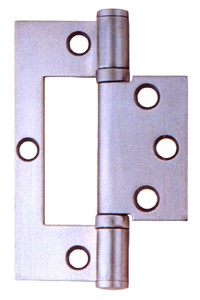
I replaced it with a different hinge, similar to this one:

And that fixed 80% of the wobbliness.
To summarise, you will need:
a) some wood. I used some cheap pine form local hardware store. It was like $2 for a good length of it at 19mm thick
b) a threaded bolt that is 20TPI.
c) a t-nut for your threaded bolt to wind through
d) a hinge (piano hinge specifically)
e) cup hooks (for your rubber bands - the resistance these provide will really help to stabilise the tracker)
f) dome nuts for either end of the threaded bolt
b) a threaded bolt that is 20TPI.
c) a t-nut for your threaded bolt to wind through
d) a hinge (piano hinge specifically)
e) cup hooks (for your rubber bands - the resistance these provide will really help to stabilise the tracker)
f) dome nuts for either end of the threaded bolt
That's it. Additional t-nuts, ballhead mounts and handles are up to you. I didn't worry about any of them in the initial build until I was more familiar with how it worked, and more importantly, what its limits were.
Tornado Condor
Member
Wow thanks for the guide. I'll definitely try it 

vivftp
Member
Ooo. nice thread. Here're a few pictures from earlier this month during a camping trip in Ontario. They're taken with the Sony RX100 on 30 second exposures.


Ooo. nice thread. Here're a few pictures from earlier this month during a camping trip in Ontario. They're taken with the Sony RX100 on 30 second exposures.
The top photo with the horizon glow is very nice, thanks for sharing.
How do you like the RX100? It's been on my wishlist for some time, though now I've taken the plunge into the DSLR world my lust for such a nice bit of (what is now) extra kit has subsided.

vivftp
Member
The top photo with the horizon glow is very nice, thanks for sharing.
How do you like the RX100? It's been on my wishlist for some time, though now I've taken the plunge into the DSLR world my lust for such a nice bit of (what is now) extra kit has subsided.
You're welcome. I guess it may not be easily evident unless you have a higher resolution display, but the two middle pics are of the dipper... big I think.
As for the RX100, absolutely love it. All of my friends have fallen in love with the pictures it takes. I went on a friends destination wedding where they brought their own photographer with his own SLRs and whatnot, and that was my first outing with the RX100. They actually prefer most of my shots compared to the dreck he gave them. Just for the heck of it, here's a pic from that trip

EDIT.
BTW, loving all these shots showing the Milky Ways galactic disc. I could see it on my camping trip, but I'm afraid the RX100 wasn't fully able to pick it up. I'm still learning about the camera, but AFAIK there's no way to take exposures longer than 30 seconds.
Deadly Cyclone
Pride of Iowa State
Perfect timing. I want to buy a camera in the not too distant future and want to get the right stuff for night sky photography. What would be a solid camera for this? Any decent SLR? Also any specific lens?
Perfect timing. I want to buy a camera in the not too distant future and want to get the right stuff for night sky photography. What would be a solid camera for this? Any decent SLR? Also any specific lens?
Truly any DSLR will be more than capable for this, even something really entry level like the Canon 1100D (not sure what its model number is outside of Australia - Rebel T3 maybe?) is capable of taking marvellous night shots. If you are really truly interested in getting into astrophotography, there is a bunch of homebrew software and firmware made for Canon gear that elevates them above other DSLRs. This is only relevant if you're interested in tethering your DLSR to a laptop and getting right into it, though.
Otherwise, just grab whatever your budget allows and your circumstances place in your way and don't stress over the minor details. For me, once I had held a Pentax K30 in my hand I knew it was the one I wanted and just as I had decided that, they came on sale with the exceptional Sigma 17-70mm 2.8-4.0 lens so it was a done deal.
You're welcome. I guess it may not be easily evident unless you have a higher resolution display, but the two middle pics are of the dipper... big I think.
As for the RX100, absolutely love it. All of my friends have fallen in love with the pictures it takes. I went on a friends destination wedding where they brought their own photographer with his own SLRs and whatnot, and that was my first outing with the RX100. They actually prefer most of my shots compared to the dreck he gave them. Just for the heck of it, here's a pic from that trip
EDIT.
BTW, loving all these shots showing the Milky Ways galactic disc. I could see it on my camping trip, but I'm afraid the RX100 wasn't fully able to pick it up. I'm still learning about the camera, but AFAIK there's no way to take exposures longer than 30 seconds.
Lovely colours and silhouette.
As long as you can shoot in the shutter speed of 8-15sec range, you'll take great night shots. Aperture of f/4 to f/6, ISO set to 800 or 1600 and just go for it. At a wide zoom (say <28mm), you'll have almost zero star trails at these shorter exposures, but still reveal a ton of detail - even more if you want to play around with image stacking
I'm constantly amazed at just what my camera captures when I'm doing little more than point and shoot at parts of the sky.
Tornado Condor
Member
Perfect timing. I want to buy a camera in the not too distant future and want to get the right stuff for night sky photography. What would be a solid camera for this? Any decent SLR? Also any specific lens?
I would go with a Canon DSLR.
Photos of my Barndoor. Apologies for the woeful iPhone pics. Hope this clarifies any thoughts you had about the construction, but let me know if you have any extra questions.


As long as this is mounted firmly, there is almost no wobble, so I can sit and twiddle the bolt as much as I like and take decent 2 or 3 minute exposures. However, not shown in these photos is the tripod mount I built into it (just a 1/4" bolt beneath the ball-head mount that screws directly into the tripod). This works fine until I place the camera on it! The top-heavy nature of the tripod when mounted with the barndoor tracker plus camera plus lens just makes it unusable. A better tripod would certainly alleviate this though. So instead I find myself just mounting it on the deck outside with Irwin G-clamps and some padding.
Hopefully this thing arrives next week in conjunction with my T-ring and T-adapter and I'll get really funky with 'scope mounted photography then. Fuck yeah, arrive by courier thsi afternoon. Clouds begone and it'll be go time tonight.
As long as this is mounted firmly, there is almost no wobble, so I can sit and twiddle the bolt as much as I like and take decent 2 or 3 minute exposures. However, not shown in these photos is the tripod mount I built into it (just a 1/4" bolt beneath the ball-head mount that screws directly into the tripod). This works fine until I place the camera on it! The top-heavy nature of the tripod when mounted with the barndoor tracker plus camera plus lens just makes it unusable. A better tripod would certainly alleviate this though. So instead I find myself just mounting it on the deck outside with Irwin G-clamps and some padding.
Tornado Condor
Member
Took these pics today with my 75-300mm lens
Pleiades ( 7 sisters)

Jupiter and its 4 moons

The pictures are a little rough but they were taking in front of my house were there was plenty of light pollution.
Pleiades ( 7 sisters)
Jupiter and its 4 moons
The pictures are a little rough but they were taking in front of my house were there was plenty of light pollution.
MilesWebber
Member
Very nice, OP! I love doing those


Tornado Condor
Member
LOL i think you posted the exact same pics in the 1st page or 2nd. They're still awesome though
Nice pictures, subscribed; excellent topic.
Just out-of curioustiy, why does the moon looked shopped into this photo? Is it an artifact from the camera; and I wasn't sure if this was from the phone or a digital camera.
I'm sure all I did was change the image to grayscale, as the moon was a shade of yellow. It's possible I edited contrast/brightness etc as well though, but I can't find the original now.
It's from a digital camera.
Great first photo. Invest in an ioptron sky tracker, vixen polarie or even a AstroTrac. An equatorial mount is your next step and those work great. A used kenko sky memo is good too. The nice thing about those is that even if you upgrade later in the future, you will always be able to continue to have a use for the portable mount. You can find used CG5's for not too much as well.
Without a tracking mount, the best you can do is to shoot Orion Nebula and constellations. You might be able to get 2-3 second subs. With 1 hour worth of data, it might actually look ok. Google for "Samir" and skyglow and you will see someone's pbase that talks about optimal exposures (you will be limited by the rotation of the stars). Everything else is too dim and requires tracking.
You also should use bias and dark frames also with deepskystacker. There is a lot you have to learn with the curves adjustment after stacking and then my preference is to still bring the image into Photoshop for additional work.
It's amazing what technology will do in a light polluted city. It's a satisfying hobby but is the most expensive techie hobby...
Without a tracking mount, the best you can do is to shoot Orion Nebula and constellations. You might be able to get 2-3 second subs. With 1 hour worth of data, it might actually look ok. Google for "Samir" and skyglow and you will see someone's pbase that talks about optimal exposures (you will be limited by the rotation of the stars). Everything else is too dim and requires tracking.
You also should use bias and dark frames also with deepskystacker. There is a lot you have to learn with the curves adjustment after stacking and then my preference is to still bring the image into Photoshop for additional work.
It's amazing what technology will do in a light polluted city. It's a satisfying hobby but is the most expensive techie hobby...
Not to toot my own horn but I got to observe with this last month:

It is astonishingly huge in-person.
You damn horn tooter!!!
great view huh?
Partial Gamification
Banned
I don't know if its related, but I had a similar result making a calendar as a gift this year. I think my color calibration might be slightly off or the export from gimp-file to .png did it. not entirely sure.I'm sure all I did was change the image to grayscale, as the moon was a shade of yellow. It's possible I edited contrast/brightness etc as well though, but I can't find the original now.
It's from a digital camera.
The DIY Barndoors [stabilizers] are most excellent, I need a remote picture-clicker thingy, and a clear sky. Gray skies are gonna clear up, get out that astrophotographic gear...
I have a telescope now, but had a barndoor tracker a few years ago (manual and motorized ones):

My barn door mount by Excaliber2013, on Flickr

Mr. Barn Door by Excaliber2013, on Flickr
Examples:

Andromeda with barndoor tracker by Excaliber2013, on Flickr

Pleiades & California Nebula with Barndoor Tracker by Excaliber2013, on Flickr
If you guys have any questions fire away. Using a barndoor was pretty fun, except the nights when I tried to image Orion in the cold nights.
My barn door mount by Excaliber2013, on Flickr
Mr. Barn Door by Excaliber2013, on Flickr
Examples:
Andromeda with barndoor tracker by Excaliber2013, on Flickr
Pleiades & California Nebula with Barndoor Tracker by Excaliber2013, on Flickr
If you guys have any questions fire away. Using a barndoor was pretty fun, except the nights when I tried to image Orion in the cold nights.
MilesWebber
Member
Bah! I got all excited and didn't realize this was from earlier this yearLOL i think you posted the exact same pics in the 1st page or 2nd. They're still awesome though

WeAreStarStuff
Member
Nice shot.
 Sorry for being pedantic!
triplestation
Member
They're beautiful aren't they
I have a telescope now, but had a barndoor tracker a few years ago (manual and motorized ones):
Examples:
Andromeda with barndoor tracker by Excaliber2013, on Flickr
If you guys have any questions fire away. Using a barndoor was pretty fun, except the nights when I tried to image Orion in the cold nights.
This is amazing. Do you have more of Andromeda? I know nothing of telescopes, and I always assumed Andromeda was only visible with enormous telescopes.
Tornado Condor
Member
This is amazing. Do you have more of Andromeda? I know nothing of telescopes, and I always assumed Andromeda was only visible with enormous telescopes.
Nope. In a dark area, you can view andromeda with the naked eye. It's even better if you have binoculars
Nope. In a dark area, you can view andromeda with the naked eye. It's even better if you have binoculars
What salva said. I can barely see a faint smudge around midnight if m31 is at zenith. With binoculars I can make out the core and a little bit of the outer area. I haven't tried seeing it with my 8" reflector yet.
Concept17, this is the latest I have of andromeda (not with barndoor, commercial mount this time):
http://farm4.staticflickr.com/3728/9873730473_c54707f9cb_c.jpg

CharminUltra
Member
I'm loving some of these.
Powdered Toastman
Member

So much light polution here in the Netherlands, it's almost as if I took this at daytime... But I was still amazed to see so many stars in the photograph; with my own eyes I could only see a few.

And an edited version
CountAntonius
Member
I thought OP mispelled photgraph. This stuff is nice to look at. Thanks for the enlightenment.


Here are some of mine, they're not very good (I don't really have any special equipment) but I still like 'em
Why is only one moon upside down?
Any tips of getting into astrophotography? I'd like to take deep space shots but I get that shit can cost a LOT. What's a good starting point for a total beginner?
These are the kind of pics I would LOVE to take eventually. Those are so awesome.
I have a telescope now, but had a barndoor tracker a few years ago (manual and motorized ones):
My barn door mount by Excaliber2013, on Flickr
Mr. Barn Door by Excaliber2013, on Flickr
Examples:
Andromeda with barndoor tracker by Excaliber2013, on Flickr
Pleiades & California Nebula with Barndoor Tracker by Excaliber2013, on Flickr
If you guys have any questions fire away. Using a barndoor was pretty fun, except the nights when I tried to image Orion in the cold nights.
These are the kind of pics I would LOVE to take eventually. Those are so awesome.
I need to get back into astrophotography, I picked up a philips webcam before I got too busy so I should be able to get some nice planetary shots. Jupiter has started to come out pretty nicely here so there'll probably be shots of that soon enough.
This was the solar eclipse last year in brisbane, this was about as much the moon covered here. Just my scope + shitty p&s.
This was the solar eclipse last year in brisbane, this was about as much the moon covered here. Just my scope + shitty p&s.

Tornado Condor
Member
What salva said. I can barely see a faint smudge around midnight if m31 is at zenith. With binoculars I can make out the core and a little bit of the outer area. I haven't tried seeing it with my 8" reflector yet.
Concept17, this is the latest I have of andromeda (not with barndoor, commercial mount this time):
http://farm4.staticflickr.com/3728/9873730473_c54707f9cb_c.jpg
Jesus christ man. That's an incredible picture. What mount and telescope do you have?
Concept17, this is the latest I have of andromeda (not with barndoor, commercial mount this time):
http://farm4.staticflickr.com/3728/9873730473_c54707f9cb_c.jpg
wow wow wow
Tornado Condor
Member
Any tips of getting into astrophotography? I'd like to take deep space shots but I get that shit can cost a LOT. What's a good starting point for a total beginner?
These are the kind of pics I would LOVE to take eventually. Those are so awesome.
Astrophotography is a really expensive hobby but if you're poor like me you should start with the following:
-DSLR (I use a canon 60D)
-A shuttle cable
-A sturdy tripod
-A lens
For the shutter cable, i recommend something cheap like this one: http://www.amazon.com/gp/product/B005TCMW7S/?tag=neogaf0e-20
With this equipment you will be really limited at what kind of astrophotography you will be able to take. If you want to reach the next step i say build a barn-door mount of buy a tracking mount. I will be building the barn-door mount next 'cause the tracking mount is out of my budget right now.
Also, download the free software DeepSkyStacker. Once you get into it and have questions just post them here.

- Status
- Not open for further replies.