• Hey Guest. Check out your NeoGAF Wrapped 2025 results here!

Songwriters: piracy "dwarfs bank robbery"

Status
Not open for further replies.
AVclub said:
If someone invents a machine that can make physical copies of inanimate objects like rocks and plastic or metal things, will cloning your friend's pet rock be the same thing as stealing it?


If someone invented a machine like that, then the companies that manufactured all those objects would go out of business.
 
and that's how business works. Ever wonder why we don't have Salt empires anymore? I, for one, can't believe that I'm touting "free market!" while Avatar is like "We need more laws!"

Must be opposite day.
 
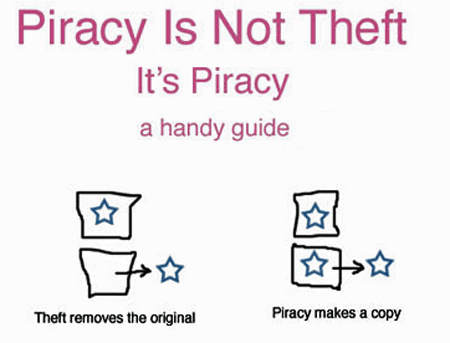
1250374016347.gif


Regardless of how you might feel about piracy it's a part of our culture now and it likely always will be. You can either whine about it or try to find ways to reduce it. For some reason all of the big entertainment companies seem to think impeding the enjoyment of their paying customers is a good tactic to stop piracy, but it clearly isn't.

Piracy is about convenience and price. You'll never beat the price (at best you can match it), but you can easily match or beat the convenience. Companies like Netflix and Apple get that and have been rolling with the changes.

One leg up that big companies have on torrents is trustworthiness (maybe not Sony because of the whole rootkit thing). If a user wants to download, say, a movie they know there's a chance that the file they're downloading might be the wrong file or have a trojan or have terrible quality (for the sake of argument we're assuming public trackers). On the other hand, if they watch a movie from Netflix Instant streaming or download a song from Amazon they know exactly what they're getting.

Entertainment is an over-saturated commodity. At the end of the day potential customers have near limitless options and can do without your product if they truly must. It's the job of the producers of the entertainment products to convince the customer that what they're offering has more value than the other guys. Like it or not, file sharing is one of the other guys. Running the competition out of business is virtually impossible but seems to be the only strategy these big companies can come up with. If they plan on sticking around they'll have to adapt or die.
 
The battles fought on the digital frontier now will determine the kind of world we live in once more and more experiences enter into the digital realm.

At some point in the concievably in our life time futures, we'll have the ability to create a mix of the matrix and the internet...

The question we should ask ourselves now is: do we want to live in a world where everyone is free to experience the best of it, or do we want to live in the world where few are 'rewarded' with the ability to experience the best of it, while the rest of us work harder and harder to be able to taste a scrap of those experiences.

I envision a post-capitalist world that will come about by the digitization of many essential experiences. In this post-capitalism world, people are still able to find meaning to life and its struggles; without preoccupation on earning money to drive positive experiences, it frees people to engage in, come up with and better advance the experiences of life and the world.

Of course changes made now aren't set in stone and can always be modified when other changes come to light to invalidate points and positions made now. But it's not really the kind of precedent we want to be setting. Moreover, we know while it's possible to change things once invalidated and outmoded, we also know that in practice, this happens far less often than it should.
 
Yeef said:
It's the job of the producers of the entertainment products to convince the customer that what they're offering has more value than the other guys. Like it or not, file sharing is one of the other guys. Running the competition out of business is virtually impossible but seems to be the only strategy these big companies can come up with. If they plan on sticking around they'll have to adapt or die.

This IMO is why the big record companies are so against illegal downloading, because in the past a pop album would have a few singles of quality and then complete shit to fill up the remaining album. Nowadays people can easily hear an entire album and realise there are only a few decent tracks. So the record companies need to spend more effort developing an albums worth of decent material which they don't want to do.
 
Trent Strong said:
If someone invented a machine like that, then the companies that manufactured all those objects would go out of business.

They would not go quietly though. The dying thrashes of the distribution companies that we are witnessing now would look like childs play.
 
gerg said:
Illegally downloaded property without paying for it is theft, inasmuch as you are accessing (intellectual) property to which you have no right to access. Theft is not necessarily material or physical in nature, as the phrases "identity theft" and "You stole my idea!" show.
WRONG.

SCOTUS said:
The phonorecords in question were not "stolen, converted or taken by fraud" for purposes of [section] 2314. The section's language clearly contemplates a physical identity between the items unlawfully obtained and those eventually transported, and hence some prior physical taking of the subject goods. Since the statutorily defined property rights of a copyright holder have a character distinct from the possessory interest of the owner of simple "goods, wares, [or] merchandise," interference with copyright does not easily equate with theft, conversion, or fraud. The infringer of a copyright does not assume physical control over the copyright nor wholly deprive its owner of its use. Infringement implicates a more complex set of property interests than does run-of-the-mill theft, conversion, or fraud.

Infringement is not theft. Sorry.
 
record companies have been robbing consumers for decades by releasing $30 albums with one or two worthy songs and making stars out of talentless hacks by paying stations millions to lay the same shitty song 3x per day for months on end. imo
 
CurlySaysX said:
record companies have been robbing consumers for decades by releasing $30 albums with one or two worthy songs and making stars out of talentless hacks by paying stations millions to lay the same shitty song 3x per day for months on end. imo

It's interesting, because in the early days the record companies claimed that the radio stations and later MTV stole revenue from them when they played their songs on their networks. It did not take them that long to figure out that they were actually helping the record companies to increase revenue by playing the songs.

Just something to bear in mind in the face of similar claims that internet copyright infringements are hurting the industry, while report after report claims the exact opposite.
 
Trent Strong said:
If someone invented a machine like that, then the companies that manufactured all those objects would go out of business.
Not comparable to music at all. There isn't even a gurantee these manufacturing companies would die. They could just change their role from general production to concept and design and allow you to manufacture what you want. Their property rights are still respected.

Musicians are not treated the same. Their stuff is taken many times over with no intention of ever paying them. If a large comapny stole a bands song and put it in an ad with zero permission, they would be sued. Pirates do that every day with little repurcussions. Just a vague promise that the pirate will support them in the future.
 
soultron said:
Hate to say this, but you're a song writer.

Get a job at Buger King. Then, when someone walks in and demands all of your burgers at gun point, you'll actually realise you had it great back when you were writing songs and making daisy chains.

Shit's weak.

I think the entertainment industry is incredibly overpaid anyway, the movie industry also suffers from this, actors getting paid $10-20 million for a single film? Sports industry also suffers from this, like the obscene amounts that footballers (soccer players to you yanks) get paid.

The Internet has allowed artists to put songs out there because they want to make music, not purely to make money. Labels want to make money they don't give a shit about the songs, if they could put out a track of static and sell it they would.

Piracy as it stands may or may not be wrong, but the Internet atleast gives people a choice, a choice they didn't have before. It gives people a chance to return to how the arts should be, art for the sake of art, not art for the sake of money.

Meus Renaissance said:

Its only a trap if you talk about videogame piracy :P I love the amusing double-standard on GAF (but atleast the gaming industry isn't as fucked up as other entertainment industries)
 
Sh1ner said:
It is illegal, my point was to break his shitty analogy. He used a physical item, I disagree. If someone copies data, it is theft but the original person still has a copy. He is not losing anything. Just the fact that the duplicator is a cheap skate and didn't pay for it, and that small bit about him/she breaking the law...

Fair enough. I just wanted to state that applying the term "theft" to illegally downloading material was valid. : )

devilhawk said:

It would be very helpful if you could explain why I am wrong.

In general I prefer theories that underwrite how we use language, rather than actively undermine it. I'd like to know why it is wrong to call illegally downloading material "theft" when language, both formal and informal, calls the act of misappropriating intellectually property (or data) without the owner's permission theft.

jorma said:
No you are distributing material you have no right to distribute.

I never said that illegally distributing material was theft; I said that illegally downloading it was.
 
avatar299 said:
The fact of the matter is the music industry is being robbed. People can justify it all they want but that is reality. There have been less transactions involving music ever since the "revolution" started even with iTunes and Amazon.

People need to have property rights respected and pirates don't do that. If you are going to treat people who pirate videogames like scum, at least have some consistency.

Is this necessarily the case? Given the effects of market power inequality- I'd at least consider the possibility that piracy is a check on market power inequality- which destroys free markets.

That said, the private/public good comparison is pretty good. A law is only as effective as the willingness/ability to enforce it is (See illegal immigration). See Prohibition as opposed to laws against meth.

Also, if you cut piracy out, most likely people would leave the market instead of buying goods legitimately.

I do believe if the music industry all went kaput, that musicians would end up forming their own replacement. I feel little sympathy for the music corporations, as I feel they are asking for corporate welfare to support an archaic and outdated business model. That said, it's been proven the greatest marginal cost is that from free to one cent, so piracy is a powerful incentive.

I love the smell of Econo-GAF in the morning. (this and another thread)
 
gerg said:
Fair enough. I just wanted to state that applying the term "theft" to illegally downloading material was valid. : )


It would be very helpful if you could explain why I am wrong.

In general I prefer theories that underwrite how we use language, rather than actively undermine it. I'd like to know why it is wrong to call illegally downloading material "theft" when language, both formal and informal, calls the act of misappropriating intellectually property (or data) without the owner's permission theft.


I never said that illegally distributing material was theft; I said that illegally downloading it was.
The Supreme Court in Dowling v. United States says that you are wrong. I quoted the majority opinion.
 
It really should be noted that this is about the songwriters, and not about the performing artists or the music corporations. Their only income are the royalties on the songs they write. Many of the greatest songs in music history have been written by songwriters that were not performing artists, and it would be sad if (due to changing business models or technologies) there would be no viable place anymore for songwriters.
 
Yeef said:
[IM G]http://suptg.thisisnotatrueending.com/archive/5462965/images/1250374016347.gif[/IMG]

Regardless of how you might feel about piracy it's a part of our culture now and it likely always will be. You can either whine about it or try to find ways to reduce it. For some reason all of the big entertainment companies seem to think impeding the enjoyment of their paying customers is a good tactic to stop piracy, but it clearly isn't.

Piracy is about convenience and price. You'll never beat the price (at best you can match it), but you can easily match or beat the convenience. Companies like Netflix and Apple get that and have been rolling with the changes.

One leg up that big companies have on torrents is trustworthiness (maybe not Sony because of the whole rootkit thing). If a user wants to download, say, a movie they know there's a chance that the file they're downloading might be the wrong file or have a trojan or have terrible quality (for the sake of argument we're assuming public trackers). On the other hand, if they watch a movie from Netflix Instant streaming or download a song from Amazon they know exactly what they're getting.

Entertainment is an over-saturated commodity. At the end of the day potential customers have near limitless options and can do without your product if they truly must. It's the job of the producers of the entertainment products to convince the customer that what they're offering has more value than the other guys. Like it or not, file sharing is one of the other guys. Running the competition out of business is virtually impossible but seems to be the only strategy these big companies can come up with. If they plan on sticking around they'll have to adapt or die.
This, a hundred times this.
 
gerg said:
I never said that illegally distributing material was theft; I said that illegally downloading it was.

Downloading and distributing is the same thing. Regardless if you are making available or downloading you are committing the same crime - copyright infringement.

Watching a copyrighted movie is not a crime, whether you paid for it or not.
 
BrokenSymmetry said:
It really should be noted that this is about the songwriters, and not about the performing artists or the music corporations. Their only income are the royalties on the songs they write. Many of the greatest songs in music history have been written by songwriters that were not performing artists, and it would be sad if (due to changing business models or technologies) there would be no viable place anymore for songwriters.

like? It would be interesting to find out what we'd be missing out on.
 
Note to industry: People can die in fucking bank robberies.

Your plight doesn't compare. You engendered bad will by overcharging for your services for far too long, consistently fighting against new technology and only adopting it when your survival depended on it, by coming off as a threatened bully that publicized the use of your considerable financial muscle to get your way in the court system, and by trying to cripple the internet as a response to your late adoption to it (You acted too slowly and now the damage is hard to repair. Sucks to be you.)
Yeef said:
Regardless of how you might feel about piracy it's a part of our culture now and it likely always will be. You can either whine about it or try to find ways to reduce it. For some reason all of the big entertainment companies seem to think impeding the enjoyment of their paying customers is a good tactic to stop piracy, but it clearly isn't.

Piracy is about convenience and price. You'll never beat the price (at best you can match it), but you can easily match or beat the convenience. Companies like Netflix and Apple get that and have been rolling with the changes.

One leg up that big companies have on torrents is trustworthiness (maybe not Sony because of the whole rootkit thing). If a user wants to download, say, a movie they know there's a chance that the file they're downloading might be the wrong file or have a trojan or have terrible quality (for the sake of argument we're assuming public trackers). On the other hand, if they watch a movie from Netflix Instant streaming or download a song from Amazon they know exactly what they're getting.

Entertainment is an over-saturated commodity. At the end of the day potential customers have near limitless options and can do without your product if they truly must. It's the job of the producers of the entertainment products to convince the customer that what they're offering has more value than the other guys. Like it or not, file sharing is one of the other guys. Running the competition out of business is virtually impossible but seems to be the only strategy these big companies can come up with. If they plan on sticking around they'll have to adapt or die.
Agreed, especially with the text in bold.
 
avatar299 said:
Not comparable to music at all. There isn't even a gurantee these manufacturing companies would die. They could just change their role from general production to concept and design and allow you to manufacture what you want. Their property rights are still respected.

Your logic here is so weak, it's laughable.

There's no guarantee that these artists and media companies would die either. And indeed, they have not, even with the increase in piracy and file sharing, even against the dramatic drop in price of music in the last two decades, even against the explosion of options enabled by a global Internet.

Musicians are not treated the same. Their stuff is taken many times over with no intention of ever paying them. If a large comapny stole a bands song and put it in an ad with zero permission, they would be sued. Pirates do that every day with little repurcussions. Just a vague promise that the pirate will support them in the future.

It's quite different because a file sharer does not stand to profit from the material. A company using the song in an advertisement without paying for the rights stands to profit from the material and, in some contexts, can be used to imply endorsement or approval of a product by the artist. Clearly, very different from file sharing.
 
My opinion on the matter is rather limited and simple.

If someone is selling a product and you take the product without permisson or paying it's stealing

But then again its only my opinion
 
Revolution number one said:
My opinion on the matter is rather limited and simple.

If someone is selling a product and you take the product without permisson or paying it's stealing

But then again its only my opinion

But pirates don't "take" it, they copy it without permission -> both parties have a copy and the owner of the original has only lost potential profit.
 
BrokenSymmetry said:
It really should be noted that this is about the songwriters, and not about the performing artists or the music corporations. Their only income are the royalties on the songs they write. Many of the greatest songs in music history have been written by songwriters that were not performing artists, and it would be sad if (due to changing business models or technologies) there would be no viable place anymore for songwriters.
It's clear that they have a union (guild). Just like the screenwriters did they could put it to use to get the royalty contracts changed. Instead they're trying to go after the public at large.
 
devilhawk said:
The Supreme Court in Dowling v. United States says that you are wrong. I quoted the majority opinion.

Because the majority opinion is always right?

jorma said:
Downloading and distributing is the same thing.

Unless I am mistakenly being obtuse, I'm struggling to understand this. Here are my definitions, in case providing them helps clear the matter:

Distribution: This is akin to leaving a document by a photocopier; it may involve uploading a copy of a file you already own (whether illegally or otherwise) to a file-sharing website, or simply sending it to a friend. When you do this you are "only" commiting copyright infringement, as by doing it you are not misappropriating property you do not have a right to own.

Downloading: This is akin to taking the document placed by a photocopier and copying it. When you do this not only are you breaking that content's copyright, but by misappropriating (a copy of) that content illegally you are stealing it.

Regardless if you are making available or downloading you are committing the same crime - copyright infringement.

Indeed. But when you download a file you also steal that content.

Watching a copyrighted movie is not a crime, whether you paid for it or not.

Whether or not this is actually true, I'm not sure what it has to do with the current discussion.
 
CharlieDigital said:
Your logic here is so weak, it's laughable.
If you are going to say that, you should come up with a half way decent rebuttal.


no guarantee that these artists and media companies would die either. And indeed, they have not, even with the increase in piracy and file sharing, even against the dramatic drop in price of music in the last two decades, even against the explosion of options enabled by a global Internet.
Never said the musicians would go out of business. All i said was the manufacturers can adapt so the argument that they are guaranteed to go out of business isn't true. Learn to read the entire paragraph.


quite different because a file sharer does not stand to profit from the material.
Not enough lols in the worlds. How many people sell pirated content.

company using the song in an advertisement without paying for the rights stands to profit from the material and, in some contexts, can be used to imply endorsement or approval of a product by the artist. Clearly, very different from file sharing.
It's not different at all. If you "copy" a song without the legal permission to do so, you are profiting from it. There are tons of content on sites like youtube that are using music and video without the rights to do so. Generally however the property owners do nothing to stop it but it doesn't make it legal.
 
gerg said:
Because the majority opinion is always right?
Should we side with the Supreme Court or the whiny random internet poster who has yet to refute the majority opinion other than his argument that amounts to nothing more than semantics?

I'm going to go with "it's not theft."
 
avatar299 said:
The fact of the matter is the music industry is being robbed.
yes, they are.

by ASCAP and BMI, to be specific.

two companies you've probably never heard of, but are at the center of all of the industries problems.
 
jorma said:
It's interesting, because in the early days the record companies claimed that the radio stations and later MTV stole revenue from them when they played their songs on their networks. It did not take them that long to figure out that they were actually helping the record companies to increase revenue by playing the songs.
they still don't necessarily believe that.

ASCAP is more than happy to sue a club for tens of thousands of dollars in "damages" if a club plays one of the songs ASCAP controls and the find out about it. Gotta get that license or else!
 
Mike Works said:
Do I think that CD's and other "ancient" forms of distribution for music (and possibly movies) have become overpriced? Probably, yeah. Do I think the music industry has done a terrible job overall of attempting to adapt to the changing distribution interface? For the most part, definitely. Do I think that the bank robber analogy is stupid? Yep.

However, it's still ridiculous that people try to completely justify piracy.

You're stealing directly from the artists, the people that create this entertainment, this material that brings you enjoyment.

You can hide behind the justification that you're doing this to spite the relic business model and heinous tactics of the RIAA, and while those justifications may be just, you are still hurting that individual artist.

I'm not trying to act holier than thou with this post- i download music and movies too. Music is one of the most important parts of my daily life, and I think I may have purchased 5 CD's over the last 10 years.

The difference between me and a lot of people in this thread and this world is that I don't try to absolve myself of the situation by focusing only on the justifiable aspects of not paying for CD's/MP3's.

And I think that's a big problem when it comes to the discussions in these threads.
I hear you, but one can only sympathize with the artist so much. Their royalties are a joke compared to what the label and everyone else makes before they even see anything. Any new artist who thinks they can rely solely on album/song sales to get rich is an idiot. You have to be willing to tour, have merchandise, (sadly) sell your songs to companies for commercials, movies, sports, video games, and so on. Artists know this. Hell, I'd love to know how many new independent acts consist of people who pirate, too. It's not like artists are some other entity, they are people who love music as much as anyone else and, like many others have become accustomed to the ways in which people access it.

The nature of the industry for the artist has completely changed. What's the biggest pushback we've seen against piracy of music in the past 10 years or so? Don Henley and Sheryl Crow crying about it? There's a reason why you don't hear much whining and complaining from artists. I'm sure the industry would love their support, too. And yet, you do not see it on a constant basis.

Even last year, popular bands like Radiohead got together and figured cracking down on rapidshare/megaupload-like links was a good solution. That's about as aggressive as their stance got.

Basically, if all you can do is come out and say "hey fans, I want to see you in jail if you pirated my music," you're losing.

Furthermore, I can't feel bad for the RIAA when they bloat their lost revenues in the pursuit of suing poor people for downloading things they would have never bought at a brick and mortar store or on iTunes anyway. It's very scary when a court can basically say "you would have stolen a physical copy of this if you couldn't download it." There's no way to prove anyone would have done that.

Even more scary is ACTA, which may basically provide the means for a world entertainment governing body. Absolutely terrifying and a punch in the face to anyone who gives a damn about being a citizen of the free world.

 
Perhaps if musicans concentrated on making more then one or two tracks on their 12-13 track albums half-decent people would buy more albums.
 
dave is ok said:
The music industry overcharged for years and it's really hard to have sympathy for any part of it.

20+ dollar CDs, etc.
Surprised it hasn't been said yet, but songs aren't even worth a dollar anymore. In the past, I bought $15 CDs because I had to. I had to buy the shitty songs to get the good ones. Now that we have MP3's, I can pick only the good songs. So now I'm picking songs I like, which are mostly songs that play on the radio...for free. And songs are so homogenized these days, there's little to no loss in getting a censored version of a song. It's hard to pay even a dollar for a song now, when the pay product is only marginally better than the free one.

The industry fell behind, period. You can't close Pandora's box, you just roll with it. I'm of the opinion that technology will make thwarting piracy a less-practical task than the war on drugs. Just think about it. Wireless access will propogate to the point that ip addresses will mean nothing, and the only trace will be your MAC address, which is probably not unique.

That's my opinion anyway. The entertainment industry has to adapt in all forms of media to a format that makes revenue off listening/watching of streaming data. All data is gonna be available on-demand the more bandwidth increases, so they can keep trying to sue downloaders, or learn to survive. I have no pity for them or entertainers as a whole. The world we live in has shifted in a direction and won't go back. Either hop onboard in a timely manner, or get left in the digital dust. PEACE.
 
When record companies die what, of value, are we losing?

Promotion can be done by dedicated companies leaving the artists with better deals in regards to royalties and IP rights. Songwriter teams can survive by freelancing like producers do. There isn't really anything of value that we as consumers or music as an industry would stand to lose over the current state of the industry collapsing.
 
Trent Strong said:
If someone invented a machine like that, then the companies that manufactured all those objects would go out of business.

Yeah, they would go out of business because the marginal cost of producing a chair isn't near zero like the marginal cost of transferring an MP3 through the internet.
 
I've only skimmed the four pages, but I don't think this point was brought up.

Piracy does not "dwarf" bank robbery, nor is it equivalent to robbery. Because robbery, by definition, involves the threat of or use of violence in the theft.

Music piracy does not threaten the physical safety of anyone, therefore, the people making the comparison are full of shit.


avatar299 said:
The fact of the matter is the music industry is being robbed.

Wrong. Victims of theft, sure. Robbery, no.
 
Downloading’s the same as what I used to do – I used to tape the charts of the songs I liked [off the radio]. I don’t mind it,”

Liam Gallagher said that and I am glad that he did, now I will download every oasis album.:D :D :D :D :D :D :D :D :D :D
 
Sh1ner said:
Here I fixed it for you:

The point is that if a guy walks into a bank at night, then duplicated lots of money really quietly and without hurting anyone (in fact, he even leaves a rose-scented thankyou card), his demeanor doesn't change the fact that he had no right to take something he just made for free?:
That's completely different to downloading music.
Duplicating money just gives both of you money. Cool deal.
Duplicating a work designed to be sold means you get the benefit of the owner's work without fulfilling your end of the contract, which is reimbursing them for it.
 
Jesus, this thread again.

I find interesting how people get super-pissed when they are reminded their torrenting is actually harming people.

Bonus points for the dude that uses as an example one of the biggest stars this industry has ever produced.

And the solutions... if groups are doing more live shows, then problem solved. What about movies, should studios sell tickets to the shooting? Too bad watching a movie being made is as boring as watching water boil. Books? No problemo! Writers can just read their last book to live audiences, all 500 pages of it.

I don't know, really. People want to pirate? Just do it, don't flood forums with crazy arguments attempting to justify it. Everytime you put up an argument like that you look like you think its wrong.
 
Bitmap Frogs said:
Jesus, this thread again.

I find interesting how people get super-pissed when they are reminded their torrenting is actually harming people.

Bonus points for the dude that uses as an example one of the biggest stars this industry has ever produced.

And the solutions... if groups are doing more live shows, then problem solved. What about movies, should studios sell tickets to the shooting? Too bad watching a movie being made is as boring as watching water boil. Books? No problemo! Writers can just read their last book to live audiences, all 500 pages of it.

I don't know, really. People want to pirate? Just do it, don't flood forums with crazy arguments attempting to justify it. Everytime you put up an argument like that you look like you think its wrong.
It has nothing to do with downloading's legality or morality. This has more to do with idiots equating it with theft. No matter your position in the morality police, downloading is still copyright infringement and is not theft or robbery.

By the way, your analogies are horrendous.
 
devilhawk said:
Should we side with the Supreme Court or the whiny random internet poster who has yet to refute the majority opinion other than his argument that amounts to nothing more than semantics?

First of all, an appeal to authority isn't particularly effective.

Furthermore, the argument is about what the word (and/or concept) "theft" means. Of course the dicscussion will involve semantics.
 
I haven't read the thread, but have they caught the pirates that robbed those dwarves yet? Did the song writers get a good look at what colors the were flying?
 
Status
Not open for further replies.
Top Bottom