

-
Hey Guest. Check out your NeoGAF Wrapped 2025 results here!
You are using an out of date browser. It may not display this or other websites correctly.
You should upgrade or use an alternative browser.
You should upgrade or use an alternative browser.
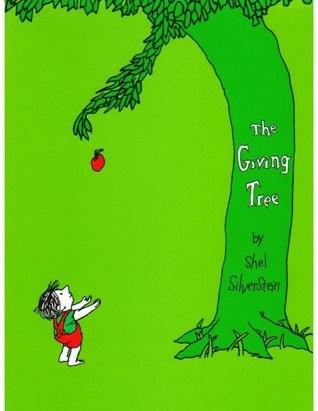
The Giving Tree-the most depressing book?
- Thread starter Dalek
- Start date
- Status
- Not open for further replies.
-Pyromaniac-
Member
I feel like Shel Silverstein books were huge in Canada growing up in school. At least in Ontario.
Nathan_Drake
Member
Holy hell. My mom just bought this for my daughter. I read it 2 days ago. It made me instantly depressed. My daughter is 8 and asked to read it for bed. We did with my wife in the room. again all of us were sad. We explained to her what the book was trying to convey but it is awful. That boy is a douche. That is the only real story there.
Holy hell. My mom just bought this for my daughter. I read it 2 days ago. It made me instantly depressed. My daughter is 8 and asked to read it for bed. We did with my wife in the room. again all of us were sad. We explained to her what the book was trying to convey but it is awful. That boy is a douche. That is the only real story there.
No lie man-I was standing there in Target all choked up with tears in my eyes. My wife walked up and was like "what the hell happened???"
Spider from Mars
tap that thorax
I remember this book from when I was younger. Apparently it's one of my mom's favorite books that she used to read to me when I was a kid. It might be sad and/or depressing but it's just an allegory for what a parent does for their child. They will do anything for their child no matter what, even if it means there is nothing left of them. That's why the tree was always happy; because the boy was happy. So I don't really see it as sad or depressing but I understand where some might get that interpretation.
I read that book once and never read it again, I'm pretty sure.
Now I'm more sad that I clicked that.
Now I'm more sad that I clicked that.
The Technomancer
card-carrying scientician
Holy hell. My mom just bought this for my daughter. I read it 2 days ago. It made me instantly depressed. My daughter is 8 and asked to read it for bed. We did with my wife in the room. again all of us were sad. We explained to her what the book was trying to convey but it is awful. That boy is a douche. That is the only real story there.
Its a metaphor
Lets stop fucking stripping down every square foot of the earth
Wikipedia has a lot of good food for thought on this:
The most-discussed interpretation of the book is that the tree and the boy have a parent-child relationship, as in a 1995 collection of essays about the book edited by Richard John Neuhaus in the journal First Things.[21] Among the essayists, some were positive about the relationship; for example, Amy A. Kass wrote about the story that "it is wise and it is true about giving and about motherhood," and her husband Leon R. Kass encourages people to read the book because the tree "is an emblem of the sacred memory of our own mother's love."[21] However, other essayists put forth negative views. Mary Ann Glendon wrote that the book is "a nursery tale for the 'me' generation, a primer of narcissism, a catechism of exploitation," while Jean Bethke Elshtain felt that the story ends with the tree and the boy "both wrecks."[21]
Many writers harshly criticize the book for the way in which it depicts the relationship:[22]
Totally self-effacing, the 'mother' treats her 'son' as if he were a perpetual infant, while he behaves toward her as if he were frozen in time as an importunate baby. This overrated picture book thus presents as a paradigm for young children a callously exploitative human relationship both across genders and across generations. It perpetuates the myth of the selfless, all-giving mother who exists only to be used and the image of a male child who can offer no reciprocity, express no gratitude, feel no empathy an insatiable creature who encounters no limits for his demands.
Critics of the book point out that the boy never thanks the tree for its gifts.[23] An editor with Harper & Row was quoted as saying that the book is "about a sadomasochistic relationship" and that it "elevates masochism to the level of a good."[3]
One college instructor discovered that the book caused both male and female remedial reading students to be angry because they felt that the boy exploited the tree.[24] For teaching purposes, he paired the book with a short story by Andre Dubus entitled "The Fat Girl" because its plot can be described as The Giving Tree "in reverse."[24]
That's actually a pretty interesting story.


InfiniteBento
Member
Conor_Fool
Banned
Read this a lot as a child, went back to it within the last year and it destroyed me. I love it but man it's depressing.
And for the love of god I wish that fanfic didn't exist.
EDITL Since this is a Shel Silverstein thread, I may as well add something many of you may not know. He was great friends with Johnny Cash and is the writer of the song A Boy Named Sue, check out this awesome performance on the Johnny Cash show
And for the love of god I wish that fanfic didn't exist.
EDITL Since this is a Shel Silverstein thread, I may as well add something many of you may not know. He was great friends with Johnny Cash and is the writer of the song A Boy Named Sue, check out this awesome performance on the Johnny Cash show
biggersmaller
Banned
I think this book is a metaphor for a mother/child relationship. Not meant to illuminate how dickish the boy is, but rather how loving the tree is in its sacrifices. Women don't literally kill themselves to provide for their children, but many sure as hell feel that way.
Now go call your mother and tell her you love her.
Now go call your mother and tell her you love her.
killamajig
Member
The better question is how you found that.
Fake edit: I don't want to know.

Huevos de Oro
Member
I never read this book. I need some background on why people find it so sad.
CarpeDeezNutz
Member
I think this book is a metaphor for a mother/child relationship. Not meant to illuminate how dickish the boy is, but rather how loving the tree is in its sacrifices. Women don't literally kill themselves to provide for their children, but many sure as hell feel that way.
Now go call your mother and tell her you love her.
Same here, when I read it I thought it was about how much your mom does for you.
Conor_Fool
Banned
I never read this book. I need some background on why people find it so sad.
Listen to Shel reading it here - https://www.youtube.com/watch?v=1TZCP6OqRlE
It's just pretty heartbreaking, but nostalgia also definitely plays a role in the emotions I feel when reading/listening to it.
Do.. Not click this
thecouncil
Banned
A few weeks ago on Bates Motel, Norma yelled this at a guy,
"Parents do not have needs. You ever read the book The Giving Tree? It's about this tree and this kid keeps coming and taking stuff from it his whole life until there's nothing left but a stump. And then the kid sits on the stump. That's being a parent."
And it was a great scene.
"Parents do not have needs. You ever read the book The Giving Tree? It's about this tree and this kid keeps coming and taking stuff from it his whole life until there's nothing left but a stump. And then the kid sits on the stump. That's being a parent."
And it was a great scene.
Icyflamez96
Member
I never read this book. I need some background on why people find it so sad.
It's short. Someone posted a link to it in the thread
Gentleman Jack
Member
of course this exists...

Spider from Mars
tap that thorax
oh, they took care of each other.It's about loving someone else more than you love yourself. Take care of that kid.
I thought it was about learning to limit how much of yourself you give to others because if you put your entire being into pleasing someone who only sees you as a means to an end then you'll end up as a small fraction of your former glory, having lived your entire life trying to make others happy at the cost of yourself with no friendships or bonds or anything else to show for it.
I mean, you could say it's about putting others above yourself, but it doesn't exactly turn out well in this book.
I mean, you could say it's about putting others above yourself, but it doesn't exactly turn out well in this book.
itwasTuesday
He wasn't alone.
One of my favorite books from a young age.
Cameron122
Member

"There is no god and we are his prophets"
"There is no god and we are his prophets"
That's my runner up. I read this book a few months after becoming a parent.
"No pressure!"
Cameron122
Member
That's my runner up. I read this book a few months after becoming a parent.
"No pressure!"
book spoilers and cameron life spoilers within
I read it a few months after my father died

pitt_norton
Member
i had no idea about this book and picked it out randomly from the bookshelf to read to my kindergarten class a few months back.
at the end of the reading, i faced a room of glum faces. then one 4 year old boy held his hand up and asked "why didn't the boy say 'thank you'?"
best book ever.
at the end of the reading, i faced a room of glum faces. then one 4 year old boy held his hand up and asked "why didn't the boy say 'thank you'?"
best book ever.
DarkHeartedKill
Member
Saddest book of my childhood man. I don't think any other book has hit me the same way since.

Byakuya769
Member
Giving tree is rough, but the worst is definitely "I'll Love You Forever."
Giving tree is rough, but the worst is definitely "I'll Love You Forever."
I read that once. Never again. Nightmare Fuel.
Jive Turkey
Unconfirmed Member
Giving tree is rough, but the worst is definitely "I'll Love You Forever."
I came here to post this. I tear up just reading the title.
I came here to post this. I tear up just reading the title.
Hear, hear.
Great story, but completely devastating due to the inevitability of life.

terrisus
Member
By: OhGodHereItComesYouMustNotMiss
- Status
- Not open for further replies.