• Hey Guest. Check out your NeoGAF Wrapped 2025 results here!

True Replayability: Randomized elements in Games

Do you enjoy games with a heavy focus on randomization?
What game utilizes it to the best effect?
What game utilizes it the worst, negatively affecting your enjoyment?


I love the idea of randomization (enemies, maps, shop items and loot.) and how it adds to the experience, usually causing interesting emergent results. i have artbooks full of ideas on a dream game coupling randomization with user generated content, and have researched a lot of rougelikes and loot games.. i guess my question is do you enjoy game focused on randomization? And regardless of how you feel, which game do you think utilizes it the best? Worst?

My pick?
The binding of Isaac.
Full disclosure : I've never played the game, don't think i ever will, but to date i've watched a cat named Northernlion on youtube play this game at least 20 times (out of the 250+total). Its brilliantly designed and full of character (NPI) and the emergent gameplay that results from the randomness of it all never gets old.
 
My pick?
The binding of Isaac.
Full disclosure : I've never played the game, don't think i ever will, but to date i've watched a cat named Northernlion on youtube play this game at least 20 times (out of the 250+total). Its brilliantly designed and full of character (NPI) and the emergent gameplay that results from the randomness of it all never gets old.

The problem with Binding of Isaac is that these emergent gameplay situations can render the game basically impossible and you have to start over at the beginning. While interesting, it can make for some really harsh gameplay sometimes.
 
I really do not enjoy games with a heavy focus on randomization, in general. I prefer hand-designed, well-tested stuff in games. That's not to say I haven't enjoyed games with random elements - I like Roguelikes, particularly the Mysterious Dungeon series, and also things like the Diablo games. It's just not something I really value a lot, and for me, it does little to add to replayability.
 
The promise of infinite replayability via procedurally generated content is always something that gets my attention. In fact, two of my favorite games this generation, Minecraft and Borderlands, have both used randomization to great effect and I love them for it. My dream is that one day, we'll have open-world RPGs like The Elder Scrolls, Amalur, or Dragon's Dogma whose worlds, stories, enemies, and NPCs all have heavy procedural components to them, similar to a more evolved version of Spore.

There's certainly a place for delicate, hand-crafted experiences, but sometimes I just want to truly lose myself in a game and not have to worry about running out of content.
 
Not a big fan of randomized elements in games. It always results in dull and repetitive content. You can tell me that Borderlands has a million guns all day and I'll tell you that maybe 5 were worth using, at least that I was able to find.

I also warned people not to get excited when Howard said Skyrim would have infinite quests before the game came out. I said it would result in nothing but lame fetch quests constantly being generated and I was right.
 
The problem with Binding of Isaac is that these emergent gameplay situations can render the game basically impossible and you have to start over at the beginning. While interesting, it can make for some really harsh gameplay sometimes.

but when you get that combination..that perfect combination, you feel like a diety! Its a roguelike though, thats inherent to their design, you subconsciously get better at the base game the more you play.
 
Minecraft, Isaac, Spelunky and Tower Climb are the most recent examples I can think of that all have excellent replayability due to their large amount of well-done randomisation.

I freely admit that it can be an absolute deal breaker when done badly and there's definitely an argument to be made for "hand-crafted" environments - but really, if done well there's little that can match the joy of being able to re-roll time and time again to get a new experience (while applying your previously earned skills/knowledge!). They're all deceptively simple games at first glance, but I've spend so much goddamn time in them for a reason.
 
My pick is Dwarf Fortress. You can randomly generate a near infinite number of worlds and as the game progresses more and more insane levels of detail are added. This is a game blog to follow for the next ten years.

The game's motto is "Losing is Fun", how can you not like it?
 
The promise of infinite replayability via procedurally generated content is always something that gets my attention. In fact, two of my favorite games this generation, Minecraft and Borderlands, have both used randomization to great effect and I love them for it. My dream is that one day, we'll have open-world RPGs like The Elder Scrolls, Amalur, or Dragon's Dogma whose worlds, stories, enemies, and NPCs all have heavy procedural components to them, similar to a more evolved version of Spore.

There's certainly a place for delicate, hand-crafted experiences, but sometimes I just want to truly lose myself in a game and not have to worry about running out of content.

You're speaking my language, i loved the potential of spore and procedural + user generated content! Maybe one day i'll post my ideas on gaf, for prosperity.
 
but when you get that combination..that perfect combination, you feel like a diety! Its a roguelike though, thats inherent to their design, you subconsciously get better at the base game the more you play.

This is very true, and really the only reason I keep coming back to Isaac, but sometimes you can just get royally screwed over no matter your skills or practice. But when I get relatively fair room combos and items pickups, it's one of the coolest feelings ever.

That said, I rarely ever kill Mom because I think I played my best.
 
You want a great example of randomization in video games that failed? Look no further than tc_hydro from TF2.

Here's the dev commentary on the map:

(Jeff Lane) Multiplayer communities tend to focus on a small group of maps, playing them over and over again. Instead of producing a large number of maps, most of which would go un-played, we decided to try and build a single map with more innate replayability than any we'd built before. With most multiplayer maps, you know what you'll be doing before the map has even finished loading. In our case, we wanted a map where you couldn't predict even something as basic as your starting point, let alone what you would be doing when you got there. Hydro therefore begins with a randomized starting state. The emphasis on control of constantly shifting territories means the map rarely feels repetitive. Meanwhile, the explicit round structure keeps teams focused, and provides regular highs and lows as the teams gain and lose territory.
 
This is very true, and really the only reason I keep coming back to Isaac, but sometimes you can just get royally screwed over no matter your skills or practice. But when I get relatively fair room combos and items pickups, it's one of the coolest feelings ever.

That said, I rarely ever kill Mom because I think I played my best.

This is a point worth bringing up: Games that allow for dramatic changes based on random/procedural content should have advanced detection for fairness and playability. Roguelikes use flood-fill algorithms to make sure their levels are navigable, but we need similar tests that detect other things like difficulty level and distribution of pickup/consumables.
 
I really loved the Zelda: Four Swords experience on GameBoy Advance, and was disappointed that Four Swords Adventures on GameCube didn't expand on the original's randomized puzzle elements. The way the game mixed up puzzle pieces based on the number of players was cool, but FSA just gave you Four Links at all times.

A friend and I played through it once and were done with it, but we played a lot of Four Swords on GBA and I'd still like to see Nintendo more fully embrace that concept on a larger scale. I'd certainly have played the 3DS version if I had one.
 
L4D 1&2 did a decent job with the director controlling how the team was hit with the hordes. Usually though, I don't care for randomization in games.

Edit: Ah beaten by badcrumble. =p
 
Burning Rangers on the Saturn had an interesting take on random level design.

There were only 4 missions. Story based and somewhat linear the first time you play through them. During the course of a mission you would find survivors to rescue each had their own name and back story to how they ended up stuck in the disaster.

When you replayed the levels you would find that things had changed. Doors which were locked before might open, routes may be blocked off, switches moved and key cards in different locations. The survivors also moved around and were cycled through, so on one run of a level you might find 4 survivors, but play it again and you would find 8. After you rescued the survivors you would receive virtual letters from them thanking you, sometimes with cheat codes.

The structure created a pokemon-esque system of trying to catch all the survivors across the 4 missions. A very cool way to extend the replayability of a game, which was admittedly, fairly short.

So, while the game didn't have total randomisation of its level design, it did use randomisation in an interesting way, while preserving the story elements.
 
Burning Rangers on the Saturn had an interesting take on random level design.

There were only 4 missions. Story based and somewhat linear the first time you play through them. During the course of a mission you would find survivors to rescue each had their own name and back story to how they ended up stuck in the disaster.

When you replayed the levels you would find that things had changed. Doors which were locked before might open, routes may be blocked off, switches moved and key cards in different locations. The survivors also moved around and were cycled through, so on one run of a level you might find 4 survivors, but play it again and you would find 8. After you rescued the survivors you would receive virtual letters from them thanking you, sometimes with cheat codes.

The structure created a pokemon-esque system of trying to catch all the survivors across the 4 missions. A very cool way to extend the replayability of a game, which was admittedly, fairly short.

So, while the game didn't have total randomisation of its level design, it did use randomisation in an interesting way, while preserving the story elements.

This really makes me want a future installment of Dead Rising to use randomized scoops. MOTHER OF GOD that would be amazing!
 
This is a point worth bringing up: Games that allow for dramatic changes based on random/procedural content should have advanced detection for fairness and playability. Roguelikes use flood-fill algorithms to make sure their levels are navigable, but we need similar tests that detect other things like difficulty level and distribution of pickup/consumables.

I agree completely, and maybe part of that would be to institute a couple non-random elements to the floors and distribution on items, so you sort of can rely on those rare constants to make the scaling in randomness more manageable. But I don't know, I haven't played many roguelikes... But with Isaac in particular a lot of my frustration at times comes from inconsistencies in the hitboxes and how you need to sort of curve your shots sometimes. Where lots of times I can see my shot hit a enemy hitbox but it'll miss, and sometimes I'll hit something I didn't even expect, making deaths and hard rooms very frustrating. Maybe that's a casualty of it being a flash game, but pretty annoying.
 
Phantasy Star Online 2 has completely taken random elements in games to a new level with the random events ingame, you can be casually walking through forest and a giant boss will show up out of nowhere. you might get chased by an incarnation of darkness with no option but to flee in different directions or have to protect a downed air support ship or any one of an ever increaing number of random events which really kill the monotony present in most online game of that type
 
Played a hack of Baldur's Gate II where all the items were randomly moved based on how good they were and how hard it was to get to each location. Definitely made things interesting because certain items could make a world of difference for a specific fight. I began to appreciate the uses of gear I never tried before that I would just normally sell. Also, if enemies were capable of using things that were now suddenly in their possession, they would, which mixed some fights up quite a bit.
 
Phantasy Star Online 2 has completely taken random elements in games to a new level with the random events ingame, you can be casually walking through forest and a giant boss will show up out of nowhere. you might get chased by an incarnation of darkness with no option but to flee in different directions or have to protect a downed air support ship or any one of an ever increaing number of random events which really kill the monotony present in most online game of that type

Indeed. PSO2's Emergency Trial system elevates the game greatly over its predecessors.
 
The problem with Binding of Isaac is that these emergent gameplay situations can render the game basically impossible and you have to start over at the beginning. While interesting, it can make for some really harsh gameplay sometimes.

Ah yes, all items spawn in the middle of the room, surrounded by a pit, and you can't fly. It's just...cruel.
 
Binding of Isaac was my GOTY 2011. Over 100 hours played thusfar and I'm still not sick of it.

I still have to beat the last last last last last stage with 2 or 3 more characters. Yes that many lasts are necessary, the final stage keeps on changing.


The problem with Binding of Isaac is that these emergent gameplay situations can render the game basically impossible and you have to start over at the beginning. While interesting, it can make for some really harsh gameplay sometimes.

Harsh? Yes. Basically impossible? Learn to play.

Til I went out of my way to die tons of times for an achievement I had a positive ratio of game wins to deaths.
 
You want a great example of randomization in video games that failed? Look no further than tc_hydro from TF2.

Here's the dev commentary on the map:

The problem with Hydro is not that the randomisation element failed, it's the context they used it in. The map is littered with chokepoints which just aren't that much fun to fight around. It has fantastic height-based combat though, and encourages some of the most genuine teamplay you'll see in TF2.
 
I wish more games used very slight color tint variations for enemies and wild life. Also minor pitch changes in voices of NPCs.

Both are very easy things that can make scenes seem less artificial.

Imagine bandits with slightly different patterns in their armor, or maybe one Soldier has a brown helmet, and the other has a light green helmet.
 
I really do not enjoy games with a heavy focus on randomization, in general. I prefer hand-designed, well-tested stuff in games. That's not to say I haven't enjoyed games with random elements - I like Roguelikes, particularly the Mysterious Dungeon series, and also things like the Diablo games. It's just not something I really value a lot, and for me, it does little to add to replayability.
Yeah, pretty much exactly how I feel.

I remember being SO EXCITED about it in F-Zero X... And then most of the random tracks ended up being garbage.
 
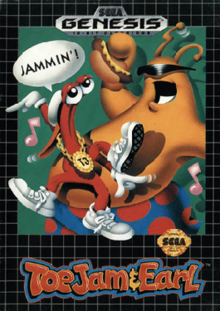
There is only one answer...

220px-ToeJam_%26_Earl.png
 
My first thought was Isaac as well.
It strikes that balance of quick replayability with randomization so well. 240 hours into it and I am done with it for the most part, but I still fire it up every so often with the intention of just getting that first item and end up doing a Satan run.
 
The problem with Hydro is not that the randomisation element failed, it's the context they used it in. The map is littered with chokepoints which just aren't that much fun to fight around. It has fantastic height-based combat though, and encourages some of the most genuine teamplay you'll see in TF2.

You should try out the unofficial arena variant. Heckuva lot more fun than the TC version.

I see your point, though. At the same time, I think there's a desire for familiarity in maps that are strictly PvP, like in CS.
 
Completely depends.

Doom can be fun with random maps. Not as much fun as with a lifetime supply of decent man-made maps (which, really, pretty much exists), but still a great time, and it's because most of what makes Doom work is in its enemies and how they behave and the way projectiles work and the way player movement works. Good roguelikes are like this, too, as the shape of the hallways and the exact positions of monsters and items matter way less than the rough curve of what you see at what stages of the game.

On the other hand, you see indie 2D shooting games and platformers that heavily rely on randomization, and they definitely get hurt by it due to their genre's reliance on how well the enemies and terrain are arranged. Too much left up to fate, not enough actual design.

There are games that make great use of light randomization. Metal Slug and Bubble Bobble, for example, lightly randomize item drops, and the Psikyo shooting games randomize the order of the first few stages (which are designed to be difficulty-scalable). You still get an excellent and focused experience, but the variety helps keep things fresh.

So to answer the questions,

Do you enjoy games with a heavy focus on randomization? I have, but I don't prefer it.
What game utilizes it to the best effect? Maybe Gunbird 2.
What game utilizes it the worst, negatively affecting your enjoyment I've played enough bad ones that I don't really care to pick out a worst.
 
Random syphilis on Crusader Kings 2 is my worst enemy (seriously, tho, it is great when some tragedy comes completely out of nowhere and completely messes the future of the kingdom).
 
Burning Rangers on the Saturn had an interesting take on random level design.

There were only 4 missions. Story based and somewhat linear the first time you play through them. During the course of a mission you would find survivors to rescue each had their own name and back story to how they ended up stuck in the disaster.

When you replayed the levels you would find that things had changed. Doors which were locked before might open, routes may be blocked off, switches moved and key cards in different locations. The survivors also moved around and were cycled through, so on one run of a level you might find 4 survivors, but play it again and you would find 8. After you rescued the survivors you would receive virtual letters from them thanking you, sometimes with cheat codes.

The structure created a pokemon-esque system of trying to catch all the survivors across the 4 missions. A very cool way to extend the replayability of a game, which was admittedly, fairly short.

So, while the game didn't have total randomisation of its level design, it did use randomisation in an interesting way, while preserving the story elements.

What I would not do to have Burning Rangers ported to PSN/XBLA. =(
 
I put about 400 hours into Civ V's single player campaign before finally getting bored of it. One of the aspects I liked was setting the world generation to be random. You never who you would be playing against, what the surrounding land would be like or what assets (if any) that you would have nearby to exploit. That and climbing through the various difficulty levels with all of the different Civs kept me fairly entertained for a good long while.
 
Medabots, Medabots Brawl, Medabots!
Custom Robo, GUNDAMN!

Interchangeable parts, like the CPU, weapons, exhaust, legs, feet, head, sword, upgradables. Etc.
Different Endings, Heavy Rain, Final Fantasy X-2, it was a little harsh at %100 completion, just crazy.
 
I would rather get rid of crafting in skyrim to have loot drops that are awesome. Slay dragon, get badass sword is a better story than craft for 3 hours then one hit all the dragons.
 
Randomization gets more of a bad rap on GAF than it deserves, I think. There are a lot of games which use it to great effect, and most of the ones named in this thread wouldn't work without it. Minecraft would lose a lot of its exploration appeal with a preset world, and games like Isaac and Spelunky would get extremely tedious if you had to re-traverse a static world for every game.

On the flipside, I've seen some discussion (especially in the roguelike community) that every game would be better with randomization -- i.e. what if Mario had random maps? -- which completely ignores the benefits of good, intentional design.

Random/procedural design is really just another tool in the toolbox. It's one I wish more mainstream developers would take advantage of, but it can also be overused as a crutch to avoid designing interesting content.
 
Top Bottom