

-
Hey Guest. Check out your NeoGAF Wrapped 2025 results here!
You are using an out of date browser. It may not display this or other websites correctly.
You should upgrade or use an alternative browser.
You should upgrade or use an alternative browser.
Truly visionary people in gaming
- Thread starter Mysterious
- Start date
IronicSonic
Member
One of the greatest, if not the GOAT.... Yu Suzuki....
That man did so much for the evolution of gaming.
This can't be stressed enough

Barry Burton
Member
Shinji Mikami

Closer Two
Member
Kojima, Kamiya and Mikami. Some of the greatest artists of our time as hyperbolic as that sounds. I do find it kind of reductive to point out the directors specifically considering making a game is such a joint effort but these guys are just so good at what they do.
Kamiya and Mikami in particular have a grasp on complex gameplay systems that very few people in this world could make. I have no doubt classic Capcom is a big reason behind this.
Kamiya and Mikami in particular have a grasp on complex gameplay systems that very few people in this world could make. I have no doubt classic Capcom is a big reason behind this.
The Omega Man
Member
Nobody can compare to Iwata or Miyomoto. Maybe Gabe.
Can't believe nobody's mentioned Ken Levine yet.
Can't believe you didn't read the thread
http://www.neogaf.com/forum/showpost.php?p=217876481&postcount=38

NOLA_Gaffer
Banned
Has anybody said Will Wright yet?
Post #19.
Nobody can compare to Iwata or Miyomoto. Maybe Gabe.
Can't believe nobody's mentioned Ken Levine yet.
Was just about to mention Levine.... Seriously, he's quite underrated here. Despite the disappointment with Infinite, Bioshock is probably the game to point to when talking about video games as art because it's mainstream unlike the other obscure "art" games.
Bioshock is the first game I played that had the ambitions of a novel.
NESpowerhouse
Perhaps he's wondering why someone would shoot a man before throwing him out of a plane.
Post #19.
Oh. Didn't recognize him at first.
Peter Molyneux
I was afraid to post this. Actually i'm not even sure if you were serious with your answer. But I do think that he is a visionary, not that his vision has always been accomplished. But he has been pushing for orginality his whole career I think and pushed the industry forward. He mad absolute classics with Bullfrog and very interesting things with Lionhead too. After that, I can't defend the guy much though. But for me it doesn't tarnish his actual legacy.

Stiler
Member

Say what you want about his later career, but he's one of the few people like Will Wright, etc that constantly tried to push and do new things over his career, from Populous to Black & White to Dungeon Keeper and Fable.
He had a habit of over-promising things but most of his games still did things that others had never done or still don't do (why don't other rpgs use fable's type of character system? I'd love that).
I'd take a 100 Molyneux's that over-promise but still keep trying new things then most developers that play it safe and make the same genre games over and over and over.
Crash Bandicoot, Spyro, and Ratchet & Clank could be considered landmark games in the platformer genre, and he had a major hand in all of them.
There's a lot of people that have worked on numerous big successful games. I don't think that's much of a qualification for true visionary in gaming. None of those three games really shaped platformers in any noticeable manner (and Ratchet barely even qualifies for the genre at all). None of these are even a Rayman in that regards, let alone a Mario or Sonic establishing genre templates.
Like, if I nominated someone like Yu Suzuki, you can look at stuff like Virtua Fighter or Hang On and see core aspects of the genres being established... whereas Crash is basically NES Mario in 3D just after Mario 64 rewrote the book entirely, and around the time Tomb Raider had provided the template for third-person action games going forward.
John Romero - for giving Doom all it's personality, creating some downright perfect maps, and later giving us Quake and all it's glory
Warren Spector - the original Deus Ex is still a masterpiece of design. The amount of things that change the world is still really impressive even by today's standards.
Swery - Deadly Premonition is still quite unlike anything I've ever played.
Kamiya - More so then anyone else he knows how to make you feel like a badass in control of a badass. The Wonderful 101 in particular is so far ahead mechanically then other games. I adore this man and hope Scalebound ramps up even more.
Shigesato Itoi - Mother 3 is the greatest narrative put into a video game form. The levels that game goes through and explores is completely unrivaled. Simply put - It's what I would consider the best game of all time. Eathbound is also quite an excellent SNES RPG.
Warren Spector - the original Deus Ex is still a masterpiece of design. The amount of things that change the world is still really impressive even by today's standards.
Swery - Deadly Premonition is still quite unlike anything I've ever played.
Kamiya - More so then anyone else he knows how to make you feel like a badass in control of a badass. The Wonderful 101 in particular is so far ahead mechanically then other games. I adore this man and hope Scalebound ramps up even more.
Shigesato Itoi - Mother 3 is the greatest narrative put into a video game form. The levels that game goes through and explores is completely unrivaled. Simply put - It's what I would consider the best game of all time. Eathbound is also quite an excellent SNES RPG.
walking fiend
Member
Who was that guy who founded Game Developers Conference?
Peter Molyneux
He was completely irrational, often wanting gameplay that simply wasn't possible., but even when he missed his target (which is what most of you younger folks probably remember him for) in the early days he pushed hardware and gameplay to it's limits and spawned all sorts of wonderful genres.
Also, shout out to Neogaf homeboy Dylan Cuthbert. If you look up his track record, the guy's probably been involved in some of your favorite games without you even realising it. Admire how he clearly goes for unique and challenging projects instead of just making an FPS engine all day long.
He was completely irrational, often wanting gameplay that simply wasn't possible., but even when he missed his target (which is what most of you younger folks probably remember him for) in the early days he pushed hardware and gameplay to it's limits and spawned all sorts of wonderful genres.
Also, shout out to Neogaf homeboy Dylan Cuthbert. If you look up his track record, the guy's probably been involved in some of your favorite games without you even realising it. Admire how he clearly goes for unique and challenging projects instead of just making an FPS engine all day long.
Grim Patron
Member
Todd Howard
Spieler Eins
Member
Shinji Mikami and Hideki Kamiya are like Plato and Socrates.


petran79
Banned
Tomohiro Nishikado
http://shmuplations.com/spaceinvaders/
It all started for me with an interest in hardware and technology. Back then, you see, games werent software you programmedit was all controlled by the hardware. Each time you wanted to make a game, you had to physically create the specific circuits for it. That was one of the funnest things about it, to me, but it also meant that planning a game took an inordinate amount of time and was a bottleneck in production. Around that time the microprocessor was invented in America, and I remember thinking, now, the era of software begins.
Americas technology was ahead of Japan, but when it came to using the microprocessor for games, the path ahead was not clear. At first the microprocessors were just used in things like pinball machines. I believe it was Space Invaders that first hit upon the idea of using them for video games.
And there was no such job as game programmer then either.
Nishikado: I dont think anyone called themselves that. In those days a programmer would be someone who used the large, room-sized computers for making scientific or work-related calculations.
Did you begin the development of Space Invaders totally from zero, then?
Nishikado: I had several books and bits of documentation from America, and using my crude English, I translated what I needed from them as I went. Professional development tools back then cost 10 million yen (roughly $100,000). The microprocessor was something we acquired when we got the memory and other hardware parts, but a development workstation was too expensive, so we did not get one. We had to create all our development tools by ourselves.
Did you do it all alone?
Nishikado: Yes, by myself. In those days that was standard, for games to be made by one person. You saved on personnel costs that way, and with the tools being made by hand, it cost next to nothing.
http://shmuplations.com/spaceinvaders/
It all started for me with an interest in hardware and technology. Back then, you see, games werent software you programmedit was all controlled by the hardware. Each time you wanted to make a game, you had to physically create the specific circuits for it. That was one of the funnest things about it, to me, but it also meant that planning a game took an inordinate amount of time and was a bottleneck in production. Around that time the microprocessor was invented in America, and I remember thinking, now, the era of software begins.
Americas technology was ahead of Japan, but when it came to using the microprocessor for games, the path ahead was not clear. At first the microprocessors were just used in things like pinball machines. I believe it was Space Invaders that first hit upon the idea of using them for video games.
And there was no such job as game programmer then either.
Nishikado: I dont think anyone called themselves that. In those days a programmer would be someone who used the large, room-sized computers for making scientific or work-related calculations.
Did you begin the development of Space Invaders totally from zero, then?
Nishikado: I had several books and bits of documentation from America, and using my crude English, I translated what I needed from them as I went. Professional development tools back then cost 10 million yen (roughly $100,000). The microprocessor was something we acquired when we got the memory and other hardware parts, but a development workstation was too expensive, so we did not get one. We had to create all our development tools by ourselves.
Did you do it all alone?
Nishikado: Yes, by myself. In those days that was standard, for games to be made by one person. You saved on personnel costs that way, and with the tools being made by hand, it cost next to nothing.
Anoregon
The flight plan I just filed with the agency list me, my men, Dr. Pavel here. But only one of you!
Poe's law?
I actually think he's serious.


Kojima of course.
Besides him, I'd say we could elect Neil Druckmann (probably together with Bruce Straley) as visionaries in the field of storytelling. Especially The Last of Us has a profound effect on storytelling goals in the industry, influenced many big franchises (most obvious perhaps is God of War) and will continue to do so most likely.
Besides him, I'd say we could elect Neil Druckmann (probably together with Bruce Straley) as visionaries in the field of storytelling. Especially The Last of Us has a profound effect on storytelling goals in the industry, influenced many big franchises (most obvious perhaps is God of War) and will continue to do so most likely.
There's a lot of people that have worked on numerous big successful games. I don't think that's much of a qualification for true visionary in gaming. None of those three games really shaped platformers in any noticeable manner (and Ratchet barely even qualifies for the genre at all). None of these are even a Rayman in that regards, let alone a Mario or Sonic establishing genre templates.
Like, if I nominated someone like Yu Suzuki, you can look at stuff like Virtua Fighter or Hang On and see core aspects of the genres being established... whereas Crash is basically NES Mario in 3D just after Mario 64 rewrote the book entirely, and around the time Tomb Raider had provided the template for third-person action games going forward.
Oh I know, I didn't nominate him in this thread, just trying to defend why someone may think that.
chun li's thighs
Member
Hideki Kamiya- Basically pioneered the evolution of game elements that I like to see in all games...all without being an eccentric weirdo.

deriks
4-Time GIF/Meme God
Gabe Newell.
Imagine if Steam didn't exist.
iTunes came out first and people said "hey, digital is the future for PC", so a digital only gaming plataform was just a matter of time. So he's not that visionary because of Steam. Although, for modding games, yes.
Yu Suzuki needs more love in this thread


gingerbeardman
Member
J Allard
...what?
...what?

Murdamonk
Member
Nobody can compare to Iwata or Miyomoto. Maybe Gabe.
Can't believe nobody's mentioned Ken Levine yet.
Euh.. Yeah, but without Yu Suzuki, a whole lot of games and companies wouldn't existed...
While Miyamoto always plays it safe, Sukuzi always tries to push for new technologies..
They are both great in their own ways..



Dee Dah Dave
Member
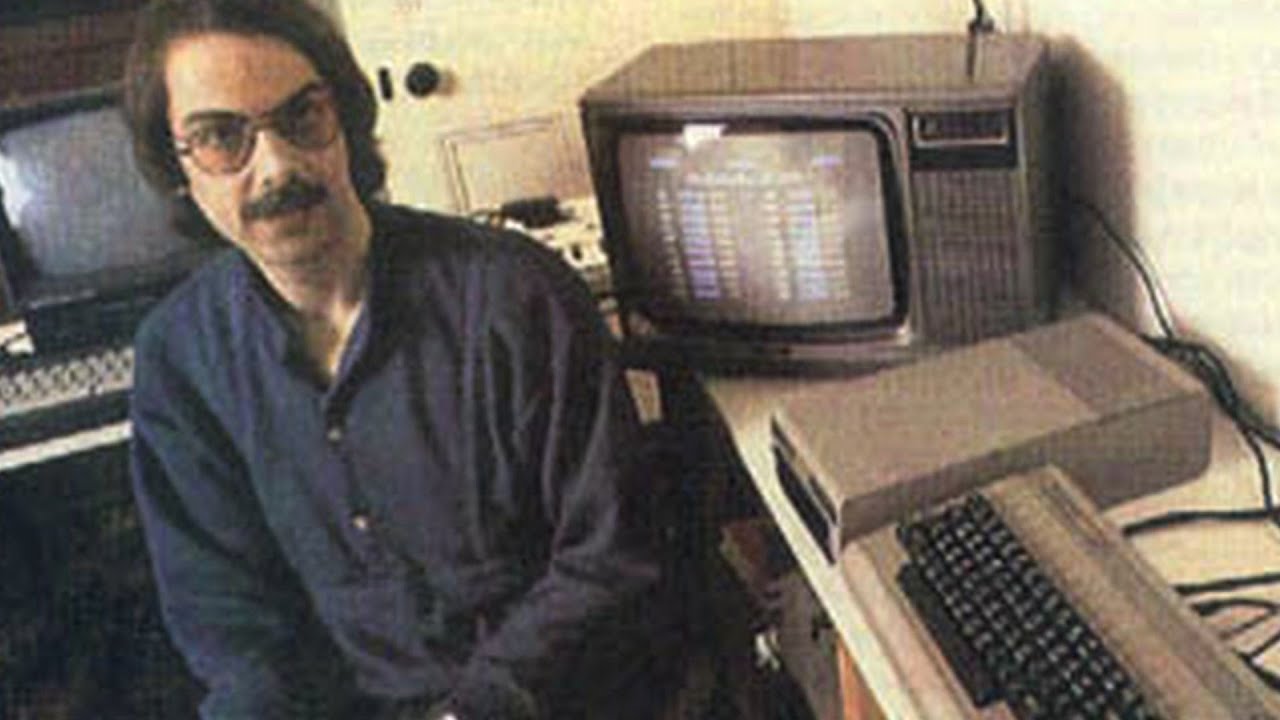
Tetsuya Nomura and his revolutionary character designs that changed gaming history for the better.
Sakaguchi, Amano and Nobuo Uematsu for me
... and Toriyama + Tabata
Euh.. Yeah, but without Yu Suzuki, a whole lot of games and companies wouldn't existed...
While Miyamoto always plays it safe, Sukuzi always tries to push for new technologies..
They are both great in their own ways..
what? is this some alternate reality?
PeskyToaster
Member
What about Tim Sweeney? Unreal Engine is like the biggest engine out there still.
Miyazaki for sure. He doesn't need to be this showman/celeb with big egos like so-called visionaries like Molyneux or Kojima to have under his belt some of the best videogames ever created. His contribution to gaming is in a whole other league.
Both Miyazaki and Ueda have helped making videogames a legitimate form of art, they really deserve all the respect to me. Meanwhile, wannabe film directors like Kojima and Druckmann keep trying to move the medium towards the movie industry and get praised for it like they were reinventing the wheel.
Both Miyazaki and Ueda have helped making videogames a legitimate form of art, they really deserve all the respect to me. Meanwhile, wannabe film directors like Kojima and Druckmann keep trying to move the medium towards the movie industry and get praised for it like they were reinventing the wheel.
DarkLordMalik
Member


I'd put Jonathan Blow's name forward.
Agreed.
I'll say Jenova Chen.

Bl@de
Member
Richard Garriott
.
CertifiedFP
Member
What about Tim Sweeney? Unreal Engine is like the biggest engine out there still.
This, this, and this. 100%
...I want to call him The Man Who Killed Id Tech, but Id Tech's downfall was ultimately a result of Id and Carmack's own decisions and actions for reasons similar to why the Source Engine has never caught on. Shit, I think Titanfall, its sequel, and VTMB are really the only really notable non-Valve games to ever use it. And basically every indie dev who used Source has ditched it for Unreal 4 for their newer games.
WhateverItTakes
Banned
Jonathan Blow perhaps? Though it might be more about his games having an excellent vision than being a visionary, so to speak. At the very least he was one of the first 'one man teams' at the start of the digital distribution revolution.