• Hey Guest. Check out your NeoGAF Wrapped 2025 results here!

US Is an Oligarchy Not a Democracy, says Scientific Study

Status
Not open for further replies.
Bingo. The US has never been a democracy. If it were, every eligible voter would have to vote on every single thing. That's why we have elected representatives to go and vote for us, hence a republic.

At the least the president is elected democratically
, at least since about 1968...
 
Bingo. The US has never been a democracy. If it were, every eligible voter would have to vote on every single thing. That's why we have elected representatives to go and vote for us, hence a republic.

Its a Constitutional Republic that establishes a representative democracy. You speak of direct democracy. the way the people are represented have been gerrymandered and lobbied into an oligarchical power structure; [edit: its debatable if a populist will has ever been expressed in the history of this Country]. The representation is there, it just not very accurate in what interests are served, compared to a more populist expression of that representation.
 
Glenn Beck knew it all along.

373369863.jpg
 
Yet another instance of a research paper I'd rather read than any directly related to my own work.

Yes, it's pretty obvious, but evidence like this is important in any debate. It provides much-needed legitimacy.
 
Yup, exactly what the founders feared. Democracy has been wiped away slowly but steadily by anti-government fucksticks on the right and the intellectually bankrupt Roberts court. Can't wait until the Scalia and Thomas retire and we get the country back on track.
Most of the founders feared poor people getting political power.
There were land ownership and/or income level requirements for voting in most of the US when it was founded.

I'm not saying this country hasn't taken a huge step backward the last couple of decades in this regards, but the rich and powerful trying disenfranchise the poor is as American as apple pie.
 
Not that I don't agree with the study but this is flawed for two reasons:

1) Political Science is not a "science" despite having science its name.

2) This is really a semantic argument about what "democracy" means. Semantic arguments are stupid so I won't argue over what somebody calls "democracy".

It's more of a science than what Economists do.
 
Acceptance is the first step to recovery. More people need to understand this rather than be distracted by the red team blue team ruse.

Do you really want to tell people who post on Facebook political stuff that they have been wasting a huge amount of their life obsessing over politics when it doesn't matter? Some people don't follow sports so they need a "team" to root for.

I am glad we don't have a true democracy or there would have been worst decisions made by politicians. Take the 2008 bail out for instance. Both constituents didn't want to bail out the banks for emotional reasons despite all the economic experts agreeing it had to be done. The economy would have been even more fucked if people were just given the right to vote on it.
 
Yup, exactly what the founders feared. Democracy has been wiped away slowly but steadily by anti-government fucksticks on the right and the intellectually bankrupt Roberts court. Can't wait until the Scalia and Thomas retire and we get the country back on track.

Effectively universal suffrage and black people aren't property. I'm sure ~the founders~ are spinning in their graves.
 
Gilens and a small army of research assistants29 gathered data on a large, diverse set of policy cases: 1,779 instances between 1981 and 2002 in which a national survey of the general public asked a favor/oppose question about a proposed policy change. A total of 1,923 cases met four criteria: dichotomous pro/con responses, specificity about policy, relevance to federal government decisions, and categorical rather than conditional phrasing. Of those 1,923 original cases, 1,779 cases also met the criteria of providing income breakdowns for respondents, not involving a Constitutional amendment or a Supreme Court ruling (which might entail a quite different policy making process), and involving a clear, as opposed to partial or ambiguous, actual presence or absence of policy change. These 1,779 cases do not constitute a sample from the universe of all possible policy alternatives (this is hardly conceivable), but we see them as particularly relevant to assessing the public’s influence on policy. The included policies are not restricted to the narrow Washington “policy agenda.” At the same time – since they were seen as worth asking poll questions about – they tend to concern matters of relatively high salience, about which it is plausible that average citizens may have real opinions and may exert some political influence.30

...


Gilens, using a modified version of this simple count of the number of “powerful” interest groups favoring (minus those opposing) each proposed policy change, developed a measure of Net Interest Group Alignment. To the set of groups on the “Power 25” lists (which seemed to neglect certain major business interests) he added ten key industries that had reported the highest lobbying expenditures. (For the final list of included industries and interest groups, see Appendix 1.) For each of the 1,779 instances of proposed policy change, Gilens and his assistants drew upon multiple sources to code all engaged interest groups as “strongly favorable,” “somewhat favorable,” “somewhat unfavorable,” or “strongly unfavorable” to the change. He then combined the numbers of groups on each side of a given issue, weighting “somewhat” favorable or somewhat unfavorable positions at half the magnitude of “strongly” favorable or strongly unfavorable positions. In order to allow for the likelihood of diminishing returns as the net number of groups on a given side increases (an increase from 10 to 11 groups likely matters less than a jump from 1 to 2 does), he took the logarithms of the number of pro groups and the number of con groups before subtracting. Thus:

Net Interest Group Alignment = ln(# Strongly Favor + [0.5 * # Somewhat Favor] + 1) - ln(# Strongly Oppose + [0.5 * # Somewhat Oppose] + 1).38

...

Our dependent variable is a measure of whether or not the policy change proposed in
each survey question was actually adopted, within four years after the question was asked. (It turns out that most of the action occurred within two years). Of course there was nothing easy about measuring the presence or absence of policy change for each of 1,779 different cases; Gilens and his research assistants spent many hours poring over news accounts, government data, Congressional Quarterly publications, academic papers and the like.39

oh god

Some particular U.S. membership organizations – especially the AARP and labor unions – do tend to favor the same policies as average citizens. But other membership groups take stands that are unrelated (pro-life and pro-choice groups) or negatively related (gun owners) to what the average American wants.40 Some membership groups may reflect the views of corporate backers or their most affluent constituents. Others focus on issues on which the public is fairly evenly divided. Whatever the reasons, all mass-based groups taken together simply do not add up, in aggregate, to good representatives of the citizenry as a whole. Business-oriented groups do even worse, with a modest negative over-all correlation of -.10.
oh god oh god
 
It's more of a science than what Economists do.

Burn!

Personally, I think both are about the same level of science - i.e. not science.


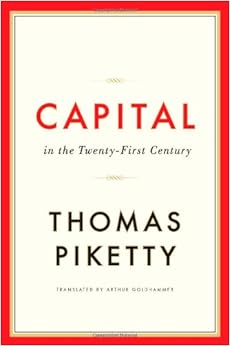
Speaking of economics, I have not read it yet (read quite a number of summaries/reviews though), but this seems to posit that America and other economically developed nations are turning into oligarchies as well, just from an economics perspective.
 
Do you really want to tell people who post on Facebook political stuff that they have been wasting a huge amount of their life obsessing over politics when it doesn't matter? Some people don't follow sports so they need a "team" to root for.

I am glad we don't have a true democracy or there would have been worst decisions made by politicians. Take the 2008 bail out for instance. Both constituents didn't want to bail out the banks for emotional reasons despite all the economic experts agreeing it had to be done. The economy would have been even more fucked if people were just given the right to vote on it.
Democracy doesn't imply idiocracy. The reason people are so uninformed is in large part because it benefits the status quo (e.g. the oligarchy) for them to stay that way.

Consider the state of our public schools. That's not an accident.

As for picking fights with people on Facebook -- no, since that's a horrible way to do anything other than waste a day posting on Facebook. I do talk about it whenever politics comes up in real life though. The mainstream news media is pretty easy-to-digest evidence, in my experience
 
Democracy doesn't imply idiocracy. The reason people are so uninformed is in large part because it benefits the status quo (e.g. the oligarchy) for them to stay that way.

Even the most informed people who follow politics chose to ignore what economics experts were saying that a bail was needed and just rationalize that they knew better. People will chose an emotional response over a logical response despite whatever education you provide for them.
 
Even the most informed people who follow politics chose to ignore what economics experts were saying that a bail was needed and just rationalize that they knew better. People will chose an emotional response over a logical response despite whatever education you provide for them.
You're not going to convince me of this without some cold hard data.

In any case, it's not an argument for oligarchy, it's an argument for experts making policy decisions. You can do that with representative democracy. You can even do it with regular democracy.
 
Whaaaa? Look I can sum the entire GDP with a formula:

C + I + G + (X-M) = GDP

The GDP is just that simple to calculate.

SCIENCE!

All calculating is math but not all math is calculating. Science would be testing the formula against data from the economic universe. They both have some deep specialized scientific applications but economics seems to have more concretely quantifiable variables than political science does, in the widest sense of both fields. Both apply game theoretical tools for their own purposes. Is there a noble prize for Political Science (or is that the Peace Prize)?
 
You're not going to convince me of this without some cold hard data.

In any case, it's not an argument for oligarchy, it's an argument for experts making policy decisions. You can do that with representative democracy. You can even do it with regular democracy.

Experts often get it wrong too, in part because they're that much more confident in making boisterous claims that someone who is generally well-informed wouldn't dare make.
 
I was surprised to learn that every President after Reagan has either been a Harvard or Yale graduate.

I was even more surprised to learn that the last Supreme Court justice that did not attend Harvard or Yale was in 1981.

Eaglecry.gif
 
All calculating is math but not all math is calculating. Science would be testing the formula against data from the economic universe. They both have some deep specialized scientific applications but economics seems to have more concretely quantifiable variables than political science does, in the widest sense of both fields. Both apply game theoretical tools for their own purposes. Is there a noble prize for Political Science (or is that the Peace Prize)?

I'd argue Daniel Kahneman's Nobel Prize for Economics was a Nobel Prize for social science.
 
You're not going to convince me of this without some cold hard data.

http://en.wikipedia.org/wiki/Emerge...C_financiers.2C_economists.2C_and_journalists

In a survey conducted September 19–22 by Bloomberg/Los Angeles Times, by a margin of 55 percent to 31 percent, Americans opposed the bailout when asked whether "the government should use taxpayers' dollars to rescue ailing private financial firms whose collapse could have adverse effects on the economy and market, or is it not the government's responsibility to bail out private companies with taxpayers' dollars?".

Here is a good example of the rationalizations people do to discredit experts:

Experts often get it wrong too, in part because they're that much more confident in making boisterous claims that someone who is generally well-informed wouldn't dare make.

People are saying that about climate change all the time.
 
I was surprised to learn that every President after Reagan has either been a Harvard or Yale graduate.

I was even more surprised to learn that the last Supreme Court justice that did not attend either Harvard or Yale was in 1981.

Eaglecry.gif

The last president who never finished college was Truman, and I think the last justice who didn't have a law degree was Robert Jackson.
 
Democracy doesn't imply idiocracy. The reason people are so uninformed is in large part because it benefits the status quo (e.g. the oligarchy) for them to stay that way.

Consider the state of our public schools. That's not an accident.

As for picking fights with people on Facebook -- no, since that's a horrible way to do anything other than waste a day posting on Facebook. I do talk about it whenever politics comes up in real life though. The mainstream news media is pretty easy-to-digest evidence, in my experience

WAKE UP SHEEPLE
 
Here is a good example of the rationalizations people do to discredit experts:

Contrary to what you believe I'm not pulling that out of my ass. Expert aren't infallible especially when viewed in aggregate, on average they often do not beat random chance or the market in the financial sectors and there is hard data that proves this. Not saying this means they're useless, but overestimating them can lead to bad policy.
 
The interesting thing about oligarchies is that they exist because we are effectively transferring to them our political power (ie. money) and thus giving their power our tacit approval.

The end-game for a capitalistic democracy, without proper regulations, will always be an oligarchy, because 'they' will have more money than the general populace.
 
I consider economics a social science. Some lady won it too in 2009 (a political scientist). I think any competition between fields is funnier than it is something I would argue.
edit: http://en.wikipedia.org/wiki/Elinor_Ostrom (work on political economy so she wore both hats)

Economics is a social science, by definition. That modern macroeconomics is based on math heavy microeconomics is another, while true, thing. It's why the degree went from Political Economy to just Economics or Commercial Engineering in some countries. Many nobel laureates have worked or are math scientists.
 
Contrary to what you believe I'm not pulling that out of my ass. Expert aren't infallible especially when viewed in aggregate, on average they often do not beat random chance or the market in the financial sectors and there is hard data that proves this. Not saying this means they're useless, but overestimating them can lead to bad policy.
The very concept of an "expert" is always temporally relativistic.
 
There are places in the country where democracy happens. For example, it's town meeting season here in Eastern Massachusetts. Many small towns are having their annual town meetings where anyone can show up and vote on town matters/budgets etc.

They take forever.
 
To be fair the notion that any democracy is a democracy isn't true. They tend to actually be Republics. But I am curious, how much influence is the average citizen expected to have? 1/317,000,000ish?
 
Speaking of the founders, my brother believes that we are still under the control of the British Empire.

I don't know but maybe some people here have heard this theory before and understand it.
 
Status
Not open for further replies.
Top Bottom