

THESE are biscuits.
I don't give a damn what the Brits opinion on the matter is.
Yup, dont worry my friend. We will win like usual.

THESE are biscuits.
I don't give a damn what the Brits opinion on the matter is.
I'm starting to get annoyed by Englishisms tbh.
The 8 letter of the alphabet "H" is pronounced "aitch" not "haitch" you English heathens!
Hospitalize is often cited as annoying to brits. But they made up that word. Its not an Americanism.

This isn't a universal English thing. The heathens who pronounce it haitch are ridiculed there as well.I'm starting to get annoyed by Englishisms tbh.
The 8 letter of the alphabet "H" is pronounced "aitch" not "haitch" you English heathens!
THESE are biscuits.
I don't give a damn what the Brits opinion on the matter is.
Similarly, I can't stand when Americans call whirlybirds 'ducks'.
http://www.bbc.com/news/14130942
"I have had a lengthy career in journalism. I hope that's because editors have found me reliable. I have worked with many talented colleagues. Sometimes I get invited to parties and meet influential people. Overall, I've had a tremendous time.
Lengthy. Reliable. Talented. Influential. Tremendous."
As an Australian, I'd call that a scone. And I'd pronounce 'scone' to rhyme with 'gone'.
Most of the British complaints about US-english are based on ignorance.
The English accent is not "the authentic form of the languge", English used to be a rhotic language, Americans and English people used to have the same accent during the American revolution and it was much closer to the way Americans speak today. It was only in the late 18th century to early 19th that the English upper class people started using non-rhotic dialect in prep-schools to separate themselves from the those nouveau riche people who (gasp) made their own money and the savages in the colonies.
As for spelling, most of the US and UK spelling used to coexist on both sides of the ponds, it was just when Noah Webster tried to standardize the spelling and chose 'o' over 'ou' (since that sound was mostly gone from spoken English at that point) that English people started treating them as vulgar and stuck to the alternative.
They even had to go and edit Shakespeare so he don't speak "American".
This kills me every time.
You mean it's not 'scown'?As an Australian, I'd call that a scone. And I'd pronounce 'scone' to rhyme with 'gone'.
THESE are biscuits.
I don't give a damn what the Brits opinion on the matter is.


Time to pimp this again:
http://www.amazon.com/dp/1592404944/?tag=neogaf0e-20
It's about grammar, not vocabulary, although it touches on that subject a little. And English and American grammar differ only very very slightly, as far as a I can tell.
THESE are biscuits.
I don't give a damn what the Brits opinion on the matter is.
THESE are biscuits.
I don't give a damn what the Brits opinion on the matter is.
Well it's not just Britain but the entirety of Europe. As a European, that is NOT a biscuit. That is a scone sir.
THESE are biscuits.
I don't give a damn what the Brits opinion on the matter is.
Well it's not just Britain but the entirety of Europe. As a European, that is NOT a biscuit. That is a scone sir.
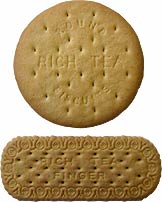
These are biscuits
These are cookies

The only thing that comes to mind is punctuation positioning. Apparently the norm regarding quotation marks and commas is include any following comma in the quote regardless of whether it's part of the quote or not "Like this," but over on this side of the pond we usually do it the more logical way by not including it as part of the quote "Like this", unless the quote contains punctuation.
I haven't eaten yet today and this made my mouth water at the buttery, buttery goodness.
THESE are biscuits.
I don't give a damn what the Brits opinion on the matter is.
The only thing that comes to mind is punctuation positioning. Apparently the norm regarding quotation marks and commas is include any following comma in the quote regardless of whether it's part of the quote or not "Like this," but over on this side of the pond we usually do it the more logical way by not including it as part of the quote "Like this", unless the quote contains punctuation.
I was referring to structural grammar, like word order, case, marking endings and such. The only difference I know of is that UK english will say things like "the crowd are going wild" and in the US it would be "the crowd is going wild."
...huh. So do they also say stuff like "The UK are great at drinking tea" and "The Royal Family are very private?"
I think you completely missed his point.
That dictionary was printed in 1965. He's using it as a reference point to show you how much US english has been imported and exchanged over the last 50 years.
I would definitely put the question mark inside, because it's part of the girl's sentence. Plus, putting it outside just makes it a grammatically imperfect sentence.Yeah, quotation punctuation is really confusing. Visually, I think the British system is more appealing, but both can lead to odd results.
For example:
The girl said, "Is that a cat?".
v.
The girl said, "Is that a cat"?
To me, the former is unparsimonious, but the later grammatically confusing because the sentence is a statement even if the subject is asking a question.
I see. I suppose that's something that's so minor that it gets lost in the sea in misused forms of there/their/they're and the myriad other common mistakes on the Internet. Thinking about that example in particular, I would say that "is" is the prevalent choice here in the UK, too. It is interesting though, I've never thought about whether or not it's correct to refer to groups as singular entities. I think I tend to do it. Actually, no. It's probably context based and I mix it up.I was referring to structural grammar, like word order, case, marking endings and such. The only difference I know of is that UK english will say things like "the crowd are going wild" and in the US it would be "the crowd is going wild."
Shouldn't The Beatles always be referred to as multiple people because of the plural name?there's no real consistency, but referring to the UK will always be singular
The Beatles, however, are a band
Zed makes a lot of sense when you think about the rest of the alphabet and how many letters end with a d sound. Oh wait...
They sound different, just like B and T.How else do you tell the difference between C "cee" and Z "zee"? I always say Zed, but English is my second language.
How else do you tell the difference between C "cee" and Z "zee"? I always say Zed, but English is my second language.

Is that like new breaking development in historical linguistics?Respectfully, a lot of this is based on misconceptions.
While Anglo-Saxon was a rhotic language, arhotacism developed well before the English colonized North America.
Furthermore, most American dialects were non-rhotic themselves until fairly recently. The American television accent (or more accurately American Midwestern accent) is somewhat new, and was not terribly pervasive until maybe 30 years ago. That and the influx of Irish and Scottish into the US is what has caused American English to develop into a rhotic language.
So I agree that until recently Americans and English sounded similar, but that's because both were non-rhotic, not because they were rhotic. Listen to old speeches by Roosevelt and other news reporters from WW2 - they speak non-rhotically.

Sconne vs. scone always seemed a little silly to me. But a biscuit is certainly not a scone. Their texture and taste are different.Scones and there's a big debate in the UK over their pronunciation
Jam and jelly are two different things. Why you guys call gello jelly I'll never know.The day we call jammie dodgers something other than biscuits I'll write a very angry sounding letter to the American consulate in jam (Edit and it's jam not bloody jelly)
Garbage tier biscuits are made with lard, the genuine article is made with butter.I believe the difference between scones and your biscuits in the butter content in the baking of them. Hence why they taste different. You use animal fat I think to create biscuits.
Because it's jelly.Jam and jelly are two different things. Why you guys call gello jelly I'll never know.
But it's gello.Because it's jelly.
You need to hear the accent from Tangier Island in Virginia: https://www.youtube.com/watch?v=AIZgw09CG9E
Are ramen and instant noddles used interchangeably in the states? It's the impression i've gotten via cultural osmosis
THESE are biscuits.
I don't give a damn what the Brits opinion on the matter is.
Are ramen and instant noddles used interchangeably in the states? It's the impression i've gotten via cultural osmosis
See, scones do have a meaning in the US:
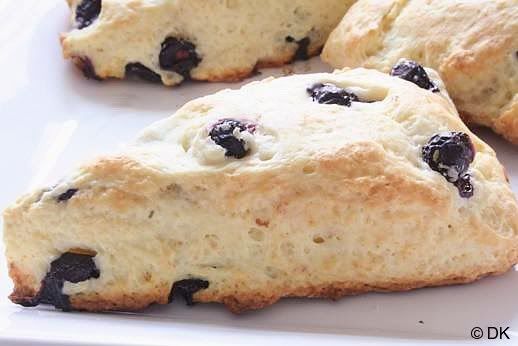
They're pretty much the same thing except their triangular and have fruit in them typically.

"Nutty-gum and fruit spleggings" is the best things I've ever read.
As an Australian, I'd call that a scone. And I'd pronounce 'scone' to rhyme with 'gone'.


