

-
Hey Guest. Check out your NeoGAF Wrapped 2025 results here!
You are using an out of date browser. It may not display this or other websites correctly.
You should upgrade or use an alternative browser.
You should upgrade or use an alternative browser.
Weird moments in game publishing!
- Thread starter sn00zer
- Start date
For about 1/3 of the life of the Sega Master System in the US, Sega didn't handle the publishing in America. Instead, they had sold exclusive publishing rights to Tonka, and Tonka published both the system and the games in America. This happened in 1988 and went until about late 1989, when Sega took over after Tonka had done poorly. If you look on the back of many early Sega master system boxes, you'll see the Tonka trademark instead of the Sega trademark.

In this thread I discovered the word Tonka comes from their address in Minnetonka.
DiipuSurotu
Banned


Sunsoft re-published Final Fantasy Legend in 1998, nine years after the original release by Square.

Conker's Bad Fur Day was published by THQ, even though it was developed by a Nintendo studio for a Nintendo console, because Nintendo didn't want to touch it with a ten-foot pole.
Only in Europe. Rare published it themselves in the US.
snow in jamaica
Member

Bimini Run for the Genesis.
Never heard of Nuvision Entertainment? That's because it's the only game they ever published, on any platform,, and even then, only in the US. One-game publishers were and are virtually unheard of in console gaming. It's also the only game from its developer (Microsmiths.)
What a strange release. It's the kind of low-key, self-published game that was common in the home computer scene, but on a console, officially licensed and everything.
I actually played this game! It's... OK for what it is, nothing too special. But it reminds me of a Sega CD game with an interesting publishing history:

Android Assault: The Revenge of Bari-Arm
This game was developed by Human and called "Bari-Arm" in Japan. The US title screen still says "Bari-Arm", even if the boxart's title is different. The game was released in America by Big Fun Games, who have published no other games aside from this.
The actual game is a pretty decent Thunder Force clone and probably the best shmup on the system (I like it better than Robo Aleste, Silpheed, and Sol-Feace personally).
Other strange things:
-Enix publishing Eidos' Tomb Raider III in Japan
-Eidos publishing Enix's Dragon Quest I/II/III GBC ports in the west
-Eidos also publishing FF7 PC in the west
-Eidos publishing Ion Storm's Anachronox, a game heavily influenced by Square's Chrono Trigger
So maybe SE's acquisition of Eidos wasn't as out of left field as you might think!
banefirelord
Banned
Ubisoft published Morrowind in Europe, if I recall correctly.
Activision published Virtual On Oratorio Tangram in North America
Activision used to publish a lot of strange niche games - Guardian's Crusade and Alundra 2 for PS1, Oratorio Tangram, Biometal (SNES shmup that got a 2 Unlimited soundtrack in its western release). A lot more interesting than what they are known for nowadays.

Also, Mastiff is probably the weirdest publisher ever, look at some of the stuff they've published:
-Gungrave: Overdose
-La Pucelle Tactics
-Gurumin
-Top Gun (GBA)
-Heavy Fire: Afghanistan
-Major League Eating: The Game (Wii)
-Shimano Xtreme Fishing
-Remington Great American Bird Hunt
No rhyme or reason to some of this, and they are still in business to this day even with such a limited and super-obscure release schedule. When Gurumin (already pretty niche by Falcom standards) is your best known game, uhh...
Scorpion Soldier
Member
They still did that up to Advanced Warfare, actually.
I've got one that's much weirder:
Though, I do believe Activision handled the X1 version themselves.


KyanMehwulfe
Member
How about around 2010-2012 where, thanks to Eidos, it seemed a Square Enix published game was more likely to feature a city shootout with a Chinese gangster (Sleeping Dogs; Kane & Lynch DD; Deus Ex HR; Hitman AB) than to ride a chocobo or airship with a Black Mage looking for a crystal. Most of my favorite S-E games of the last decade are actually shooters or otherwise somehow feature crime, gangs, contract killers, espionage, etc.
Considering FF VI-X was 1994-2001, I'd have never likely expected that publisher scenario before, but for a long time 'new games about chocobos and dragoons' sort of fell out of mind, and I associated Eidos crime/espionage dramas more with Square Enix.
Considering FF VI-X was 1994-2001, I'd have never likely expected that publisher scenario before, but for a long time 'new games about chocobos and dragoons' sort of fell out of mind, and I associated Eidos crime/espionage dramas more with Square Enix.

So during the original console wars of Atari vs Mattel, of which I am a product, there were some crazy things going on with publishing. Such as, software from both companies appearing on their rival consoles.
Atarisoft was formed to publish their "console exclusives" to rival platforms. Centipede, Defender and Pac-Man were three titles Atari published to Intellivision.
Conversely, Mattel set up M Network to publish their first party titles such as Star Strike, Frogs and Flies (Frog Bog), and TRON Deadly Discs on the 2600.
Then when Coleco came into the picture in 1982, they started snatching up the home rights to popular arcade titles, notably Donkey Kong. which was a pack-in for the ColecoVision. Coleco also published the title and others the company licensed on rival consoles Atari 2600 and IntelliVision.
In a weird twist, Atarisoft actually published Donkey Kong for home computers, but its rival Coleco published it on the Atari 2600.
https://en.wikipedia.org/wiki/Donkey_Kong_(video_game)#Licensing_and_ports
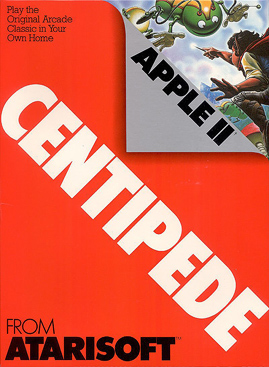
Atarisoft was formed to publish their "console exclusives" to rival platforms. Centipede, Defender and Pac-Man were three titles Atari published to Intellivision.
Conversely, Mattel set up M Network to publish their first party titles such as Star Strike, Frogs and Flies (Frog Bog), and TRON Deadly Discs on the 2600.
Then when Coleco came into the picture in 1982, they started snatching up the home rights to popular arcade titles, notably Donkey Kong. which was a pack-in for the ColecoVision. Coleco also published the title and others the company licensed on rival consoles Atari 2600 and IntelliVision.
In a weird twist, Atarisoft actually published Donkey Kong for home computers, but its rival Coleco published it on the Atari 2600.
https://en.wikipedia.org/wiki/Donkey_Kong_(video_game)#Licensing_and_ports
Wikipedia said:Meanwhile, Atari got the license for computer versions of Donkey Kong and released it for the Atari 400/800. When Coleco unveiled the Adam Computer, running a port of Donkey Kong at the 1983 Consumer Electronics Show in Chicago, Illinois, Atari protested that it was in violation of the licensing agreement. Yamauchi demanded that Arnold Greenberg, Coleco's president, shelve his Adam port. This version of the game was cartridge-based, and thus not a violation of Nintendo's license with Atari; still, Greenberg complied. Ray Kassar of Atari was fired the next month, and the home PC version of Donkey Kong fell through.
In 1983, Atari released several computer versions under the Atarisoft label. All of the computer ports had the cement factory level, while most of the console versions did not. None of the home versions of Donkey Kong had all of the intermissions or animations from the arcade game. Some have Donkey Kong on the left side of the screen in the barrel level (like he is in the arcade game) and others have him on the right side.

SystemUser
Member
Sort of.
They did have NES games, but they were by Tengen:
Sega did work with Sunsoft a bit, they did Super Fantasy Zone on Genesis IIRC, but I don't ever recall any Sega games on SNES though.
Edit: Okay Sunsoft did do Fantasy Zone NES, at least in Japan:
http://segaretro.org/Fantasy_Zone#Famicom_version
There was also Space Harrier for the NES, but I am not sure who published it in any region.
Edit: I guess it was Takara that published it. http://www.insidegamingonline.com/sega-why-are-your-games-on-the-famicom/
ScientificPizza
Banned
id and Activision had a working relationship going back to Quake II that only really ended with the Bethesda acquisition, so it's not that weirdActivision published DOOM 3and some of the Bloody Roar games back in the day.

Sorcerer
Member
Maybe the general cost?
Ubisoft published the PS3 version.
Morrowind was the game that put Elders Scrolls on the map for console gamers.
Oblivion was hotly anticipated because of the success of Morrowind, I am guessing they needed better distribution because sales were going to be huge.
NESpowerhouse
Perhaps he's wondering why someone would shoot a man before throwing him out of a plane.
For about 1/3 of the life of the Sega Master System in the US, Sega didn't handle the publishing in America. Instead, they had sold exclusive publishing rights to Tonka, and Tonka published both the system and the games in America. This happened in 1988 and went until about late 1989, when Sega took over after Tonka had done poorly. If you look on the back of many early Sega master system boxes, you'll see the Tonka trademark instead of the Sega trademark.
This takes the cake by far.
Capcom published GTA: San Andreas
-1.jpg)
Only in Japan. As mentioned they also did this with 3, VC, and IV. Not sure on V. They sold pretty well there too.
Resident Evil 3 for PC was published by Eidos.
The first version of RE4 PC (along with DMC3 and Oninusha) were published by Ubisoft.
I think Capcom hasn't started publishing their games on PC until Lost Planet.
That version of Re4 was what came to mind first. Fucking god awful PC port, no mouse support, missing lighting effects, terribly compressed cutscenes. ( I know this isn't the publishers fault, but its the it stuck out to me )
Also its surprising to see so many "big name games" being randomly published by a seemingly random company. Especially when its game in an already very well established franchise.
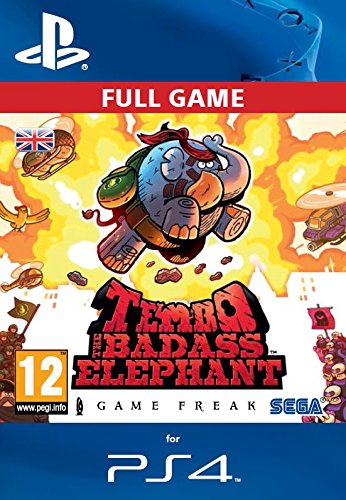
Sega publishing a Game Freak game and it's not even on a Nintendo system!
They did it waaay before Tempo !

Pulseman on the Genesis/Mega Drive
.jpg/revision/latest?cb=20090430204403&path-prefix=en)
They did it waaay before Tempo !
Pulseman on the Genesis/Mega Drive
I forgot about that. That's a good one. I would think Tembo the Badass Elephant would be more surprising considering Pulseman was before Pokemon and it's been over 20 years and Sega/Game Freak can still get together and release a game.
Also, future generations are going to wonder about publishing duties with The Last Story and Pandora's Tower in North America.
GillianSeed79
Member
The story behind the Tengen version of Tetris on NES is crazy. I believe they reverse engineered the lock out chip or something on the NES but Nintendo I think got a judge to pull the game from shelves or something. Not publishing, but Nintendo did offer the distribution rights to NES to Atari in the US at some point but they said no
They fraudulently obtained the specifications for the lockout chip from the patent office, but that was for all their unlicensed NES games. For Tetris it was because they never had the home console rights in the first place.The story behind the Tengen version of Tetris on NES is crazy. I believe they reverse engineered the lock out chip or something on the NES but Nintendo I think got a judge to pull the game from shelves or something. Not publishing, but Nintendo did offer the distribution rights to NES to Atari in the US at some point but they said no
Never heard of Nuvision Entertainment? That's because it's the only game they ever published, on any platform,, and even then, only in the US. One-game publishers were and are virtually unheard of in console gaming. It's also the only game from its developer (Microsmiths.)
This kind of thing happened regularly during the peak Famicom years in the bubble economy 80s. Japanese companies saw the huge amount of money being made in the console business and wanted a piece of the action. They'd publish a shitty game, usually made by a shadowy uncredited developer like Micronics, it would sell like crap and they'd usually give up there and then. For example broadcaster Fuji TV published a game called Saikoushi Sedi.
valkillmore
Member
Wow I never knew this was a thing.
It plays like Wipeout XL, has unique courses and a licensed electronica soundtrack. Shit is the shit. It is a better game than Wipeout Fusion, the only Wipeout game to exclusively launch on PS2.
This kind of thing happened regularly during the peak Famicom years in the bubble economy 80s. Japanese companies saw the huge amount of money being made in the console business and wanted a piece of the action. They'd publish a shitty game, usually made by a shadowy uncredited developer like Micronics, it would sell like crap and they'd usually give up there and then. For example broadcaster Fuji TV published a game called Saikoushi Sedi.
Fuji TV published quite a few NES games in the US under the name "FCI". Probably best known for Hydlide, Dr Chaos, and the NES Ultima ports.