

• Hey Guest. Check out your NeoGAF Wrapped 2025 results here!

What is "Level Design"?

The other day I was watching this review of Sparkster for the Genesis, in it he was talking about how great the level design is, which in my mind was the geometry of the actual environment, but he spent most of his time talking about thematic consistency, how each level blends into the next, how each level has a distinct look. I never really thought about it before, but I usually put that in the Style of Graphics categories, but is that actually a part of good level design? I've heard a lot of people talk about level design as the way something looks, or each area having a unique look. Are these people wrong, or is me that's wrong?

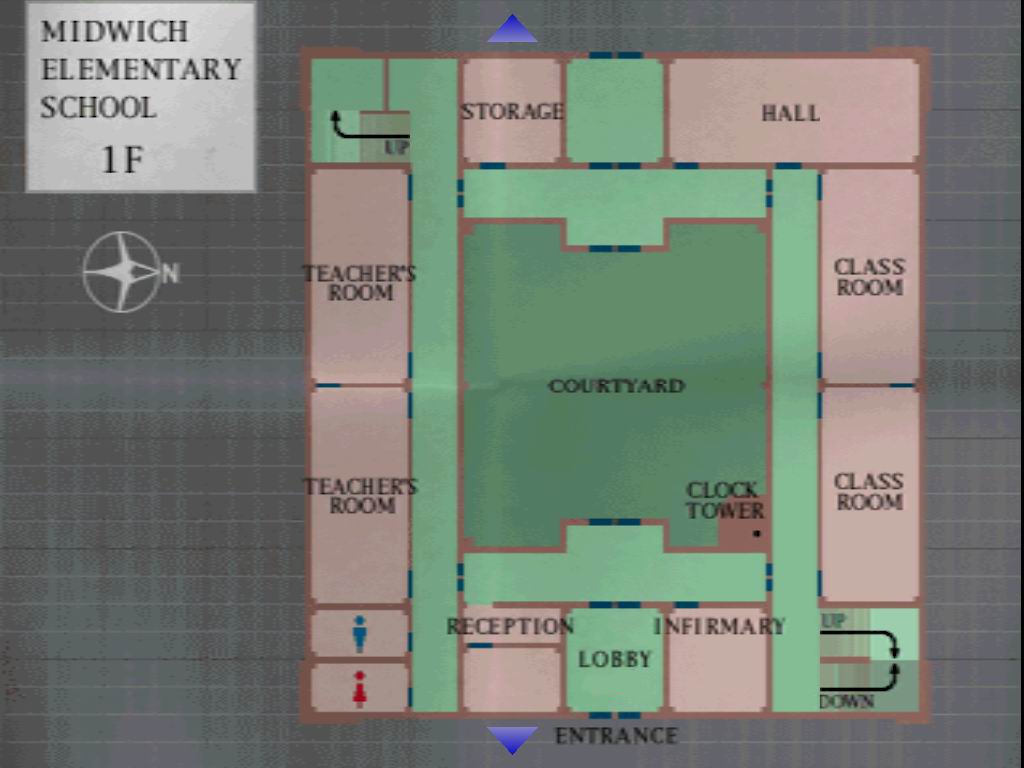
These thoughts then caused me to start thinking about games I thought had good level design in a different way, what about the levels made them stick out in my head? With the Silent Hills announcement I've been replaying SH1 again, and Midwich Elementary really stuck out to me, because of how it made the layout of a boring school into a creepy maze. But I really couldn't place if it was the aesthetics of the school, especially in the otherworld, that made it stick out or if it was the way they made it work as a videogame level.
sh1-map-s1f.jpg

5_19_49_37.jpg
Looking at the layout, it really doesn't have much going on, but the rusty chain link motif makes it stick out, but again, is that graphical or stylistic instead of actual level design?
On a similar note to the linked video, I wanted to quickly talk about Sonic 3. A lot of people prefer 3 to 2, but what I personally really don't like about 3 is the labyrinthine level design. There's too much up and down, back and forth with a much heavier emphasis on platforming throughout the game. Not as many of the levels really have an emphasis on forward momentum, which I feel is one of the best parts of Sonic 2, which focused more on the sense of speed and progression than 3, which was more about finding your way through the levels.

What I'm saying is that I personally don't like the level structure of Sonic 3, but when I take into account aesthetics and level blending, like riding the snowboard into the next area and even just the color pallet in most levels, I actually like a lot of what's going on in Sonic 3. Which only further muddies the idea of what level design actually is in my mind.

TLDR: What do you qualify as "Level Design", aesthetics or the environment your character interacts with? As an alternative, which do you prefer, a good looking environment or a well structured area.

And sorry if this is a basic thing, or whatever, I've just heard a lot of conflicting opinions on the subject.
 
For most games it's how well the environment and the objects placed within it facilitate the games mechanics and player's moveset and challenge their mastery. Other games have different goals outside of the player mastering its rules, for example something like Amnesia or Gone Home, where the goals are to explore and find things rather than demonstrate mechanical mastery.
 
The level design must go hand in hand with the mechanics as well as the aesthetics of the overall game. Innovative level design wins...it's what keeps the game going.
 
Both.

I would say level design primarily refers to the arrangement of obstacles/objects the player interacts with.

The nature of those objects ('aesthetics', as you call it) factors into it, as well, though, and in some cases, they are not distinguishable from each other (function & form, that is).
 
I watched the video you linked in the OP, and that guy has a very curious definition of level design. I've never heard anyone else use it that way before.
 
I watched the video you linked in the OP, and that guy has a very curious definition of level design. I've never heard anyone else use it that way before.

I didn't agree with his definition, but I actually have heard quite a few people think of it that way, which was counter to what I thought and led to this thread. It's good to see I wasn't horribly mistaken this whole time.
 
boring environments are just that, boring.


If I'm going down a plain hall it's dull, especially if they all look like that.

If there's something else, a grate wall or a window or something looking out to another part of a level, then it's a huge improvement.
 
The Silent Hill example is a bit disingenuous, because the game usually layers in plenty of locked doors, holes in walls, unexpected blockades ...one of the charms of the series is the bait and switch it pulls with the map you are given leading to fairly complex level design.
 
For most games it's how well the environment and the objects placed within it facilitate the games mechanics and player's moveset and challenge their mastery. Other games have different goals outside of the player mastering its rules, for example something like Amnesia or Gone Home, where the goals are to explore and find things rather than demonstrate mechanical mastery.

Well said, this is pretty much it.
 
The Silent Hill example is a bit disingenuous, because the game usually layers in plenty of locked doors, holes in walls, unexpected blockades ...one of the charms of the series is the bait and switch it pulls with the map you are given

That's what I was saying in that how they executed a regular school was really cool, but I also love the way it looks, so I wasn't sure if the quality of the level design was based around the layout, which is unique and cool, or if it's based on how it looks, which is also unique and cool.
 
A good designed level facilitates the unique gameplay the game might have, it keeps people interested and entertained and willing to explore and move forward while designed in such a way that players naturally move trough the level without getting stuck and lost. Level design has less to do with how things look and the visual theme, which is the job of the level artist.
 
This is an interesting question, made more interesting because you'll get different answers from actual level designers and other developers themselves as well. In the 80s and 90s a dedicated level designer in a level designy genre (2D platformers, FPS, etc) was usually responsible for everything in that level that the players could see, minus characters and usually textures. They would handle the overall look and feel, architecture, pacing, sightlines, actor/event placement, etc... In big modern productions these roles have become more specialized, so what was once a Level Designer role has now become Level Designer, Environment Artist, Event Scripter, World Builder, Combat Designer, Lighting Artist, Architect... the list continues.

Those titles are common in western studios but based on titles in Japanese game credits I'd guess they have much different methodologies and workflows a lot of the time.
 
The level design must go hand in hand with the mechanics as well as the aesthetics of the overall game. Innovative level design wins...it's what keeps the game going.
I disagree. I actually disagree with the term innovation in general (though that's another topic). Super Mario adds little to no innovation with it's series but instead has "level design" (yes quotation marks) down on a fundamental level that doesn't require change. Especially 20 years on where, like I said, hardly anything has changed with the series. And yet when we have "innovative level design" like DmC: Devil May Cry, Alice: Madness Returns, El Shaddai they take "level design" in a more artistic approach.

To me level design means how the level is built. Is it easy to navigate? Does it complement the mechanics of the game? What is the art style of the game how does this effect the environment? How are objects and/or interactables placed? Is it linear/non-linear?
There's a lot of factors to consider and those questions are just a few.
(I'm not the most articulate fucker on the planet so that's kinda my bad wording here)

boring environments are just that, boring.

It may be boring but is it bad? The environment doesn't have to stand out in order for it to be considered good. I'd like to see bad level design without someone having to bring up Superman 64.
 
I watched the video you linked in the OP, and that guy has a very curious definition of level design. I've never heard anyone else use it that way before.

As much as I loved the original Rocket Knight adventure, I never really felt that the level design was particularly amazing. Rocket Knight relies more on jumping from set piece to set piece, and uses a lot of mini boss fights. It actually feels kind of like Contra: Hard Corps to me, and was probably made by most of the same team members.

A well designed game, but not one that has long winding levels that keep you interested throughout the adventure.


That's what I was saying in that how they executed a regular school was really cool, but I also love the way it looks, so I wasn't sure if the quality of the level design was based around the layout, which is unique and cool, or if it's based on how it looks, which is also unique and cool.

Cant resist posting...

silenthill_kindergartencop-2.jpg


But I agree with you that they look a very mundane school layout and turned it into a really neat maze that transitions between two visual styles, one made up of rusty steel and spikes an the other a somewhat dilapidated school.
 
I can't add much to the definition that hasn't been said, but I will say level design is EASILY as important as a game's mechanics. As great as a game like God Hand is, it REALLY could have benefitted from some more thoughtful level design to compliment it's superb mechanics. It's why games like Tropical Freeze and Super Mario Galaxy are so revered... In the platformer genre a game will live or die based on it's level design. The God of War games are another example... The action mechanics may not be the genre's best, but the games always have interesting level design to keep things interesting.
 
Depends on the kind of game you're making. Level design can mean many things all at once.
 
A good designed level facilitates the unique gameplay the game might have, it keeps people interested and entertained and willing to explore and move forward while designed in such a way that players naturally move trough the level without getting stuck and lost. Level design has less to do with how things look and the visual theme, which is the job of the level artist.

As a level designer myself, this is mostly true. Unfortunately, in the industry the term 'level designer' fluctuates from studio to studio. Some are more scripting savvy, others fit more into the role of level artists. Some have an eye for good world-building and environmental story telling, whilst others may be great and scripting out big set pieces, interacting with AI.

Level design, as a high level concept though, is best explained as a filter that all the other areas of game development feed into. Every other discipline passes through a designer in some way before making it into the game. Be it the art assets that you'll have to construct the environments with, or the game design rules & mechanics you'll have to balance and tweak to fit the scenario.

Fundamentally good level design is the result of frequent and iterative testing and feedback. If you don't know how other people playing your level might approach an objective, you can't anticipate how to capitalize on covering all the potential scenarios.
 
This is an interesting question, made more interesting because you'll get different answers from actual level designers and other developers themselves as well. In the 80s and 90s a dedicated level designer in a level designy genre (2D platformers, FPS, etc) was usually responsible for everything in that level that the players could see, minus characters and usually textures. They would handle the overall look and feel, architecture, pacing, sightlines, actor/event placement, etc... In big modern productions these roles have become more specialized, so what was once a Level Designer role has now become Level Designer, Environment Artist, Event Scripter, World Builder, Combat Designer, Lighting Artist, Architect... the list continues.

Those titles are common in western studios but based on titles in Japanese game credits I'd guess they have much different methodologies and workflows a lot of the time.
The names and responsibilities are much different now depending on the studio and the genre and scope of the project, yeah.

I handle initial layout, scripting, and gameplay/encounters in my job as a LD. I depend on modelers to complete asset requests for buildings/modules and small props. A level artist will do set dressing/composition. Lighters and VFX artists will handle lighting and special particle FX stuff, sometimes weather if it's not done procedurally by whatever engine we are working with. Sound designers will place things like ambiance and sound occlusion zones, music stingers, and so on.

These are things that if I had to do them myself, I'd never be able to finish a level/area.
 
DN3D had those.

So, so, so good.

Level Lord for lyfe.

But I liked Duke 3D's level designed because they served as both single player as well as multi-player deathmatch levels.Which made them pretty non-linear if not still self contained, with lots of destructible walls that would create alternate pathways, and more than one way to gain access to an area in general. It really affected how you could speed run through a level and not have to really play it in the same way twice. Plus they were rather well designed for co-op.
 
It may be boring but is it bad? The environment doesn't have to stand out in order for it to be considered good. I'd like to see bad level design without someone having to bring up Superman 64.

It doesn't hurt gameplay or anything but it does make it seem repetitive and liken to a chore.

sometimes it works in certain games.

Like lets see, ok, revelations: Persona's maze layout in first person was kind of boring in the hospital.

fSjscus.jpg


nothing much, it's just one long curling guard rail to a door or two, lights up above.

However, cause of the music being played , sounds of death, doors leading to nowhere, it kind of works. It goes with the game a bit.


If it did the same with say silent hills hospitals it'd be a bit boring. But Silent Hill's hospital both normal and dark world version work out well, they've got detail they've got some resemblance of not being a copy paste plain old hallway.

Same with metal gear, I've heard a bunch of folks before say MGS2 is just orange and grey shit in the big shell but there's actually a GOOD amount of detail to each of the shell's buildings beside just the orange walls.

I know what you're saying though, less is more. And I do believe that, but it can't all be rather plain. Hence I like the details to the RE 1 mansion quite a bit.
 
I can't add much to the definition that hasn't been said, but I will say level design is EASILY as important as a game's mechanics. As great as a game like God Hand is, it REALLY could have benefitted from some more thoughtful level design to compliment it's superb mechanics. It's why games like Tropical Freeze and Super Mario Galaxy are so revered... In the platformer genre a game will live or die based on it's level design. The God of War games are another example... The action mechanics may not be the genre's best, but the games always have interesting level design to keep things interesting.

I would say that level design is fundamentally tied to game mechanics and design. The geometry of the level needs to be based around the player's power set, maneuverability/mobility and actions that they can take. That is why level design means a different thing game to game and genre to genre. For a super cheap example, Dishonoured's levels are laid out more vertically than other first person action games because the player has the ability to high jump and blink to gain height, so the level designer has to populate the higher areas with items, enemies and alternate routes. Compared to VVVVVV, where each puzzle screen was designed to challenge a character that can't jump conventionally, so ankle high walls, awkwardly shaped terrain and ceiling spikes all contribute to level design. The approach to both game's level design is different. The complexity is far, far greater for a world that is semi-open, like Dark Souls (using skeletons to blow the player up if they take the stairs down and even its effectiveness is debatable).

There's also more that can go into it, like how to lead the player in the correct direction (shine a light on a doorway, create lots of leading lines, and example is Mirror's Edge's red obstacles but that's pretty explicit).
 
Level design is the geometry/map/object/etc that the gameplay directly interacts with. Good gameplay can't reach its potential without good level design.

World design is the setting/atmosphere/props/etc. It doesn't have a direct effect on gameplay (except perhaps in genres such as horror where presentation affects player movement), but it plays a big role in absorbing the player into the level design, and consequently amplifies the draw of the gameplay even though it hasn't itself been altered.
 
I'm most familiar with level design in multiplayer games, where it's reffered to as map design, to be more specific. The goal is to create a balanced map with good flow, chokepoints for focused firefights that aren't actual chokepoints (you can get around them), camping spots which can be neutralized (blown up, have an angle the camper can't cover), and other elements which lend themselves to fun and more importantly, fair matches.

I've done a few of these in the past and honestly, looks and theme were never my primary focus.
 
Creative sophistication in the environment planning for the use of directing the player to justifiably negotiate the obstacles/opposition while adhering to the specific rules or constraints of the game logic.

Marrying/blending artistry(or an aesthetic narrative) to those parameters can often greatly help signify said game logic as well as enhance user engagement.
 
I have always thought of level design as, first and foremost, the layout and features of the environment, including enemy/item placement and scripting. But when I was actually designing levels, they were for Descent 2/3, and usually designed specifically for multiplayer. I have no idea if the general consensus of what constitutes the art of "level design" has changed since then or not.

I do think of aesthetics as part of the job of building levels, I suppose, but ultimately a good level to me (or at least a good multiplayer one) can be reduced down to the most basic components and will still achieve the intended aims of the designer (ex. I want chokepoints in these parts of the level to make sure people have to fight each other often, and I want these elevated vantage points to be vulnerable so people can't camp and snipe without having to watch their back, and etc., etc.). Aesthetics and art direction absolutely have their place in setting mood and atmosphere, but to me they're complementary arts, not one and the same.

(also, haha, nsignific actually said pretty much what I just said a few posts above, so go with that.)
 
Top Bottom