
Wii was hamstrung by its terrible video output processing. As the Dolphin shots show, many Wii games easily outmatch the best Xbox 1 had to offer, but Xbox 1 (and the Gamecube) had much better digital video output. Gamecube games actually look worse on the Wii due to the subpar output versus a digital output-equipped Gamecube.

-
Hey Guest. Check out your NeoGAF Wrapped 2025 results here!
You are using an out of date browser. It may not display this or other websites correctly.
You should upgrade or use an alternative browser.
You should upgrade or use an alternative browser.
Which was stronger, Wii or Xbox?
- Thread starter BLACK AMERICAN PSYCHO
- Start date
Wii, since I think the Xbox was weaker than the GameCube (and most of its "advantages" where actually DirectX stuff).
Nah, the Xbox had the edge over the GC in most regards. Not as significant an edge as some people believed at the time, but definitely there.
Schweinehund
Member
Wii looks better in my eyes.
Thats not to say the xbox has ugly games, its really not that far off from the Wii.
Thats not to say the xbox has ugly games, its really not that far off from the Wii.
Captain Smoker
Member

ProtomanNeo
Member
I could see a comparison thread between the Gamecube and the Xbox. But the Wii? Either you're trolling, or creatively bankrupt of ideas for threads
lostinblue
Banned
My reaction to this thread is "oh no, not again"
But I'll still bite.
Regarding the shader discussion, most people don't realize but there's not much, if at all that the Shader Model 1.1 did on the first Xbox that GC/Wii couldn't replicate. Of course being proprietary means less documentation, less "examples" out there to just copy paste and means they had to learn how to use it.
Also, because work environment was not a PC, you had to go back and forth with the actual hardware to see how your new custom effect would look which sucked, because code had to be compiled and put to ran on a devkit just to see a nuance.
I believe they actually released a TEV pipeline previewer for PC environment back in 2008/2009 though.
As for the extent of shit done, it has been said that Rebel Strike actually manipulated the GPU ISA via the CPU, injecting code so it could do more per cycle, actually surpassing what could have been done on Shader Model 1.1. But this is urban legend, as is the information that Factor 5 actually gave out some tech papers to capcom on how to implement their light scattering shader (employed in Rebel Strike) on RE4.
Anywho, it's against Shader model 2.x and up, and the notion that TEV pipeline was a dead end that hadn't evolved that the architecture got bad reactions. So, from Wii release forward; even if it was still very viable for SD content, if completely screwed on the multiplatform prospects)
Going back though; and that's GC versus Xbox, they were different architectures and so did things differently, which is the same thing as saying Gamecube did EMBM as if it was a spam attack of no consequence but didn't have the DOT3 full feature set (you could do it, and those missing features weren't often used; but fact is you'd be having more hit doing it that way than via the theoretically better EMBM), my point being when tackling either hardware you couldn't have the same strategy of attack, for it would either suit one platform or the other.
GC though, was a texturing beast, hence, EMBM was really a spam attack, look at Super Mario Galaxy, it manages to do it on almost every surface; Pikmin 1/2 on GC also abuses it; being a texturing beast doesn't amount to just that though; it also means it had lesser hit texturing polygons, so that's why it did 21 million polygons per second @ 60 frames per second (and supposedly even more than that, up to 28-30 million peak), against Xbox top performer at 15 million polygons @ 30 frames. That's no small difference.
On top of it all, Gamecube did 8 texture passes per clock and Xbox only did 4, so most Xbox games had to use the polygon trick to achieve the same results, which is rendering the scene twice per frame in order to double the texture passes. This would halve the performance.
Other nice story to tell is how these conditions lead to very different games, Halo 1 wasn't built for the Xbox from the ground up but was regarded as a 10 million polygon game (or near); Halo 2 though, opted to do bump mapping on all surfaces and reducing the polygons per second further; meanwhile Nintendo was pulling 15 million polygons on the Metroid Prime 1 and 2 with 64x64 textures and without bump mapping. The bottom line is, Gamecube couldn't run Halo 2, not enough RAM for that amount of bump mapping, and Xbox couldn't dream of doing Metroid Prime geometry. (but GC actually had theoretically superior texturing capability, albeit starved for RAM and disc storage)
IMO, GC was simply a better machine, but it was mitigated by being proprietary while not market leader; by not being a PC (hence, PC porting wasn't a simple option retaining graphical prowess over PS2 as it was on Xbox), low amount of RAM and shitty 2 MB framebuffer not being enough for AA. It also simply worked differently, the bridge between CPU and GPU being very important because CPU still dealt with Vertex information and tracking against Xbox Vertex Shader capability. They prepared for that though, with compression being supported back and forth from the GPU to the CPU. As for HD capabilities, Xbox was using a modified desktop GPU designed for more than 640x480; GC wasn't, it's down to design; 720p on it ate a lot of resources though, Xbox didn't have a framebuffer so usually just Z-buffer and outputting was supposed to take 16 MB of RAM.
As for the Wii versus Xbox, no contest; the Wii, but it was nonetheless a shame that the advantages Xbox architecture had over the GC (minus RAM and disc storage space) were still pretty much evident, because they weren't solved.
As for why were previous generation consoles pushed harder... I'd wager because they were leading edge (and competing for being leading edge) whereas Wii simply wasn't. It's like saying SNES gor pushed harder than GBA, and it did. In the end of this portable generation we'll also come to the conclusion they pushed the PS2 further than they did for the 3DS, despite 3DS being more powerful (and having a modern feature set).
I don't think Skyward Sword is impressive in anyway; they just grabbed existing tech from WW and TP, added a artistic filter (instead of the WW blur one) and went with it, nowhere near the ambition of appearing next gen on a last gen console Zelda TP had, and it shows.
But I'll still bite.
Regarding the shader discussion, most people don't realize but there's not much, if at all that the Shader Model 1.1 did on the first Xbox that GC/Wii couldn't replicate. Of course being proprietary means less documentation, less "examples" out there to just copy paste and means they had to learn how to use it.
Also, because work environment was not a PC, you had to go back and forth with the actual hardware to see how your new custom effect would look which sucked, because code had to be compiled and put to ran on a devkit just to see a nuance.
I believe they actually released a TEV pipeline previewer for PC environment back in 2008/2009 though.
As for the extent of shit done, it has been said that Rebel Strike actually manipulated the GPU ISA via the CPU, injecting code so it could do more per cycle, actually surpassing what could have been done on Shader Model 1.1. But this is urban legend, as is the information that Factor 5 actually gave out some tech papers to capcom on how to implement their light scattering shader (employed in Rebel Strike) on RE4.
Anywho, it's against Shader model 2.x and up, and the notion that TEV pipeline was a dead end that hadn't evolved that the architecture got bad reactions. So, from Wii release forward; even if it was still very viable for SD content, if completely screwed on the multiplatform prospects)
Going back though; and that's GC versus Xbox, they were different architectures and so did things differently, which is the same thing as saying Gamecube did EMBM as if it was a spam attack of no consequence but didn't have the DOT3 full feature set (you could do it, and those missing features weren't often used; but fact is you'd be having more hit doing it that way than via the theoretically better EMBM), my point being when tackling either hardware you couldn't have the same strategy of attack, for it would either suit one platform or the other.
GC though, was a texturing beast, hence, EMBM was really a spam attack, look at Super Mario Galaxy, it manages to do it on almost every surface; Pikmin 1/2 on GC also abuses it; being a texturing beast doesn't amount to just that though; it also means it had lesser hit texturing polygons, so that's why it did 21 million polygons per second @ 60 frames per second (and supposedly even more than that, up to 28-30 million peak), against Xbox top performer at 15 million polygons @ 30 frames. That's no small difference.
On top of it all, Gamecube did 8 texture passes per clock and Xbox only did 4, so most Xbox games had to use the polygon trick to achieve the same results, which is rendering the scene twice per frame in order to double the texture passes. This would halve the performance.
Other nice story to tell is how these conditions lead to very different games, Halo 1 wasn't built for the Xbox from the ground up but was regarded as a 10 million polygon game (or near); Halo 2 though, opted to do bump mapping on all surfaces and reducing the polygons per second further; meanwhile Nintendo was pulling 15 million polygons on the Metroid Prime 1 and 2 with 64x64 textures and without bump mapping. The bottom line is, Gamecube couldn't run Halo 2, not enough RAM for that amount of bump mapping, and Xbox couldn't dream of doing Metroid Prime geometry. (but GC actually had theoretically superior texturing capability, albeit starved for RAM and disc storage)
IMO, GC was simply a better machine, but it was mitigated by being proprietary while not market leader; by not being a PC (hence, PC porting wasn't a simple option retaining graphical prowess over PS2 as it was on Xbox), low amount of RAM and shitty 2 MB framebuffer not being enough for AA. It also simply worked differently, the bridge between CPU and GPU being very important because CPU still dealt with Vertex information and tracking against Xbox Vertex Shader capability. They prepared for that though, with compression being supported back and forth from the GPU to the CPU. As for HD capabilities, Xbox was using a modified desktop GPU designed for more than 640x480; GC wasn't, it's down to design; 720p on it ate a lot of resources though, Xbox didn't have a framebuffer so usually just Z-buffer and outputting was supposed to take 16 MB of RAM.
As for the Wii versus Xbox, no contest; the Wii, but it was nonetheless a shame that the advantages Xbox architecture had over the GC (minus RAM and disc storage space) were still pretty much evident, because they weren't solved.
As for why were previous generation consoles pushed harder... I'd wager because they were leading edge (and competing for being leading edge) whereas Wii simply wasn't. It's like saying SNES gor pushed harder than GBA, and it did. In the end of this portable generation we'll also come to the conclusion they pushed the PS2 further than they did for the 3DS, despite 3DS being more powerful (and having a modern feature set).
Conker has very small areas and even then the game dips quite a bit and they had problem with fur shading on Xbox, on Starfox adventures they really spammed it (even for grass) and used smaller shells (hence more strands) than on Conker.What about Conker that makes it better than Wii? The fur shading? That was already done in Mario Galaxy and even some select Gamecube games.
I'd say Skyward Sword is a more impressive effort. Nintendo manage to squeeze in bump maps, motion blur, depth of field, and soft shadows. They also added some physics based puzzles and monsters.
I don't think Skyward Sword is impressive in anyway; they just grabbed existing tech from WW and TP, added a artistic filter (instead of the WW blur one) and went with it, nowhere near the ambition of appearing next gen on a last gen console Zelda TP had, and it shows.
Not many games pushed the Xbox either....Would be a bad idea since so few games pushed the Wii in the way that many games pushed the limits of the Xbox.
"Many" is pushing it. There are 24 games supporting 720p or 1080p on the original XBOX. There are 968 games available for XBOX.Many Xbox games were HD. Many Wii games are sub-SD
It's true, however, that the XBOX had superior output quality and delivered slightly higher resolutions more often (by rendering into the overscan region regularly). Furthermore, most Wii titles only rendered at 16-bit color which was not the case on XBOX.
XANDER CAGE
Member
Jesus Christ dude, at least quote those.
Is that a downsampled shot of an emulator shot, though? Xenoblade looks great but it's certainly more jaggy than that.
Is that a downsampled shot of an emulator shot, though? Xenoblade looks great but it's certainly more jaggy than that.
Jesus Christ dude, at least quote those.
Is that a downsampled shot of an emulator shot, though? Xenoblade looks great but it's certainly more jaggy than that.
The things is, it's really not...
lostinblue
Banned
Even Little King Story drawing stills count as a Wii graphical showcase?
Dude overdid it.
Dude overdid it.
no one will read my post before it now.
Uhh, it actually is. Don't be silly.The things is, it's really not...
It's 640x480 stretched to 16:9. It's not at all clean on an actual Wii.
Here's an 853x480 shot (which is 640 stretched to 853 as it would appear on a TV). This is pretty accurate, although it looks quite a bit worse when blown up on a larger HDTV.

"Many" is pushing it. There are 24 games supporting 720p or 1080p on the original XBOX. There are 968 games available for XBOX.
It's true, however, that the XBOX had superior output quality and delivered slightly higher resolutions more often (by rendering into the overscan region regularly). Furthermore, most Wii titles only rendered at 16-bit color which was not the case on XBOX.
Yeah, my bad. "Many" was definitely pushing it. Back then though, spending as much time as I did with the GC and then switching over to the Xbox and seeing the difference in image quality was awesome. Good times.
Stronger physically. Xbox. Stronger third party support. Xbox. Stronger online mechanism. Xbox. Stronger first party support. Wii. Console with a controller that you could throw at a charging rhino and stun it? Xbox.
No. Espexially japanese third parties.
lostinblue
Banned
Color palette was supposed to be better on the GC though, PS2 was too dark, Xbox tended to be too colourful.Yeah, my bad. "Many" was definitely pushing it. Back then though, spending as much time as I did with the GC and then switching over to the Xbox and seeing the difference in image quality was awesome. Good times.
Shame dithering screwed it out. (and AA being a rare thing to see due to the small framebuffer)

JordanN
Banned
Barely.You even had repeats in there.
I'd say the difference between the Wii and Xbox is comparable to the difference between the Wii U (from what's released) and the HD twins.
Wii U has 2x the RAM and a more advance API. The Wii didn't offer any API advantages and had a 1.4x increase in memory over Xbox.
The difference the Wii U's GPU offers is actually significant.
"Many" is pushing it. There are 24 games supporting 720p or 1080p on the original XBOX. There are 968 games available for XBOX.
It's true, however, that the XBOX had superior output quality and delivered slightly higher resolutions more often (by rendering into the overscan region regularly). Furthermore, most Wii titles only rendered at 16-bit color which was not the case on XBOX.
Just out of curiosity how many games were on wii?

DonMigs85
Member
Color palette was supposed to be better on the GC though, PS2 was too dark, Xbox tended to be too colourful.
Shame dithering screwed it out. (and AA being a rare thing to see due to the small framebuffer)
I heard Xbox could do 2 texture passes in the time it took the Cube to do just 1, and with less of a fillrate penalty - also it had over twice the texel performance but was hampered by its lack of memory bandwidth.
lostinblue
Banned
That's overly compressed as fock. It actually appears worse than it would on a good HDTV, with good upscaling.Uhh, it actually is. Don't be silly.
It's 640x480 stretched to 16:9. It's not at all clean on an actual Wii.
Here's an 853x480 shot (which is 640 stretched to 853 as it would appear on a TV). This is pretty accurate, although it looks quite a bit worse when blown up on a larger HDTV.
Anywho, this is more like it:

Read my post before the spam of images.I heard Xbox could do 2 texture passes in the time it took the Cube to do just 1, and with less of a fillrate penalty - also it had over twice the texel performance but was hampered by its lack of memory bandwidth.
Xbox could do 4 textures per pass, GC could do 8 textures per pass. Xbox had to do two passes to equal that, halving the already at disadvantage polygon throughput.
Obviously none.Just out of curiosity how many games were on wii?
TheGreyHulk
Member
Xbox was stronger, but the wii had a whole decade for devs to toy with since it's chips were in the GCN.
Xbox had a measly 4 years, but it had the better hardware and it could actually do HD 720p unlike the Wii.
Xbox had a measly 4 years, but it had the better hardware and it could actually do HD 720p unlike the Wii.
Aquamarine
Member
Just out of curiosity how many games were on wii?
At least 3000 (if you count one release in one territory as a "game.")
need to get endless ocean 2

XANDER CAGE
Member
The things is, it's really not...
Bullhonky, unless you have a three-inch 480p TV.
That's overly compressed as fock. It actually appears worse than it would on a good HDTV, with good upscaling.
Anywho, this is more like it:
That's more like it. Looks great, but let's not pretend it wasn't on the Wii.

Insane Metal
Gold Member
The XBox IMO. Splinter Cell Chaos Theory was simply unbelievable.


I don't know the exact number but it's likely somewhere around 1400-1500, actually. There's an absolute fuck ton of shovelware, though.Just out of curiosity how many games were on wii?
Are you kidding? The XBOX shots in this thread are limited to one shot from each game. You actually posted more shots from a single game than all of the XBOX shots in this thread combined.Not really, easier for people to choose if both sides are shown.
Wii was hamstrung by its terrible video output processing. As the Dolphin shots show, many Wii games easily outmatch the best Xbox 1 had to offer, but Xbox 1 (and the Gamecube) had much better digital video output. Gamecube games actually look worse on the Wii due to the subpar output versus a digital output-equipped Gamecube.
Splinter Cell Chaos Theory?
lostinblue
Banned
Unreal Engine 2.XThe XBox IMO. Splinter Cell Chaos Theory was simply unbelievable.

Shame Epic didn't do an enhanced engine port for the GC/Wii; the last official release for GC was Build 927 on April/March 2002 and it was an outsourced port to Secret Level, the same dudes doing the PS2 build so no miracles; no wonder everyone had to pretty much fight the darn thing on the platform.
Official builds over the years went up to Build 3369 (released December 2005) and Unreal Engine 2.X was Build 2227, released March 2004.
Glass Rebel
Member
I once dropped the Duke controller on a friend's XBOX and it survived.
Thunder Monkey
Banned
I'm not one for hyperbolic statements...I don't know the exact number but it's likely somewhere around 1400-1500, actually. There's an absolute fuck ton of shovelware, though.
Are you kidding? The XBOX shots in this thread are limited to one shot from each game. You actually posted more shots from a single game than all of the XBOX shots in this thread combined.
*cough*
But that was one of the most simultaneously insane and completely asinine pic war posts I've seen. And I've seen some some cray cray pic wars.
I still have to give it to one on Xbox365 years ago though. About Wind Waker being a pedophiles dream game.
The reason I compare is because this one made about as much sense.
Aquamarine
Member
I don't know the exact number but it's likely somewhere around 1400-1500, actually. There's an absolute fuck ton of shovelware, though.
Are you kidding? The XBOX shots in this thread are limited to one shot from each game. You actually posted more shots from a single game than all of the XBOX shots in this thread combined.
There's been 1,600+ Wii titles released in North America, 1,750+ titles in Europe, and 550+ in Japan (including localizations).
Without taking localizations into mind, I think 1,400-1,500 is definitely lowballing it. Maybe more like 2,200?
The shovelware-to-game ratio is ridiculously high, you're right.
soxinthebox
Member
Screenshots are always good
Those screenshots make me care less and less about the Wii u - orbis/Durango power gap
Given the latter haven't shown their hand yet it's a bit hard to get an idea of the gap
Chie Satonaka
Member
Given the latter haven't shown their hand yet it's a bit hard to get an idea of the gap
I'm guessing his point was that you can make beautiful games without them being on cutting edge hardware.
At least, I'm hoping that was his point.
Willy Wanka
my god this avatar owns
The best on the Xbox looked significantly better than the best on Wii to me but I did play the vast majority of my Wii games on a 50 inch HD display (ie. they looked fucking horrible) so that may have skewed my perception somewhat.
Unreal Engine 2.X
Shame Epic didn't do an enhanced engine port for the GC/Wii; the last official release for GC was Build 927 on April/March 2002 and it was an outsourced port to Secret Level, the same dudes doing the PS2 build so no miracles; no wonder everyone had to pretty much fight the darn thing on the platform.
Official builds over the years went up to Build 3369 (released December 2005) and Unreal Engine 2.X was Build 2227, released March 2004.
Didn't Red Steel use UE2? Although I think it was Ubisoft's implementation of it.
Agent Icebeezy
Welcome beautful toddler, Madison Elizabeth, to the horde!
My Xbox lasted through a fire in 2004. It's a fucking tank.

Alexios
Cores, shaders and BIOS oh my!
Splinter Cell was Ubisoft's implementation too. I don't think vanilla UE at the time offered any of those HDR, normal and parallax mapping and dynamic lighting and shadowing features, they transformed it compared to say Unreal Championship 2.Didn't Red Steel use UE2? Although I think it was Ubisoft's implementation of it.
I don't think a single Wii or GC game looked as impressively modern for the time, as Splinter Cell CT did.
Other than that, the Wii library as a whole sports waaaaaaaaaaaay more *good looking games.
* Relative to the hardware. They otherwise all look shit on any modern set today
Edit: The fuck happened to my avatar?
Edit 2: Aaaand its back
Other than that, the Wii library as a whole sports waaaaaaaaaaaay more *good looking games.
* Relative to the hardware. They otherwise all look shit on any modern set today
Edit: The fuck happened to my avatar?
Edit 2: Aaaand its back
Kasumi1970
my name is Ted
Because pretty much anything worth playing on an Xbox has a PC or PS2 version anyway, so it's pointless?
that not ture.....there all the great sega games
Jet Set Radio Future
Gun Valkyrie
Shenmue 2
House of the Dead 3
Panzer Dragoon Orta -
ToeJam & Earl 3
Spikeout: Battle Street
Alexios
Cores, shaders and BIOS oh my!
Well, there's model 3 emulator and Dreamcast and Wii and emulators for some. JSRF, Gun Valkyrie and PDO left that I'd want.that not ture.....there all the great sega games
Jet Set Radio Future
Gun Valkyrie
Shenmue 2
House of the Dead 3
Panzer Dragoon Orta -
ToeJam & Earl 3
Spikeout: Battle Street
lostinblue
Banned
But Shenmue 2 on Dreamcast is the better version.
Epic whole attitude towards it sucked. Sure, UE3 would have been a massive undertake for essentially nothing other than the work environment possible to be achieved through other means; but they could have given the Wii some UE2.5 "overdrive" support, even if the optimized port for it was forked out to some other company, at least it would show some respect. There was money to be done on the Wii before it's market collapsed.
Point is, their support for GC and PS2 was horrible (outsourced, badly optimized and poorly maintained), and yet they touted those 2002 builds as "more than enough" for Wii needs; they'd be more honest in not even licencing it for it anymore.
It did, and it sure struggled with it.Didn't Red Steel use UE2? Although I think it was Ubisoft's implementation of it.
Epic whole attitude towards it sucked. Sure, UE3 would have been a massive undertake for essentially nothing other than the work environment possible to be achieved through other means; but they could have given the Wii some UE2.5 "overdrive" support, even if the optimized port for it was forked out to some other company, at least it would show some respect. There was money to be done on the Wii before it's market collapsed.
Point is, their support for GC and PS2 was horrible (outsourced, badly optimized and poorly maintained), and yet they touted those 2002 builds as "more than enough" for Wii needs; they'd be more honest in not even licencing it for it anymore.

Darkangel
Member
The OG Xbox was quite the beast.
It could do 720p, 1080i, and true Dolby 5.1 surround sound.
The Xbox and Wii were pretty neck-in-neck, and Nintendo 1st party games looked great, but I feel the Xbox's "highs" were better than the Wii's "highs". It also had much better IQ.

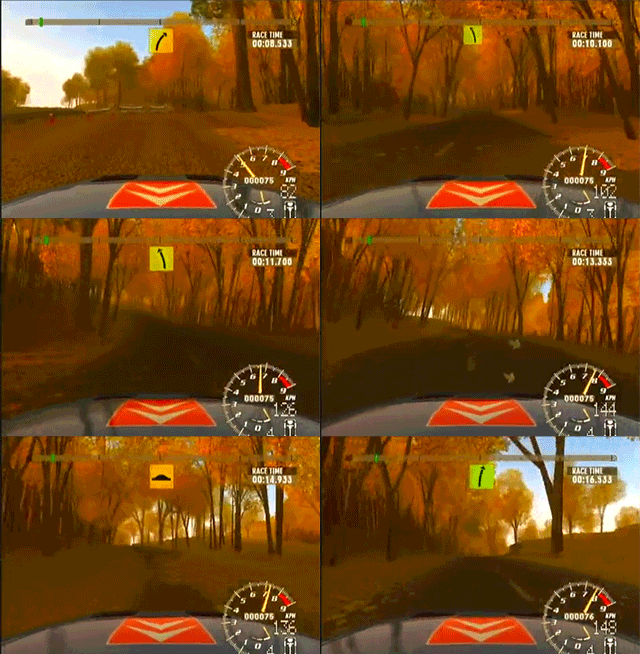
Here are some Xbox games running in 720p (It's really hard to find any pictures on the net):
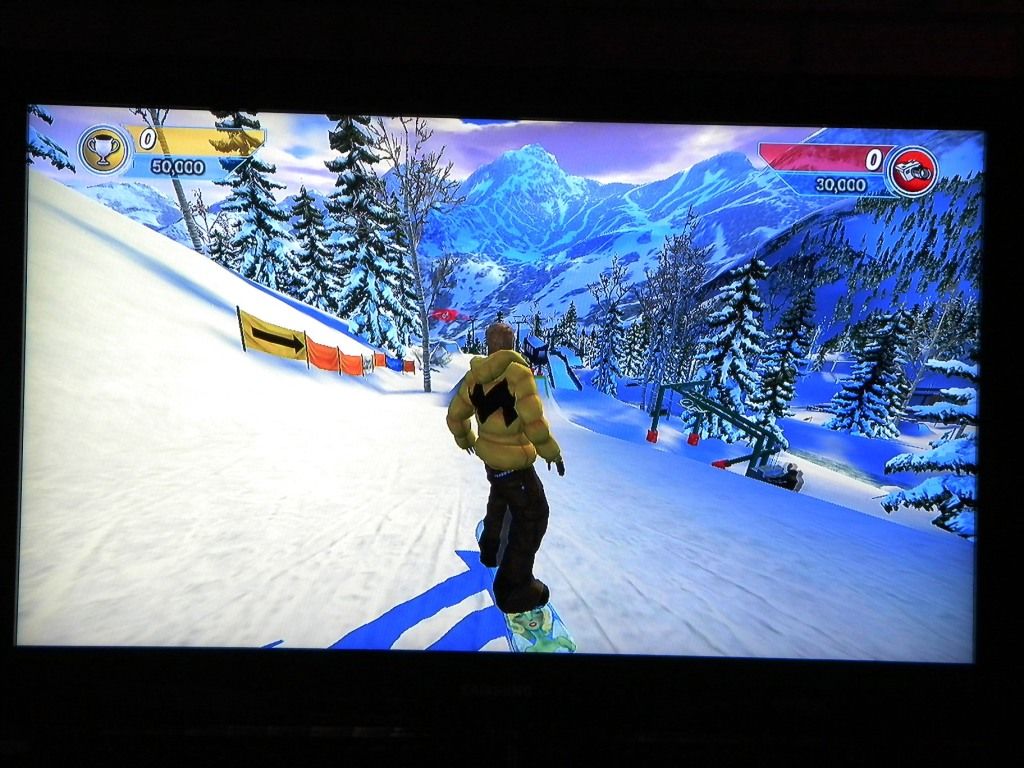


I've played Tony Hawk's Pro Skater 4 and Underground in 720p on the Xbox and they both looked great.
It could do 720p, 1080i, and true Dolby 5.1 surround sound.
The Xbox and Wii were pretty neck-in-neck, and Nintendo 1st party games looked great, but I feel the Xbox's "highs" were better than the Wii's "highs". It also had much better IQ.
Here are some Xbox games running in 720p (It's really hard to find any pictures on the net):
I've played Tony Hawk's Pro Skater 4 and Underground in 720p on the Xbox and they both looked great.

Shadow of the BEAST
Banned
I dont know who is more powerful. xbox with its more modern gpu but with less ram and worse cpu(?).
But I know I prefer wii graphics to xbox graphics.
I honestly dont like the look of more modern shaders when they are really low end.
As weird as it might sound i actually prefer traditional texturing of gc and ps2 compared to the low end normal maps etc of xbox.
For an example. i prefere the way halo1 looks to halo 2.
But I know I prefer wii graphics to xbox graphics.
I honestly dont like the look of more modern shaders when they are really low end.
As weird as it might sound i actually prefer traditional texturing of gc and ps2 compared to the low end normal maps etc of xbox.
For an example. i prefere the way halo1 looks to halo 2.
It seems totally unfair to compare screenshots, because most developers never allocated the kind of budget, production values, and talent to the Wii that they gave to Xbox games.
Maybe Wii games could have looked as good as Ninja Gaiden Black, but Team Ninja never put their best programmers and artists on Wii titles, and nor did Tecmo ever give a Team Ninja-sized budget to Wii games.
Most publishers viewed the Wii as a platform for cheap low-budget gimmick titles. So of course Dance Mania 5 and Carnival Gallery 3 are not going to look as good as the games from the best and brightest developers on relatively equivalent hardware.
Maybe Wii games could have looked as good as Ninja Gaiden Black, but Team Ninja never put their best programmers and artists on Wii titles, and nor did Tecmo ever give a Team Ninja-sized budget to Wii games.
Most publishers viewed the Wii as a platform for cheap low-budget gimmick titles. So of course Dance Mania 5 and Carnival Gallery 3 are not going to look as good as the games from the best and brightest developers on relatively equivalent hardware.
Aquamarine
Member
It seems totally unfair to compare screenshots, because most developers never allocated the kind of budget, production values, and talent to the Wii that they gave to Xbox games.
Maybe Wii games could have looked as good as Ninja Gaiden Black, but Team Ninja never put their best programmers and artists on Wii titles, and nor did Tecmo ever give a Team Ninja-sized budget to Wii games.
Most publishers viewed the Wii as a platform for cheap low-budget gimmick titles. So of course Dance Mania 5 and Carnival Gallery 3 are not going to look as good as the games from the best and brightest developers on relatively equivalent hardware.
This guy knows what's up.