• Hey Guest. Check out your NeoGAF Wrapped 2025 results here!

TV Color Temp: What do Dev's say is the preferred Color Temp?

Because they have nothing better to do than to include a ton of shitty features on their sets.

And as said a little earlier, it helps them stand out in a Best Buy. The biggest, brightest TV does tend to sell, and cool tones appear brighter.

It's bad for accuracy but good for marketing.
 
I wonder why Cool 1 and 2 settings exist, if (according to this thread) they provide the most inaccurate results when trying to properly display natural looking colors. It's like TV manufacturers decided to have a "fuck up my whole shit, fam" setting.

Warm 2 for life

Some people actually like those settings, along with many of the other features that hurt accuracy and picture quality. It's also a part of what makes one set stand out from the other in a showroom. Since most people don't know any better, they just keep doing it.
 
I was thinking the same.

Surface however, lawd

I know at least the iPads from the 3 up to the Air and their cinema displays had very good accuracy. I can attest to the iPad 3 and 2010 1440p cinema display myself as I use both. The latest models admittedly I am not sure as I haven't been following them.
 
People use something other than neutral?


Yes, because despite what the labels would indicate, warm 1/warm 2 are closer to the white color temperature standard most of the time.

For the people saying "warm is a piss filter," go to your 2-point white balance and turn the R-gain down a few clicks. Like magic, you now have a white that's much closer to actual white than what you get at neutral or cool.
 
You're either using Warm 2 or you're using the wrong setting. That's fine, you're allowed to use whatever looks best to you. Just as long as you acknowledge it's not the proper standard.
 
I'm always the one who has to calibrate new monitors and televisions at work because I'm the only one at the studio who's taken the time to learn about it. (And I have gels to help balance the colors). On a vast majority of televisions and monitors, Warm 2 is the best foundation to start calibrating from. Warm 2 itself is not necessarily the best picture, but it requires less tweaking than starting from neutral, or cool settings.

Apple monitors also require very little tweaking, which is why they're a pretty beloved standard for photo and video editors. Occasionally they'll come out of the box needing some color adjustment but most of the adjustments I have to do on those is because of the lighting environment the monitor is being viewed in.
 
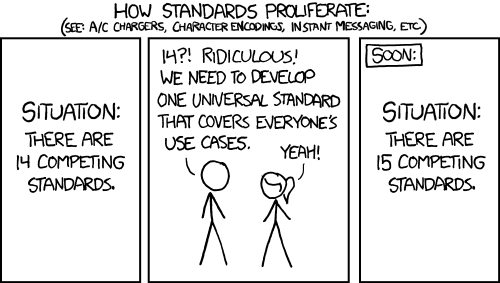
Fascinating. This makes me wish Apple made TVs, because at least then there'd be a popular, properly calibrated standard for people to compare against.

standards.png


There already is a digital standard, and there has been pretty much forever.

Historically, Apple's been a thorn in the side of colour correction. When they created the Macintosh, they threw standards out the window and decided on a gamma level that was different than every other digital system in existence -- 1.8, as opposed to the standard of 2.2. They argued that even though 2.2 was the standard, 1.8 was a closer match to print, so they were going to be their own special flower and make everyone's life a nightmare. Which, you know, may have made an ounce of sense at the time, if the assumption that people would use Macs only for desktop publishing, and never for anything else.

It doesn't explain why they stubbornly ignored the standard and did their own thing until 2009, and some Macs out there are still wrong.

Of course, if your Mac isn't properly set up and for some reason is displaying the wrong gamma levels -- which happens -- or if your colour drifts and you need to modify your display settings, they actually hide all that information from you. It's not just buried deep in a menu somewhere, you have to open System Preferences, go to Display, then Color, and then hold the option key while clicking Calibrate.

If Apple starts making TVs, I quit. I'm done. A lifetime wasted on compensating for h264 gamma shifts and improperly calibrated operating systems. I can't do that again. I can't.

breathes heavily into paper bag

What were we talking about?

 
Uh, non?

Why not just leave it at neutral and calibrate your TV to display the colors properly?
I don't think developers waste a dime on something as useless as your TV manufacturer's arbitrary color temperature setting.

Yup. The only preset you should be using is manual and getting it calibrated.

Anything else is changing the colors of what the author / director / producer intended.
 
Yes, because despite what the labels would indicate, warm 1/warm 2 are closer to the white color temperature standard most of the time.

For the people saying "warm is a piss filter," go to your 2-point white balance and turn the R-gain down a few clicks. Like magic, you now have a white that's much closer to actual white than what you get at neutral or cool.

Or you could actually take a few extra minutes to actually manually calibrate it...
 
All i can say is that Apple displays, at least for computers and laptops are horribly inaccurate.

Hasn't been true for years, since 2012 or so. Current iMacs have wide color gamuts and are immaculately calibrated out of the box. Same with iPads and iPhones.
 
Or you could actually take a few extra minutes to actually manually calibrate it...

If you're going to calibrate your display, a vast majority of the time you'll find that Warm1/2 is a better starting point than neutral. Take a look at the calibrated settings for recent TVs on rtings or cnet. Most if not all use Warm 1 or Warm 2. A professional calibrator will always use a Warm setting to start with. I've never seen a thread so full of confident wrong people.
 
If you're going to calibrate your display, a vast majority of the time you'll find that Warm1/2 is a better starting point than neutral. Take a look at the calibrated settings for recent TVs on rtings or cnet. Most if not all use Warm 1 or Warm 2. A professional calibrator will always use a Warm setting to start with. I've never seen a thread so full of confident wrong people.

Your assumption that neutral is farther from the D65 standard than warm on all TV's is prtty wrong dawg. Calibraters using warm as a starting point is the result of some weird naming schemes that were adopted a while back but have never been enforced to a standard.
 
If you're on PC, and you've spent anything over like $200 on your monitor, you really owe it to yourself to buy a colorimeter. There are great foolproof solutions like the Spyder express line that will give you an excellent calibration at the click of a button. You can find Spyder or colormunki units on sale, or even used for much cheaper than normal retail.

Dell ultrasharps have some models that have decent factory calibration in an sRGB mode. Good option if you don't want to invest in a colorimeter.

For TVs, there are lots of sites that offer up cal settings, or you can find your owners thread on avsforum. At a minimum, set it to warm 2, buy a cal DVD like Digital Video Essentials or Disney WOW, and at least calibrate your brightness, contrast and color setting correctly. For the love of God also disable sharpness.

Let's stop this "cool" nonsense. Nip that in the bud.

If anyone wants a Spyder 4, I have an old one I'd be willing to sell.
 
Why not just make the standard setting have the correct colour temperature and gamma?
Well... there's not really anything which is perfectly "correct", since the color perception is linked to the environment...

Also, I find interesting that the standard for Electric to Optic Transfer Function (with which the gamma is related) for *CRT* has been defined in... 2011. Fun thing is, five years later, we're about to enter in HDR, for which the gamma curve doesn't even make sense anymore...
 
Since I've started using Warm2 and Cinema mode (only a little more lag on my Bravia)I never changed the setting. Looks great, especially with dem cinematic titles.
 
Hmm...

I always just defaulted.

And looking at my current set I cannot even find a temperature setting.

It has settings for flesh tone, white balance and 10p white balance though.
 
I'd rather put a brick through my TV than use anything other than Cool.

Gross. Everything is too blue.

Anyway, as it was said in one of the earlier posts, it's usually suggested to set a TV to warm or warm 2. Whichever gets you the closest to 6500K white. It's also closest to what movie theater projectors are projecting with as well.

For movies I can understand the sentiment for using a Warm color temp but gaming has always been on the vibrant side and I feel like neutral or cool match it better. Even if it's not "accurate" it looks better IMO. PC monitors in genera are also notorious for this, having very vivid colors that are more cool than warm.

I don't understand where these "neutral/balanced" remarks are stemming from, since your TV is always set to some kind of color temp from default out of the box anyway.

I always used the same color temperature on my plasma for movies and games, but the THX mode was designed for low level lighting, watching video. So for games, I'd just change it from THX to standard, but everything else was the same. Haven't gamed on my OLED yet, but there's already a noticeable difference in the way the same color temp looks on it compared to my plasma, and both were calibrated.
 
Well... there's not really anything which is perfectly "correct", since the color perception is linked to the environment...

Also, I find interesting that the standard for Electric to Optic Transfer Function (with which the gamma is related) for *CRT* has been defined in... 2011.

That has to do more with the consistency since they vary by display types and weren't an issue with reference CRT displays.

https://www.itu.int/dms_pubrec/itu-r/rec/bt/R-REC-BT.1886-0-201103-I!!PDF-E.pdf
 
I had Cool 1 (the default) for a few years , then tried Warm but ewww, the piss filter is ugly, and Cool looks a little dark so i simply changed to "Normal"
 
Your assumption that neutral is farther from the D65 standard than warm on all TV's is prtty wrong dawg. Calibraters using warm as a starting point is the result of some weird naming schemes that were adopted a while back but have never been enforced to a standard.

Oh yeah? Do you have something to back that up?

From rtings
Warmer color temperatures will make the picture look yellower, and cooler temperatures look bluer. We recommend using a warm temperature – that’s what professional calibrators use (it is the closest to the 6500k standard color temperature) - but you should choose whatever you like best.

From cnet
Color temperature is the "color" of white in an image. Know how some light bulbs look bluish, while others look reddish or "warmer"? Same thing. The Sports and Vivid modes go for a cooler, bluish white that appears to "pop" more to the eye. Cinema and Movie go for a warmer color temperature. Technically, the warmer color temperature is the correct one, as it's the one used by the people who made the TV show or movie you're watching. At first glance, Movie/Cinema mode will appear very red, but this is likely far more accurate. Your eye/brain gets used to the color temperature, so "cool" seems correct, "warm" seems too red. But after watching the more accurate "warm" mode, cool will seem blue.

From PCMag
Once you find a mode that seems right, look for the Color Temperature setting and make sure it's set to Warm. This works with the picture mode to produce, for most modern TVs, fairly accurate colors across the board. You can get pinpoint precision for color levels with a full white balance/RGBCMY calibration, but that requires a calibration professional with special equipment. For most consumers, the warmest color temperature preset will do the job.

From WhatHiFi
We tend to start with either standard or warm (sometimes called ‘cinema’ or ‘pro’) – the latter usually being the most colour accurate, even though it might look on the warm side to begin with.

I could go on. You're not going to find a source that says neutral is the best starting point because it's objectively wrong. I mean maybe there's some off-brand TV out there that lables their warm setting as neutral, but for all the big-name brands, warm 1 or 2 is the one closest to D65.
 
As in, there would be a popular TV available (assuming popular because Apple) that would be properly calibrated, so people would have a point of comparison and look at their TVs at home and be like, "What have I been doing with my life, I feel infinite shame."
Most decent TVs are pretty close. Most people still have overscan on and mega sharpening on crap tvs
 
Movies/shows/whatever are made towards the warmer color range. So mostly Warm 2 for accuracy. Most professional calibrators start from that point for a reason.

My Kuro Elite and Panasonic ZT60 are calibrated from the warm settings for years. Cool is way too blue.
 
On my Panasonic ST60, colours look better in Warm mode. I does make whites look a bit less bright but it makes every other colour look better so the trade off is worth it.
 
As a dev: none. Just properly calibrate yout set.

I test our game on several monitors and TVs. Don't waste my hard work XD

Edit: for those vehemently in the "warm" camp - this is for games, not live action TV.
 
As a dev: none. Just properly calibrate yout set.

I test our game on several monitors and TVs. Don't waste my hard work XD

Edit: for those vehemently in the "warm" camp - this is for games, not live action TV.

By Warm, they are talking about what TV Manufacturers call 6500k on some TVs.

Hmm...

I always just defaulted.

And looking at my current set I cannot even find a temperature setting.

It has settings for flesh tone, white balance and 10p white balance though.

Fancy term for colour temperature
 
Not really shocking. Too few people even make a noise about crushed blacks in Xbox One OS and games. This console was released in 2013 and it's still not fixed. And this is a consumer media device that should be all about industry standarts. Last time i checked everything was messed up in that OS even YouTube app, picture viewer and web browser.

well it didn't start there. the 360 had crushed blacks and MS never fixed that either.
 
That's what I was thinking, reading through all these "warm" and "cool" replies. I'll have to check my TVs, but I'm pretty sure none of them are on cool, and I know for damned sure none of them are on (piss) warm.
If you care about accuracy, you'll calibrate even on a warmer color temperature, but you won't know what's closest to D65 until you measure it with a meter.
 
Default-colors.jpg


How GAF likes to view content


Gamma, you can "kinda" get with calibrating with your eyes. For free you can use www.lagom.nl/lcd-test/? ~ I also like the one that comes with the Xbox One Settings (though don't view any calibration sites on the Xbox One browser or Picture Viewer, because the colour space is fucked)

As for 6500k, you gotta just go for whatever is the closest to your neutral setting and try to make white look like white. Otherwise, you'll need a calibrated reference (less accurate) or a colorimeter (expensive as fuck).

woo had me laughing with your blue-white cie chart. Best Buy

You can pick up a respectable colorimeter for $200 and DIY with some good free software.
 
ive recently started using warm on my vizio p series. im used to cool, so the yellowish whites bother me a bit.

anyone know how to reduce that effect? make white a little more pure white?
 
I like how OP is asking devs specifically, but instead the thread is full of mad gamers who like to fuck up their TVs, meanwhile the voices of devs telling you to calibrate that shit are getting drowned out.

ive recently started using warm on my vizio p series. im used to cool, so the yellowish whites bother me a bit.

anyone know how to reduce that effect? make white a little more pure white?

what's your exact TV model?
 
ive recently started using warm on my vizio p series. im used to cool, so the yellowish whites bother me a bit.

anyone know how to reduce that effect? make white a little more pure white?

Apparently for recent Vizio TVs, normal color temperature is typically used as the base. They're the one exception to the rule. At least according to Cnet/Rtings.
 
ive recently started using warm on my vizio p series. im used to cool, so the yellowish whites bother me a bit.

anyone know how to reduce that effect? make white a little more pure white?

the white point is defined as D65, meant to be the color temperature of a bright sunny day. Warm settings try to get close to this color temp. Its what TV and movies use as reference.
Cool will look a little bit (sometimes a lotta bit) bluer. Often times, big box stores put everything in cool as the white intensity os stronger with extra blue contributions.
 
I like how OP is asking devs specifically, but instead the thread is full of mad gamers who like to fuck up their TVs, meanwhile the voices of devs telling you to calibrate that shit are getting drowned out.


what's your exact TV model?

P75-c1.

And sorry, I do have this on normal color temp actually.
 
I am a dev and I would be happiest for you to play my game on a CRT HDTV (not a joke, these do exist) so you can experience the most awesome black levels.

Alternatively, rock my games on OLED, that's the only thing that comes close.
 
Top Bottom