

• Hey Guest. Check out your NeoGAF Wrapped 2025 results here!

Emotion Engine was really powerful ?

Toxa

Junior Member
Kutargi did a wonderful hardware in 1994 , the first playstation , very powerful and easy to use !

and Kutaragi once said that the sega saturn wasn't a beatutiful harwdare because the architecture was too complicated .

But with the PS2 he went in a other direction and he created a powerful hardware but way more complicated than the PS1.
Emotion Engine was the key for the PS2 a brand new architecture that was suppose to push the limits.
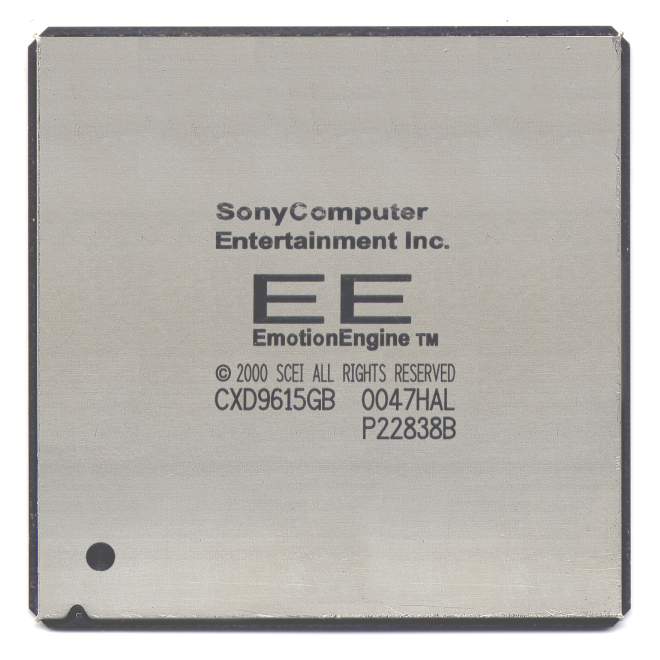
Sony_EmotionEngine_CXD9615GB_top.jpg


PS2 was a pain for dev, a lot of aliasing and some people saying that PS2 wasn't more powerful than DC


So the question is "Emotion Engine was really powerful ?"

at least it was powerful according kitase

“That would be the fact that the PS2 was such a great platform. Of course, the PS3 and PS Vita have better specs but with the Emotion Engine at its core, the PS2 really was a very high performance graphics machine.


http://gearnuke.com/kitase-emotion-engine-ps2-ps2-really-high-performance-graphics-machine/
 
It was weird that they overlooked anti-aliasing. Typical Sony/Kutaragi design, though, with the powerful CPU and by comparison weaker GPU (Toy Story, indeed).
 
Yes, it was actually a lot like the Cell in many ways. It had a mediocre main core but it also had two very powerful Vector Processing Units, which made it a floating point monster for the time. Of course also similar to the PS3 the PS2 had a gimped GPU that lacked a lot of features that modern GPUs were starting to have at the time and the CPU was designed to do a lot of the graphics workload.
 
It was for its time. But there is no denying that the consoles from Sony competitors which came out a year later, the Gamecube and the Xbox, were more powerful overall.
 
It's the "cell" of the last generation.

Difficult to use/learn but powerful (I'm not saying it is the best).

Without it, a lot of ps2 games will be much simpler.
 
Maybe compared to the Dreamcast, but in that generation I bought everything on the Xbox because things looked so much better.

And that hard drive for custom soundtracks and save games. And caching.
 
Emotion Engine was a cracking piece of kit and a real pre-cursor to CELL and multiprocessor design.
The VU units really allowed some amazing work - again a precursor to shaders.
The main thing was that the bus speed allowed the PS2 to have a really tiny amount of RAM whilst being able to kick it's data around all over the place..

I love the PS2 architecture - and seeing Gran Turismo 4 have a 1080i frontend UI in 4MB of VRAM, it blows my mind.

Loved it.
 
The Emotion Engine was certainly good at appealing to fanboys. Besides that it was in line with the times. Between the Dreamcast and the Xbox.

It was the last MIPS cpu used in consoles. Now it's all Arm, PPC and x86.
 
It was weird that they overlooked anti-aliasing.

They actually provided several HW mechanisms that were useful for anti-aliasing, so it was not really overlooked. Some of those were quite expensive, though, and the HW was flexible enough that resources saved on AA could be put to good use for other things. Different developers made different trade-offs, and the variation between different games was actually quite large. The CRT TVs typically used in the PS2 era were also more forgiving against aliasing, so a game could be perceived as having perfectly good anti-aliasing even though it doesn't quite look that way now (e.g. MGS2).
 
Predictably enough for its generation, it was more powerful than the system that came before it (Dreamcast), and less powerful than both the of the systems released after it (Gamecube and Xbox).
 
They actually provided several HW mechanisms that were useful for anti-aliasing, so it was not really overlooked. Some of those were quite expensive, though, and the HW was flexible enough that resources saved on AA could be put to good use for other things. Different developers made different trade-offs, and the variation between different games was actually quite large. The CRT TVs typically used in the PS2 era were also more forgiving against aliasing, so a game could be perceived as having perfectly good anti-aliasing even though it doesn't quite look that way now (e.g. MGS2).

The issue with the PS2 wasn't really edge aliasing... it was texture aliasing due to their poor implementation of mipmapping.
 
Ken Kutaragi was ahead of his time. And when multinational billion dollar businesses are concerned, that's not always a good thing.

I would have loved to see what he could have done working with a smaller, more independent and more experimentally oriented team .
 
Typical Kutaragi design. It did some things very nicely, and had some good on-paper theoretical stuff, but it was pointlessly arcane and needlessly obtuse for outside developers to get to grips with, and was vastly outperformed by the competition when they both launched. I believe part of Shinji Mikami's reasoning for jumping ship to Gamecube was because of how much of an utter pain in the arse the PS2 was to program for.

That the PS2 still went on to dominate just goes to show that it is games, not specs, that ultimately prove the test of time. Kutaragi's earned his place in the gaming hall of fame, but he's also consistently been Sony's own worst enemy, allowing his own ego to drive hardware decisions that then make life harder for everyone else. In the PS2's case, that meant hardware that was significantly harder to get to grips with for developers, and also significantly weaker. Sony were fortunate they could press their exclusives library to their advantage.
 
I always wondered why the difficulty of the ps2 was not an impediment to Japanese developers/

A lot of Japanese games were B-tier efforts or visual novels. So brute force maybe?
With PS3, it was more than just coding. Lack of middleware and no PC background to pull off shaders probably hurt them more.
 
Typical Kutaragi design. It did some things very nicely, and had some good on-paper theoretical stuff, but it was pointlessly arcane and needlessly obtuse for outside developers to get to grips with, and was vastly outperformed by the competition when they both launched. I believe part of Shinji Mikami's reasoning for jumping ship to Gamecube was because of how much of an utter pain in the arse the PS2 was to program for.

That the PS2 still went on to dominate just goes to show that it is games, not specs, that ultimately prove the test of time. Kutaragi's earned his place in the gaming hall of fame, but he's also consistently been Sony's own worst enemy, allowing his own ego to drive hardware decisions that then make life harder for everyone else. In the PS2's case, that meant hardware that was significantly harder to get to grips with for developers, and also significantly weaker. Sony were fortunate they could press their exclusives library to their advantage.

I don't think you can stress enough the fact that those competitors launched a year later. A year was a lot of time back then when it came to advancement of hardware.
 
Didn't the EE let the PS2 push some really large environments? Something about an absurd fill rate the PS3 had problems emulating?
 
I don't think you can stress enough the fact that those competitors launched a year later. A year was a lot of time back then when it came to advancement of hardware.

The Xbox and Gamecube launched a whopping 16/18 months later than the PS2. By then the PS2 had unstoppable momentum. To say that specs weren't important truly is revisionist history.
 
FFX was probably the best looking game on the system for quite a while and still holds up, so Kitase would know.
 
Typical Kutaragi design. It did some things very nicely, and had some good on-paper theoretical stuff, but it was pointlessly arcane and needlessly obtuse for outside developers to get to grips with.
Not really. The early devkits were bad, but the CPU itself was a fairly well known MIPS derivative. The VPUs weren't that hard exotic either, and can be compared with today's vertex and geometry shaders.

The Graphics Synthesizer was also pretty simple. The main complaint was that it lacked features found in other chips (described as sub Voodoo 2) and being a little short on memory (Only four megabytes, but that was still more than the PSX had in total). On the upside you got plenty of fill-rate and bandwidth, which is something developers like.

All in all the PS2 is a evolution of the PS1 design. The PS1 has a Sony designed GPU and a MIPS CPU with some extra hardware to help out geometry processing. The PS2 has a Sony designed GPU and a MIPS CPU with some extra hardware to help out geometry processing.

Sony could of course have licensed a GPU, like Sega, Microsoft and Nintendo did, but that might have driven up the cost or delayed the release.
 
sörine;119302292 said:
It was technically a handheld but PSP also used a MIPS CPU. I think PPC will probably stop with Wii U.
Considering the cost of development and the ease of porting x86 to more devices I would say that's a safe bet, and one for the better.
 
I always wondered why the difficulty of the ps2 was not an impediment to Japanese developers/

afaik Japanese devs only began using standardized engines and software relatively recently compared to western devs, who've been Unreal and Havok (etc) streamlined for quite some time. That's why Kojima gave a keynote several years ago about needing to combine understanding of both hardware-crentric and software-centric development going forward, and ended up spending a few years on Fox Engine. Prior to that, it was standard procedure to make a game and engine for a piece of hardware that might only ever be used for one game, or only for games on that system.
 
MGS2 ran like shit on the Xbox when it was ported.
Proof that the Emotion Engine was more powerful?
All the consoles back then had strengths and weaknesses.

Dreamcast: The weakest but had some good AA
PS2: Pushes more polygons than DC and had the highest fillrate/good at particles
Gamecube: Pushes more polygons than PS2, had 8 free hardware lights. Held back by fixed functioned architecture and mini-discs.
Xbox: Capable of bump maps/per pixel lighting on every surface. A so-so CPU.
 
Yo did you guys play mgs2 and 3?

Games were beautiful for their time...nothing like mgs2 in 2001.

That's more a testament to good development teams taking advantage of what the PS2 had to offer than the CPU being super powerful. MGS2 had very clean, simple textures that avoided a lot of the issues PS2 games typically faced with mipmapping, for example. If I remember correctly the PS2 had a unique advantage over the other consoles when it came to frame buffer/fill rate to render particle effects (if that sentence made a techie cringe, I'm sorry) that MGS2 used to great effect for rain and whatnot.
 
Man I was all the way on the Emotion Engine over hype back then. The magazines with the photo of that old mans face rendered in what was supposed real time had me going crazy.
 
For it's time yeah.
I also wished it had more 480p games like Xbox and Gamecube did, heck even Dreamcast did 480p on nearly all of it's games.
 
When the Dreamcast was assassinated, and I eventually found out how complicated the PS2 hardware was, it made me scratch my head... 'cause I'd grown up thinking that unorthodox hardware helped kill the Saturn, and that Dreamcast being Windows-based made it a breeze. Of course, there's more to it than that, but that's just what I thought about it as a youngin'.
 
Yes the Emotion Engine with its vector units was really a tremendous solution to the big problem of the time, increasing drastically the number of polygons on screen creating realistic environments and characters.
So the hardware team really nailed it with the EE.
Unfortunately the PS2 had more shortfalls with the rasterizer chip (the Graphics Synthesizer) which was a fill rate and bandwidth monster for its time but having just 4MB of embedded vram created many headaches until programmers learned how to stream textures (8MB would have been perfect but it wasn't possible with the manufacturing process of the time @0.35-0.25um) and also its feature set was pretty barebone compared to the PC 3D accelerator chips available at the time.
 
It was difficult to develop for yet why did it become the best selling console of all time? Why did developers choose the playstation 2 to make exclusive AAA titles?
 
EE was a great little chip, once you got all the sub-processors singing.

The GS was a beast. Dat fill rate. So many particles. So much overdraw.

The RS on the other hand...
 
It was difficult to develop for yet why did it become the best selling console of all time? Why did developers choose the playstation 2 to make exclusive AAA titles?

The biggest games of last gen sold on Playstation 1. The competition didn't do much to stop it.

SEGA was on their death bed, Nintendo charged too much for cartridges (that was out of style) and Microsoft was a newcomer (who arrived late).
 
The Xbox and Gamecube launched a whopping 16/18 months later than the PS2. By then the PS2 had unstoppable momentum. To say that specs weren't important truly is revisionist history.

Oh. For the success of PS2 it definitely helped that it came year earlier. I was just answering to why it was kinda given that both GC and Xbox outperformed it graphically. A year was a lot in tech world back then.
 
Oh. For the success of PS2 it definitely helped that it came year earlier. I was just answering to why it was kinda given that both GC and Xbox outperformed it graphically. A year was a lot in tech world back then.

The Gamecube was actually old hardware by the time it launched -- it was finalized way back in April of 2000. (Which explains how they were able to launch at $199.) This makes it all the more remarkable that the GC's graphical output outclassed the PS2 and could even hang with the Xbox.
 
Top Bottom