nkarafo
Member
This is a site with some amazing high-res pictures of the insides of various older computer chips:
http://www.visual6502.org/
Just look at the 68000 CPU (the one used in Genesis/MegaDrive and many more 16bit systems)
http://www.visual6502.org/images/pages/Motorola_68000.html
In the big pics, you can clearly see each individual transistor. Keep in mind that these pictures can reach 10.000 x 10.000 resolution or more and 200+ MB, so don't do this in your old smartphone or netbook or something... i suggest looking at the lower res 20MB pictures, they work well too.
http://www.visual6502.org/images/68000/Motorola_68000_die_20x_1c_noMetal_6500w.jpg
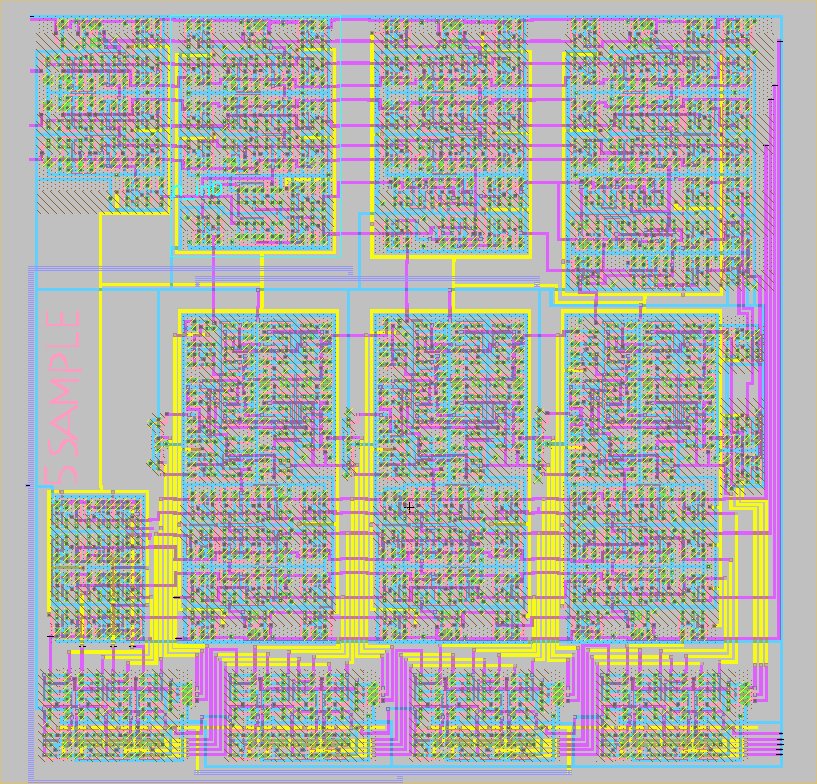
Looking at the 68000 picture i see a very complex design, like a huge metropolis of some sort, with wiring and more than 60k individual transistors. I assume that they didn't just throw the transistors in there randomly. So each one of them was put there by someone, right? All these paths and patterns are thought out and "handcrafted" correct? If so, how many man hours would a team of people need to design something like this?
But my real question is this: Let alone the 68000 processor. This is ancient tech. What about modern processors? These have BILLIONS yes, Billions of transistors inside them. Again, i assume that they didn't throw them in the chip at random. They have to be put in some kind of order right?
Now i'm not very good at math but i think that even if you try to count to 1 billion, it will take you about 30 years (assuming you count 1 each second). Now imagine trying to place 1 billion transistors in a design. One by one. I assume it would take you several lives, more than 100 actually. Obviously, you need people to help you. But even if you had 100 men painstakingly placing the transistors 1 by 1 in a design, it would still take hundreds of years.
So how does that work. I can't warp my mind around this, someone has to design all these patterns in microscopic levels so that it can work in some mysterious way. It looks completely magic or at least alien to me.
http://www.visual6502.org/
Just look at the 68000 CPU (the one used in Genesis/MegaDrive and many more 16bit systems)
http://www.visual6502.org/images/pages/Motorola_68000.html
In the big pics, you can clearly see each individual transistor. Keep in mind that these pictures can reach 10.000 x 10.000 resolution or more and 200+ MB, so don't do this in your old smartphone or netbook or something... i suggest looking at the lower res 20MB pictures, they work well too.
http://www.visual6502.org/images/68000/Motorola_68000_die_20x_1c_noMetal_6500w.jpg
Looking at the 68000 picture i see a very complex design, like a huge metropolis of some sort, with wiring and more than 60k individual transistors. I assume that they didn't just throw the transistors in there randomly. So each one of them was put there by someone, right? All these paths and patterns are thought out and "handcrafted" correct? If so, how many man hours would a team of people need to design something like this?
But my real question is this: Let alone the 68000 processor. This is ancient tech. What about modern processors? These have BILLIONS yes, Billions of transistors inside them. Again, i assume that they didn't throw them in the chip at random. They have to be put in some kind of order right?
Now i'm not very good at math but i think that even if you try to count to 1 billion, it will take you about 30 years (assuming you count 1 each second). Now imagine trying to place 1 billion transistors in a design. One by one. I assume it would take you several lives, more than 100 actually. Obviously, you need people to help you. But even if you had 100 men painstakingly placing the transistors 1 by 1 in a design, it would still take hundreds of years.
So how does that work. I can't warp my mind around this, someone has to design all these patterns in microscopic levels so that it can work in some mysterious way. It looks completely magic or at least alien to me.
 Then they simulate the CPU with big server farms. If everything works correct they design the masks etc.