
Its much more powerful in real world offerings than PS2 but less powerful than PS3. The thing is, a great looking Vita game looks just as good as a PS3 game, while even a bad looking game will look better than PS2. So I'd say it skews more towards PS3, but its definitely not up it's level.

-
Hey Guest. Check out your NeoGAF Wrapped 2025 results here!
You are using an out of date browser. It may not display this or other websites correctly.
You should upgrade or use an alternative browser.
You should upgrade or use an alternative browser.
How powerful is the PlayStation vita?
- Thread starter BLACK AMERICAN PSYCHO
- Start date
BLACK AMERICAN PSYCHO
Junior Member
Soul sacrifice looks better than Uncharted and it's naive resolution.A sure thing is that, even if it's not often put to the table but that's one of the reasons the Vita struggle. It was meant to be a huge expensive machine for a reason, and that was its crazy unreal power. That idea has probably faded slowly in every mind after months of average performance.
The funny thing is i'm pretty certain it's suffering from the exact same problem as WiiU. It doesn't have the most usual architecture and the dev usual tools are not efficient for it yet, but that's pretty fatal in those days and ages.
And the problem of the Vita is that it's not worthy of what it wants to be. From the begenning, the fact that Uncharted wasn't native rez was a really bad sign and symbol for the console. If the game that is meant to show your console is a monster.. cannot run on it (cause not being native rez means it cannot run on the vita as it was designed initially...).. You've got a problem on your hands..

Canis lupus
Member
One thing that's a huge improvement over the PSP as far as image quality goes is the lack of horrible dithering on shadows/transparencies/textures. It was a real eyesore that I'm glad to see banished forever.
Oh god I hated ghosting on psp.
xxbrothawizxx63
Member
One thing that's a huge improvement over the PSP as far as image quality goes is the lack of horrible dithering on shadows/transparencies/textures. It was a real eyesore that I'm glad to see banished forever.
A problem that still persists in some 3DS games unfortunately....
Mercs 3D and Revelations in particular.
That's the biggest difference for me when going between 3DS and Vita. The IQ jump is VERY satisfying.
Aren't boxy futuristic cars easier to draw than detailed characters and environments? I agree that Wipeout's always looked good, but much of it IMO is due to the effects and the sense of speed that race games can convey.
Uncharted is no slouch either honestly. Minus flame effects it impressed me first run. Good starting point. And the first wipeout was not a looker to me. Just about everything on ps1 looked like trash. Had the system at launch.
One thing which you have to keep in mind is that the lighting, shaders and polygon density in iphone games (even after the fact that they are running at a higher res) are many times worse than the vita games. Also I'd like to point out that none of the iphone games (or even Tegra 3) have AI and animations that are even remotely as complex as what you see in something like say Golden Abyss.

JordanN
Banned
Very close to the original Xbox in geometry (260,000 a frame). Some better physics (I particularly like Kat's hair in gravity daze). Textures are inbetween 3DS and PS3. Some shaders ripped out of a Directx 9 level GPU.
Vita is still a far cry from the mini-PS3 people like to claim.
Vita is still a far cry from the mini-PS3 people like to claim.
BLACK AMERICAN PSYCHO
Junior Member
Holy shit dynasty warriors has 4xAA? That game is officially up there as one of the best looking vita games. Native resolution,4xAA and looks really nice to boot.
Hmmmmmm I forgot all about this.One thing which you have to keep in mind is that the lighting, shaders and polygon density in iphone games (even after the fact that they are running at a higher res) are many times worse than the vita games. Also I'd like to point out that none of the iphone games (or even Tegra 3) have AI and animations that are even remotely as complex as what you see in something like say Golden Abyss.
One thing which you have to keep in mind is that the lighting, shaders and polygon density in iphone games (even after the fact that they are running at a higher res) are many times worse than the vita games. Also I'd like to point out that none of the iphone games (or even Tegra 3) have AI and animations that are even remotely as complex as what you see in something like say Golden Abyss.
This is correct. Most of the best looking iOS games rely heavily on high resolution textures and lightmaps. Shaders are often on the level of the original Xbox, if not simpler, and many games use blob shadows. Vita games like Uncharted were the first instances of the SGX chips being used for heavy duties like fully normal-mapped and shadow-mapped levels with several dynamic lights, and the limited shader processing of the SGX finally showed it's ugly head.
Holy shit dynasty warriors has 4xAA? That game is officially up there as one of the best looking vita games. Native resolution,4xAA and looks really nice to boot.
Hmmmmmm I forgot all about this.
Everybody does once they see ios games for 2 bucks.
One thing which you have to keep in mind is that the lighting, shaders and polygon density in iphone games (even after the fact that they are running at a higher res) are many times worse than the vita games. Also I'd like to point out that none of the iphone games (or even Tegra 3) have AI and animations that are even remotely as complex as what you see in something like say Golden Abyss.
Exactly. Almost the only thing iOS games have going for it over Vita is the sometimes better image quality. There's so much more going on with it like what you mentioned that its really not even worth a comparison.
Exactly. Almost the only thing iOS games have going for it over Vita is the sometimes better image quality. There's so much more going on with it like what you mentioned that its really not even worth a comparison.
Sad many dont see past the smoke in mirrors.
Huh? People say that P4G is a "looker"? Because it looks like a mediocre Ps2 games to me. Along with the framerate drops and aliasing. Maybe you guys are talking about the Anime scenes?
This. But I believe that Vita developers would get better results following the lead of Mobile developers. If I show Unit 13 and Shadowgun running on my Note side to side to people most say that Shadowgun looks way better, despite the first displaying much complex graphics, all thanks to good IQ at 720p+ of the second.
This is correct. Most of the best looking iOS games rely heavily on high resolution textures and lightmaps. Shaders are often on the level of the original Xbox, if not simpler, and many games use blob shadows. Vita games like Uncharted were the first instances of the SGX chips being used for heavy duties like fully normal-mapped and shadow-mapped levels with several dynamic lights, and the limited shader processing of the SGX finally showed it's ugly head.
This. But I believe that Vita developers would get better results following the lead of Mobile developers. If I show Unit 13 and Shadowgun running on my Note side to side to people most say that Shadowgun looks way better, despite the first displaying much complex graphics, all thanks to good IQ at 720p+ of the second.
Doesn't change the fact?Games I own: Virtua Tennis
Mortal Kombat
Touch My Katamari
Little Big Planet
Need for Speed
Uncharted
Wipeout
Gravity Rush
Games that are native res:
Virtua Tennis
Touch My Katamari
Wipeout
chickdigger802
Banned
wipeout looks great, but the loading.
My priorities for handheld games is, loading, framerate, IQ, textures.
Speaking of which, what is up with a lot of vita games taking FOREVER to get from loading a game from the home screen to being in game? Oh yeah, 'console like experience' T_T.
P4G is ok looking, but it's so fucking weird that it's ALMOST native res, but ain't. Shit also looks weird in motion (think they are trying to mimmick the ps2 feel).
My priorities for handheld games is, loading, framerate, IQ, textures.
Speaking of which, what is up with a lot of vita games taking FOREVER to get from loading a game from the home screen to being in game? Oh yeah, 'console like experience' T_T.
P4G is ok looking, but it's so fucking weird that it's ALMOST native res, but ain't. Shit also looks weird in motion (think they are trying to mimmick the ps2 feel).
Do you mean infinity blade when you say 'blade for ios'?
If that is the case, then it's actually a pretty good example of what compromises developers typically have to make to target mobile hardware. Their GDC talk covered a lot of the details, but in summary, the number of draw calls was dramatically lower than any equivalent console/PC title and they had to rework their shader pipeline to pre-bake all their shader effects directly into unique textures. A simple example they gave was the god ray effect alone was taking around 20%+ of their frame time (!).
The end result is undeniably an amazing looking mobile game, but it very cleverly hides how hard they worked around the limitations of mobile graphics. Problem is, I don't see that approach scaling well to large game projects.
The other thing I'd like to say is that many people probably don't realise how expensive certain effects are. Normal mapping is a perfect example - it has massive implications on the complexity of both vertex and fragment shaders. In a home console it makes sense to use shaders of a certain ALU complexity, because otherwise the ALU's would just go underutilised (the pipe will be stalled elsewhere). On a mobile, this is flipped on it's head.
My point is, when you see fully dynamic lighting, deferred rendering, shadowing (cascaded sun shadows, spot light shadows), normal mapping, accurate specular, reflections+distortions, tone mapping, bloom and depth of field in a launch title of console scope you can't simply use "but it's not native res!" alone as an indication of a system's power. These cumulative cost of these effects are dramatically higher than most people probably realise - simply Bend did an utterly amazing job.
Was it a wise use of the system's power? That's an entirely different debate.
If that is the case, then it's actually a pretty good example of what compromises developers typically have to make to target mobile hardware. Their GDC talk covered a lot of the details, but in summary, the number of draw calls was dramatically lower than any equivalent console/PC title and they had to rework their shader pipeline to pre-bake all their shader effects directly into unique textures. A simple example they gave was the god ray effect alone was taking around 20%+ of their frame time (!).
The end result is undeniably an amazing looking mobile game, but it very cleverly hides how hard they worked around the limitations of mobile graphics. Problem is, I don't see that approach scaling well to large game projects.
The other thing I'd like to say is that many people probably don't realise how expensive certain effects are. Normal mapping is a perfect example - it has massive implications on the complexity of both vertex and fragment shaders. In a home console it makes sense to use shaders of a certain ALU complexity, because otherwise the ALU's would just go underutilised (the pipe will be stalled elsewhere). On a mobile, this is flipped on it's head.
My point is, when you see fully dynamic lighting, deferred rendering, shadowing (cascaded sun shadows, spot light shadows), normal mapping, accurate specular, reflections+distortions, tone mapping, bloom and depth of field in a launch title of console scope you can't simply use "but it's not native res!" alone as an indication of a system's power. These cumulative cost of these effects are dramatically higher than most people probably realise - simply Bend did an utterly amazing job.
Was it a wise use of the system's power? That's an entirely different debate.
wipeout looks great, but the loading.
My priorities for handheld games is, loading, framerate, IQ, textures.
They fixed it by like 25% each patch. It's good now.
Doesn't change the fact?
Virtually, every system showcase game for the system is sub-native res. (Wipeout drops resolution during races).
JordanN
Banned
I just noticed:Its much more powerful in real world offerings than PS2 but less powerful than PS3. The thing is, a great looking Vita game looks just as good as a PS3 game, while even a bad looking game will look better than PS2. So I'd say it skews more towards PS3, but its definitely not up it's level.
Vita less powerful than PS3 but games can look "just as good".
Wii U more powerful than PS3 but games claimed to be "worse/can't look better".
Note, this is not meant to single you out or de-rail the thread. Only an observation on how I see some view specs...
I just noticed:
Vita less powerful than PS3 but games can look "just as good".
Wii U more powerful than PS3 but games claimed to be "worse/can't look better".
Note, this is not meant to single you out or de-rail the thread. Only an insight on how I see some view specs...
Probably some truth to that but don't forget different (target) resolutions.
Pad resolution is lower than vita's.Probably some truth to that but don't forget different resolutions.


iceatcs
Junior Member
I know it's much more powerful than 3DS, but I really don't get why there are so few graphically impressive games that run in native resolution, given that the iPhone 4S is both less powerful and has a slightly higher native res.
For example NFS most wanted Vita/iOS which both are completely different version.
I can see if Vita getting that same iOS version, will run full native resolution.
It didn't.I'm pretty confident that the PSAll Stars beta had AA.
The aesthetic is far more pleasing than, say, Uncharted - which is an inconsistent mess. Uncharted does a lot of cool things, but is plagued by problems that really degrade the overall visual quality.Huh? People say that P4G is a "looker"? Because it looks like a mediocre Ps2 games to me. Along with the framerate drops and aliasing. Maybe you guys are talking about the Anime scenes?
I just noticed:
Vita less powerful than PS3 but games can look "just as good".
Wii U more powerful than PS3 but games claimed to be "worse/can't look better".
Note, this is not meant to single you out or de-rail the thread. Only an insight/observation on how I see some view specs...
Well it obviously depends on who you talk to. I'm a Vita fan so I'm going to bring up the fact that some games look as good as PS3. Others will say its disappointing because many games don't look as good as PS3. I get what you're saying but you hear multiple viewpoints on both, not just one viewpoint on Vita and one on Wii U.
TheChewyWaffles
Member
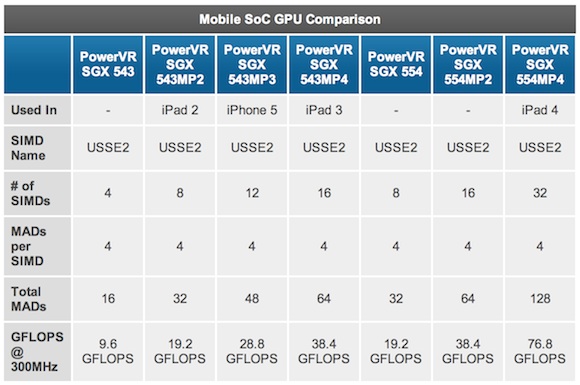
Well, here is it compared to the new iPhone and iPad
(Keep in mind the iPhone 5 is running at 1136x640 and the iPad is running at 2048x1536)
I don't see the Vita in there.
Well it obviously depends on who you talk to. I'm a Vita fan so I'm going to bring up the fact that some games look as good as PS3. Others will say its disappointing because many games don't look as good as PS3. I get what you're saying but you hear multiple viewpoints on both, not just one viewpoint on Vita and one on Wii U.
Eh, is not a fact.
Metalmurphy
Member
No wonder VT4 looks so awesome, native resolution with x4 AA at 60fps is insane. I hope developers keep pushing the vita to see how far it goes.
Pad resolution is lower than vita's.
I'm not sure they were referring to the image on the gamepad
Btw how is the quality on the pad screen? Still haven't gotten to try or even see one yet. I heard it was bad though...makes sense for low latency streaming.
I'm guessing the wiiU actually doesn't work as much when just sending an image to the gamepad as well ..
Well it obviously depends on who you talk to. I'm a Vita fan so I'm going to bring up the fact that some games look as good as PS3. Others will say its disappointing because many games don't look as good as PS3. I get what you're saying but you hear multiple viewpoints on both, not just one viewpoint on Vita and one on Wii U.
The fact that "vita games look as good as ps3" is a figure of speach anyway. We clearly know they have to lower the poly count or the framerate by half at least.
Eh, is not a fact.
Oh okay. Could have fooled me. I figured VT4 or Uncharted GA was doing at least as much technically as some PS3 games.
iceatcs
Junior Member
I don't see the Vita in there.
Vita is additional version of 543MP4 listed used in iPad 3. Add with 128MB video RAM.
Vita is additional version of 543MP4 listed used in iPad 3. Add with 128MB video RAM.
2 more cores on the processor iirc too.
But probably at a lower clock.
^ ok then (maybe). Lower resolution to aim for as well
2 more cores on the processor iirc too.
Vita is additional version of 543MP4 listed used in iPad 3. Add with 128MB video RAM.
2 more cores on the processor iirc too.
UncleSporky
Member
I just noticed:
Vita less powerful than PS3 but games can look "just as good".
Wii U more powerful than PS3 but games claimed to be "worse/can't look better".
Note, this is not meant to single you out or de-rail the thread. Only an observation on how I see some view specs...
Along the same lines I was thinking of Wii U compared to next gen.
If Vita is less powerful than PS3 but can look just as good, why isn't the same possible there?
I'd argue that the best 3DS games can look as good as average/low end Vita games too.
iceatcs
Junior Member
But probably at a lower clock.
lol, you do like to keep anything down on Vita.
usually games released at launch on a new system were never developed with the final system specs in mind, usually console manufacturers give devs an idea of what the system can do and what kind of specs would have, that's why games released at the half way of a console generation look considerable better, just give it time
Well.... To me it it feels basically like Playstation 2.5. That's my feeling.
More like 2.3 right now...
Maybe they can unlock the clock of the processors later. They better do that next year, with the price drop coming and all...
^ ok then (maybe). Lower resolution to aim for as well
Yes, But I wish Vita developers had a higher priority for IQ. Even if it means less effects.
I've mentioned in the past that it seems like devs of the bigger name titles are seemingly trying to to do too much on new hardware.Virtually, every system showcase game for the system is sub-native res. (Wipeout drops resolution during races).
Doesn't change my original statement that the majority of titles are native and look fantastic.
^ I agree with both points
I don't own any games that I am actually disappointed with except modnation. I'm hoping it's mostly because of launch game issues but I can also feel publishers are cheapening out without the ideal dev time to improve efficiency - hence why I have to wait for confirmations now..
tbf it's not just with the vita either but probably because of rising dev costs (....to sales ratio, especially with vita atm). Of course I slam them when it gets too far but in the end they know they can get away with slight dips etc for more flash as less people will notice the issues (before they buy it) but they will notice the effects -_- gotta get those sales. Some good devs/publishers with standards left though so not all is lost. And make sure to slam games for issues (when deserving - and not to forget the issues for next time) can't really do much more but wait for the next batch and hope most are better.
Yes, But I wish Vita developers had a higher priority for IQ. Even if it means less effects.
I don't own any games that I am actually disappointed with except modnation. I'm hoping it's mostly because of launch game issues but I can also feel publishers are cheapening out without the ideal dev time to improve efficiency - hence why I have to wait for confirmations now..
tbf it's not just with the vita either but probably because of rising dev costs (....to sales ratio, especially with vita atm). Of course I slam them when it gets too far but in the end they know they can get away with slight dips etc for more flash as less people will notice the issues (before they buy it) but they will notice the effects -_- gotta get those sales. Some good devs/publishers with standards left though so not all is lost. And make sure to slam games for issues (when deserving - and not to forget the issues for next time)
can't really do much more but wait for the next batch and hope most are better.Leona Lewis
Banned
Wipeout, UMvC3, and Ninja Gaiden Sigma are all native (well, Wipeout has dynamic res) and look fantastic and sharp.I haven't been very impressed by anything on my Vita so far (Super Stardust Delta looks pretty good though). Persona 4 is fun, but it's obviously not native, and it has a lot of jaggy stuff. Having games at native resolution would make them look a lot better.
Virtua Tennis 4 didn't look all that impressive to me. The models are great, but there's nothing going on in the courts, so they damn well better.
D
Deleted member 17706
Unconfirmed Member
I got the Vita over Black Friday and really haven't been all that impressed with most of the games I have played so far. Assassin's Creed and Uncharted just look bad to me. There's some good art in there, but they both look awful due to low resolution rendering and low framerates. Assassin's Creed is the worst by far with all of its extremely muddy textures, pop-in, and 4-frame animations.
Gravity Daze was pretty impressive. Also, Rayman looked amazing on the OLED screen. Another one that I liked was Shinobido, just because it was so sharp. I honestly think I'd prefer it if more developers aimed for more PS2-level visuals and made them super sharp like Shinobido.
Gravity Daze was pretty impressive. Also, Rayman looked amazing on the OLED screen. Another one that I liked was Shinobido, just because it was so sharp. I honestly think I'd prefer it if more developers aimed for more PS2-level visuals and made them super sharp like Shinobido.
Wipeout, UMvC3, and Ninja Gaiden Sigma are all native (well, Wipeout has dynamic res) and look fantastic and sharp.
Virtua Tennis 4 didn't look all that impressive to me. The models are great, but there's nothing going on in the courts, so they damn well better.
I don't doubt they look good, just the games I do have don't look too impressive. I don't think any Vita game should sacrifice native resolution. Especially Persona 4, I mean it doesn't even have crazy detailed environments\effects\models and it doesn't run at native. It's a great game but visually kind of disappointing given the hardware.