

-
Hey Guest. Check out your NeoGAF Wrapped 2025 results here!
You are using an out of date browser. It may not display this or other websites correctly.
You should upgrade or use an alternative browser.
You should upgrade or use an alternative browser.
I think HBO's True Detective is overrated.
- Thread starter Fatalah
- Start date
- Status
- Not open for further replies.
A Serious Man
Member
It's a great show with great potential. Trying to place it in the Television Pantheon is a bit silly at this point.
Things you like that I don't like:
The Walking Dead
Breaking Bad
Sriracha sauce
True Detective
I'm an unique snowflake.
I'll never understand this.
johnny_park
Member
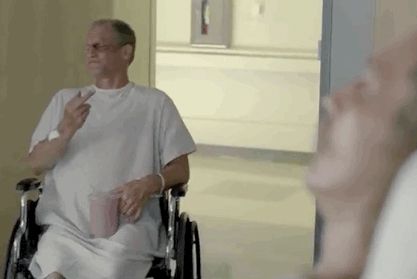
Wish I didn't see this before watching the finale. Thanks!!!How I feel about this thread...
Poimandres
Member
The shows listed in the original article... Breaking Bad, Mad Men, The Americans, Game of Thrones can ALL be described as overrated.
Hell, even sacred cows like The Wire and Sopranos are overrated by some.
There are a few shows that I feel are underrated/overlooked like The Shield, Deadwood and Carnivale... but I'm sure in some places these are also overrated!
The point is, True Detective has received a lot of good press for a reason as have all of these "overrated" shows. Just take the reviews/talkback as a sign that it is a generally well received and enjoyable show, check it out, and come to your own conclusion.
Hell, even sacred cows like The Wire and Sopranos are overrated by some.
There are a few shows that I feel are underrated/overlooked like The Shield, Deadwood and Carnivale... but I'm sure in some places these are also overrated!
The point is, True Detective has received a lot of good press for a reason as have all of these "overrated" shows. Just take the reviews/talkback as a sign that it is a generally well received and enjoyable show, check it out, and come to your own conclusion.

shadow_shogun
Member
It most certainly is, op, and while we are on the subject of overrated shows, the wire is high up there, IMO.
The wire's overrated but still a good show
It most certainly is, op, and while we are on the subject of overrated shows, the wire is high up there, IMO.
The wire's overrated but still a good show
I watched the first season of the Wire and thought it was really, really cheesy. It has been a really long time, but I remember actively cringing at a scene where a bunch of female cops were at some kind of after hours party at a bar. I don't remember what the scene was even about but boy oh boy was there some real shitty writing going on there.
I did watch that after watching a slew of higher quality HBO shows (Sopranos, 6FU, Deadwood, et al) so I think my expectations were a little high.
Wish I didn't see this before watching the finale. Thanks!!!
Thanks for quoting it for a whole new page?
Trent Strong
Banned
No way man. True Detective is awesome.
ryutaro's mama
Member
:| @ the OP.
plasmawave
Banned
I liked it.
Then the finale happened and I was like "meh".
Then the finale happened and I was like "meh".
Warm Machine
Member
I just wanted the finale to implicate more people. Otherwise it was well written, well shot, and well acted.
ryutaro's mama
Member
I just wanted the finale to implicate more people. Otherwise it was well written, well shot, and well acted.
That isn't how things are in real life.
Marty and Rust even mention how didn't catch everyone involved
on the tape
It's good TV no doubt.
I also don't get the incredible love it got, but you know, different strokes for different folks.
I think it has good performances, some striking cinematography at times, and some outright great moments (as well as a lot of eye rolling ones).
In the end i felt somewhat disappointed that it never turned around my lukewarm impressions, but it didn't overstay its welcome.
I'm not sure if i'll be tuning in next year, since the writing was basically the part i liked less, but it depends on the cast they're going for.
I also don't get the incredible love it got, but you know, different strokes for different folks.
I think it has good performances, some striking cinematography at times, and some outright great moments (as well as a lot of eye rolling ones).
In the end i felt somewhat disappointed that it never turned around my lukewarm impressions, but it didn't overstay its welcome.
I'm not sure if i'll be tuning in next year, since the writing was basically the part i liked less, but it depends on the cast they're going for.
Warm Machine
Member
That isn't how things are in real life.
Marty and Rust even mention how didn't catch everyone involved.on the tape
Yeah I caught that. I just personally wanted to see more implication.
Boston Globe TV Critic link
Not to throw cold water on NeoGAF's rabid True Detective fanbase, but I'm in full agreement with Matt Gilbert. There are shows more deserving of mass hysteria.
Just wondering if there are a few folks out there feeling the same way.
This is sacrilege around these parts:
I can sort of see it. I think it was a great show.
When you compare it to lets say the Matrix with its philosophy and so forth it is so much better done. It does not hold your hand.
The acting from the two leads is way above and beyond what you would expect from TV. LIke most serial killer investigative shows, it never hits your expectations. You always imagine the most crazy shit ever, and they never produce. It would have taken an alien spacecraft coming down and picking up Russ to make some watchers happy.
ryutaro's mama
Member
So many plot threads left unaddressed or left on the cutting room floor.
Did you want realism or resolution?
Please don't respond with "why not both"

Wiktor
Member
I think it's a genuine breakthrough for TV landscape. Getting movie actors and one director plus one writer for all episodes? Great stuff and hopefully very influential
THe quality of the show itself? Hmm.. I think it is a bit overrated. 10 years ago I would have liked it more, but since then a lot of crime writers have shown you can take a police procedural and make something much more meaningful and ambitious with it than just a drama about personal lives of few characters.
True Detective did it's characters wonderfully, but the case itself was completely forgettable, both in terms of plot itself as well as examination of the society it took place in.
Still great show though, just not among the "best ever".
THe quality of the show itself? Hmm.. I think it is a bit overrated. 10 years ago I would have liked it more, but since then a lot of crime writers have shown you can take a police procedural and make something much more meaningful and ambitious with it than just a drama about personal lives of few characters.
True Detective did it's characters wonderfully, but the case itself was completely forgettable, both in terms of plot itself as well as examination of the society it took place in.
Still great show though, just not among the "best ever".

I_D
Member
It's pretty terrible. Now that I've had years to reflect on it, it just doesn't compare to modern shows.
What does this mean? I thought True Detective was brand new?
True Detective is awesome, OP. It's definitely a slower show than the average TV show, but it has awesome acting and directing.
I want satisfaction; everyone does.Did you want realism or resolution?
Please don't respond with "why not both"
Why include the subplots involving the daughters or involving the metaphysical philosophical waxing if none of it leads anywhere? Saying that a film or series can't be criticized because "life has unresolved threads too" is a fucking terrible excuse to include padding and fluff dialogue.
Don't get me wrong, I enjoyed the series a ton, but turning a blind eye to some of the patchy writing/editing is being a bit naive.
Trent Strong
Banned
I want satisfaction; everyone does.
Why include the subplots involving the daughters or involving the metaphysical philosophical waxing if none of it leads anywhere? Saying that a film or series can't be criticized because "life has unresolved threads too" is a fucking terrible excuse to include padding and fluff dialogue.
Don't get me wrong, I enjoyed the series a ton, but turning a blind eye to some of the patchy writing/editing is being a bit naive.
There was never any metaphysical subplot. Rust just occasionally spouted some philosophy. And Rust never believed in the supernatural at all until the very end.
ryutaro's mama
Member
I want satisfaction; everyone does.
Why include the subplots involving the daughters or involving the metaphysical philosophical waxing if none of it leads anywhere? Saying that a film or series can't be criticized because "life has unresolved threads too" is a fucking terrible excuse to include padding and fluff dialogue.
Don't get me wrong, I enjoyed the series a ton, but turning a blind eye to some of the patchy writing/editing is being a bit naive.
Oh hey, I'm not giving it a pass, I just don't think the subplots you mentioned were that important to explore to their end as you did. I didn't think it was necessary in order for the show to have a satisfactory conclusion.
It was more to me about the dynamic between Marty and Russ--about how, even after all the shit in the series that divided them, the one thing that united them was the job.
And ultimately, Russ and Marty both had arches that closed the show in a way that gave both characters closure.
Marty with his family (that he had fucked over for his own selfish, ego driven reasons) and Russ with the guilt over his daughter's death and his subsequent questioning of God and the universe.
That was enough for me.

Kadayi
Banned
Why include the subplots involving the daughters or involving the metaphysical philosophical waxing if none of it leads anywhere? Saying that a film or series can't be criticized because "life has unresolved threads too" is a fucking terrible excuse to include padding and fluff dialogue.
Girl was sexually curious. End of story. Why is this somehow something that needs to be explained?
Angry Grimace
Two cannibals are eating a clown. One turns to the other and says "does something taste funny to you?"
The problem with that criticism is complaining that Rust should be a believable person. I don't really need fiction featuring believable persons.
It got several scenes dedicated to it and what does it bring to the plot? How does it demonstrate the themes of the narrative? How does this reinforce Hart's character arc?Girl was sexually curious. End of story. Why is this somehow something that needs to be explained?
I have yet to hear any responses that actually answer my questions. "It exists for the sake of existing" isn't acceptable, it's wasting the viewers time. Films get eviscerated by critics for directionless plot threads and inconclusive side stories all the time, I see no reason why True Detective should get a pass just because "derr, life is inconclusive man". If I'm forking over 8 hours of my life to a story then I want it to earn its' length, not fill it with a bunch of half-baked threads.
There was never any metaphysical subplot. Rust just occasionally spouted some philosophy. And Rust never believed in the supernatural at all until the very end.
I would argue he still doesn't believe in the supernatural. All he felt was the overwhelming love if his daughter - in the deeper darkness that he was drifting towards. If you let Rust explain it, he would likely tell you that it was all a construct of the purity of his focused senses as his brain began to shut off functions one by one, like a vast department store snapping off banks of light in succession. His final thoughts rested on the singular concept of his daughter and the unquenchable love he had for her. As he slipped into nothingness, he held on to that and discovered that the love he was hanging onto enveloped him, as if it was reflected back towards him, or returned.
At that moment, he fully experienced what he had seen in the eyes of all those photos of dead bodies he'd been staring at for days on end... That they welcomed it, in that last moment. To him, I imagine, it finally clicked. The reason they all welcomed the darkness was because that void was actually filled with the love of those that they themselves loved above all - they filled that void with what they brought with them, what they most cherished.
To me (a believer in God), none of what he described evoked anything of the supernatural... More like what you would sense if you overdosed on sedatives or an anaesthetic. A chemical manipulation of neuronal signaling making you sense something like euphoria. Beautiful in its own way. But not a literal religious experience.
I think his shear turn towards any kind of optimism was the big character development revealed at the end - the dark vs light line.
Edit: What blainethemono said in much fewer words (next post)
blainethemono
Member
There was never any metaphysical subplot. Rust just occasionally spouted some philosophy. And Rust never believed in the supernatural at all until the very end.
Going by what the writer has said about Rust's new worldview being entirely based on physics, I think he still doesn't believe in anything supernatural in the end. He went from having an incredibly pessimistic view of the universe to looking at it in an entirely different light
ryutaro's mama
Member
It got several scenes dedicated to it and what does it bring to the plot? How does it demonstrate the themes of the narrative? How does this reinforce Hart's character arc?
It served the purpose that Marty's home life was slowly falling apart because he was too busy involving himself in self serving behavior. His daughter's chaotic antics actually clear up and get you your resolution by the show's end. She has a career and her mother says as much. Marty didn't even know because he had been out the picture, presumably for a long while.
It pays off at the end of the show. Marty finally gets his moment of redemption with his family. A taste of what could have been, if you will.
I have yet to hear any responses that actually answer my questions. "It exists for the sake of existing" isn't acceptable, it's wasting the viewers time. Films get eviscerated by critics for directionless plot threads and inconclusive side stories all the time, I see no reason why True Detective should get a pass just because "derr, life is inconclusive man". If I'm forking over 8 hours of my life to a story then I want it to earn its' length, not fill it with a bunch of half-baked threads.
Wat
HP_Wuvcraft
Banned
Lol at the Americans being mentioned in the same breath as Breaking Bad.
"Is Boyd Crowder the next Walter White?"
So many plot threads left unaddressed or left on the cutting room floor.
Does it matter? It is not Lost.
Oh shit what am I going to do, the show did not tell me exactly how I should feel.
Maybe they could have presented a chart. Where every unexplained event was .................
The show assumes that you can enjoy it without it ......... Nevermind.
Trent Strong
Banned
I would argue he still doesn't believe in the supernatural. All he felt was the overwhelming love if his daughter - in the deeper darkness that he was drifting towards. If you let Rust explain it, he would likely tell you that it was all a construct of the purity of his focused senses as his brain began to shut off functions one by one, like a vast department store snapping off banks of light in succession. His final thoughts rested on the singular concept of his daughter and the unquenchable love he had for her. As he slipped into nothingness, he held on to that and discovered that the love he was hanging onto enveloped him, as if it was reflected back towards him, or returned.
At that moment, he fully experienced what he had seen in the eyes of all those photos of dead bodies he'd been staring at for days on end... That they welcomed it, in that last moment. To him, I imagine, it finally clicked. The reason they all welcomed the darkness was because that void was actually filled with the love of those that they themselves loved above all - they filled that void with what they brought with them, what they most cherished.
To me (a believer in God), none of what he described evoked anything of the supernatural... More like what you would sense if you overdosed on sedatives or an anaesthetic. A chemical manipulation of neuronal signaling making you sense something like euphoria. Beautiful in its own way. But not a literal religious experience.
I think his shear turn towards any kind of optimism was the big character development revealed at the end - the dark vs light line.
Edit: What blainethemono said in much fewer words (next post)
Going by what the writer has said about Rust's new worldview being entirely based on physics, I think he still doesn't believe in anything supernatural in the end. He went from having an incredibly pessimistic view of the universe to looking at it in an entirely different light
Interesting. I liked the fact that Rust didn't believe in the supernatural, so I like this interpretation of what he felt when he thought he was dying better than my own previous interpretation. I'll have to listen to that speech again.
Zeus Molecules
illegal immigrants are stealing our air
Ehhh I know what I saw and it was amazing.
Alright, that's a pretty solid explanation of that subplot. I feel better about that part of the narrative now.It served the purpose that Marty's home life was slowly falling apart because he was too busy involving himself in self serving behavior. His daughter's chaotic antics actually clear up and get you your resolution by the show's end. She has a career and her mother says as much. Marty didn't even know because he had been out the picture, presumably for a long while.
It pays off at the end of the show. Marty finally gets his moment of redemption with his family. A taste of what could have been, if you will.
My biggest issue though was with the main plotline involving the cultist murders. The show spends much of episodes 5-7 hinting that these cult murders and ritualistic rapes are part of a larger conspiracy that implicates several politicians and goes far and beyond the inbred Scooby Doo villain they end up confronting. The only reference to this after the climax is a throwaway line on the news that mentions how the politicians implicated throughout the season won't be charged. Maybe that's supposed to be the point, highlighting how those who were really pulling the strings got away with it in the end. Or maybe you could argue that the series is supposed to be a character study and that plot specifics aren't the message you should be taking away from the story (or the "Lost Defense" as I like to call it). Either way, it seems weird to spend all that time at the university and all that time having Rust draw family trees just to have it all get resolved after a single psycho hillbilly meets his end. It also seems strange that the two main characters make no mention of the greater conspiracy that didn't get resolved after the climax. It felt to me like they were repeating the same mistake of "we killed a guy so mystery solved then" that they made with Reggie.
blainethemono
Member
Alright, that's a pretty solid explanation of that subplot. I feel better about that part of the narrative now.
My biggest issue though was with the main plotline involving the cultist murders. The show spends much of episodes 5-7 hinting that these cult murders and ritualistic rapes are part of a larger conspiracy that implicates several politicians and goes far and beyond the inbred Scooby Doo villain they end up confronting. The only reference to this after the climax is a throwaway line on the news that mentions how the politicians implicated throughout the season won't be charged. Maybe that's supposed to be the point, highlighting how those who were really pulling the strings got away with it in the end. Or maybe you could argue that the series is supposed to be a character study and that plot specifics aren't the message you should be taking away from the story (or the "Lost Defense" as I like to call it). Either way, it seems weird to spend all that time at the university and all that time having Rust draw family trees just to have it all get resolved after a single psycho hillbilly meets his end. It also seems strange that the two main characters make no mention of the greater conspiracy that didn't get resolved after the climax. It felt to me like they were repeating the same mistake of "we killed a guy so mystery solved then" that they made with Reggie.
Cohle: "We didn't get 'em all."
Hart: "And we ain't gonna get 'em all. That ain't what kind of world it is. But we got ours."
My understanding (and I really need to watch the whole thing again because there are a lot of details packed into this show) was that the rest of the cult was never involved in the recent murders that Rust and Marty were investigating. At least not the main Dora Lang case. They seemingly did try to cover up the stuff Childress was doing, but I think he was pretty much operating solo due to the influence his family had on him when he was growing up.
Trent Strong
Banned
Alright, that's a pretty solid explanation of that subplot. I feel better about that part of the narrative now.
My biggest issue though was with the main plotline involving the cultist murders. The show spends much of episodes 5-7 hinting that these cult murders and ritualistic rapes are part of a larger conspiracy that implicates several politicians and goes far and beyond the inbred Scooby Doo villain they end up confronting. The only reference to this after the climax is a throwaway line on the news that mentions how the politicians implicated throughout the season won't be charged. Maybe that's supposed to be the point, highlighting how those who were really pulling the strings got away with it in the end. Or maybe you could argue that the series is supposed to be a character study and that plot specifics aren't the message you should be taking away from the story (or the "Lost Defense" as I like to call it). Either way, it seems weird to spend all that time at the university and all that time having Rust draw family trees just to have it all get resolved after a single psycho hillbilly meets his end. It also seems strange that the two main characters make no mention of the greater conspiracy that didn't get resolved after the climax. It felt to me like they were repeating the same mistake of "we killed a guy so mystery solved then" that they made with Reggie.
The only unresolved thread that bothered me was whether or not that task force that was supposed to take over investigating the original murder was really part of a larger plot from the cultists to sweep the murder under the rug.
ryutaro's mama
Member
The only unresolved thread that bothered me was whether or not that task force that was supposed to take over investigating the original murder was really part of a larger plot from the cultists to sweep the murder under the rug.
I think they purposely left that vague.
Romars202129
Member
It got several scenes dedicated to it and what does it bring to the plot? How does it demonstrate the themes of the narrative? How does this reinforce Hart's character arc?
I have yet to hear any responses that actually answer my questions. "It exists for the sake of existing" isn't acceptable, it's wasting the viewers time. Films get eviscerated by critics for directionless plot threads and inconclusive side stories all the time, I see no reason why True Detective should get a pass just because "derr, life is inconclusive man". If I'm forking over 8 hours of my life to a story then I want it to earn its' length, not fill it with a bunch of half-baked threads.
It exists so Harrelson can have that awesome scene where he beats the shit out of those two teenagers. Simple as that.
Or perhaps, it exists to show a way in which Harrelson's character's job effects his children, since his entire character arc is about a guy who supposed to be normal, but let's the job start to mess with his life.
That said, wow who the fuck cares. When a critic gets his balls in a vice over a little thing like this, they ussually don't like the show at all and are just searching for any tiny reason at all to justify their opinion. Other than the fact that art is subjective, that is.
BearFlexington
Member
Comparing True Detective to other excellent shows, does not accurately determine its worth. Compare it to all shows on at the time, and only someone with very different tastes or a poor understanding of entertainment could say the True Detective was anything less than fantastic. IMO
Can't wait for season 2.
Can't wait for season 2.
...When a critic gets his balls in a vice over a little thing like this, they ussually don't like the show at all and are just searching for any tiny reason at all to justify their opinion. Other than the fact that art is subjective, that is.
Not sure why you're directing this at me, I've said before that I liked the show. I could write a post that doubles the lengths of my criticisms purely on the things I feel this show does right. Granted, I only watched the series once so apparently certain conversations or plot elements didn't sink in for me immediately. I'm still standing by my criticism though that the show spends too much time hinting at this larger political conspiracy that never really goes anywhere after they kill the big bad guy. Alternatively, you could also say that the show is demonstrating how the main characters spent the better part of 20 years catching one backwoods killer so how would they have any hope of going after people with power and money? In a best case scenario assuming that was the point, that still makes for some pretty unsatisfying viewing given the buildup. It just strikes me as a weird choice to spend so much time building that up only to have it dispelled by a few lines during the end of the finale.
Or maybe I just "have my balls in a vice" and anything negative I have to say or any questions I have about a series that I genuinely enjoyed is just me trying too hard to find the cracks in the foundation. Apparently enjoying something and being able to criticize it for certain things or question its' motives are mutually exclusive.
The Albatross
Member
I think OP is overrated.
THERE
THERE
I loved the acting and Ill watch the next season when they change the cast and have a new story. But it was only 'good' IMO. I wouldn't rank it as the best or anything that extreme. I don't feel its that overrated though after weeks of 'cooling off'. I think its rated fairly. Its a good show.
I want satisfaction; everyone does.
Why include the subplots involving the daughters
There was no subplot. Every character outside of Rust and Marty are used as mirrors held up to Rust and Marty. What was going on with Audrey wasn't a sex cult subplot or whatever, it was Marty's failure as an absentee father and philandering husband come home to roost in the form of a daughter acting out in pieu of a strong male parental figure in her life.

Hari Seldon
Member
I just finished the series since I didn't have HBO when this was released.
SUPERB acting, gripping, and tightly written. I didn't find anything not to like about this show, unlike shows like Breaking Bad and Mad Men which I could not get into.
SUPERB acting, gripping, and tightly written. I didn't find anything not to like about this show, unlike shows like Breaking Bad and Mad Men which I could not get into.
- Status
- Not open for further replies.