Summary of Yurinka's gems in a single post:
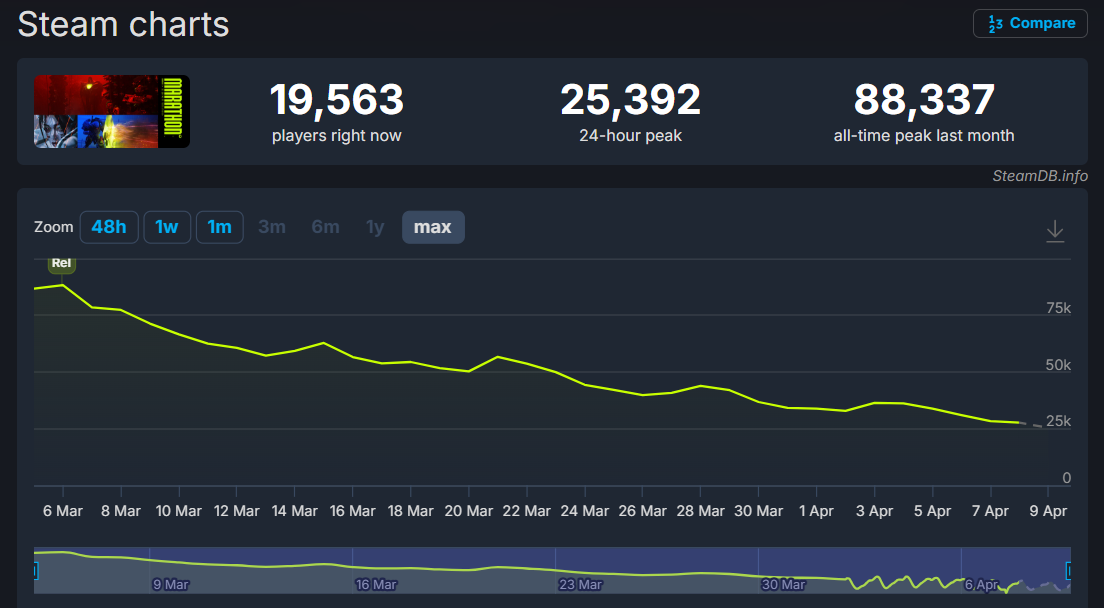
- PUBG/Marathon? Same trajectory
- This one is pure gold: releasing a game like Overwatch exclusively on Battle.net THEN years later on Steam often had no impact on the Steam CCU (precisely: if the game has been released at the same time, before or later elsewhere often don't affect them (the CCU))
- Most PC players interested in a game, won't install any other launcher than Steam to play said game, even if it's exclusive to another launcher
- GAAS are Early Access releases
I never said that, you're lying again. Go back to your cave.
But as I told you that list make no sense.
It's a comparision table of objective, factual data of Steam GaaS CCU amount and evolution after a certain amount of weeks.
Of course it makes sense, it helps to compare the CCU amount and variation after that same period getting some context against most somewhat similar titles and see the differences of different groups or tiers.
Your objective personal opinion saying it doesn't make sense doesn't mean a shit and doesn't invalidate it at all, particularly when you're a troll that has no idea what he's talking about. It's just a toxic take with zero value to any debate.
Criticism that would make sense would be to highlight that would be better to add this or that game, or correct some typo. Or to provide a more meaningful comparision table for this period for other more important metrics like revenue generated until that point, DAU, ARPU / LTV etc but they aren't available.
And tell me, what's the difference with Marathon. Hint: numbers go brrr
The one I mentioned several times before: PUBG had the first week less CCUs than Marathon, so it was highly stupid to say Marathon CCUs were a disaster back then.
Because of what is shown in the table that compares the change after several weeks: almost all GaaS normally keep losing daily CCU peak over time week after week until they get some meaningful update, but a tiny portion of them, includes PUBG, are rare unicorns that keep growing during the first weeks reaching their launch peak not in the first week as usual, but instead several weeks or months later.
That launch peak is often the all time CCU peak, but several cases isn't, because many GaaS have minor peaks with certain key updates and keep improving their retention with fixes and additions, sometimes to the point of them having its all time peak several months or years after launch.
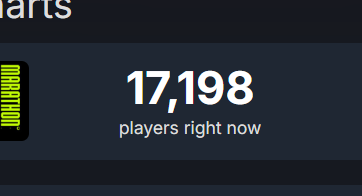
As of now, having 5 complete weeks of Marathon, Marathon sits in the ballpark or better of many popular and success Steam GaaS. But obviously not isn't in the league of the 1 percenters of the 1 percenters like Pubg, Helldivers 2 or Arc Raiders.
Regarding big updates that could attract new users or bring back previous ones, Marathon still didn't have them: they mainly had fixes, tweaks, some experiments and minor rebalancing. Their main addition were a couple endgame things that back then were going to be used only by a tiny portion of high level players already very engaged, the long term retention benefits of Cryo & ranked for most of the existing players, plus new ones, won't be noticed until later.
Potential future updates that could cause a CCU spike (traditionally smaller than the launch peak) would be things focused to attract new players or retain/bring back low level and medium level players: new playable character, new non-endgame map, new weapons, new non-endgame mode (as could be PvE), new missions/progression/unlockable types etc.
Well that's new. I didn't knew Helldivers II (for example) released in EA. You should tell Sony and the studio.
You keep saying "GaaS are basically Early Access" and "old games show the same pattern."
I never said Helldivers II released in EA. I said almost all GaaS are mostly released as if they were a EA because that's the whole point of GaaS: to release a MVP and keep building on top having a flexible roadmap of post launch additions, which keeps adapting to the results of the project, to the feedback, to the market and so on.
Unlike the non-GaaS games that aren't released as EA, which mostly are released as a static project that other than a few fixes or tweaks and maybe a handful DLCs they don't meaningfully evolve after launch.
But your comparison shown nothing but Marathon is failing. That's the point. Not to mention it's flawed in many ways.
What my comparision shows and proves is that falling Steam CCUs during the first weeks is a normal thing for 99.99% of the games in Steam including many of the most popular ever, so it's a highly stupid to claim a game is failing because their Steam CCUs fall. Same goes with the CCU amount.
The comparision shows that Marathon is in the ballpark or better than several popular GaaS available in Steam (the games in the comparision are from the top 200-250 out of 145K Steam games sorting by their all time CCU peak) regarding CCU amount and percentual decrease after X weeks. Destpite obviously not being in the league of the unicorns.
WAIT WAIT WAIT DID I READ THAT CORRECTLY
Are you saying that, for example Overwatch, released earlier on Battle.net had no impact on the Steam CCU (or minor at best)? And you actually think that most PC players won't install any other launcher than Steam to play a game that is exclusive to another launcher, like... really?
Oh you need to show proof of that with such a bold claim.
The Steam CCU comparision table compares CCU in Steam, not elsewhere.
It includes GaaS titles that are in the top 200 or so Steam games sorted by their all time CCU peak. As seen in the table, Overwatch performed in Steam similar to many others including games that released at the same time in PC and console, that released only in PC, that released first in PC and later in console, that in PC released day one on Steam or after some time in other launcher, etc.
Regardint Steam CCUs, what makes special the Overwatch case is that they had their all time CCU peak years after releasing it on Steam: when they did the reboot back in February changing the name and releasing all that stuff.
You keep comparing a hyped premium extraction shooter to:
- Games that were cheap or free
- Games with endless grind loops (not punishing extractions)
- Games that had massive prior hype or different business models
- Games that grew or stabilized at much higher absolute numbers
What I kept comparing are games that are:
- MP GaaS titles on Steam that are in the top 200-250 aprox
- Have PvP, are team based, are shooters or have survival elements
Independently if released before, later or at the same time elsewhere (because we're comparing Steam) or their price at release etc.
The idea is to compare their Steam CCU after a certain amount of completed weeks (5 until now, soon 6) plus percentual decrease vs the first week to show where Marathon sits among them.
Many of those titles you listed either grew after week 1 or stabilized at levels that keep matchmaking healthy.
Marathon is bleeding players fast, and the "great gunplay" honeymoon (boosted by the free Server Slam) clearly isn't carrying long-term engagement.
You can keep posting giant tables and claiming "I proved you wrong with facts." All you're proving is how desperate the defense has become.
Facts still show Bungie cooked a shooter with strong first impressions that very few want to stick with once the novelty wears off
All these games in the table, including the ones that were performing launch aligned way worse than Marathon, had their matchmaking healthy after 5 weeks, seen in the fact that many of them still had/have a health matchmaking years later.
And what facts of the table prove is that player 'bleeding' in Marathon is similar or better than where many other top GaaS in Steam were 5 weeks after launch.
This is factual data you don't want to accept and that you only fight it with your subjective personal opinion (which means nothing against factual data) and with trolling attacking the person who shows the data and that you're the desperate one here and that your takes add nothing to any debate.