

Any Questions
Member
Hi folks, searched and couldn't find so I saw this and thought it was worthy of GAF
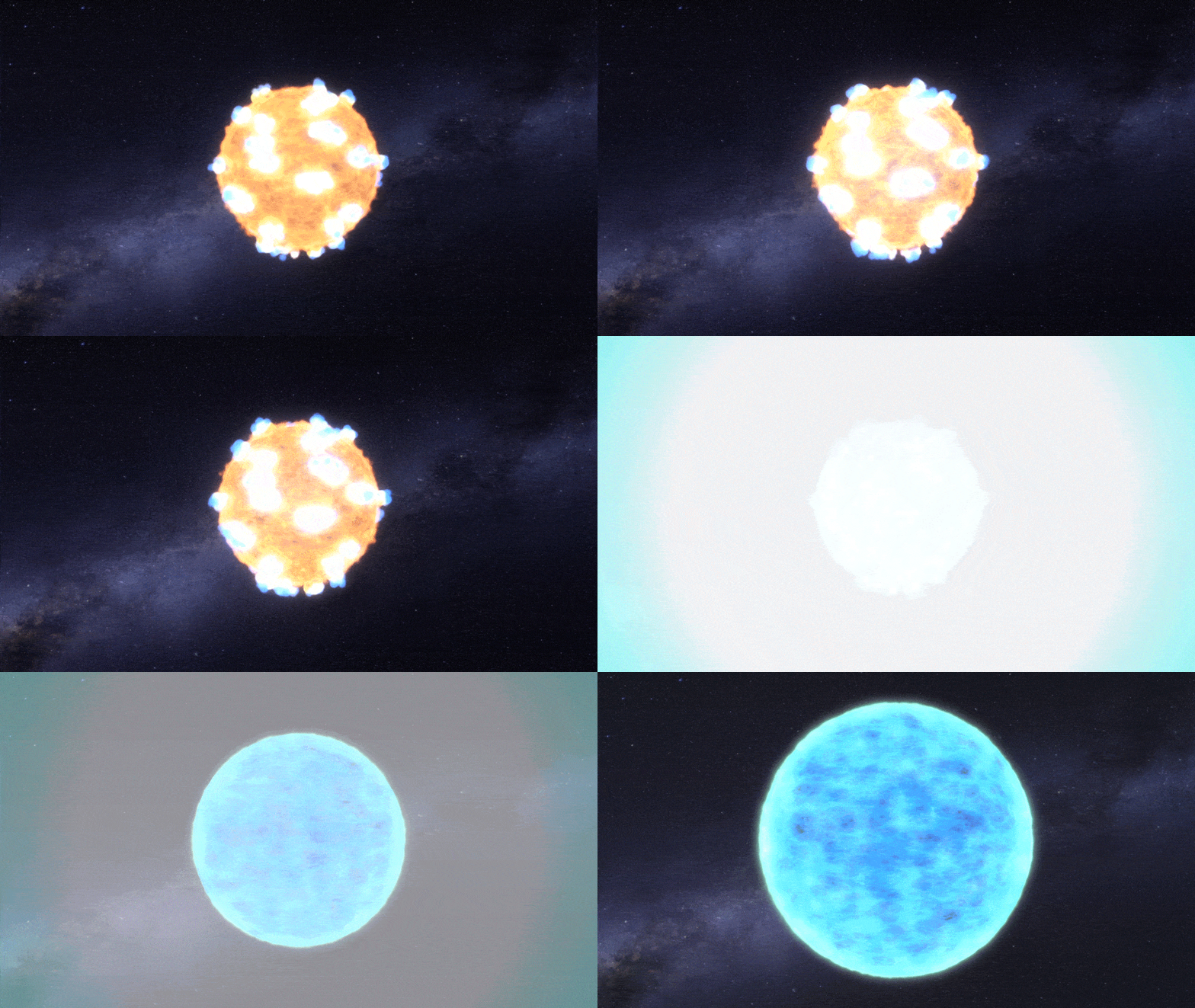
Basically NASA captured on film a sun going supernova. Incredible!
From Engadget
http://www.engadget.com/2016/03/22/nasa-spots-early-supernova-shockwave/
http://o.aolcdn.com/hss/storage/midas/a2946d2e030c28cd45621c8051778412/203582782/supernova-kepler.gif
Basically NASA captured on film a sun going supernova. Incredible!
From Engadget
Spotting supernovae is relatively easy, but witnessing the immediate aftermath of those exploding stars? That's hard -- however, NASA has managed just that. By using the Kepler space telescope to capture the light of 500 galaxy every 30 minutes for 3 years, the agency caught the flash of a supernova's initial shockwave as a red supergiant (KSN 2011d) met its grisly end. That's no mean feat when this early burst only lasted roughly 20 minutes, and the target star was a whopping 1.2 billion light years away.
The data helps confirm scientists' models for how Type II supernovae (where the star is between 8 and 50 times the size of the Sun) behave, but it also uncovered a surprise or two. The team didn't spot a shockwave in the supernova of a smaller red supergiant, KSN 2011a, suggesting that there's significant variety in how these explosions take place -- the theory is that a gas cloud obscured the blast. Whatever the cause, the findings should help us understand more about the life cycles of stars.
http://www.engadget.com/2016/03/22/nasa-spots-early-supernova-shockwave/
http://o.aolcdn.com/hss/storage/midas/a2946d2e030c28cd45621c8051778412/203582782/supernova-kepler.gif


