• Hey Guest. Check out your NeoGAF Wrapped 2025 results here!

Not This Again : Ebert : Video games can never be art

Ebert is smart but his appeal is that he is an everyman. He is ignorant of the philosophy of art. This also bleeds into his opinions on the relationship between the critic and subjectivity. He has of late settled on the idea that the critic is more right because he or she has refined taste. These essays he's writing would be examples of the naive view in any intro course.
 
One obvious difference between art and games is that you can win a game. It has rules, points, objectives, and an outcome. Santiago might cite a immersive game without points or rules, but I would say then it ceases to be a game and becomes a representation of a story, a novel, a play, dance, a film. Those are things you cannot win; you can only experience them.

So he's moving from one semantic argument ("definition of art") to another ("definition of game"). Just further exemplifies how useless this whole debacle is; the "games are art" is about nothing.

For my money, I'd show him Bloodlines, again, not out of an attempt to end the fight, but just because everyone should play that game. Braid and Flower are the realm of new-age hippies who overanalyze everything in hopes that it'll grant them a shred of academic legitimacy. I'd show off a writer who knows the line between minimalism and vapidity.
 
mugwhump said:
Everyone's opinion on the matter should come down to whether or not they agree with the bolded.
After playing games like Ico and SotC, I have to wholeheartedly disagree. But if you played them and felt otherwise, I wouldn't really know how to disagree with you.
That's really all it comes down to, yes.

I still have suspension of disbelief and flow and all that, but when I REALLY put my ass down and look at what exactly these games are stripped from their assets, there's not much to write home about in terms of surprising or life-changing revelations. Games like any other. It's about the details. The outcome is still basically the same. Some peculiar animation+physics intermingling going on somewhere under the hood, that's probably solved with particles and spring abstractions. Certainly the highpoint of the game mechanics. Not exactly something to write a poem about.

Pretty much on the level of a pokergame, mixed with darts. Much more pathos, but that's totally irrelevant here.
 
The term "art" is so faceless it renders itself meaningless once a debate on such a term progresses. I mean looking through this thread perfectly elicits that. What the fuck is art anyway? When does something become art and when does it not? There is an artist out there who painted an orange square and it now sits in a museum for those to witness it. There is a composer out there who uses contact mics on a piece of sheet metal and warps the sheet for over 30 mins, he's assigned to a label and has many CDs.

Maybe if we stopped using art as a term for justifying creative significance then maybe we'd realize that it's just a fucking orange square and that it's just a bunch of contorted dissonance sounds running for 30 minutes. I mean these guys are getting paid for this shit. Ridiculous.

With games, I choose not to even consider them art, why? Well maybe because I don't need to in order to justify my enjoyment for such a past time. In fact this obsession with art has lead to some pretty bizarre games with game design philosophies that seem absolutely retarded (Shadow of the Colossus as a prime example). In a game I ultimately care about INPUT----DATA VALORIZATION----OUTPUT, anything else is secondary and serves itself as a supportive medial attribute for those fundamental functions.
 
Vinci said:
Then why such a stiff defense of games in regards to this subject? Whenever someone suggests that games are not art, people on this forum often start throwing feces. There's an emotional investment in whether games are considered art for many people - but would there be such investment if they recognized art as purely subjective in all honesty?

I think the reason people get upset about this is because they do perceive something being considered 'art' to have inherent value, and they don't want their favorite hobby to lack that value.
I would assume there is such a stiff defense because gamers are tired of the comparisons and the use of the term art as some sort of exclusive term for paintings, film, poets, etc. Games are just as much of a creative work as any of the consistently mentioned art forms.
 
I just read his column, and I've noticed a few flaws. First, his examples of games as art are cherrypicked from a list compiled by someone else, made worse by the fact that he has not played a single one of them. it's essentially reviewing a film without seeing it. Secondl, by his own definition that art is from one person, this excludes most music, television, and movies from being considered art, since they are collaborative in nature.
 
So basically what we can take away from this thread is that Calvin and Hobbes know more about art, society and reasoning than Ebert will ever know in his lifetime.
 
It's kind of a stupid thing to say, especially for a guy with his interests, but whatevs. Whether or not Ebert thinks anything about anything affects me very little, and whether or not a game is art is equally unimportant to me.
 
BocoDragon said:
There's a reason why the cave paintings were considered humanities first art. Because it didn't matter one lick to anthropologists whether it was "high art"... "real art" or whatever it is Ebert was really talking about. They just said "creative expression: check. It's art".

Here's what Ebert's really saying whether he knows it or not: Games are not good art.

Of course it's art... any anthropologist would say so.
Come on developers, start making some good art then!
 
wmat said:
Pretty much on the level of a poker game..
If you don't realize how "deep" poker is, you haven't thought about it enough.

Subitai said:
Come on developers, start making some good art then!
Designing a set of mathematical rules in an effort to express what it means to be a "paladin" is good art.
 
jdogmoney said:
calvin_3.jpg

*save image for inspiration.
 
Safe Bet said:
If you don't realize how "deep" poker is, you haven't thought about it enough.
Deep != art

Wouldn't dismiss the poker rules as shallow anyway myself, or the way they usually play out as uninteresting. But I'm not into poker.
 
I would rather developers tried to push games forward because they want to push games forward, not because they want to prove something to the rest of the world.

A lot of gamers must feel inferior to other forms of entertainment, is that why we're always trying to hold some new game up as "now, games truly are art"?
 
What offends people about Ebert is that he doesn't merely say video games are not art. He strongly implies or outright states that they are /worthless/ because they do not meet his definition of art. Plenty of people say games are not art without saying games are idiotic worthless trash. Ebert has chosen to take the road of the cultural elitist however and defend "true" culture from the crummy plebes beating at the tower doors on the street.

It is very true though that every new "art form" is dismissed by an entire generation of critics until those critics die off - because every generation judges what is new solely by the standards of what is old. It won't be until nobody is alive who remembers a world before interactive computer-driven games that we will see a major shift in attitudes.

And I'm not saying games are, or aren't, art by themselves. In fact, I go with the definition of "art" being largely bullshit because people always try to define what art precisely is so they an cut the world up into the "good stuff" and "all that worthless crud". It's an endless exercise in elitism itself. Art is anything and everything. Videogames are art in that sense - plus trying to prove how they're art by comparing them to old art forms is futile because they're something new.

One person said it best: if we could describe the essential experience of playing video games with words, then we wouldn't need video games and nobody would be interested in them. Interactive experiences are inherently different from a movie or a book or poetry just as each of those things are not the same as one another.

But anyway, Ebert is largely playing the role of an old fool at this point, however "right" he is about anything.
 
wmat said:
Deep != art

Wouldn't dismiss the poker rules as shallow anyway myself, or the way they usually play out as uninteresting. But I'm not into poker.
What?

I would consider "being deep" a requirment of High Art.

Also...

If you find poker to be uninteresting, your either losing without thought or not really playing.

Put next month's rent on the table and it will instantly become an interesting game to you.

Trust Me


Edit:


Fuck...

I think i completely misread the second part of your post.

My bad dude...
 
Exactly and people can find it appealing which is fine, but does it need to be considered art in order to have justified meaning?
 
Kaijima said:
What offends people about Ebert is that he doesn't merely say video games are not art. He strongly implies or outright states that they are /worthless/ because they do not meet his definition of art. Plenty of people say games are not art without saying games are idiotic worthless trash. Ebert has chosen to take the road of the cultural elitist however and defend "true" culture from the crummy plebes beating at the tower doors on the street.

I don't think so. It really comes down to Ebert believing art isn't winnable, and as long as video games are winnable they aren't art. He even says that if the videogame isn't winnable than it isn't a game. Which means it could be art.

I just think it's a matter of definition for him than anything else. Ebert isn't an elitist, just has a different world view. Which could be argued against of course.

Excuse me if this has been said.
 
Why would anyone give a shit about someone else's opinion of what has artistic merit? Especially when it's someone who doesn't affect your life in any way?

I assume Ebert doesn't play games, so to him "gamers" are probably as kooky as model train enthusiasts. Again, why do you give a shit? When someone in a turtleneck with a white beard finally accepts video games as art are you suddenly going to be swimming in art school pussy? no. Nothing changes, there is no gold at the end of this rainbow.

tl;dr: Shut the fuck up and stop hating yourselves because someone out there doesn't enjoy the same things you do, to the degree you do.
 
Second said:
That's not art. It's just a stupid concrete sofa.
It's not High Art.*


*It may be but being untarined in the craft of furniture and/or mosaics I'm unable to recognize "the message" in it.
 
Games aren't art because we don't have an art culture. There were occasional examples of photography and movies as art but before Citizen Kane, there was no culture to it. There was no barometer. No stepping stone

The fact that people have to shuffle around trying real freggin hard to come up with games that go beyond pure entertainment shows that games as a culture have a lot to go. It's our culture that got in the way. It's the extremely embarrassing VGA awards. It's the unquestionable desire to go after the 14 year old boy demographic. It's the constant competition between the big 3. It's the constant desire for meaningless violence and habit to ignore narrative. It's the desire for "AAA" "epic" bullshit and the need for big profits and low risk. It's all those things getting the way of making games "high art." Video Games is hollywood but without the oscars, and in that world movies wouldn't be art yet either. Imagine if movies had a yearly awards show and it was like the VGA awards. Dear god...how embarrasing would that be?

I agree with ebert. Games aren't art (and by that he obviously means "high art") but I disagree with ebert when he says that games can't be art. Sure they can. We just need a large community of people that are willing to redefine the purpose of games. We need a counterculture, just like all art forms had. Is that going to happen anytime soon? Hell no. Look at games these days, they're arguably less artsy than they use to be. We've become more commercial than we could possibly imagine. The fact that Heavy Rain may be the artsy-est game this year is a horrible testament to games.
 
Amir0x said:
I think whatever he thinks about games as art, the summarized end of his commentary is the right point of view:

Why do they care? When did they start caring? Games are about fun, and if I'm not having fun with these toys, I probably don't want to have it. Who cares if it is defined as art!

I think games can be art, or at least aspects of games can be art, but even if you would call games "art", it doesn't matter.

Because most games... probably all games... are abysmal art atm. Ebert's fault is in suggesting quality is the defining line of art. If you accept that art can be terrible, than games can fall in that category.

This is pretty much it. I'm betting very few actually read that part though.

The nerdrage in the comments is pretty epic though. "Bad examples! Here are other better examples!" Then MGS4, Bioshock, Final Fantasies and such are muttered. Oi vey.
 
All I can say is that, by reading that piece, he is damning the games without ever attempting to understand them.

His fundamental problem is that he assumes that games can be judged by the same criteria as films or paintings, that is, by the passive observer. That one can sit back and look at a game and judge its merits.

He fails to take into account the fundamental nature of gaming, which is the interactive experience. Until he actually picks up a controller or sits in front of a keyboard and mouse, how can he truly judge a game? To do otherwise is akin, IMO, to judging a movie that you watched with your eyes closed.

Frankly, he actually fails even in the passive role, since he resists any attempt to understand the nature of the games themselves. He doesn't even try to understand what a player is doing or how the game mechanics function. It would be equivalent to just glancing at a Jackson Pollack and only seeing a bunch of paint splotches and then declaring that your 5-year-old nephew could do that. He just writes games off unilaterally.

I love Ebert, but it really does feel like he's staked out a position and is attempting to justify that position after the fact. Maybe he feels that gaming will eventually threaten film, I don't know, but it's clear that he is not open-minded in the least.
 
Patryn said:
All I can say is that, by reading that piece, he is damning the games without ever attempting to understand them.

His fundamental problem is that he assumes that games can be judged by the same criteria as films or paintings, that is, by the passive observer. That one can sit back and look at a game and judge its merits.

He fails to take into account the fundamental nature of gaming, which is the interactive experience. Until he actually picks up a controller or sits in front of a keyboard and mouse, how can he truly judge a game? To do otherwise is akin, IMO, to judging a movie that you watched with your eyes closed.

Frankly, he actually fails even in the passive role, since he resists any attempt to understand the nature of the games themselves. He doesn't even try to understand what a player is doing or how the game mechanics function. It would be equivalent to just glancing at a Jackson Pollack and only seeing a bunch of paint splotches and then declaring that your 5-year-old nephew could do that. He just writes games off unilaterally.

I love Ebert, but it really does feel like he's staked out a position and is attempting to justify that position after the fact. Maybe he feels that gaming will eventually threaten film, I don't know, but it's clear that he is not open-minded in the least.
I think this is pretty insightful.

Ebert is a really smart guy, but I don't agree with his definition of art.

What he really should have done is define art in his first paragraph so we know the context of his argument. This seems to be more a matter of semantics, since art is such a personally defined term.
 
VistraNorrez said:
And plenty of people would argue there is no high or low art, there is just art.
Those people are wrong.


Note: I dislike the connotations the words high and low bring but we need a term to describe artistic intent to convey message.
 
Roger Ebert's a great guy and a titan in the world of film but he's sadly always been ignorant on this subject. It's probably a little late for him to see the light at this point, although I wish he would stop trying to double-down on it given his own demonstrable lack of knowledge about gaming; it's just going to be embarrassing to read this stuff in ten or twenty years in between his actual insights about movies.

The parallels between film and gaming in this manner are so stark it's really kind of incredible to me that educated and informed people like Ebert can miss them. American film in the prewar era rarely developed from the singular focus of an auteur, was often developed as disposable content driven purely by commercial concerns full of pandering and generic material, was held back by overly restrictive content standards and a crippling studio system...

Vinci said:
A word without definition, or one so in flux as to include anything ever, is worthless.

Your position here is essentially equivalent to that of someone who sets down a position that salty snacks, pre-processed sugar treats, candy, etc. are not "food" because once you allow them to be considered "food" the word becomes so "broad" that it "loses all meaning."

Like, no shit the word food has a broad meaning. That's because it's a word whose purpose is to categorically describe the entirety of non-liquid substances which people consume using their mouths. Some people may have interest in redefining it into a judgmental word that only refers to things that meet some quality standard, but that's ultimately just not what the word means

Art is really the same way. Yes, it's a broad word -- that's because it's a categorical description of all creative works created to provide edification, aesthetic enjoyment, or any of a variety of other experiences to those who consume them. People try to make it, too, into a word of judgment -- if a specific work meets some arbitrary and capricious standard then it gets to "be" art -- but that's nonsensical and doesn't even fit with how people normally use the word. If that were the case, how can there be "bad art"? How can controversial works ever be showcased when tastemakers (apparently) disagree whether they even qualify as art? How can people study "art history" rather than "art and bad things that aren't art history"?

The idea that someone can look at a piece and make a subjective judgment of whether it's art based on whether theylike it is ridiculous. Despite his goofy position about games, Ebert still doesn't make this particular mistake about bad movies.

 
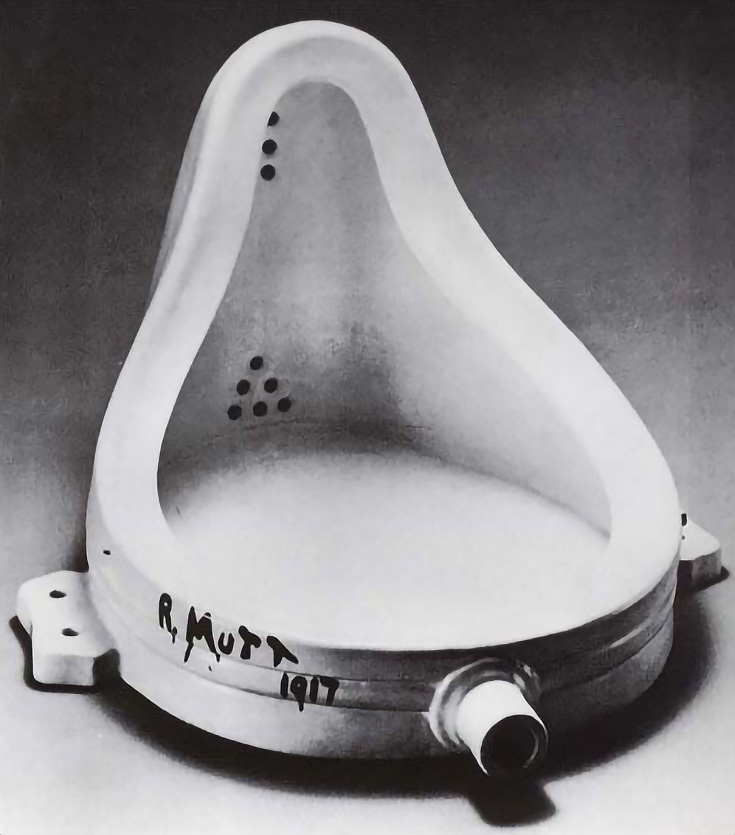
Behold! High Art:
fountainbymarcelduchamp.jpg


This, however, is NOT art:
79747_shadow_colossus.jpg

Nevermind the beauty of it, the fact that you can actually take control of the character in this living, breathing world created by a team of people destroys anything artistic about it.

Ebert is being silly.
 
Safe Bet said:
Those people are wrong.


Note: I dislike the connotations the words high and low bring but we need a term to describe artistic intent to convey message.

Classification runs into the problem of family resemblance proposed by Wittgenstein. Intent is not always central or important.
 
Outside of gaming, I'm a giant film buff. With that in mind, I have an enormous amount of respect for Roger Ebert, and the hard times he's been going through lately. With that being said, I feel like he's way off the mark here. His article is basically structured around refuting a very well presented lecture on the topic, but he never actually puts forward a clear counter argument; furthermore his criticisms aren't altogether coherent. Moreover, statements like "they're pathetic" are blatantly, and intentionally offensive. Tell that to team ICO. In his article he says he gives us his "blessing" to play games..but that's just misses the point entirely... Don't get me wrong, it's not that I don't respect his opinion, I just wish he had a bit more substance to prove it. However, without getting too deep into the actual issue here (other people in this thread have said it better than I can), I just want to say that for the first time in my life Ebert is looking dangerously like a troll.
 
I maintain my opinion that anybody who tries to draw a distinction between what is and isn't art is simply saying what they do and do not like and using the word "art" to try to make what they do like seem objectively superior.

If you make something and say it is art, it's art. If you look at something somebody else made and say it's art, it's art.
 
KevinCow said:
I maintain my opinion that anybody who tries to draw a distinction between what is and isn't art is simply saying what they do and do not like and using the word "art" to try to make what they do like seem objectively superior.

If you make something and say it is art, it's art. If you look at something somebody else made and say it's art, it's art.
Agreed 100%. Flower is art to me.
 
Some of these comments clearly illustrate why no-one takes games seriously.

What next... posting of abstract paintings next to Gears of War screenshots :lol
 
You talk to a person that hates video games and forced him to play video game just so he could justify his earlier comment, you are bound to get an expected answer.

Also, the fact that this type of media has the word "game" in it will forever make people think of it less than what it is.
 
KevinCow said:
I maintain my opinion that anybody who tries to draw a distinction between what is and isn't art is simply saying what they do and do not like and using the word "art" to try to make what they do like seem objectively superior.

If you make something and say it is art, it's art. If you look at something somebody else made and say it's art, it's art.

The demarcation or dividing line in classification of art will always be fuzzy as it depends on a shared subjectivity or life world where there is only partial agreement. Art is only a special case as this applies to any activity of value and valuing. There are not facts which can settle the issue. There is at best a partial ordering where the facts, the reasoning, the agreement in the valuing take part, which co exist with differences in interpretation and disagreement that no facts can resolve.
 
KevinCow said:
I maintain my opinion that anybody who tries to draw a distinction between what is and isn't art is simply saying what they do and do not like and using the word "art" to try to make what they do like seem objectively superior.

If you make something and say it is art, it's art. If you look at something somebody else made and say it's art, it's art.

Exactly.

It's fucking 2010, y'alls, we have already had postmodernism. The idea of "art" as a walled garden protected by elite tastemakers is sillier now than it has ever been before (and it was always pretty fuckin' silly.)
 
Safe Bet said:
Note: I dislike the connotations the words high and low bring but we need a term to describe artistic intent to convey message.

Why? You either like a piece of art or don't. Not all art will affect people the same no matter the intent.

The only important thing to know about art is it exists as an expression.
 
Kintaro said:
The nerdrage in the comments is pretty epic though. "Bad examples! Here are other better examples!" Then MGS4, Bioshock, Final Fantasies and such are muttered. Oi vey.

To me, devs and gamers out there should take ebert's words like a match between their toes. Ya know, higher your standards a bit would be nice. The fact that bioshock, mgs and final fantasy (or even ico for gods sake) is muttered means that we as a community of gamers has let crap pass as masterpieces. Our standards are so low that devs don't bother. But why? I don't understand.

To me it's about balance. Hollywood has (usually) decent balance between brain-dead crap for the masses and art for the people that desire it. The oversized indy and "foreign" scenes also help to balance out the low art and the high art. Games don't have that balance...it's all brain-dead all the time. It's numbing. It's a model that won't last forever, either. hollywood realized that the balance is the best way to keep longevity. Sure, the next John Cena movie or Kate Hudson rom-com will make money for the short term, but it's guys like Hitchcock that keep movies relevant for...well, possibly forever. Good movies are the long term investment that helps make the short term investment possible 100 years from now. Games have to keep relevant every day...always upping the stakes. Always innovating and with no long term investment to cool it off. Games in general are running full force into a wall, just like a lot of game genres already have.

On a side note:
Somebody posted a Calvin and Hobbes strip. Calvin and Hobbes was trying to take the newspaper comic strip in a direction beyond what it is today and what it was at the time - something long term respectable. Something beyond stupid gags. Calvin and Hobbes stepped it up but nobody cared. Now comic strips are about as irrelevant as ever. They had their citizen kane moment and said meh to it. I don't think games have had such a clear moment like that, but gamers in general have rejected plenty of mini-moments like that.
 
Kintaro said:
The nerdrage in the comments is pretty epic though. "Bad examples! Here are other better examples!" Then MGS4, Bioshock, Final Fantasies and such are muttered. Oi vey.

Mathew Kumar made a good comment, I thought.

Mr. B Natural said:
On a side note:
Somebody posted a Calvin and Hobbes strip. Calvin and Hobbes was trying to take the newspaper comic strip in a direction beyond what it is today and what it was at the time - something long term respectable. Something beyond stupid gags. Calvin and Hobbes stepped it up but nobody cared. Now comic strips are about as irrelevant as ever. They had their citizen kane moment and said meh to it. I don't think games have had such a clear moment like that, but gamers in general have rejected plenty of mini-moments like that.

You should read more comics. I believe you meant, at latest, Little Nemo In Slumberland.
 
VistraNorrez said:
Why? You either like a piece of art or don't. Not all art will affect people the same no matter the intent.

The only important thing to know about art is it exists as an expression.

Cause it's not about "like" or "dislike?"

"High" art and "low" art has more to do about the culture surrounding the art form than the art itself. Games "culture" is so low that it makes corporate television seem hipster.
 
Top Bottom