LectureMaster
Or is it just one of Adam's balls in my throat?
A sign of the times? NVIDIA has introduced a major change to its financial reporting structure, removing gaming as a standalone business category and folding it into a broader "Edge Computing" division. The adjustment appeared in the company's fiscal 2027 first-quarter earnings report, which also delivered another record-breaking quarter for revenue growth. The company reported approximately $81.62 billion in quarterly revenue, representing an 85% increase year-over-year and a 20% increase compared to the previous quarter. AI infrastructure demand continues to dominate NVIDIA's business, particularly in the data center segment, which has become the company's primary growth engine. Under the revised reporting structure, the newly defined Edge Computing category generated roughly $6.4 billion during the quarter. This segment now combines multiple businesses that were previously reported separately, including GeForce RTX graphics cards, AI PCs, workstation products, gaming consoles, robotics, AI-RAN networking systems, and automotive technologies.
Historically, NVIDIA maintained gaming as an independent reporting category, making it easier to track GeForce-related revenue directly. That segment traditionally covered desktop GPUs, gaming laptops, and workstation graphics products. By integrating gaming into Edge Computing, NVIDIA is signaling a broader strategic shift toward accelerated computing and AI-driven markets.
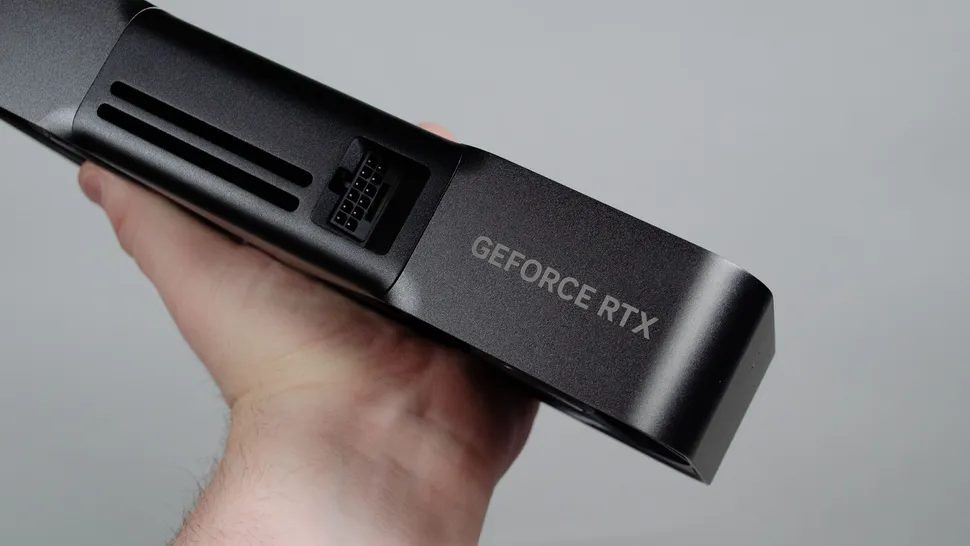
The restructuring does not suggest that NVIDIA is moving away from GeForce products or consumer gaming hardware. RTX graphics cards remain an active part of the company's roadmap, and gaming hardware continues to receive new product launches. However, gaming is no longer being presented as the company's primary growth narrative. Instead, NVIDIA increasingly positions its technologies around AI acceleration across multiple markets. Consumer RTX GPUs are now commonly used not only for gaming, but also for AI inference, content generation, local machine learning workloads, and AI-enhanced PC applications. This overlap between gaming hardware and AI workloads likely contributed to the decision to consolidate categories.
From a business perspective, the change also reflects how NVIDIA's various hardware segments now share common technologies and software ecosystems. CUDA acceleration, Tensor cores, AI frameworks, and RTX technologies are being deployed across gaming, robotics, automotive systems, AI PCs, and edge inference hardware simultaneously.
NVIDIA stated that the updated reporting model better represents the company's present and future growth drivers. The financial restructuring highlights how significantly the company's identity has evolved over the past several years, transitioning from a gaming-focused GPU manufacturer into a broader AI and accelerated computing company. While GeForce remains an important product family, the latest earnings report makes it increasingly clear that NVIDIA now views gaming as one component within a much larger edge AI and accelerated computing strategy.