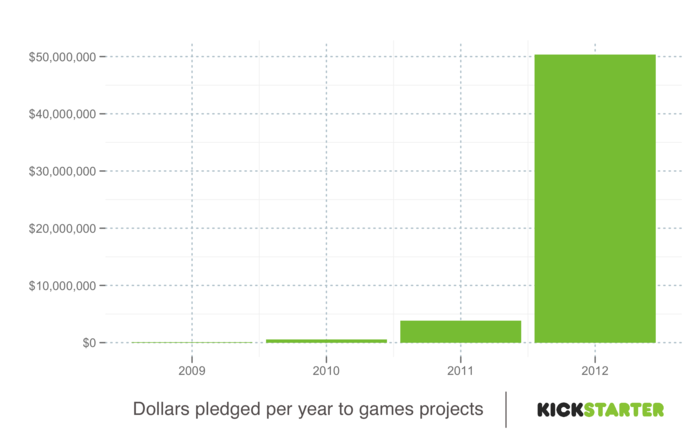
The Kickstarter model has nothing at all to do with guaranteeing the ultimate quality of the games. What it does is open up the possibility of making relatively unique games that people otherwise want but that would have a hard time being created otherwise. It's not some predetermined route to high product quality; it's an avenue that allows for a form of funding that can prove less problematic in making what could otherwise be "riskier" products, or in fact letting them even be made at all. Where Kickstarter's impact on quality comes in is in allowing devs to concern themselves solely with the game-making process, removing many of the hurdles they'd otherwise have to jump.
Kickstarter's very existence and its proven ability to generate funding already makes it a success. The quality of the final product is purely up to the abilities of the development team tasked with creating it, and that goes for both games and the many other non-game products that go through Kickstarter. Some of these games may end up middling, and others excellent, because that is simply the nature of video game creation (and any creation). Kickstarter isn't some automatic great product generator.
In most cases devs through Kickstarter also get vastly more money than they had originally asked for, which allows them to both add to the product as well as have even more breathing room during development. When you aren't hamstrung by a massive marketing budget and a publisher-driven need to meet certain "expectations" (i.e. lots of expensive voice acting), you can save a fairly substantial amount of money as virtually all of it is going directly to salaries for a relatively small dev team.
And no, the point isn't that publishers are inherently evil. The point is that they have their own interests (shareholders), and these often don't jibe with the development process and the final quality of games. Significant resources are poured into marketing and publishers frequently interfere in development in order to make sure the product ticks certain boxes (regardless of how the dev team feels about it). I don't begrudge the publishers for that because that is their entire purpose, at least with the major ones, but I will certainly be glad when models like Kickstarter come forth that allow developers to bypass publisher-related difficulties and freely make the games they want to make.
Ultimately, if a Kickstarter game bombs quality-wise, publishers and whatever outside elements can't be criticized for it. And if it ends up amazing, the devs did their work. Accordingly, like any creator, developers can ultimately take all of the praise and criticisms and all of the fallout that arises from how their product is received.