• Hey Guest. Check out your NeoGAF Wrapped 2025 results here!

Remaster Vs. Remake

8BiTw0LF

Banned
Since a lot in here doesn't know the difference - I'll take my precious time to educate you all.

Youre Welcome GIF by BayWa AG


Generally speaking: A remaster is done within the same engine - like remastering a song - adding something to it - for better or worse.

Generally speaking: A remake is done by changing engine - like doing a cover of a song - it's not the same, but something a like - for better or worse.

Generally speaking: A remaster is always done in the same engine. Most devs doesn't want to use the time to convert to a new engine, so remastering what have already been done, is the preffered route for most devs.

Generally speaking: A remake isn't a "quality of approval seal", cause it only means the devs changed engines, and made old code work in a newer engine (or older?).

I Have Questions GIF by MOODMAN


Hit me! It's really not that hard!

Edit: I added 'Generally speaking', so the ones that found the needle in a haystack, can have some redemption.
 
Last edited:
Sometimes the press or the promo announcements themselves also write one but they mean the other; usually write "remake" when they should write "remaster". So that also complicates things.
 
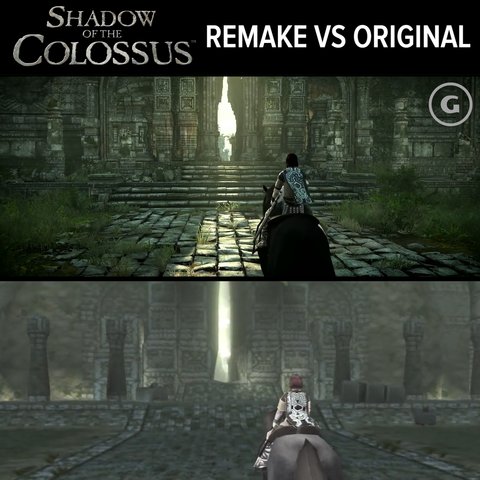
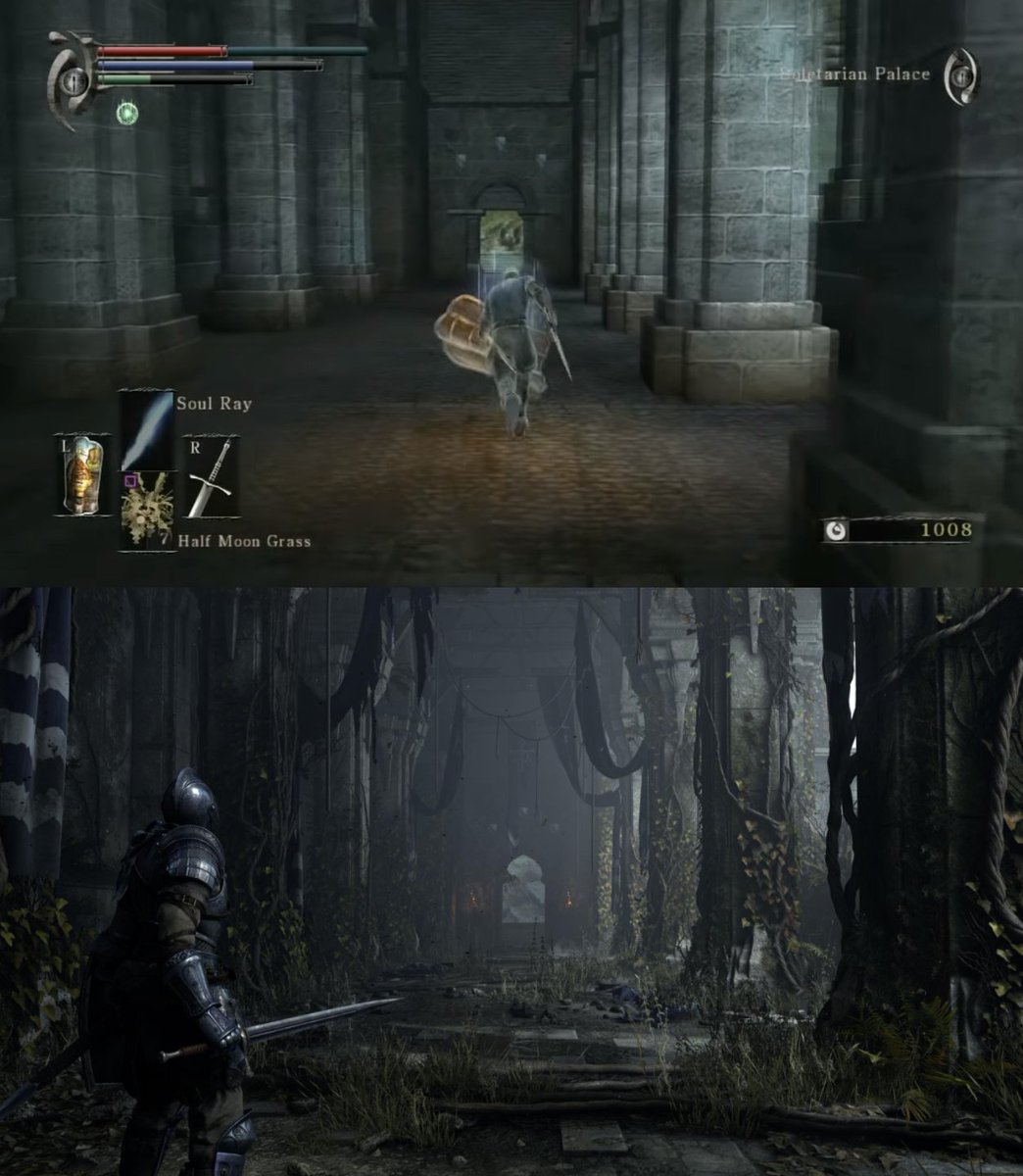
Bluepoint kinda blur the line a little, games SOTC & Demon's Souls generally seem like a remake but they do run some aspects of the original engine within their own
 
Last edited:
Depends on the case.

Very old games need a remake because nobody want to play with ps1-ps2 graphic\controls\animations.

Recent games can get away with a remaster because framerate\resolution are usually the biggest problems.
 
Bluepoint literally did a SOTC remaster and remake. The remaster was the PS3 port of the ico collection. The remake was the PS4 game. Just look to that as an example
 
Last edited:
The only time the line could be "blurred" is when you have games like the Final Fantasy ports (FFVIII, FFX, FFXII), where the game is basically identical but they did update some of the character models, and sometimes those updates are significant.

But even then it's so obviously still a remaster I'm not sure how anyone can't figure this out.
 
Alan Wake is not a remaster, since it's using a newer engine. The devs may say it's a remaster - but it can only be e remaster running on the same engine. That's the rule - and the rule can't be fucked with.
Well this makes things even worse then, since most promo and review articles mention it as a remaster.

(I also agree with those; it's a remaster)
 
Well this makes things even worse then, since most promo and review articles mention it as a remaster.

(I also agree with those; it's a remaster)
Maybe they're right - it all comes down to, if the newer engine is backwards compatible with the older engine = no coding needs to be done.
 
Stop It Neil Patrick Harris GIF


It's pretty simple (no matter what). Same engine = remaster. new engine = remake.

Let's take Final Fantasy VII versus Final Fantasy VII: Remake, and lets assume that the original Final Fantasy VII was made on the exact same engine as Final Fantasy VII: Remake. (I know that isn't true, but this is just to make a point.) You're saying that Final Fantasy VII: Remake would actually only be a remaster purely because they didn't change the game engine? They're two completely different games, but by your logic there is a singular definition for what constitutes a remake, and that is solely the game engine.

TL;DR - The game engine isn't the "be-all; end-all" of what constitutes a remake versus a remaster. If a separate game is released (meaning it isn't a patch to the existing version, but is a standalone game) and actual game play mechanics change between the two games, that would constitute a remake (even if it was on the same game engine). If you're just enhancing graphics and/or sound quality, and (optionally) implementing bug fixes from a previous version, that is a remaster. Audio/visual changes = Remaster. Mechanic changes = Remake.
 
Last edited:
It's pretty simple (no matter what). Same engine = remaster. new engine = remake.

That's fine, but there there clearly needs to be more clarity with regard to how "remake" is used, since this technical definition (however accurate) is not useful when applying in an overall way to multiple products with such a massive variance in visual quality.
 
You're setting up a ridiculous "what if". No one can work with that.

It's not ridiculous. It's showing you why your statement is flawed. Final Fantasy VII is a completely different game than Final Fantasy VII: Remake regardless of what game engine it uses. By your logic if Square Enix had ported Final Fantasy VII to the engine they used for Final Fantasy VII: Remake, but changed nothing about the game, that would have been a Remake. But after doing that, if they had released Final Fantasy VII: Remake it would only be considered a Remaster. You're putting too much value on the game engine, and not enough value on the game mechanics which is ACTUALLY what determines whether a game is a Remake or a Remaster.
 
That's why I just can't see RE2 2019 as a Remake. To me it is a good Reboot. They managed to reboot it making it as good as the original with the feeling of the game, that both shares.

Almost the same hapenned to Final Fantasy VII. But the games does not have the same feeling of the original. To me it just looks like any generic action game with Final Fantasy Skins (and that is really sad to me).

A remaster that is actually a remake.. What a mysterious paradox. :pie_thinking:


/s

We also have a lot of Reboots that people calls Remasters or Remakes :messenger_tears_of_joy:
 
Even all remasters aren't created equal. Sometimes it's just resolution + framerate upgrades, but other times game mechanics can change, assets and textures can be remade, lighting, geometry etc.
 
It's not ridiculous. It's showing you why your statement is flawed. Final Fantasy VII is a completely different game than Final Fantasy VII: Remake regardless of what game engine it uses. By your logic if Square Enix had ported Final Fantasy VII to the engine they used for Final Fantasy VII: Remake, but changed nothing about the game, that would have been a Remake. But after doing that, if they had released Final Fantasy VII: Remake it would only be considered a Remaster. You're putting too much value on the game engine, and not enough value on the game mechanics which is ACTUALLY what determines whether a game is a Remake or a Remaster.
Remake is not a "quality of approval seal"! You can literally make a remake of any game and make them worse than the original - they're still remakes - as long they're running on different engines.
 
Last edited:
The way I've always looked at it is...

A remaster is an improvement of what's already there. Much like when music is remastered. Bands don't rerecord instruments or add anything new, they remaster what's already there. Meaning, they go back through the mastering process which revolves around readjusting levels, etc. Readjusting those levels can REALLY make a difference, especially on dated recordings.

When a game is typically remastered, they take the core of that game and make improvements where they can without tampering with the core of the game itself. So, better resolutions, better/improved textures, etc. It's basically like taking an old car and adding a new coat of paint to it, and cleaning the interior and exterior.

A remake is the polar opposite, meaning improvements are made to anything and everything that feels desired, necessary, or required. While generally sticking to the original source material "to a T" or to SOME degree. But that's all up to the team involved. It's basically like taking an old car and completely redoing the interior and exterior. Replacing some of the parts with newer and better parts. Maybe even adding some new things to the car that make it look and perform better.

People have a different way of looking at it. I just think the important part is being able to distinguish the difference between the two.

The thing that's sad is that there are a number of games that journalists have mislabeled. Or even games that are mislabeled that can definitely make it more confusing for others.
 
The way I've always looked at it is...

A remaster is an improvement of what's already there. Much like when music is remastered. Bands don't rerecord instruments or add anything new, they remaster what's already there. Meaning, they go back through the mastering process which revolves around readjusting levels, etc. Readjusting those levels can REALLY make a difference, especially on dated recordings.

When a game is typically remastered, they take the core of that game and make improvements where they can without tampering with the core of the game itself. So, better resolutions, better/improved textures, etc. It's basically like taking an old car and adding a new coat of paint to it, and cleaning the interior and exterior.

A remake is the polar opposite, meaning improvements are made to anything and everything that feels desired, necessary, or required. While generally sticking to the original source material "to a T" or to SOME degree. But that's all up to the team involved. It's basically like taking an old car and completely redoing the interior and exterior. Replacing some of the parts with newer and better parts. Maybe even adding some new things to the car that make it look and perform better.

People have a different way of looking at it. I just think the important part is being able to distinguish the difference between the two.

The thing that's sad is that there are a number of games that journalists have mislabeled. Or even games that are mislabeled that can definitely make it more confusing for others.
Survive Danger Island GIF by Archer
 
I just want to point out that remasters are not always done in the same engine. Bluepoints Remasters were all effectively redone from the ground up. While Code Veronica HD remaster was redone in the MT framework. But they are still remasters.
 
You can remaster or even simply port with a different engine. A remaster enhances or refines the quality but faithfully retains the original content.

A remake changes the content while still paying debt to the original's artistic intent.

I just want to point out that remasters are not always done in the same engine. Bluepoints Remasters were all effectively redone from the ground up. While Code Veronica HD remaster was redone in the MT framework. But they are still remasters.

Exactly.
 
Last edited:
I just want to point out that remasters are not always done in the same engine. Bluepoints Remasters were all effectively redone from the ground up. While Code Veronica HD remaster was redone in the MT framework. But they are still remasters.
Bluepoint remakes wasn't done from the ground up, since they used Quixel Megascans to scan the games they remade. Is MT framework backwards compatible with the original Code Veronice engine?
 
This engine reasoning doesn't work out if the end result is the same.

Shin Megami Tensei 3 was ported to new consoles using Unity. The game looks just like on the ps2 but it is now in higher resolution and 60fps. This doesn't make it a Remake.

It is a remastered ports. That's the problem ppl don't get it. Remasters are ports with better resolution, framerate and maybe textures if the company cares too much about. ( the new SaGa port by Square Enix).

But for example, Trials of Mana I'd a full remake of the original one for super NES, despite staying true to the content. It is not a port. They changed the perspective, but the game is not the same


Whereas Demons Souls by blue point is a "Remake Remaster", a new work done by a new company that sticks faithfully to the original material. It is a total different perspective from Trials of Mana (that is a full remake) or SaGa/ff9/legend of mana (that are remastered ports)
 
Last edited:
Top Bottom