• Hey Guest. Check out your NeoGAF Wrapped 2025 results here!

single malt whisky thread

Status
Not open for further replies.
RbBrdMan said:
Yes. I'm so glad this thread has wise from it's gwave!

I've recently gotten into drinking Scotch and was searching around neogaf for a thread like this and recommendations. I mentioned to my wife that I wanted to start drinking scotch, mostly on a joke you know you see all these TV characters always drinking scotch. Well she ran with it and bought me several little sample bottles and put them in my xmas stocking.

My favorite so far was a Macallan 12 yo. I have no idea if that is 'good' scotch or not but it's been the best out of the bunch. I've still got a couple varieties of Johnny Walker (Red,Black) but from what I understand those are not single malt. Correct?

Anyway whoever bumped this thing thanks. Now I'm off to read up on GAF's recommendations.

Yeah, there was another bigger Whisky thread, but it was no where as informative as this one, and would have scared away the dudes who know what they're talking about, so I bumped this one. I'm kind of in the same boat as you, it's all a bit overwhelming as buying a bottle to find out if you like it is an expensive sport so this thread is pushing me in the right direction. I now regret leaving my Glenlivet in the states before I came home, man booze is cheap in the USA! Cheaper than Australian duty free. And I REALLY regret not buying a bottle coming home. Anyway...

I'm definitely putting some cash into a bottle this weekend. Now to just make the choice and take the plunge.

Any thoughts on the older Jamesons? I've had them recommended, but kind of don't take them seriously, which could be me just being silly.
 
Allow me to make some recommendations as taught to me by my father. Please note, I'm talking about single malt scotch, derived from a single distillery, produced over a certain short period of time. This is unlike the blended scotch, such as Johnny Walker, Chivas Regal, and others, which are blends, and consist of two or more distillery products added to one batch. Until recently, most Americans drank only blended scotch whisky, and Johnny Walker Black Label was the most prevalent.

I'm also not talking about scotch from countries other than Scotland. Canada, US, Japan, Ireland and Germany are also in the scotch distilling business, although not to the refinement of those found in Scotland. The Japanese are quite proud of their product, distilled in the high mountains of Hokkaido, but when placed next to the best of Scotland, they don't stand a chance of selection.

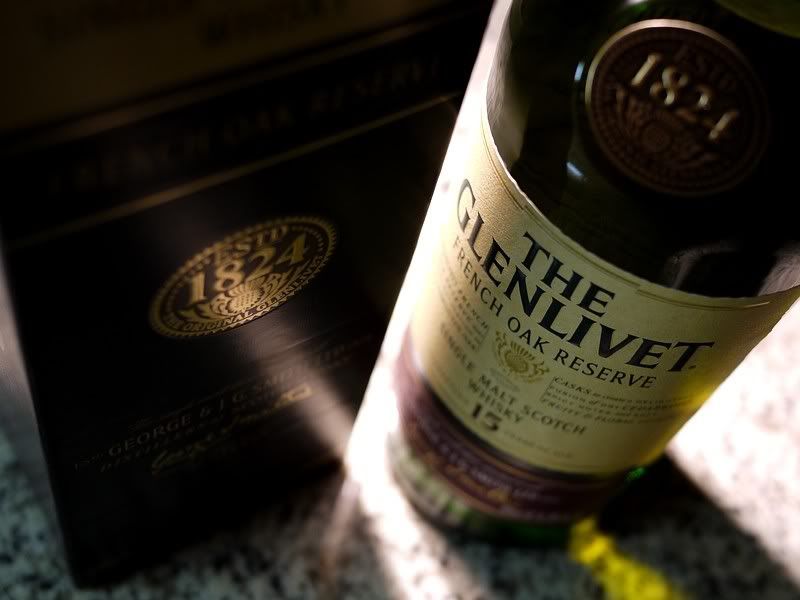
You need, at a minimum, at least 4 different scotch selections, to get a taste of around the Scottish Isles. To start with, and especially for the newbie drinker, start with a Speyside (also called Highland, from the area of distilleries in the higher hills of north central Scotland) such as Glenlivet. It is the most popular single malt scotch sold in the US. It's quite mild, smooth and platable. The highland distilleries are the most numerous - I have counted over 76 different that lay claim to that area.

The next area you might want to have is from the lowlands, around the city of Campleton, the best being Springbank. It's what I call the "ladies scotch", since it is quite tame and mild - it is to single malt scotch what Bud Light is to real beer.

After this, go to the Western Highlands, Oban comes to mind as the best. There are not a lot of distilleries located here, at least which put out sufficient quantities to be imported with any volume. If you look at a topographical map of Scotland, you'll notice that this is the most remote part of the country - the islands surrounding mainland Scotland are easier to get to than here. There is very little rail or road network. Most of the scotch distilled here is for local consumption only. Oban happens to be distilled in a town close to the sea, and most scotch is moved around via small boat/freighter. It has a distinct flavor, not similar to any other local.

Now you must have your fourth choice - that from the Scottish Isles. There are 5 major islands which support one or more distilleries - Isley being the most productive with 7 distilleries located on an island of about 400 square miles - 20 X 20 essentially. Three of the distilleries produce a distinctive, peaty flavored scotch, mild in comparison with the other 4 also located here. Bowmore, Bruichladdich and Bunnahabhain are all drinkable, with a little bit of training. They do need a bit of getting used to, but buy and large are drinkable by those who like scotch, and have a history of consumption. Jura, from the island of Jura, is similar to Highland Park, my favorite, and Jura is a bit less expensive.

Now we move into the territory which only the dedicated, and strong of constitution, fear naught to tread. The Ardbeg, Caol Ila, Lagavulin, and Laphroaig from Isley, and Talisker from Skye, are a world apart from anything else your have tried. You should have at least one of these on your shelf, if only to punish yourself for being bad. These scotch take a lot of getting used to. Drink them only with strong food. They are not to be used as dessert wines. Do not share them with neophytes - who will hate you forever and never trust you again if you sneak a dram or two to them without warning. These are overly smokey from peat, and doused with the ocean salt wind spray which seethes over their sleeping casks for 8 to 12 years.

All of these distilleries are located right on the edge of the ocean surrounding the waters off Scotland, and since trees don't grow on these islands, the fuel for their distilling consists of centuries old peat.

One final thing about the ageing of scotch. Don't fall for the sales pitch that the older the scotch, the better and subsequently, the more expensive. Scotch seems to be best when aged between 12 to 18 years. A lot of variables here, and 18 year old scotch from one distillery may not equal the quality of a 12 year old from another. It simply becomes a matter of personal taste.

Try the different ages from the same distillery together, by yourself, along with some mild crackers to clear the palate. Doing this with others accompanying you is distracting from the matter at hand, determining which you like versus the price you have to pay $60 versus $90 I think was the price variable - is the $30 worth the extra 6 years of ageing? Only you can make that determination.

There are those you are willing to pay big bucks for 24 year and older scotch, but seldom have I heard there was really a big increase in pleasure. Keep in mind how scotch is aged. Once the distilling process is completed, it's dumped into 50 gallon wooden kegs purchased from American whiskey makers such as Jack Daniels or Jim Beam, along with a select few distilleries using Spanish wine or port casks. The oak in these casks imparts the color and much resin flavors to the scotch, unique in their application by distillery. Now these casks will store the scotch until such time as the product is to be sold, whereupon it is transferred out of the cask and bottled. Scotch no longer ages when bottled. There is nothing in glass which imparts further flavors. However, it is in the wooden casks that magic happens, if the master distiller has his act together. While the wood is tightly sealed, wood is porous, and the whisky begins to evaporate out of the wood. It exchanges it's vapor with the air surrounding the storage sheds, and it is from this windswept, salty sea air that imparts the iodine flavoring in the island malts especially. The liquid that vaporizes and squeezes out through the wood pores is called the "angel's share" and is quite noticeable by even the untrained who approach the storage sheds. It's much like sensing a bakery in full swing of developing donuts or muffins before you even open the door.

Now the longer the whisky is kept in the cask, the more of the resins are given up by the wood and transferred into the liquid. This is good. However, the downside to ageing is that more and more of the liquid vaporizes - the angels love 18 and 24 year old scotch. What started out as 50 gallons may now be down to 46 or so. The longer the age, the less liquid is available for dispensing. In addition, the longer the age, the more activity involved in storage - the casks must be turned occasionally, and sampled as the ageing develops closer to the desired end flavor. In addition, the ageing stock is often used as collateral to the banker which floats the payments for the workers. So you can see why older scotch costs more. Most scotch starts to turn musty and flat after a certain age, influenced often by the quality of the wooden cask. There are only a certain amount of resins or cogeners in the oak, and once they are drawn out, there is not much reason to let the whisky sit. A master distiller can look at the outside of the cask and tell when the scotch is ready to pour. The longer the age, the darker the outside of the wood. The scotch literally seeps throughout the wood pores, and when exposed to the outside air on the cask, it turns sharply - like a mildew.

 
LiveWire said:
Anyone ever tried this? Great stuff:

GlenrothesWhiskey-ESQ-Mixologist-fb-55026992.jpg

Glenrothes is the only single malt i can stand. everything else is too peaty. I'm a huge Bourbon fan. I have over 15 bottles in my collection at the moment and although some can be a little harsh at times, i still prefer it over a 'good' single malt
 
Desertdroog, I'm sorry but while I'm sure your dad was a hell of a guy, a lot of what he told you about whisky isn't true.

These parts are absolutely correct:

desertdroog said:
One final thing about the ageing of scotch. Don't fall for the sales pitch that the older the scotch, the better and subsequently, the more expensive. Scotch seems to be best when aged between 12 to 18 years. A lot of variables here, and 18 year old scotch from one distillery may not equal the quality of a 12 year old from another. It simply becomes a matter of personal taste.

Try the different ages from the same distillery together, by yourself, along with some mild crackers to clear the palate. Doing this with others accompanying you is distracting from the matter at hand, determining which you like versus the price you have to pay $60 versus $90 I think was the price variable - is the $30 worth the extra 6 years of ageing? Only you can make that determination.

There are those you are willing to pay big bucks for 24 year and older scotch, but seldom have I heard there was really a big increase in pleasure. Keep in mind how scotch is aged. There is nothing in glass which imparts further flavors.

Now the longer the whisky is kept in the cask, the more of the resins are given up by the wood and transferred into the liquid.

But the rest isn't. In my opinion, obviously.

I think we can all agree is that the best whisky in the world is whatever one you like the most.
 
Obviously personal tastes are subjective, to the point where I take liberties with my dad's opinions on the matter. It just makes for an interesting conversation over a nice cigar in the attempt to get the old man to offer up the bottles I don't have in a taste test.

He is getting wise to it. :)

Regarding what you feel to not be true, are you talking about the locales and regions or just opinions on tastes?
 
Best of luck with it!

Sorry for coming over a bit wanky in my last post, but in my defence when you spend 38 hours a week doing something it takes a lot of the romance and mystery out of it. It turns you into a cynic, sadly. And no, I'm not a hooker!

Threads like this remind me how much our work making whisky is appreciated and understood and enjoyed by so many people around the world.

Thanks guys. It might be the drink talking but its still true.

EDIT: To answer your question,

Please note, I'm talking about single malt scotch, derived from a single distillery, produced over a certain short period of time.

A single malt's stated age is the guaranteed age of the youngest whisky in the bottle. All whiskys except for single cask editions are blends. In the case of a single malt, all of the whisky comes from the same distillery and is at least as old as the age declaration. A Talisker bottle that states 16 Years Old does not contain only 16 year old whisky. It may have no 16 year old whisky in it.


The next area you might want to have is from the lowlands, around the city of Campbletown, the best being Springbank. It's what I call the "ladies scotch", since it is quite tame and mild - it is to single malt scotch what Bud Light is to real beer.

Springbank is an astonishingly complex whisky. Bud Light is pishwater.


After this, go to the Western Highlands, Oban comes to mind as the best. There are not a lot of distilleries located here, at least which put out sufficient quantities to be imported with any volume. If you look at a topographical map of Scotland, you'll notice that this is the most remote part of the country - the islands surrounding mainland Scotland are easier to get to than here. There is very little rail or road network. Most of the scotch distilled here is for local consumption only. Oban happens to be distilled in a town close to the sea, and most scotch is moved around via small boat/freighter. It has a distinct flavor, not similar to any other local.

A map of Scotland would be useful here. We have roads. Trucks drive on them. They carry whisky. Oban is not in any way remote. That said it is a lovely place to visit and the whisky is light, smooth and very drinkable.


Now we move into the territory which only the dedicated, and strong of constitution, fear naught to tread. The Ardbeg, Caol Ila, Lagavulin, and Laphroaig from Isley, and Talisker from Skye, are a world apart from anything else your have tried. You should have at least one of these on your shelf, if only to punish yourself for being bad. These scotch take a lot of getting used to. Drink them only with strong food. They are not to be used as dessert wines. Do not share them with neophytes - who will hate you forever and never trust you again if you sneak a dram or two to them without warning. These are overly smokey from peat, and doused with the ocean salt wind spray which seethes over their sleeping casks for 8 to 12 years.

The whisky from these distilleries is not wholly stored locally. There simply isn't enough space. They are stored nearer the bottling plants in central Scotland. No ocean salt wind spray touches them. Ardbeg excepted, of course. I would believe anything of them cos they're Ardbeg.


All of these distilleries are located right on the edge of the ocean surrounding the waters off Scotland, and since trees don't grow on these islands, the fuel for their distilling consists of centuries old peat.

Not true and in any case stills are indirectly heated so it wouldn't make any difference

Keep in mind how scotch is aged. Once the distilling process is completed, it's dumped into 50 gallon wooden kegs purchased from American whiskey makers such as Jack Daniels or Jim Beam, along with a select few distilleries using Spanish wine or port casks.

Whisky is stored in casks. A barrel is a size of cask, as is a puncheon and a hogshead. Different sizes are used depending on the desired outcome. A cask can be rejevenated, where fresh wood is added to increase the light woody notes in a whisky, refilled where the sweeter and headier whisky notes come to the fore, bourban which imparts sugary sweetness or port that increases fruitiness and sweetness. Any distillery can use any combination of size and makeup of cask. Although some have the cask's character so ingrained in the whisky that it's difficult to change,

However, it is in the wooden casks that magic happens, if the master distiller has his act together. While the wood is tightly sealed, wood is porous, and the whisky begins to evaporate out of the wood. It exchanges it's vapor with the air surrounding the storage sheds, and it is from this windswept, salty sea air that imparts the iodine flavoring in the island malts especially. The liquid that vaporizes and squeezes out through the wood pores is called the "angel's share" and is quite noticeable by even the untrained who approach the storage sheds. It's much like sensing a bakery in full swing of developing donuts or muffins before you even open the door.

Again, central Scotland is neither windswept or salty. OK. maybe windswept, but that's why the casks are in warehouses.

Most scotch starts to turn musty and flat after a certain age, influenced often by the quality of the wooden cask. There are only a certain amount of resins or cogeners in the oak, and once they are drawn out, there is not much reason to let the whisky sit.

If you drink Macallan then this is precisely the effect that makes the whisky taste the way it does. Some people like it and who are we to tell them they are wrong.

A master distiller can look at the outside of the cask and tell when the scotch is ready to pour. The longer the age, the darker the outside of the wood. The scotch literally seeps throughout the wood pores, and when exposed to the outside air on the cask, it turns sharply - like a mildew.


There is a black mould that thrives in alcohol rich atmospheres like distilleries and bonded warehouses. It covers the walls. I have never heard of anyone who could look at a cask and see what quality of whisky lies inside it. That includes master blenders. I have worked in 3 distilleries and have yet to meet anyone called the "master distiller"
 
OK I can't take it anymore, I am headed to the liquor store!

I thought desertdroog's post was pretty spot on, but I still have many many more scotches to taste! :lol
 
Extollere said:
What do you mean 'nosing'? is that adding more water?
When you are checking whisky for quality you don't usually drink it. I know it sounds crazy but the sense of taste is easily fooled. Basically if you like what you are drinking you will give it high marks. But your own personal sense of taste isn't what you are testing- it's the whisky. So you have to mainly use your nose and your sense of smell. It's a far more sensitive instrument than your sense of taste.

I don't like really peaty whisky because I feel that the phenolic compounds overwhelm everything else. So when I drink it I am looking for all of the layers of flavour that you can get with other whiskies and when I find that they are overwhelmed by the heavily peated nature I don't like a whisky as much as I could.

As it was explained to me many years ago,Peaty whiskys are a one trick pony, but it's a a hell of a trick.

When you dilute then nose a whisky you release all of the flavour compounds in the whisky and you can pick up a lot of subtle flavours that you never would by drinking it.

Mouth feel is another parameter though and you have to drink the whisky to get that answer. It's an area where blends always win for smoothness because of the grain whisky in them but some people want a rough feeling and if so then a seriously peaty malt is the only way to go.

There's no right or wrong just personal taste. That's what makes whisky such an exciting drink.
 
I thought that's what it meant, but I only got confused by this because somebody mentioned diluting the whiskey....

pootle said:
When you are checking whisky for quality you don't usually drink it. I know it sounds crazy but the sense of taste is easily fooled. Basically if you like what you are drinking you will give it high marks. But your own personal sense of taste isn't what you are testing- it's the whisky. So you have to mainly use your nose and your sense of smell. It's a far more sensitive instrument than your sense of taste.

I don't like really peaty whisky because I feel that the phenolic compounds overwhelm everything else. So when I drink it I am looking for all of the layers of flavour that you can get with other whiskies and when I find that they are overwhelmed by the heavily peated nature I don't like a whisky as much as I could.

As it was explained to me many years ago,Peaty whiskys are a one trick pony, but it's a a hell of a trick.

When you dilute then nose a whisky you release all of the flavour compounds in the whisky and you can pick up a lot of subtle flavours that you never would by drinking it.

Mouth feel is another parameter though and you have to drink the whisky to get that answer. It's an area where blends always win for smoothness because of the grain whisky in them but some people want a rough feeling and if so then a seriously peaty malt is the only way to go.

There's no right or wrong just personal taste. That's what makes whisky such an exciting drink.

Do you have to dilute a whiskey to nose it? And if so does it have to be diluted to 50/50?
 
Extollere said:
I thought that's what it meant, but I only got confused by this because somebody mentioned diluting the whiskey....


Do you have to dilute a whiskey to nose it? And if so does it have to be diluted to 50/50?

You definitely DON'T have to dilute a whisky to nose it. You can enjoy it neat in a tumbler, swirling it around and enjoying the different odours as they come off the spirit.

Diluting it 50/50, is a more scientific approach. I don't know how to explain it properly, but nosing spirit is part of my job. I get paid to do it so I take it seriously. It's not about what I want to do.

When I'm not working I add a splash of water to a whisky to release the flavours more easily, but that said I enjoy a neat whisky too, as long as its not too peaty.

The great thing about whisky is that its so dynamic. Vodka is just an industrial by-product. Gin is the same industrial by-product with flavours added, although some are really difficult to make and deserve respect in their own way.

Whisky is totally different, it's in a league of its own. It's a complicated business. Just look at the conversation we have been having in this thread. Everybody is right because all whisky is a premium product made with different tastes in mind.
 
Cool, thanks for that. Also yeah, this thread has definitely been amazing. Imma go back to sippin mah whiskey.. MMmm
 
desertdroog said:
Allow me to make some recommendations as taught to me by my father. Please note, I'm talking about single malt scotch, derived from a single distillery, produced over a certain short period of time. This is unlike the blended scotch, such as Johnny Walker, Chivas Regal, and others, which are blends, and consist of two or more distillery products added to one batch. Until recently, most Americans drank only blended scotch whisky, and Johnny Walker Black Label was the most prevalent.

I'm also not talking about scotch from countries other than Scotland. Canada, US, Japan, Ireland and Germany are also in the scotch distilling business, although not to the refinement of those found in Scotland. The Japanese are quite proud of their product, distilled in the high mountains of Hokkaido, but when placed next to the best of Scotland, they don't stand a chance of selection.

You need, at a minimum, at least 4 different scotch selections, to get a taste of around the Scottish Isles. To start with, and especially for the newbie drinker, start with a Speyside (also called Highland, from the area of distilleries in the higher hills of north central Scotland) such as Glenlivet. It is the most popular single malt scotch sold in the US. It's quite mild, smooth and platable. The highland distilleries are the most numerous - I have counted over 76 different that lay claim to that area.

The next area you might want to have is from the lowlands, around the city of Campleton, the best being Springbank. It's what I call the "ladies scotch", since it is quite tame and mild - it is to single malt scotch what Bud Light is to real beer.

After this, go to the Western Highlands, Oban comes to mind as the best. There are not a lot of distilleries located here, at least which put out sufficient quantities to be imported with any volume. If you look at a topographical map of Scotland, you'll notice that this is the most remote part of the country - the islands surrounding mainland Scotland are easier to get to than here. There is very little rail or road network. Most of the scotch distilled here is for local consumption only. Oban happens to be distilled in a town close to the sea, and most scotch is moved around via small boat/freighter. It has a distinct flavor, not similar to any other local.

Now you must have your fourth choice - that from the Scottish Isles. There are 5 major islands which support one or more distilleries - Isley being the most productive with 7 distilleries located on an island of about 400 square miles - 20 X 20 essentially. Three of the distilleries produce a distinctive, peaty flavored scotch, mild in comparison with the other 4 also located here. Bowmore, Bruichladdich and Bunnahabhain are all drinkable, with a little bit of training. They do need a bit of getting used to, but buy and large are drinkable by those who like scotch, and have a history of consumption. Jura, from the island of Jura, is similar to Highland Park, my favorite, and Jura is a bit less expensive.

Now we move into the territory which only the dedicated, and strong of constitution, fear naught to tread. The Ardbeg, Caol Ila, Lagavulin, and Laphroaig from Isley, and Talisker from Skye, are a world apart from anything else your have tried. You should have at least one of these on your shelf, if only to punish yourself for being bad. These scotch take a lot of getting used to. Drink them only with strong food. They are not to be used as dessert wines. Do not share them with neophytes - who will hate you forever and never trust you again if you sneak a dram or two to them without warning. These are overly smokey from peat, and doused with the ocean salt wind spray which seethes over their sleeping casks for 8 to 12 years.

All of these distilleries are located right on the edge of the ocean surrounding the waters off Scotland, and since trees don't grow on these islands, the fuel for their distilling consists of centuries old peat.

One final thing about the ageing of scotch. Don't fall for the sales pitch that the older the scotch, the better and subsequently, the more expensive. Scotch seems to be best when aged between 12 to 18 years. A lot of variables here, and 18 year old scotch from one distillery may not equal the quality of a 12 year old from another. It simply becomes a matter of personal taste.

Try the different ages from the same distillery together, by yourself, along with some mild crackers to clear the palate. Doing this with others accompanying you is distracting from the matter at hand, determining which you like versus the price you have to pay $60 versus $90 I think was the price variable - is the $30 worth the extra 6 years of ageing? Only you can make that determination.

There are those you are willing to pay big bucks for 24 year and older scotch, but seldom have I heard there was really a big increase in pleasure. Keep in mind how scotch is aged. Once the distilling process is completed, it's dumped into 50 gallon wooden kegs purchased from American whiskey makers such as Jack Daniels or Jim Beam, along with a select few distilleries using Spanish wine or port casks. The oak in these casks imparts the color and much resin flavors to the scotch, unique in their application by distillery. Now these casks will store the scotch until such time as the product is to be sold, whereupon it is transferred out of the cask and bottled. Scotch no longer ages when bottled. There is nothing in glass which imparts further flavors. However, it is in the wooden casks that magic happens, if the master distiller has his act together. While the wood is tightly sealed, wood is porous, and the whisky begins to evaporate out of the wood. It exchanges it's vapor with the air surrounding the storage sheds, and it is from this windswept, salty sea air that imparts the iodine flavoring in the island malts especially. The liquid that vaporizes and squeezes out through the wood pores is called the "angel's share" and is quite noticeable by even the untrained who approach the storage sheds. It's much like sensing a bakery in full swing of developing donuts or muffins before you even open the door.

Now the longer the whisky is kept in the cask, the more of the resins are given up by the wood and transferred into the liquid. This is good. However, the downside to ageing is that more and more of the liquid vaporizes - the angels love 18 and 24 year old scotch. What started out as 50 gallons may now be down to 46 or so. The longer the age, the less liquid is available for dispensing. In addition, the longer the age, the more activity involved in storage - the casks must be turned occasionally, and sampled as the ageing develops closer to the desired end flavor. In addition, the ageing stock is often used as collateral to the banker which floats the payments for the workers. So you can see why older scotch costs more. Most scotch starts to turn musty and flat after a certain age, influenced often by the quality of the wooden cask. There are only a certain amount of resins or cogeners in the oak, and once they are drawn out, there is not much reason to let the whisky sit. A master distiller can look at the outside of the cask and tell when the scotch is ready to pour. The longer the age, the darker the outside of the wood. The scotch literally seeps throughout the wood pores, and when exposed to the outside air on the cask, it turns sharply - like a mildew.

Damn, I nominate this for post of 2010. This is such great information that I'm headed out to get some scotch tomorrow. Well done, sir.
 
Pootle added his critique, so we have to defer to his knowledge.

What do I know, really? I'm just an American looking to appreciate the water of life the best I can. Someday, my pops and I plan to take a trip to Scotland and go on a whisky tour. For now we use reference materials and the bottles we purchase to give us a look at our chosen libations... as romantic a view as we can make of it.
 
Extollere said:
Do you have to dilute a whiskey to nose it? And if so does it have to be diluted to 50/50?
don't dilute a single malt 50/50...one or to drops of water on the tumbler, swirl it around, and smell it. breathe in deeply.

someone suggested speyburn as a starter...i do not agree. speyburn is harsh, and obviously cheap. its not good. good starter scotch is Macallan 12, Bowmore Legend, Talisker 10, perhaps Glenlivet etc. Anything Sherry or Bourbon cask aged. Islay whiskys are smokey and peaty and take time to get used to, Laphoaig, Caol Ila and Lagavulin are definitely not starter scotches. But you can taste the Bowmores because they are cheaper and milder to get an idea and then move to other better quality Islay whiskys.

Glenfiddich 12 is probably the most popular, because its cheap, however i find it to be very bland.

Best stuff:

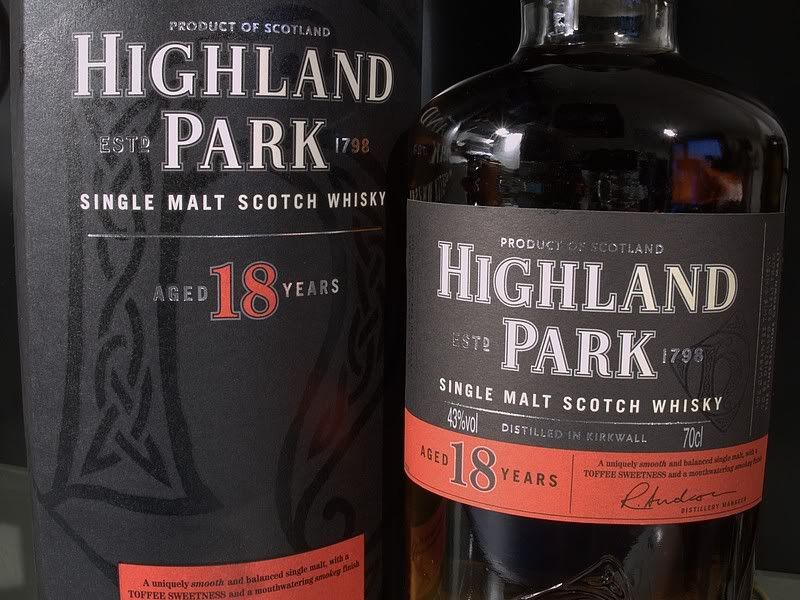
Highland Park 18

highland-park-18-year.jpg


Balvenie Portwood 21

Balvenie%20Portwood%2021-b.JPG


Talisker 18

Talisker18years.jpg
 
Thanks for the knowledge, Pootle! What are some of your favorite whiskys? Either Single or Blend?

Also, i'm looking for a couple of nice glasses and have been eyeing the Dorothy Thorpe Roly Polys... Mad Men doesn't help my whisky itch...

dorothy_thorpe_silver_band_roly_poly_P0000020081S0074T2.jpg
 
desertdroog said:
What do I know, really? I'm just an American looking to appreciate the water of life the best I can. Someday, my pops and I plan to take a trip to Scotland and go on a whisky tour. For now we use reference materials and the bottles we purchase to give us a look at our chosen libations... as romantic a view as we can make of it.

It's your obvious passion and love for the spirit that makes the difference I think.

I really enjoyed reading your views, and those of the other whisky lovers in this thread. There is such a depth of knowledge and understanding of how special Scotch whisky is.

I only ask that when you and your dad come to Scotland you write it all down for us to enjoy!

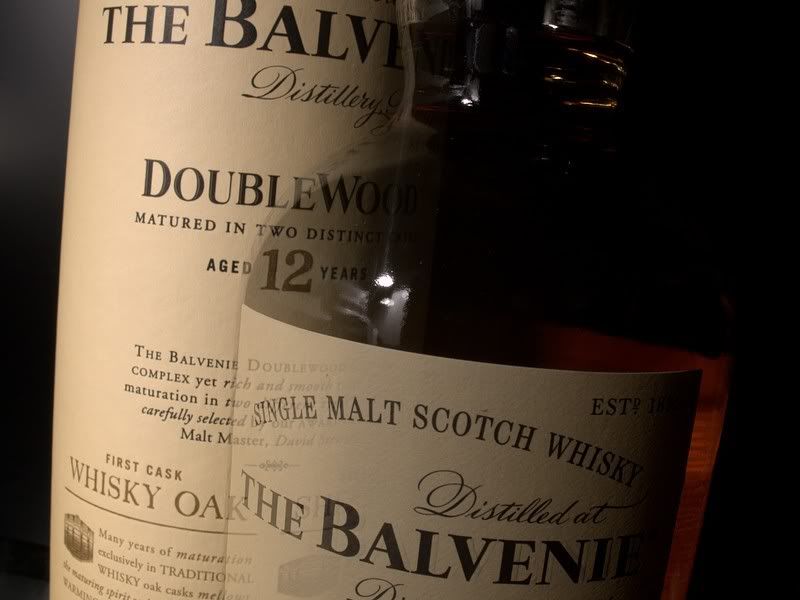
And to answer POWERSPHERE, Cragganmore and Highland Park are two of my favourites although that mention of double wood Balvenie earlier in the thread reminded me how glorious it is.

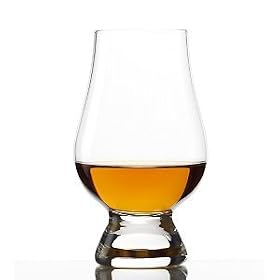
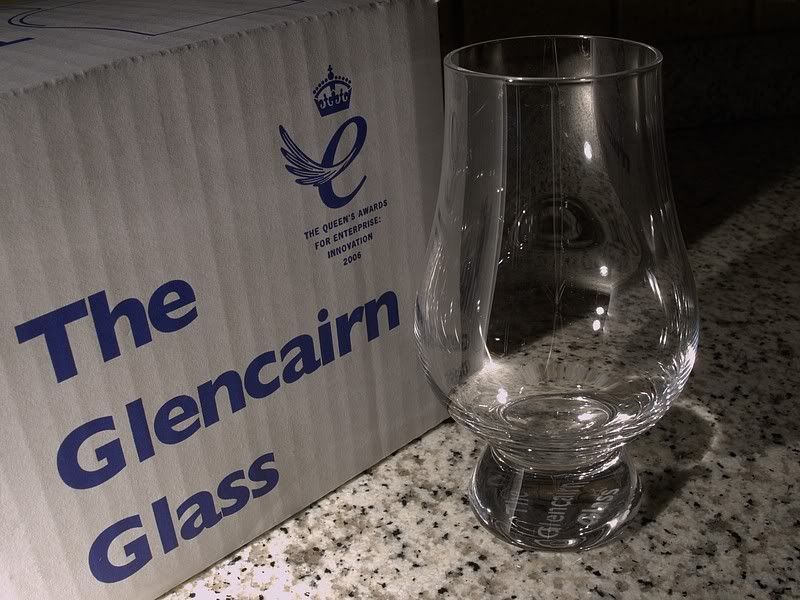
I like those glasses, they look smart. Could I suggest you look at Glencairn glasses too
21eLS6XU%2BuL._SL500_AA280_.jpg
,
nosingblue.jpg


They are a commercial version of the not so nice cheap glasses used in distilleries (see the above shitty pic for comparison).
 
pootle said:
And to answer POWERSPHERE, Cragganmore and Highland Park are two of my favourites although that mention of double wood Balvenie earlier in the thread reminded me how glorious it is.

I like those glasses, they look smart. Could I suggest you look at Glencairn glasses too
21eLS6XU%2BuL._SL500_AA280_.jpg
,
nosingblue.jpg


They are a commercial version of the not so nice cheap glasses used in distilleries (see the above shitty pic for comparison).

Those glasses look great! I've had Highland Park 12 up on my list as one of my first purchases, will keep an eye out for the Cragganmore. Looking forward to milling through a few different whiskys this year.
 
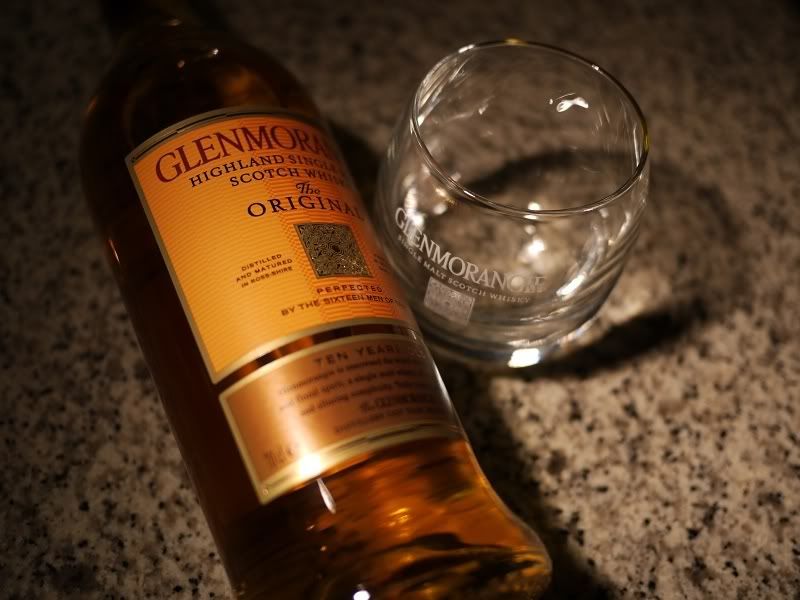
The Glenmorangie was pretty smooth. I've enjoyed it a lot.

Thread is bookmarked for future reference. I'll be doing some shopping soon.
 
So I turn 21 on Monday, and I want to become a scotch man. Where should I start? I don't mind working towards developing my palate, I'm just not sure what a good jumping off point should be?
 
How much alcohol experience do you have? It is has been limited to slamming cheap tequila, rum, and vodka at frat parties and copious amounts of cheap american lager on game night, then start basic. I stand by my recommendations on page 2. A mild speyside like speyburn or glenlivet 12 (which is damn near ubiquitous in the US) is a good start. Avoid the cheap blends like JW red or Chivas, IMHO.

Anyway, you are NOT learning how to appreciate good scotch, you are learning how to avoid the "argh, it burns!" reaction to sipping something in the 80+ proof range. So water it down a bit and persist in drinking a glass at a time (please don't kill the bottle in one night :) You will adjust and start to pick out the flavor of the whisky.

Then you can branch out as your tastes and wallet dictate. I recommend hitting up a decent bar in your area, some do sampler "flights", and in any case, a dram is much cheaper than a bottle. You may never acquire a taste for the really strong scotches, but you can spend ages just enjoying MacAllen, all the Glenfiddichs, Balviene, etc.
 
Can anyone explain why 12 years or 18 years are key selling points? What happens to the whiskey then that doesn't happen at year 10 or 15?
 
just opened this Christmas gift


r91lc1.jpg


soooooooo good

its hard for me to find a scotch that I really enjoy(most have too much of a smoke/oak/tobacco taste for me) but this is so smooth and sweet. highly recommended to anyone who likes a sweet tasting scotch.
 
So I bought the Highland Park 18 last weekend. Completely different animal than the Glenmorangie. It took me two fingers to adjust, but then I was blown away. Amazing stuff.

I'm going after some Lagavulin next.
 
Some excellent discussion in this thread. The first whisky thread I've seen where it hasn't just turned into a free for all "my choice is better than yours" argument.

Special thanks to desertdroog and pootie. Some great insights and certainly truths to be had there.

I especially liked the comments about starting small, and working your way up to the big whiskys. Going straight for the holy grail Lagavulin will only make 80% of people hate single malts. Because it's more a punch in the throat than a drink. I myself, who claim Lagavulin to be the best, hated it initially because I tried it far too early. For a good year or two I was arguing with people that Lagavulin was the worst thing I'd ever tasted. But after a good while of trying the milder whiskys and working my way into the more complex stuff, I had Lagavulin again and was completely blown away. At last my senses could appreciate what was being consumed.

As for my own recommendations. Start off with some easy ones. Glenfiddich 12, Highland Park 12, Macallan 18. All 3 are great tasting scotches yet with their own interesting flavours.

Move on to mid range stuff. Ardbeg, Oban, Glenmorangie. Each are a bit more complex than the starters yet haven't reached the status of being offensive.

After maybe 6 months or so of these you could start trying the really complex stuff. Laphroaig, Talisker, Lagavulin. Each have a unique and very powerful taste. Amazing on cold nights.

As for my personal favourites. I'd say the Highland Park 12, Macallan 18, Lagavulin 16, and Glenmorangie 18 are the stand outs for me. Each I can enjoy as much as the other, at any given time. Lagavulin though is probably my choice in all situations. I just wish it weren't so expensive and so hard to find.
 
mr stroke said:
just opened this Christmas gift

http://i47.tinypic.com/r91lc1.jpg

soooooooo good

its hard for me to find a scotch that I really enjoy(most have too much of a smoke/oak/tobacco taste for me) but this is so smooth and sweet. highly recommended to anyone who likes a sweet tasting scotch.

Thanks for this recommendation. Like you, I don't enjoy the smoky/tobacco-y flavors. My current favorite (that I haven't been able to find anywhere, as I was told that it was a limited production) is a Glenmorangie with a burgandy finish. Holy fuuuuck is it good.
 
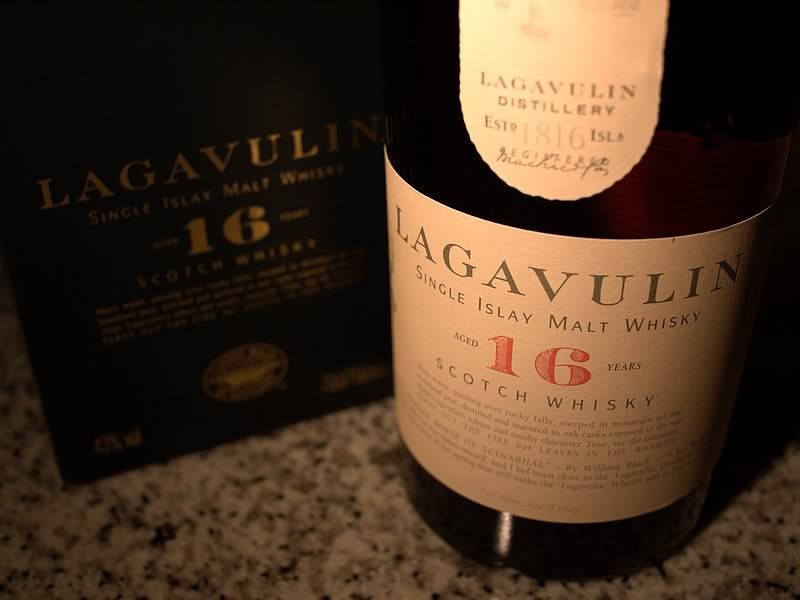
Lagavulin 16 get. Probably my biggest gamble so far. I heard of its peaty flavor, not quite sure what to expect. Well, we'll see.
 
Oh wow, the Lagavulin is heavy. Such a rich spirit, even its texture is thick ... almost oil like. Very unusual flavor, but not in a repelling way. Methinks, I like it a lot.
 
HighlandPark12.jpg


Ok, so i've finally made my first single malt purchase as above, the Highland Park 12 Y.O.

Before this I liked Johnny Walker Black, Bacardi 8 rum & Jamesons all on the rocks, which all have a deep, rich kind of taste, whereas this seems to be much sharper, more of a tang. Thinner in a way, but full of flavour which after my 3rd glass over a few days seems to be making itself a bit more known. I do like it, but I was surprised of the sharpness of the taste. Reminds me of a much more refined J&B scotch, which I had a very, very bad time on one night...

I'll report back in a few days when I have more of a chance to sit with it, but I am enjoying the process very much.

ChryZ said:
Oh wow, the Lagavulin is heavy. Such a rich spirit, even its texture is thick ... almost oil like. Very unusual flavor, but not in a repelling way. Methinks, I like it a lot.

This seems more like the kind of spirit I like. Heavy & rich. I think the Lagavulin 16 will be my next purchase. I'm going to buy a bottle a month throughout this year, as long as I can get the funds.
 
Great to read a thread like this!

I have started drinking whisky about a year ago. So far I have drank Glenfiddich 12 yo, 15 yo and 12 yo Caoran Reserve. I liked the Reserve the most. It had a very nice smokey tast.

Then I tried Glenlivet 12 and 15 yo. Again I liked the 12 yo more because it had more of a fresh kick.

Last weekend I had a glass of Glenmorangie, which was very nice. Strong kick in the teeth after you swallowed.

I also had a glass of Laphroaig... and that was a whole different story alltogether. It felt like I was drinking whisky from a still burning wooden casket :lol I totally loved the taste although it might not be for everyone.

Anyway, my personal winner so far:

laphroaig.jpg


and an honourable mention goes to:

glenfiddich-caoran-reserve-12-years-old.jpg


In a couple of months I shall try another kind of Laphroaig. I owe it to them... I am their Friend ;)
 
desertdroog said:
You need, at a minimum, at least 4 different scotch selections, to get a taste of around the Scottish Isles. To start with, and especially for the newbie drinker, start with a Speyside (also called Highland, from the area of distilleries in the higher hills of north central Scotland) such as Glenlivet. It is the most popular single malt scotch sold in the US. It's quite mild, smooth and platable.

...

Bowmore, Bruichladdich and Bunnahabhain are all drinkable, with a little bit of training. They do need a bit of getting used to, but buy and large are drinkable by those who like scotch, and have a history of consumption.

...

Now we move into the territory which only the dedicated, and strong of constitution, fear naught to tread. The Ardbeg, Caol Ila, Lagavulin, and Laphroaig from Isley, and Talisker from Skye, are a world apart from anything else your have tried. You should have at least one of these on your shelf, if only to punish yourself for being bad. These scotch take a lot of getting used to. Drink them only with strong food. They are not to be used as dessert wines. Do not share them with neophytes - who will hate you forever and never trust you again if you sneak a dram or two to them without warning. These are overly smokey from peat, and doused with the ocean salt wind spray which seethes over their sleeping casks for 8 to 12 years.

This was an excellent post full of some great information, but the parts highlighted above especially should be taken with a grain of salt. I was told pretty much the same thing, and had I listened I would never have become a scotch-lover.

I started with a bottle of 12 year The Macallan (sherry oak) and tried drams of 12 and 18 year Glenlivets. There was a slickly sweet taste I couldn't wrap my head around. I didn't enjoy it at all. I was ready to give up on the whole deal and never touch a single malt again. Then a friend convinced me to give the Laphroaig 10 year a taste. I was intrigued since everything I'd heard and read led me to believe this was too complex a whisky for a beginner and I was sure it would be horrible. I was finally swayed by the fact that the bottle looked really cool (honestly) and it was only about 17 USD delivered the next day (I've yet to find anyplace on Earth with whisky as cheap as Japan).

A single whiff of the Laphroaig was all I needed to know that it was not to be. It smelled so medicinal. Like iodine and seaweed. At least The Macallan and Glenlivet smelled nice. This didn't seem fit for human consumption. I told my friend as much and he convinced me to give it a taste. I poured the tiniest of sips into a glass and readied a bottle of water.

Floored.

It was drinkable. More than that, it was intriguing. It was good. There was smoke, fire, salty seaweed, and another dominant flavor I quickly came to realize was this 'peat' everyone was always mentioning in regards to Islay malts. I didn't really know what peat was, but now I knew what it tasted like. To wikipedia. Peat is an accumulation of partially decayed vegetation matter. Yup, that seemed like what I was tasting and smelling. And it was heavenly.

It didn't take long before I'd tasted my way across Islay. My favorites were the big smoke big peat heavy hitters. Laphroaig, Lagavulin, Ardbeg, and their various cask strengths. I eventually was daring enough to leave Islay and try some other regions. I even gave Speyside another chance. It didn't really work out in the end. And I haven't found a Glen-whisky I can enjoy yet. If there's no peat or smoke, I can't get into it. I did find the other islands offered some wonderful things. I've added Talisker and Highland Park to my list of must-have-on-hand.

I was also surprised at how many of my friends so readily took to the Islay malts. I thought after all I'd heard, surely I was an outlier. But I've introduced them to all my friends, and much more have taken to it than have disliked them (though the ones that dislike Islay really dislike it). That's not to say everyone should rush out and try Laphroaig as their first scotch. But if you don't find yourself instantly enamored with Speysides or Highland malts, don't be afraid to try an Islay.

I think scotch is less about "acquiring a taste" than it is about finding the right single malt for you.
 
My collection so far.

p1000552.jpg


p1000524.jpg


p1000479.jpg


p1000460.jpg


p1000402.jpg


p1000475.jpg


The Highland Park and Lagavulin are definitely my favorites and I'd "re-stock" them right away. I'm pretty happy with the rest of my purchases, but I'd rather try something new when they're gone.
 
There is truth in foomfoom415's words.

I gave my sis-in-law, who doesn't really like the Glens, a bit of Laphroaig.... and she completely loved it.
 
foomfoom415 said:
I think scotch is less about "acquiring a taste" than it is about finding the right single malt for you.

Certainly true, however probably not true for everyone. I believe most people need to work their way up to the more powerful whiskeys. Whereas some can just jump in and be instantly right at home.

I also believe that some whiskeys have lost some of their power over the years and that makes them more palatable to everyone. Lagavulin is probably half the smokiness it used to be (although, with such long maturation times, that can all go back the other way depending on what barrels they use to bottle).

If we're posting our collections, I guess I'll post mine:

scotchbottless.jpg


I had many more by the end of my 'scotch years'. But that was the last time I took a photo. I don't have any of those bottles anymore.
 
newsguy said:
Is that a 21 year Balvenie? Holy shit.
Next to it is a 35 year old single malt, the Lonach! ;)
The plastic wrapped one is also a Balvenie 21 Portwood BTW, it's my favorite single malt to be sure.
 
nitewulf said:
Next to it is a 35 year old single malt, the Lonach! ;)
The plastic wrapped one is also a Balvenie 21 Portwood BTW, it's my favorite single malt to be sure.

You sir, are my new bff. If ever I'm in your town we must do a Scotch tasting.
 
pootle said:
I think we can all agree is that the best whisky in the world is whatever one you like the most.

I'd like to give a shout out to pootle in this thread, the guy has dispelled many myths already, and gives it all with out the grain of arrogance that touches most scotch threads anywhere on the internet.

Bravo.

Personally, i've got a bottle of 25yo glenlivet that i'm saving for a special occasion.
 
Yesterday I was lucky enough to get a glass of Glenfiddich 21 yo at a friends place.

Very nice taste indeed. A bit of a rum aftertaste. It's pretty expensive though, so I don't know if I would buy it.

The newest addition to my collection:

oct09-laphroaig10-batch001.jpg


That is some pretty strong stuff! My gums went a bit numb. But I enjoyed it very much.
It's not just a drink, it's an experience.
 
Right now i'm bouncing an album i've been producing and mixing for one month off a year straight, listening to the tunes and sipping my Highland Park 12 with a dash of water for taking to mastering tomorrow...

Feels good, man.
 
Ok, finished the Highland Park 12 and quite enjoyed it but want to try something else, something a bit, ummm, deeper in flavor?

Wouldn't mind trying the Lagavulin 16, Laphroaig, Tallisker or Oban... maybe the lagavulin first?
 
Status
Not open for further replies.
Top Bottom