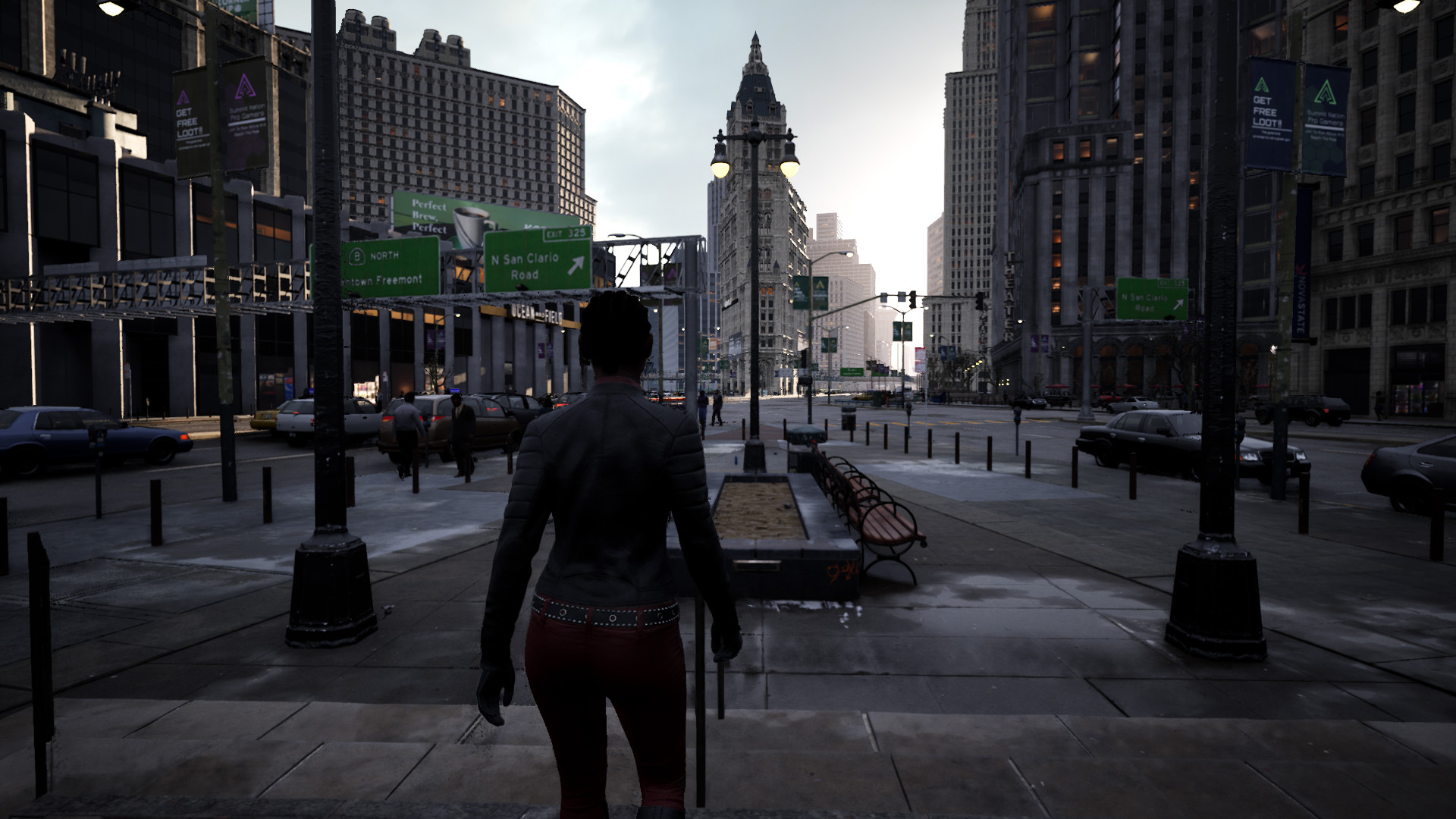
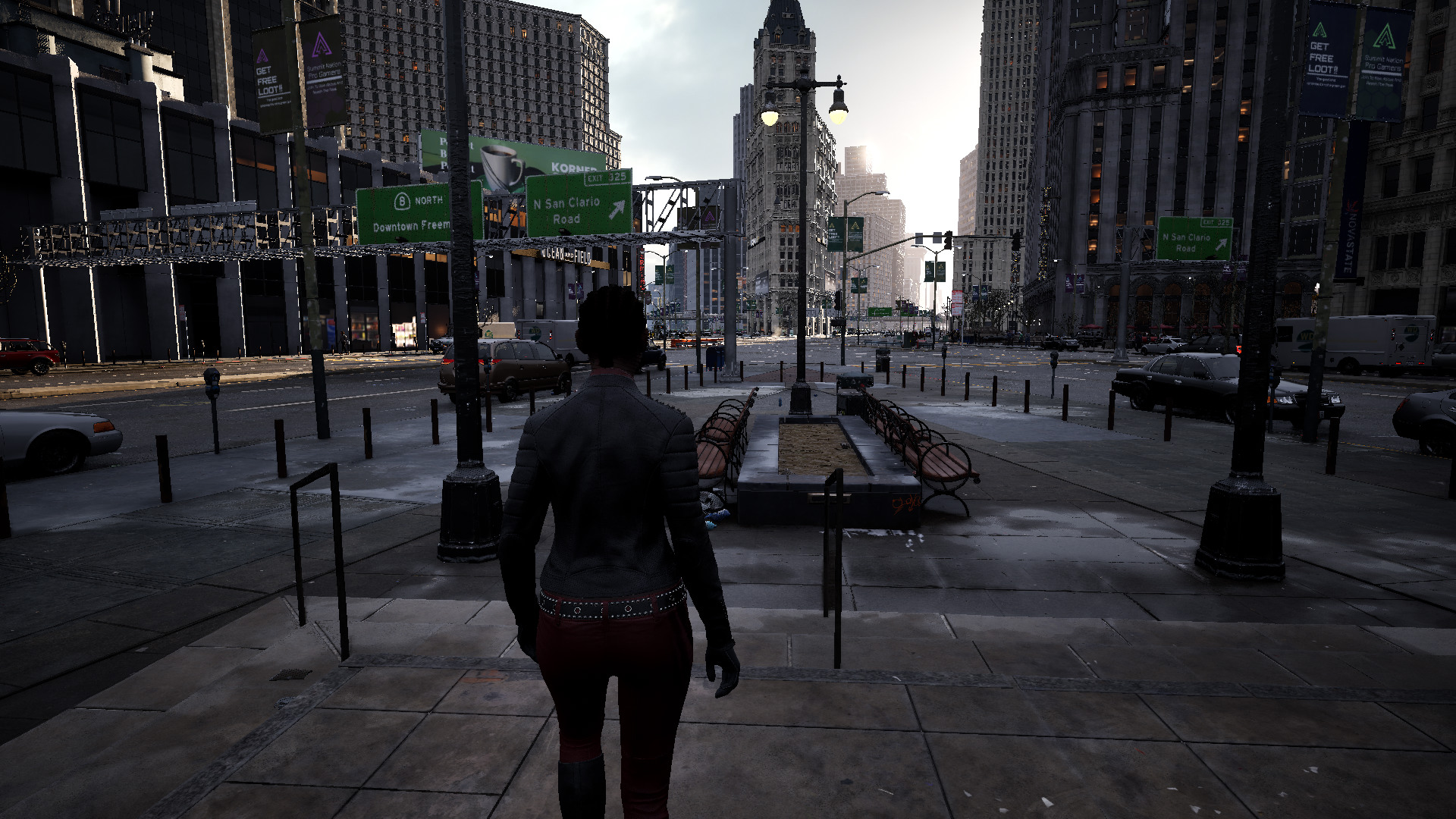
Almost every one of their comparisons looks better with TAA on. The Matrix demo looks especially terrible without it:
TAA critics will always go on about "muh sharpness", but in a modern game with very high amounts of detail, this is like asking to take razor blades to your eyes. The amount of shimmering you get from unfiltered pixels looks horrific. It's somewhat moronic to compare screenshots anyway, considering the main benefit of TAA occurs in motion. If you thought the above Matrix image with TAA off looks bad, in motion every single one of those edges is going to crawl and distort.
Yes, you can lose some texture detail with a poor implementation of TAA, but a lot of the time that is recoverable with sharpening. I've also seen implementations of it with zero perceptible impact on sharpness, on or off. About the only thing I can agree on is occasional ghosting of high contrast moving elements (eg. a dark colored car on a brightly lit race track), but that is improving with newer algorithms.
TAA really does create the 'filmic' look that Timothy Lottes, creator of FXAA, envisioned. In just the above Matrix example, the TAA screenshot could almost pass for a screenshot from a blu-ray movie - softer yes, but pristine - while the latter is unmistakable a videogame.