

-
Hey Guest. Check out your NeoGAF Wrapped 2025 results here!
You are using an out of date browser. It may not display this or other websites correctly.
You should upgrade or use an alternative browser.
You should upgrade or use an alternative browser.
The popularity of visual novel games
- Thread starter Speevy
- Start date

Zalusithix
Member
Fair enough. While they've certainly been available to the western audience long before they became a big thing on Steam, they've only had that high visibility for a relativity short period of time.The OP specifically mentions popularity on Steam, so I'm speaking from the perspective of the Western gaming community that doesn't have as much familiarity with the genre.
What is the experience like of playing one of these games?
What are the best entries in this genre, and how do you really tell them apart from the lesser ones?
Would you say that these games are as popular as I'm imagining, or am I just mistaken?
1. You click the mouse (or press A) to advance text. You read the text, look at the pictures, and listen to the audio. In some games, you are sometimes presented with multiple-choice selections, usually very few in number (say, one per hour). Sometimes the story branches, and sometimes it doesn't.
2. I don't want to say "best" without reading more VNs and taking longer to think about their merits, but my strongest recommendations are Narcissu and When They Cry 3 & 4 (3 and 4 are direct sequels, largely unconnected to 1 and 2).
Narcissu is very short and also free, so do give it a try. It's about acceptance.
When They Cry 3 and 4 tell an absolutely splendid story about truth and love that came out during an important time of my life. I learned a lot from those books.
3. As far as I can tell, visual novels seem a lot more popular than they are because the West on average doesn't understand that Japan makes adventure games. Nearly all of the high-profile (relatively speaking, here, as none of them are exactly mainstream) "visual novels" are actually adventure games. Actual VNs are still very niche.
Personally, I think Visual Novels should live up to their name and be games where interactive systems, aside from role-playing and dialogue choices, such as puzzles are non-existent or play a very minor role (i.e., treated like rare mini-games). So not games based around puzzle rooms or a game that features 100% adventure game mechanics. Apparently I'm the odd one out though, since no one seems to mind it.
I entirely agree. Danganronpa, Ace Attorney, and Zero Escape are all adventure games, not visual novels.
Kinetic novels, sound novels, and visual novels are all the same genre. Adventure games are a different genre. This misconception speaks to how little sway the adventure genre has in the West these days, I suppose, despite its honored history.
Azure Phoenix
Member
Did you ever read "choose your own adventure" books as a kid? Basically an extension of that, and I adored them so that's why I enjoy VNs. You read, you make choices that change the story.What is the experience like of playing one of these games?
The lesser ones are not hard to spot. Garbage unprofessional artstyle, screenshots that consist of mostly tits, heavy emphasis on romance options and mentions of yuri or otome for VNs on Steam should set off instant warning bells. They'll probably be low quality Western one man jobs. Also mostly anything on, I think it's Mangagamer's website? Whatever the publisher of almost exclusively porn VNs is.What are the best entries in this genre, and how do you really tell them apart from the lesser ones?
Positive things to look for: High price tag and published by Sekai Project (Grisaia, Clannad etc. - they scooped up some of the big name titles), Very Positive reviews (trust me, they're often accurate on Steam), signs of actual gameplay (eg. Analogue, Hate Plus, VA-11 Hall-A), anything by Alice in Dissonance, games that have received complete fan translations. Also anything made by Key, and a lot of ones that got an anime adaptation but haven't been fully translated yet (Amagami, Ao no Kanata no Four Rhythm, White Album 2).
Quick list of Steam games that I recommend incredibly highly: planetarian ~the reverie of a little planet~, Fault: Milestone One and Milestone Two: Side Above, Lucid9, VA-11 Hall-A: Cyberpunk Bartender Action, Analogue: A Hate Story, Hate Plus, The Fruit of Grisaia, Clannad and Long Live the Queen.
Games on other formats that are also incredible, but have more gameplay: The entire Zero Escape series (999, VLR and ZTD), the entire Ace Attorney series and Danganronpa 1 and 2 (both of these are on Steam too).
Also "you really should try this, it's completely different to what you expect and it is free": Katawa Shoujo.
They certainly aren't popular, but they have a steadily growing niche audience that typically really likes them and buys a lot of them. Hence why you see a lot of crap being shovelled out now to capitalise on it (cough Sakura series cough).Would you say that these games are as popular as I'm imagining, or am I just mistaken?
Principate
Saint Titanfall
Depends on the typemoon FAN certainly isn't, those are 3self contained parallel stories that you only get acess after completing another one and go in a set order, you can't really chose your heroine, it's upon with the option of seeing another.I was also talking about stuff like MUV-LUV, Type Moon stuff and Grisaia.
I entirely agree. Danganronpa, Ace Attorney, and Zero Escape are all adventure games, not visual novels.
The adventure genre has a long history in the West, and something like Ace Attorney which is almost entirely on rails has very little to do with it.
edit: But whatever, arguing over whether or not thing X is a part of genre Y tends to make for a boring discussion so I don't know why I got involved.
Jonneh3003
Banned
I totally get the appeal, but I do have a hard time grasping why anyone would want to play one on anything but a handheld.
Yeah I get this, it'll be hard playing Persona on a console again, not strictly a visual novel but its certainly part of the gameplay.
I don't think so. Ace Attorney is clearly an adventure game: aside from the investigation parts that are fairly traditional, the court cases are essentially a series of a logic challenges and use adventure mechanics just like the investigation parts. Likewise, the Zero Escape series (at least 999 and VLR) is entirely structured around literal puzzle rooms which are a bunch of puzzles and use some adventuring mechanics within them. Oddly enough I've seen Ghost Trick referred to a VN, when it's plainly a puzzle game where you progress one challenge to another based on a single set of mechanics.
The difference between a adventure or puzzle game and a VN seems to be the way the text is presented to you, or maybe even more ridiculous: if it comes from Japan. Personally, I think Visual Novels should live up to their name and be games where interactive systems, aside from role-playing and dialogue choices, such as puzzles are non-existent or play a very minor role (i.e., treated like rare mini-games). So not games based around puzzle rooms or a game that features 100% adventure game mechanics. Apparently I'm the odd one out though, since no one seems to mind it.
I agree, actually.
Though with heavily narrative based western games like the telltale games or until dawn becoming more popular yet still being called "adventure"-games it can all be rolled into the same genre for all i care.
Some will be more narrative focused and some more puzzle focused.
So stay away from stuff that can generally stand on its own without the sex? If you toss out any VN where you can have sex with a heroine at a certain part in the story, then you're tossing out a ton of VNs. Many of which have decent plot lines. (At least by gaming standards.)
A sex scene taking up a fraction of a percent of the story arc isn't worth playing a VN for, nor abandoning it for.
I wouldn't toss out every VN with sex, Sharnoth is one of my favorite VN and i thoroughly enjoyed stuff like Swam Song. (Except the good ending route, fuck it)
But in VN like Muv-Luv or FSN the "sex" part pretty much pollutes the other aspects of the narrative to the point it starts to actively damage them. (Harems hijinks, random molestation scenes and other narrative contrivances) Add to this, that I don't consider FSN baseline story any good, so the pandering just brings down the narrative even further to me.
That's why so many people prefer F/Z so FSN, the setting is the same, but since the story was not written in a way to make 13 years old Japanese teenager self-insert, it can actually shine.

Hikami
Member
The draw for me is being able to actually have an input on how the story goes. The "choose your own adventure" part. Most games don't let you do this and have linear stories instead. (Though nowadays more games are allowing choices outside of the VN genre like telltale's and quantic dream's for example.)
KuwabaraTheMan
Banned
I entirely agree. Danganronpa, Ace Attorney, and Zero Escape are all adventure games, not visual novels.
Kinetic novels, sound novels, and visual novels are all the same genre. Adventure games are a different genre. This misconception speaks to how little sway the adventure genre has in the West these days, I suppose, despite its honored history.
I think that Zero Escape and Ace Attorney are close enough that you can define them either way.
But Danganronpa is clearly not a visual novel, and I don't actually see how anyone could ever define it as one.
In this genre, I've only ever played 999 and Corpse Party. 999 was one of the better DS games I've ever played, Corpse Party is one of the worst games I've ever played, period. As far as I can tell this genre is entirely dependent on the quality of the narrative, and when a game like Corpse Party has one of the worst narrative's I've ever experienced in any genre of game, I just don't get what's left to like.
I think that's key. VNs are a medium which focusses heavily on story, far more than any other genre. So, ultimately, they live or die based on the quality of that story.
I entirely agree. Danganronpa, Ace Attorney, and Zero Escape are all adventure games, not visual novels.
Kinetic novels, sound novels, and visual novels are all the same genre. Adventure games are a different genre. This misconception speaks to how little sway the adventure genre has in the West these days, I suppose, despite its honored history.
I disagree strongly - the short answer being that I regard VNs *as* adventure games, with puzzle-led games being a different part of the whole genre. I argued the point in more detail a while back:
I've always been a fan of the text piece, Photopia, and it's very much a similar sort of thing. The terminology of that genre has moved from "text adventure" into, more commonly, "interactive fiction" - in part due to indicating the increased influence of story and lower influence of puzzles on some releases in the genre.
That has, in turn, led to discussions and distinctions between story-led IF (sometimes called puzzleless, although not strictly without puzzles - Photopia still has a couple) and puzzle-heavy IF (and the extreme there being a puzzlefest, games with a focus heavily on puzzles without much in the way of framing story but usually a fair amount of background to keep the fiction alive!)
So, yeah, I think it's ultimately just a sliding scale, and translating the same sliding scale to modern first-person adventures it seems reasonable to peg Gone Home and Everybody's Gone To The Rapture as story-led, with The Witness and The Talos Principle at the very opposite end of the scale.
Similarly, VNs would be at the Gone Home end, with AA and 999 somewhere in the middle.
One other thing I tend to wave around in these sorts of conversations is a series of essays written a while back about early IF, The Craft Of Adventure, which described the old-style text adventure (think the 'Zork' family, for instance) as "A narrative at war with a crossword". That remains true to this day, with the narrative or the crossword taking centre stage depending on the game, or some games marrying both perfectly.
Sumio Mondo
Member
I think that Zero Escape and Ace Attorney are close enough that you can define them either way.
But Danganronpa is clearly not a visual novel, and I don't actually see how anyone could ever define it as one.
"Clearly not". And yet you have sections where you can walk around and explore the game world and choose which characters you can interact with, has mini games galore (including puzzles) and point and click sections like Ace Attorney. Hmm. I'd say the argument is valid for Danganronpa as much as the others.
I wouldn't toss out every VN with sex, Sharnoth is one of my favorite VN and i thoroughly enjoyed stuff like Swam Song. (Except the good ending route, fuck it)
But in VN like Muv-Luv or FSN the "sex" part pretty much pollutes the other aspects of the narrative to the point it starts to actively damage them. (Harems hijinks, random molestation scenes and other narrative contrivances)
That's why so many people prefer F/Z so FSN, the setting is the same, but since the story was not written in a way to make 13 years old Japanese teenager self-insert, it can actually shine.
FSN, is clearly made for teenagers, with or without the sex stuff, and as far as battle shounen stories go, it's pretty decent by the standards of that genre/demographic.
If one can't stand anime tropes from stuff aimed at teenagers (I can't) the presence of short sex scenes really aren't what's going to bother you most about the narrative.
F/Z, aims at a slightly older crowd, and it shows from the age of the protagonist to the themes, to the way relationships are handled ect.
KuwabaraTheMan
Banned
"Clearly not". And yet you have sections where you can walk around and explore the game world and choose which characters you can interact with, has mini games galore (including puzzles) and point and click sections like Ace Attorney. Hmm. I'd say the argument is valid for Danganronpa as much as the others.
That's why I'm saying that it's clearly not a visual novel. Danganronpa has large sections of the game where you're moving your character around with 1:1 controls, and you have to go through rhythm games and shooting sections to even proceed through the story. There's no world in which it can be considered a visual novel.
I can see the arguments either way with something like Ace Attorney (not narrated, but everything is selecting things from menus) or 999 (typical VN presentation, but lots of puzzles). But I can't see any coherent argument about Danganronpa being a visual novel aside from "it's a story game with anime art".
Sit down and just read. Hear characters speak and music played in the background. Occasionally have the option to decided on what to do that may or may not trigger a flag to set you on that route. And sometimes you might end up finishing over 50 hours depending on how fast you can click. Those are the visual novels that I play. For the most part I enjoy the stories in them even if it can get out of hand, umineko comes to mind though I only finish parts 1-4. As for the good ones? It has been some time but I would like to say Ever17, Tsukihime, and Mahoutsukai no Yoru are the ones I enjoyed a lot. And no they are niche but atleast they seem to be gaining some ground to come over and get localized now atleast through kickstarter.
Sumio Mondo
Member
That's why I'm saying that it's clearly not a visual novel. Danganronpa has large sections of the game where you're moving your character around with 1:1 controls, and you have to go through rhythm games and shooting sections to even proceed through the story. There's no world in which it can be considered a visual novel.
I can see the arguments either way with something like Ace Attorney (not narrated, but everything is selecting things from menus) or 999 (typical VN presentation, but lots of puzzles). But I can't see any coherent argument about Danganronpa being a visual novel aside from "it's a story game with anime art".
Doh. Misread your post, sorry, been a long day.
I disagree strongly - the short answer being that I regard VNs *as* adventure games, with puzzle-led games being a different part of the whole genre. I argued the point in more detail a while back:
Similarly, VNs would be at the Gone Home end, with AA and 999 somewhere in the middle.
One other thing I tend to wave around in these sorts of conversations is a series of essays written a while back about early IF, The Craft Of Adventure, which described the old-style text adventure (think the 'Zork' family, for instance) as "A narrative at war with a crossword". That remains true to this day, with the narrative or the crossword taking centre stage depending on the game, or some games marrying both perfectly.
Interesting articles -- thank you, I'm always looking for more pieces like these. I haven't read them all yet, but I did look at the two bearing the name of your quote. I'll certainly go through them all more closely at some point.
Yours is a classification that can be made, but I don't see the reasoning for doing so. To me, it seems too broad. When you include games which may or may not have one or all of text, a parser, visuals, puzzles, combat, meaningful input, and storytelling, in any amount and combination, and with no singular defining feature... Well, that sounds too much like anything goes. You have to start defining by exclusion (especially if you want to segment off simulation games and RPGs, which share a lot of features with adventure games), and it ceases to be useful.
Me, I categorize all works based on their blood. I think that the lineage of the adventure genre in Japan can be followed quite clearly through games like The Portopia Serial Murder Case, which even featured a text parser at first before its newer versions adopted the command menu that was the JADV standard for a number of years. I don't see much of that game's blood in an undeniable visual novel like The Night of the Sickle Weasel or The Winds of Regret. To take it back further, I don't see any of Adventure's blood in them, either. It's for that reason that I don't think of them as being in the same genre.
I'm glad this topic came up -- once in a while, I get to drop the things I would be writing essays about if I had the time and luxury into a GAF post instead, and I'm thankful for those opportunities. Especially because I get to read other folks' thoughts on the subject at the same time, and they often differ greatly from mine in interesting ways.
The stories, just like every other medium like books, manga and anime are the selling point.
If only Type Moon wanted my money, i'd actually get a steam account or(if they brought the game to PS consoles) buy on consoles if they took advantage of their already big mindshare in the west and brought their games over.
They would probably do far better sales wise than any visual novel out so far officially.
If only Type Moon wanted my money, i'd actually get a steam account or(if they brought the game to PS consoles) buy on consoles if they took advantage of their already big mindshare in the west and brought their games over.
They would probably do far better sales wise than any visual novel out so far officially.
Dandy Crocodile
Member
I play VNs for the story and characters. Many of them have some really great stories and I'm a suckered for subverting Anime tropes so if I can get both in one game of course I'm gonna love it.
I'm also super gay so the titty part of the titty games does nothing for me. I like otome games as well but none of the guys in those games appeal to me in the way they're intended to.
I used to play fan translations and whatever localized stuff I could get my hands on. Now that yet genre has grown in the west my options are so much larger so I can afford to be more discriminating in the VNs I select.
Though I still buy every one Aksys localized. 😏
I'm also super gay so the titty part of the titty games does nothing for me. I like otome games as well but none of the guys in those games appeal to me in the way they're intended to.
I used to play fan translations and whatever localized stuff I could get my hands on. Now that yet genre has grown in the west my options are so much larger so I can afford to be more discriminating in the VNs I select.
Though I still buy every one Aksys localized. 😏
orthodoxy1095
Banned
Dude, it's a heavily story-based game with quick-time events and branching paths based on your choices. The only difference is that in one you are reading and the other you are watching cutscenes.
Of course it counts. That's why we shouldn't call them either "visual" or "novels". They are not merely visual, but interactive. They are not simply novels, but stories. A movie has more in common with a visual novel than an interactive story does.

We've gotten to this point of the thread which I was trying to avoid, but since we're here, we might as well address it.
You all need to think about the differences between a visual novel, an adventure game, and the hybridization of the two, visual novel-adventure games.
Putting the Zero Escape series and the Ace Attorney franchise, the Science Adventure series, and Until Dawn under the same genre heading is really incredibly silly, and probably completely unhelpful to genre newcomers.
Steins;Gate as a baseline for Visual Novels primarily looks like this:
And doesn't have stuff like this:

Or this:

Or this:

Or this:

Or even this:

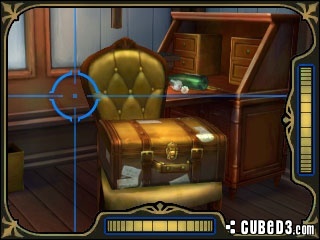
A Visual Novel is simply about lots of dialogue and text, with gameplay limited to making choices at certain plot points to determine which route one enters. In Steins;Gate that takes the slightly unusual form of the phone trigger. Steins;Gate is very much a fairly traditional visual novel that stands alongside other games like Ever 17, Clannad or Muv-Luv. And the text heaviness is indicated by the incredibly lengthiness of the script. A game like Clannad has 1,290,000 words, Fate/stay night has 1,000,000, Steins;Gate has 600,000 and so on. These things are literally the length of books, with roughly the interactivity level of a Choose Your Own Adventure book.
Conversely, games like Zero Escape and Ace Attorney are much more about puzzles (and occasional exploration) than something like Steins;Gate or Clannad. They're more akin to their Western compatriots under the Adventure game heading, evident by how they're far more traditionally "gamey." But given how text heavy they are, they're really hybridizations of the two genres (visual novel-adventure games).
And then you have something like The Walking Dead and Until Dawn, which are really even more of Adventure games, if not Adventure games out-right. Adventure games have almost always been defined in some terms similar to this: video games in which a player takes on the position of protagonist in the context of an interactive story driven by exploration and puzzle-solving. That's obviously incredibly different than what a Visual Novel is.
Sure, having some deeper or more involved gameplay elements doesn't rule your game out from being a Visual Novel completely, but it does probably mean that it's not a pure VN experience and more of a visual novel-adventure game (incidentally, the exact categorization of something like VLR and Ace Attorney).
Of course all this does in reinforce that genre labels are increasingly pretty useless in our hybridized industry and it's more helpful to explain what a game "does" in-depth rather than rely on genre-label tells.