• Hey Guest. Check out your NeoGAF Wrapped 2025 results here!

Top 10 Movies, 2011 Edition

Status
Not open for further replies.
EliCash said:
A list of 50 films that indicates great taste with no mention of a Scorsese film or The Godfather parts I or II puzzles me.

Perhaps he has only seen Bringing out the Dead and Shutter Island?

 
swoon said:
poetry never exist in a vacuum especially when overtly trying not to exist in some real world. bazin argued against that, the new wave exist almost entirely to fight this notion. i don't think you could understand bazin and the new wave and still view the film from this idea that world is paris in the 50s. this isn't "a-ha" it is the point. much like you can never understand shakespeare "the tempest" if you think it's about a disagreement between brothers and a witch.

the next turn will lead us spiraling back if abstract expressionism and pop art is art, but at some level i don't think you can argue that any poet or painter is world removed from the world and other works of art.


also


because it ignores that some of the best directors ever - sam fuller/anthony mann/robert siodmak only made genre movies. which still makes me even more interested in your reaction to my list.

You're right, nothing exists in a vacuum and everything exists in a conversation with other art. But it cannot ONLY be a part of the conversation and be entirely dependent upon things external to the art itself to make it "work." Those external forces and ideas can enhance a work of art, but they cannot BE the art itself because, definitionally, they are outside of it. A work MUST succeed on its own before it can be considered in the context of anything else. No, it does not exist OUTSIDE of human experience (how could it? art is entirely artificial), but what ties art together in a conversation is what work does DIFFERENTLY from other works of art, rather than in identifying the references and influences within a work itself. The conversation involves the subversion of cliche, the twisting of previously-stated ideas into something new, the formation of wholly new ideas themselves, etc.; that is, the conversation is in the construction, not the content (or at least, not SOLELY in the content). The 400 Blows DOES succeed on its own (mostly), but it's not for the reasons that you're describing. It's because it has some very excellent scenes of character-building and one of the all-time great adolescent performances in film. It is also limited, however, by the fact that it's a pretty familiar story of juvenile delinquency with little that twists it away from that familiarity. There are some STYLISTIC differences, for sure, but the story itself is a pretty worn one, though of course well-wrought. Any connection to Bazin and the New Wave itself is external and incidental to The 400 Blows itself, and while they can enhance the viewing experience by creating some new connections, they do not make the work itself any better or worse.

As for your list: my reaction is pretty much the same as what I said to Dr. Strangelove - some choices that beguile me (I swear to science that the whole world is trolling me on this lovefest for The Searchers and Vertigo), but some great films (Sunset Boulevard, Psycho, Citizen Kane, Days of Heaven) to counterbalance them, as well as some that I've not seen, for whatever reason. A pretty good list overall.

Edit: On genre - there is nothing inherently wrong with a work being of a genre, but 'genre work' tends often to indulge cliches and to delimit itself relative to the genre-defying great works of art history. Still, I'd be lying if I said that I didn't think that Forbidden Planet was an excellent film, genre or no.
 
25 of my favorites in no particular order..

1. Der Untergang (The Downfall)
2. The Machinist
3. Goodfellas
4. Requiem for a dream
5. Solaris
6. Glengarry Glen Ross
7. The Assassination of Jesse James by the Coward Robert Ford
8. Minority Report
9. El secreto de sus ojos (The Secret in Their Eyes)
10. Revanche
11. Casino
12. American Psycho
13. Fight Club
14. The Lives of Others
15. Before Sunrise
16. The Pianist
17. A.I
18. Schindlers List
19. The Truman Show
20. American History X
21. Terminator
22. Amorres Peros
23. Awakenings
24. Dog Day Afternoon
25. Scarface
 
Hrm. These are my favorites from one director each, as there's no such thing as a permanent list for me. To me, that's pretty damn arbitrary and who the hell wants only ten movies of the forever? That's impossible!

Anyways,

The Life Aquatic with Steve Zissou by Wes Anderson
Jaws by Steven Spielberg
The Godfather by FFC
Mean Streets by Martin Scorcese
Boogie Nights by PTA
Treasure of the Sierra Madre by Huston
Dawn of the Dead by George Romero
Solaris by Steven Soderbergh
2001: A Space Odyssey by Kubrick
Blue Velvet by David Lynch

Edit: See? This fucking shit is impossible. One love for Tarantino, Glengarry Glenn Ross, Aronofsky, del Toro, Cuaron, Kurosawa, Fellini, ad infinitum. Top ten nevergonnahappen
 
1) The Wizard of Oz
2) LOTR
3) Crouching Tiger
4) The Godfather
5) Star Wars
6) Yojimbo
7) Leon: the Professional
8) Zatoichi
9) The Good, The Bad, and the Ugly
10) Shaun of the Dead
 
Cosmic Bus said:
Being able to articulate precisely why I like what I do has never been one of my strong suits, but about Paris, Texas I can say that, as with many of my favorites, its emotional core is a very personal one to me; the isolation and displacement are clear, and there's little in the way of distinctive force driving things forward, only loyalty to a cause, dedication to simply understand. I'm rarely invested in an ultimate outcome: it's the vicarious experience, whether something remembered or aspired towards, that I'm after.
For me, Paris, TX does excellently two of the things that I love most in films: an interesting parent/child relationship and travel.
 
1) The Assassination of Jesse James by the Coward Robert Ford
2) Once
3) There Will Be Blood
4) The Secret of Nimh
5) The Rock
6) Lord of the Rings: The Return of the King
7) The Lion King
8) Ghost World
9) Pan's Labyrinth
10) Pulp Fiction
 
Time for me to get judged for my poor mainstream taste by the film aficionados:

Children of Men
The Matrix
Fight Club
The Lion King
Lord of the Rings Trilogy
Sunshine
The Fighter
T2
Shawshank Redemption
Minority Report

Don't judge me.
 
Snowman Prophet of Doom said:
And I do hope that people don't feel like I'm shitting on the thread. I know I have a bit of a penchant for monologuing, and perhaps it's a bit much, at times.

I wouldn't worry about it, dude. Do your thing.
 
Mister Wilhelm said:
For a movie that received rave reviews, raked in a ton of money, and is generally perceived to be an amazing movie, I'm surprised I hear so little about it these days.

I feel like, were the third act better, it would have embedded itself more into the cultural unconscious; as it stands, it's 2/3 of a very good sci-fi actioner (possibly Spielberg's best film but up there, at least) and 1/3 typical Spielbergian, Hollywood formula.

Edit: Meliorism, I shall, but it's a forum, not "Snowman's soapbox." I want people to post in this thread and discuss, and if my monologuing is proving prohibitive to that, I'd wanna cut it out.
 
Soderbergh's. Ashamed to say I haven't watched the original yet!
Don't be ashamed, you saw the vastly improved version. (My top ten too, what what? Most effecting science fiction film I've ever seen, with enough surrealism and polish to make me love it.)
 
MidnightCowboy said:
I posted my list a couple of pages back, but I have to rep my love for X-Men Origins: Wolverine. Probably my favorite so bad it's good movie.
I can't remember the last movie I saw in theaters that I hated as much as this. And all my mongoloid friends loved it.
 
Snowman Prophet of Doom said:
You're right, nothing exists in a vacuum and everything exists in a conversation with other art. But it cannot ONLY be a part of the conversation and be entirely dependent upon things external to the art itself to make it "work." Those external forces and ideas can enhance a work of art, but they cannot BE the art itself because, definitionally, they are outside of it. A work MUST succeed on its own before it can be considered in the context of anything else. No, it does not exist OUTSIDE of human experience (how could it? art is entirely artificial), but what ties art together in a conversation is what work does DIFFERENTLY from other works of art, rather than in identifying the references and influences within a work itself. The conversation involves the subversion of cliche, the twisting of previously-stated ideas into something new, the formation of wholly new ideas themselves, etc.; that is, the conversation is in the construction, not the content (or at least, not SOLELY in the content). The 400 Blows DOES succeed on its own (mostly), but it's not for the reasons that you're describing. It's because it has some very excellent scenes of character-building and one of the all-time great adolescent performances in film. It is also limited, however, by the fact that it's a pretty familiar story of juvenile delinquency with little that twists it away from that familiarity. There are some STYLISTIC differences, for sure, but the story itself is a pretty worn one, though of course well-wrought. Any connection to Bazin and the New Wave itself is external and incidental to The 400 Blows itself, and while they can enhance the viewing experience by creating some new connections, they do not make the work itself any better or worse.

As for your list: my reaction is pretty much the same as what I said to Dr. Strangelove - some choices that beguile me (I swear to science that the whole world is trolling me on this lovefest for The Searchers and Vertigo), but some great films (Sunset Boulevard, Psycho, Citizen Kane, Days of Heaven) to counterbalance them, as well as some that I've not seen, for whatever reason. A pretty good list overall.

Edit: On genre - there is nothing inherently wrong with a work being of a genre, but 'genre work' tends often to indulge cliches and to delimit itself relative to the genre-defying great works of art history. Still, I'd be lying if I said that I didn't think that Forbidden Planet was an excellent film, genre or no.


any connection to 400 blows to bazin and the new wave is the purpose. this is a manifesto for how films should be made. breathless of course would take it further and use films as criticism. these, much like the tempest, can never be taken away from purpose or understanding of the film - it is the directors intent.

and i mean 400 blows works on its own, and there's not a film before it that has that depiction of a broken family unit and a character like antoine. you could argue that zero de conduite (and 400 blows borrows from that short) but that's an act of anarchy among children. 400 blows is more calculated and aggressive than that. the style and manifesto that is in every frame of this movie makes it great.

it seems like from films you've called out - vertigo/paris, tx/the searchers have very overt non realistic styles. you'd hate all those noir movies on my list i'd bet. hehe
 
wait what if the film is about relationships do you love that?

i love the ending of zabriskie point. i won't stand for the rest of that film, though.
 
I love movies about relationships. I love Jean Luc Godard. I haven't seen Zabriskie Point but I positively adore it.
 
Drewsky said:
I can't remember the last movie I saw in theaters that I hated as much as this. And all my mongoloid friends loved it.

I wasn't nearly as offended by Wolverine as I was by X-Men 3.

Wolverine turned to complete shit by the end, but at least it felt like an actual film.

X-Men 3 literally has the worst pacing I've EVER seen in a film, and just about every decision made in that film was wrong. The music is wrong in every scene, the editing is abysmal, and it has less rising action than John McCain's dick.

The only films I can think of that are as bad as X-Men 3 on a pacing/narrative level are Transformers and the first Underworld.
 
swoon said:
any connection to 400 blows to bazin and the new wave is the purpose. this is a manifesto for how films should be made. breathless of course would take it further and use films as criticism. these, much like the tempest, can never be taken away from purpose or understanding of the film - it is the directors intent.

and i mean 400 blows works on its own, and there's not a film before it that has that depiction of a broken family unit and a character like antoine. you could argue that zero de conduite (and 400 blows borrows from that short) but that's an act of anarchy among children. 400 blows is more calculated and aggressive than that. the style and manifesto that is in every frame of this movie makes it great.

it seems like from films you've called out - vertigo/paris, tx/the searchers have very overt non realistic styles. you'd hate all those noir movies on my list i'd bet. hehe

Intent is meaningless in art. The final product is all that exists and matters. There may not be a FILM before The 400 Blows that depicted family in that way, but there are plenty of novels and stories (and any screenplay is inherently connected to the entire world of literature).

And I don't hate overtly non-realist films as a principle; I just don't think those three are all that good. Paris, TX is likely the best of them, though, because it does have a pretty memorable Sam Shepard screenplay.
 
Why don't you like The Searchers, Snowman?

It's been a few years since I've seen it, but I remember thinking that it was a pretty fantastic film.
 
Snowman Prophet of Doom said:
Intent is meaningless in art. The final product is all that exists and matters. There may not be a FILM before The 400 Blows that depicted family in that way, but there are plenty of novels and stories (and any screenplay is inherently connected to the entire world of literature).

And I don't hate overtly non-realist films as a principle; I just don't think those three are all that good. Paris, TX is likely the best of them, though, because it does have a pretty memorable Sam Shepard screenplay.


oh come on, intent does matter and ignoring the history behind art says more about you than it does the film. your review of das kapital might be interesting.

i'd also like to bet there aren't as many works of art detailing the rebellion of a lower school child as you'd like to to think.
 
Wow this thread moves pretty quickly, I'm loving all the discussion taking place! As fantastic as it is to see everybody's lists (which are certainly useful, especially in hammering home the point that I finally need to see a Fellini film one day!) it's the discussion over said choices that has made this all so engrossing. I want to comment on a lot but I'll be entering essay territory so just a few bits here and there:

Puddles said:
I don't differentiate between "high art" films and "entertaining" films, because to me, movie magic is movie magic is movie magic.

That's very admirable and neither should you. There is no difference. I pity those who wish to validate pretention by praising the 'artiness' of something. It reminds me of those praising the genius of Warhol's films. I was discussing Empire once with a teacher who would readily hold it aloft as a beacon of the experimental movement whilst putting a "well it's not very entertaining" disclaimer on it. Isn't entertainment, despite how perverse, unpleasant or macabre the subject matter may be, the fundamental requirement of any art form?
Apparently not, being 'arty' or 'deep' appears to get you a pass in certain circles but to me it's ludicrous that somebody may praise something that they were unable to derive any enjoyment from.

Dr. Strangelove said:
17. Le Doulos
46. Rififi

I'm interested to know what you think of Le Deuxieme Souffle, if you don't mind?

GoutPatrol said:
Do The Right Thing (Lee)

On perhaps a different day or a different month, this would've made my list. It's pretty cliched to call something "true" but Lee wrote some of the 'truest' characters here who will resonate with me indefinitely. I guess coming from a particular background or social class may be required to truly validate what appear to be stereotypes (the [effectively] single mother, the bum, etc.) but this film is without doubt one of the most accurate representations of a particular kind of area/lifestyle I've come across. The cinematography and direction are also beautiful. It's a shame Lee's politics are so focused on when it comes to this film as it doesn't get the credit it deserves for how well made it is.

King of the Potato People said:
The Lion King
“Dad, dad come on, you gotta get up. Dad, we gotta go home”, it never fails to break me up.

Why did you have to go there!? This particular line has bought tears to my eyes more than perhaps any other. I felt sad just reading it :'(
Haven't seen this film in years and years, I'll have to check it out again. I remember the first time I saw this and the other Disney films from that period, when we would all watch them together my Dad would always fast forward past every single song. My first experience was essentially censored! It makes me laugh because now it seems like such a bizarre thing to do haha

Dr. Strangelove said:
For me, Paris, TX does excellently two of the things that I love most in films: an interesting parent/child relationship and travel.

I lost interest in this film a long while before the end but I thought the performance of the boy/son was brilliant and have to agree with you that the interactions between him and father were indeed excellent.

swoon said:
any connection to 400 blows to bazin and the new wave is the purpose. this is a manifesto for how films should be made. breathless of course would take it further and use films as criticism.
Snowman Prophet of Doom said:
Intent is meaningless in art. The final product is all that exists and matters.

Hmmm.
Snowman, what do you think of Bazan's writings in general and the auteur theory?
 
I've only read a bit of Bazin, but from my sampling, I found him similar to a lot of the other Cahiers writers in that he was capable of some nice insights but also capable of some rather strange pretensions. For auteur theory: I agree and think it's self-evident that the director is the author of a film, but some of the other stuff (such as Sarris's three circle analogy or the idea that there is too much 'noise' to gauge a director's ability/quality off of a single film) struck me as a bit of an overreach.

For what it's worth: I didn't mean that great art should NOT be entertaining.

swoon: why on earth should intent matter in art? Books of Wallace Stevens poetry don't come with a mini-explanation for what the author was "going for" for each poem; it's just the poems, good or bad, waiting to be judged. Film is not special in this regard; a film stands on its own, apart from whatever a director intended or meant by it. You can certainly take a director's intent into account as an alternate interpretation, but the film apart from the intention of the author is and always must be the primary. When an artist puts something out into the world, it takes on a life of its own apart from anything the artist has to say about it. Such is the place of art in the world. That doesn't mean "ignore a work's history," it means that the work itself stands apart from the circumstances of its creation, creator included.
 
Ten off the top of my head, and I do not want to pick just dramas. I don't claim to be a movie buff, hence Forest Gump and Dumb and Dumber

Lost in Translation
The Matrix
The Godfather
Up
Pulp Fiction
Willy Wonka and the Chocolate Factory
Eternal Sunshine
Saving Private Ryan
Forest Gump
Dumb and Dumber

I also want to put Oldboy on there, but I honestly haven't watched it since the VA Tech massacre and that kind of ruined it for me.
 
I'm slowly making my way through more and more classic movies, but still most of my movies are more modern. I'm starting with Scorsese then going through Kubrick (I've seen Dr. Strangelove in school though), then might hit up Hitchcock.

1.) Spirited Away 2001
2.) No Country For Old Men 2007
3.) Memento 2000
4.) Zodiac 2007
5.) Blazing Saddles 1974
6.) Inglorious Basterds 2009
7.) Hot Fuzz 2007
8.) Primer 2004
9.) Die Hard 1988
10.) Fantastic Mr. Fox 2009

Fincher is probably my favorite director right now. I really love most of his work. Zodiac, Se7en, Fight Club, and even The Social Network. The Coen Brothers and Miyazaki are my two other favorites. I've been warming up to Tarantino, and I think IB is his best work yet. I'll work my way towards foreign films eventually, but I think I should try to catch up on the American stuff before moving to far ahead.
 
Snowman Prophet of Doom said:
I've only read a bit of Bazin, but from my sampling, I found him similar to a lot of the other Cahiers writers in that he was capable of some nice insights but also capable of some rather strange pretensions. For auteur theory: I agree and think it's self-evident that the director is the author of a film, but some of the other stuff (such as Sarris's three circle analogy or the idea that there is too much 'noise' to gauge a director's ability/quality off of a single film) struck me as a bit of an overreach.

For what it's worth: I didn't mean that great art should NOT be entertaining.

swoon: why on earth should intent matter in art? Books of Wallace Stevens poetry don't come with a mini-explanation for what the author was "going for" for each poem; it's just the poems, good or bad, waiting to be judged. Film is not special in this regard; a film stands on its own, apart from whatever a director intended or meant by it. You can certainly take a director's intent into account as an alternate interpretation, but the film apart from the intention of the author is and always must be the primary. When an artist puts something out into the world, it takes on a life of its own apart from anything the artist has to say about it. Such is the place of art in the world. That doesn't mean "ignore a work's history," it means that the work itself stands apart from the circumstances of its creation, creator included.


books of wallace stevens it might not matter, but for things like das kapital, against or in cold blood it most certainly does. i'd still argue it does for the tempest - we can't make blank statements about what art is or isn't, or how it should be talked about. i prefer to let art guide the conversation rather than have my ideas on art dictate what i discuss about it.

400 blows cannot be separate from its origins and from the history of film, that goes double for every new wave film after it. if you don't like that's fine - that means it is still relevant and important as a critique of film and film culture today.
 
Jo Shishido's Cheeks said:
On perhaps a different day or a different month, this would've made my list. It's pretty cliched to call something "true" but Lee wrote some of the 'truest' characters here who will resonate with me indefinitely. I guess coming from a particular background or social class may be required to truly validate what appear to be stereotypes (the [effectively] single mother, the bum, etc.) but this film is without doubt one of the most accurate representations of a particular kind of area/lifestyle I've come across. The cinematography and direction are also beautiful. It's a shame Lee's politics are so focused on when it comes to this film as it doesn't get the credit it deserves for how well made it is.

what politics are forced in do the right thing? it's one of the most ambiguous endings this side of the graduate. also they are suppose to be archetypes in the theater sense, not stereotypes in the real world sense. lee's love of musicals and theater are never more overt than in this movie.
 
If someone was holding a gun to my head and said :

"Raging Bull Or Taxi Driver?"

I would have to say :" SHOOT ME"

I have never been able to decide :(
 
for fun here is my list from july 05

1. Sunset Blvd.
2. Days Of Heaven
3. Do The Right Thing
4. The Big Sleep
5. Vertigo
6. Criss Cross
7. Shadow Of A Doubt
8. Double Ideminty
9. Citizen Kane
10. The Searchers

11. Sweet Smell of Sucess
12. The Last Picture Show
13. Nashville
14. In A Lonley Place
15. The Postman Always Rings Twice
16. Notorious
17. Casablanca
18. D.O.A
19. All About Eve
20. Badlands

21. M
22. Duck Soup
23. The Lady Eve
24. Out Of The Past
25. Psycho
26. Brief Encounter
27. A Letter From An Unknown Woman
28. Place In The Sun
29. Paris, Texas
30. Raging Bull

31. Detour
32. The Big Combo
33. Laura
34. The Ox-Bow Incident
35. Philidelphia Story
36. Contempt
37. The Strange Love Of Martha Ivers
38. Greed
39. Autumn Sonata
40. All That Heaven Allows

41. Raw Deal
42. Cat On A Hot Tin Roof
43. The Treasure of the Sierra Madre
44. Touch of Evil
45. Butch Cassidy And The Sundance Kid
46. Night Of The Hunter
47. Modern Times
48. Hoop Dreams
49. Set-Up
50. Giant

to compare to 4/11

1. Sunset Blvd
2. Detour
3. Citizen Kane
4. Days of Heaven
5. Criss Cross
6. Le Mépris (Contempt)
7. Vertigo
8. 400 Blows
9. Paris, Tx
10. Psycho

----

11. The Searchers
12. Out of the Past
13. Breathless
14. The Last Picture Show
15. Double Indemnity
16. Letter from an Unknown Woman
17. Greed
18. Shadow of Doubt
19. Night of the Hunter
20. Night and the City

21. All That Heaven Allows
22. Le Cercle Rouge
23. Duck Soup
24. Nashville
25. Point Blank
26. Brief Encounter
27. Play Time
28. Le Plaisir
29. A Place In The Sun
30. Jeanne Dielman, 23 Quai du Commerce, 1080 Bruxelles

i must have saw set-up like the day before, because that movie isn't top 50 any day of the week. i had seen 400 blows and breathless by the time i made that list in 05 *shocker*
 
I labored over this list & I still don't think it's quite right, but I couldn't resist representing a few unmentioned films. I went by the "one per director" rule just to keep things interesting. I put some films on the list to represent the filmography of my favorite directors -- such as Peckinpah, Polanski & Altman -- & passed over some monumental films in lieu of personal favorites, even if I recognize that these films aren't as well-crafted as other favorites. Used Flickchart a lot to help compile the list--those of you who don't use it, I recommend checking the site out. It's a fun time-waster that really makes you think about the films you like & why you like them as compared to others. On to my list.

1) Straw Dogs (Sam Peckinpah, 1971)
418px-Straw_dogs_movie_poster.jpg

For my love of Peckinpah. Hypermasculine film school in a flawless two-hour box. Every frame has intention, everything builds to a perfect apex, resulting in the most satisfying climax in my personal film history. I regard this as a perfect film.

2) McCabe & Mrs. Miller (Robert Altman, 1971)
mccabe-poster.jpg

For my love of Altman. Nobody rambles as naturally as Bob Altman. As a man who loves westerns, I think this is an immaculate deconstruction of the whole genre, an anti-western, a beautiful & deliberate character study. A timeless performance from Warren Beatty, whose place in American film history is often glossed over nowadays.

3) The Passenger (Michelangelo Antonioni, 1975)
The%20Passenger%20poster.jpg

For my love of spartan filmmaking. I appreciate & respect films that say a whole lot with very little, & this film epitomizes that notion. It is a nebula with intention that allows viewers to fill in the gaps. Beautifully shot, it features a tonal quality so thick it fills the room. I also list this to recognize Jack Nicholson & Maria Schneider, staples of my favorite decade of film, the 1970s.

4) Once Upon a Time in the West (Sergio Leone, 1968)
erawest.jpg

For my love of westerns. Sergio Leone considered this his finest film, & I agree. This movie epitomizes stylized filmmaking done right, an ideal execution of the hyperreal. Ennio Morricone is at the height of his genius, as is Charlie Bronson, king of action heroes, king of underdogs.


5) Knife in the Water (Roman Polanski, 1962)
knife-in-the-water-polish-movie-poster.jpg

For my love of Roman Polanski. Polanski does only what is necessary & no more. His films take joy in holding back. Every action, every tiny camera movement, every line -- all of which are used sparingly -- say leagues about the world, story & characters of the film. Knife in the Water is, for me, the purest distillation of the director's work.

6) Shadows (John Cassavettes, 1959)
shadows.jpg

For my love of the Beat Generation. Though it doesn't often work, I love the idea of an improvised film -- this is perhaps the only one I've seen that truly succeeds. It also fully captures a uniquely energetic time in American history, & that energy continues to pop over 50 years later. One of the greatest grandfathers of independent films.

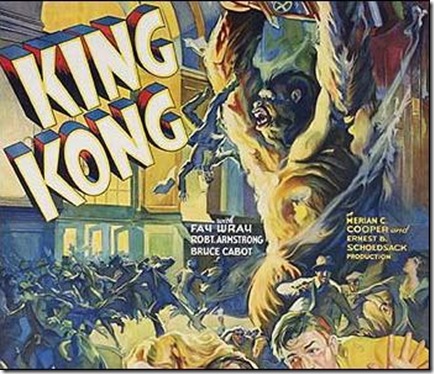
7) King Kong (Merian C. Cooper, 1933)
Vintage%201933%20Version%20King%20Kong%20poster%5B3%5D.jpg

For my love of "movie movies." Some movies are pop, blockbuster entertainment that you have to suspend disbelief for -- people act like cutouts of people, things move too quickly, everything is bigger than real & the rule of movie logic, that subconscious language we all know, is in full effect. King Kong perfected this out of the gate. It moves at a clip, has no fat whatsoever, believes in its outlandish concept wholeheartedly, manipulates the heart expertly & is -- above all -- completely, consistently entertaining.

8) Last Tango in Paris (Bernardo Bertolucci, 1972)
4052358669_8f1e90be8d.jpg

For my love of honesty in performance. Oftentimes when we list favorite movies, we overlook the performance element. I have yet to see a film that captures a performance as honest as the one given by Marlon Brando in Last Tango. A reflection of the movie itself, it's naked, grotesque, fearless & hilarious. As someone who loves film, I can appreciate it when a director tears down the whole building & satirizes its elements, as Bertolucci does in his deconstructed romance.

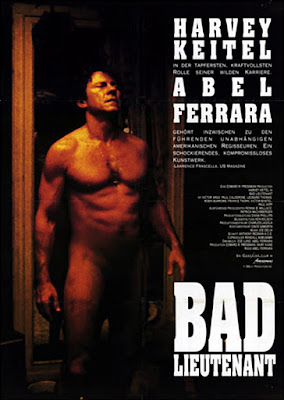
9) Bad Lieutenant (Abel Ferrara, 1992)
600full-bad-lieutenant-poster%5B1%5D.jpg

For my love of accidents. I don't think Abel Ferrara is a great filmmaker; I think Bad Lieutenant happened on accident, & that accident created an irreplaceable grit. Like Brando, the ever-underrated Keitel is honest to the point of ridiculousness. This is noir for a disappointed generation that recognizes the horror & the strange, uncomfortable beauty in substance abuse & violence.

10) The Night of the Following Day (Hubert Cornfield, 1968)
250px-Night_of_the_Following_Day.jpg

For my love of mod cinema & exploitation. Like Bad Lieutenant, I won't claim this is a perfectly-crafted piece of cinema. It is not. But on a personal level, this film has all the aesthetic qualities I like in movies, from score to locations to cinematography. Its weird balance between arthouse film & B-movie flick hits home with me. This is a slow burn full of iconic images & beautifully flawed performances from Brando & Richard Boone.
 
swoon said:
for fun here is my list from july 05


to compare to 4/11


i must have saw set-up like the day before, because that movie isn't top 50 any day of the week. i had seen 400 blows and breathless by the time i made that list in 05 *shocker*

Do the Right Thing #3 of all time, eh?
 
Fidelis Hodie said:
It would have to go something like . .

1. Eternal Sunshine of the Spotless Mind

(no real order)
Pulp Fiction
The Iron Giant
Children of Men
There Will Be Blood
Jack Ass 2
Fantastic Mr. Fox
Shaun of the Dead
Dark Knight

wat
 
Snowman Prophet of Doom said:
I suppose I should put that somewhat differently. A movie about time-traveling robots that blow up a whole bunch of stuff and have crazy action scenes has an inherent limitation in how it stacks up versus the mentioned masters. No story is INHERENTLY limited by its subject matter, you're right, but certain stories can lend themselves more to puerility than others, as well. So it really depends on the filmmaker. And I'm sure that someday, there will be a striking exception. But, based on what I've seen, it's a pretty good rule of thumb.

I wanted to reply to this, but was in a hurry yesterday.

I agree that the best stories focus on very human themes and struggles, and that some subjects don't lend themselves to this as well. The truly great sci-fi/horror/fantasy stories use their fantastic settings in order to tell a relatable human story. Cameron's films don't usually do this on a high level; if they do they tend to focus on pretty shallow, obvious themes, although there are some really poignant moments to be found in all of them. His best film from a storytelling perspective, IMO, is The Terminator, precisely because of this.

However, I am making a distinction between high-level storytelling and high-level film-making. I think that these do overlap quite a bit of the time, but that they are still distinct.

The best moments of films like Terminator 2, Aliens or Jurassic Park (or Raider of the Lost Ark) display absolute genius film-making. A scene like the one in Terminator 2 where the T-1000 is chasing the protagonists after they break Sarah Connor out of the mental institution, is, in my opinion, just as hard to execute as any pivotal character-based scene from a Best Picture winning drama. It's set up so well, and every shot is framed so perfectly, and it's paced and edited so well. I don't think there are many suspense scenes in history as effective as the one where the heroes are in the elevator and the T-1000 is on the roof above them stabbing blades down into the elevator carriage at them. There's a reason there are very few action scenes in history that can measure up to the best from those films.

Cameron's problem is that setting up sequences like that is really the only thing he does at a master level. He seems to have lost any penchant for subtlety, and as I said earlier, he tends to choose pretty obvious themes to work with. The genre itself does lend itself to that, but I don't think it's a hard rule.

One obstacle that film-makers will always have to overcome in the action genre is that character conflicts tend to be resolved via... action sequences (of course) rather than tight, focused character interaction. That's why I really agree with a critic who said that the best action sequences tend to reveal something about the characters and are used to develop a film's characters and themes rather than just to exist for their own sake.

Sorry if that was a bit of a ramble, but does what I'm trying to get across make sense?
 
Dr. Strangelove said:
I'm just going to keep shuffling this around if I don't post it, so here we go (multiple films from a director were allowed for this list):

1. Aguirre The Wrath of God
2. The Passion of Joan of Arc
3. Citizen Kane
4. Days of Heaven
5. Branded to Kill
6. Dr. Strangelove
7. My Night at Maud's
8. The Rules of the Game
9. Viridiana
10. Woman in the Dunes

11. Stalker
12. 2001: A Space Odyssey
13. The Apartment
14. The Collector
15. The Third Man
16. Vengeance is Mine
17. Le Doulos
18. High and Low
19. Night and the City
20. The Man Who Shot Liberty Valance

21. Blue Velvet
22. The Big Lebowski
23. Shoot the Piano Player
24. How Green Was My Valley
25. Vivre Sa Vie
26. 8 1/2
27. Paris, TX
28. Bicycle Thieves
29. M
30. Last Year at Marienbad

31. Brand Upon the Brain!
32. Mr. Hulot's Holiday
33. Manhattan
34. Faces
35. Stroszek
36. Yi Yi
37. Strangers on a Train
38. Fires on the Plain
39. Once Upon a Time in the West
40. Persona

41. Crimes and Misdemeanors
42. El Topo
43. Down by Law
44. Minnie & Moskowitz
45. Spirit of the Beehive
46. Rififi
47. Stagecoach
48. Le Feu Follet
49. Army of Shadows
50. Videodrome

Glorious
 
swoon said:
what politics are forced in do the right thing? it's one of the most ambiguous endings this side of the graduate. also they are suppose to be archetypes in the theater sense, not stereotypes in the real world sense. lee's love of musicals and theater are never more overt than in this movie.

Ahhh you misunderstand me. I'm not saying in any way Lee's politics are forced, I don't think they are in the slightest and have no problem with them whatsoever.
What I meant is that 20 years later any mention or appraisal of the film centre their focus on it's politics, to the films detriment. We all know films are often 'about' much more than the scenario they present, as is this film and Lee's oeuvre in general. But, as Do The Right Thing is 'only' about racism, so are Lee's films seen to 'only' be about black people which does a huge disservice to such a talented director, but I continue to see it over and over again.
I've read masses of text and sat through hours of discussion (we saw this film at university) about his politics but rarely is credit given to his direction or skilful writing, both of which are most evident in this film, the one where they are glossed over so readily.
Do you think his filmmaking skill is given enough credit?
Decades have been spent discussing the nuances of Kubrick but when it comes to Lee, the surface is never penetrated only 'blackness' is discussed. It's as if the novelty has never worn off that, yes, he is a black Hollywood director!
 
Puddles said:
I wanted to reply to this, but was in a hurry yesterday.

I agree that the best stories focus on very human themes and struggles, and that some subjects don't lend themselves to this as well. The truly great sci-fi/horror/fantasy stories use their fantastic settings in order to tell a relatable human story. Cameron's films don't usually do this on a high level; if they do they tend to focus on pretty shallow, obvious themes, although there are some really poignant moments to be found in all of them. His best film from a storytelling perspective, IMO, is The Terminator, precisely because of this.

However, I am making a distinction between high-level storytelling and high-level film-making. I think that these do overlap quite a bit of the time, but that they are still distinct.

The best moments of films like Terminator 2, Aliens or Jurassic Park (or Raider of the Lost Ark) display absolute genius film-making. A scene like the one in Terminator 2 where the T-1000 is chasing the protagonists after they break Sarah Connor out of the mental institution, is, in my opinion, just as hard to execute as any pivotal character-based scene from a Best Picture winning drama. It's set up so well, and every shot is framed so perfectly, and it's paced and edited so well. I don't think there are many suspense scenes in history as effective as the one where the heroes are in the elevator and the T-1000 is on the roof above them stabbing blades down into the elevator carriage at them. There's a reason there are very few action scenes in history that can measure up to the best from those films.

Cameron's problem is that setting up sequences like that is really the only thing he does at a master level. He seems to have lost any penchant for subtlety, and as I said earlier, he tends to choose pretty obvious themes to work with. The genre itself does lend itself to that, but I don't think it's a hard rule.

One obstacle that film-makers will always have to overcome in the action genre is that character conflicts tend to be resolved via... action sequences (of course) rather than tight, focused character interaction. That's why I really agree with a critic who said that the best action sequences tend to reveal something about the characters and are used to develop a film's characters and themes rather than just to exist for their own sake.

Sorry if that was a bit of a ramble, but does what I'm trying to get across make sense?

It does to me, I think at times some people forget what films are all about; especially when they expand and develop their tastes. It's an art form but first and foremost it's a form of entertainment. Terminator 2 is a perfect film. It just is. It's undoubtedly the greatest action film of all time as far as I'm concerned. I'm actually starting to get annoyed at myself for not including it in my top 10, although in my head it was hovering about the list. I watched that film almost every day as a kid and I could watch it again right now. However, having said that, the list of blockbuster sci-fi/action/adventure films that can stand their ground among "the greats" is short. Although what does that even mean, that's the kind of snobbery I'm trying to distance myself from here; by saying that - I'm separating great movies from great movies and for what reason? As you said, movie magic is movie magic. You mentioned 4 films that belong in a list of great movies, on the same grounds I'd add Alien, Back to the Future, Indiana Jones and The Last Crusade and LOTR it as well. I think T2: Judgement Day stands above them all though.
 
The list of summer blockbuster films that can hold their own among the greats is short. I think there are a few reasons for that. The high budget required for a summer blockbuster means that studios tend to interfere more, forcing directors to add or remove elements to often-disastrous effect. You get endless rewrites of the script, which means there's usually no unified vision for what the story should be. The focus tends to be on the effects and on shooting action scenes that look cool and will fit well in a trailer, even if these action sequences do nothing to develop the characters, plot or themes. Studios often choose the directors because of their special effects prowess and ability to finish a production on time rather than for any artistic ability. Someone like Michael Bay should never have gotten a job directing films (he should be a special effects coordinator or at best a music video director), but because he can do practical effects and can get films done on schedule, he gets to do film after film while vastly superior storytellers languish in obscurity serving coffee.

Raiders of the Lost Ark is one of those blockbuster films that I think holds a place among the all-time great films because everything about it is done at such a ridiculously high level. Does it have as much to teach us as The Seventh Seal? Hell no, but it doesn't need to, and because of that, I wouldn't rank either of those two films above the other.
 
I truly can't order them:

1. Citizen Kane (Orson Welles, 1941)
2. Dr Strangelove or: How I Learned to Stop Worrying and Love the Bomb (Stanley Kubrick, 1964)
3. Midnight Run (Martin Brest, 1988)
4. Ferris Bueller's Day Off (John Hughes, 1986)
5. Reservoir Dogs (Quentin Tarantino, 1992)
6. Serpico (Sidney Lumet, 1973)
7. Hell on Wheels (Pepe Danquart, 2004)
8. L.A. Confidential (Curtis Hanson, 1997)
9. Seven Samurai (Akira Kurosawa, 1954)
10. Samson and Delilah (Warwick Thornton, 2009)

Nothing overly controversial I don't think. Kubrick would take up so many places if the one director/one film rule didn't exist.
 
justin.au said:
I truly can't order them:

1. Citizen Kane (Orson Welles, 1941)
2. Dr Strangelove or: How I Learned to Stop Worrying and Love the Bomb (Stanley Kubrick, 1964)
3. Midnight Run (Martin Brest, 1988)
4. Ferris Bueller's Day Off (John Hughes, 1986)
5. Reservoir Dogs (Quentin Tarantino, 1992)
6. Serpico (Sidney Lumet, 1973)
7. Hell on Wheels (Pepe Danquart, 2004)
8. L.A. Confidential (Curtis Hanson, 1997)
9. Seven Samurai (Akira Kurosawa, 1954)
10. Samson and Delilah (Warwick Thornton, 2009)

Nothing overly controversial I don't think. Kubrick would take up so many places if the one director/one film rule didn't exist.

Midnight Run is a damn fine movie, very underrated. I commend you, sir.
 
Puddles said:
Never realized there were so many people who actually liked Citizen Kane (as opposed to just respecting it).
It's awesome. It's Welles himself I think, such an incredible presences. It extends to other films he's in too.
 
Status
Not open for further replies.
Top Bottom