
Gamer @ Heart
Member
God some of you are embarrassing.
At least read the last page or something ffs
At least read the last page or something ffs

I knew it, Switch will cost 249/299$ and will release in March, Tegra Pascal architechture is too recent to be in there, they wouldn't have had the time to make a customized Pascal chip for Switch, we already know Nvidia has been working for almost 2 years on Switch so it couldn't be Pascal since it's too recent, and also as i said implementing a newer technology would mean higher costs and it doesn't look like Switch will be expensive.
That said i'm fine with it, i never thought Switch could reach XB1 performances even when running at full clock speed in the dock, and i'm fine with that, i want it for Nintendo games and its exclusives, i have my PC and Xbox for those multiplatforms whoch won't be able to run on Switch
Yeah, everybody here has been saying:"it has Pascal" "Pascal is cheaper than Maxwell at this point" etc.You guys were seriously expecting Pascal? On a Nintendo console?

Can some mod fix the name of thread?
Venture Beat main page
...except we've had several posts from a very reliable insider like Matt stating that yes, Switch can get ports from PS4 and Xbox One on a technical level? It seems this time the real matter will be if games generate enough ROI to be considered a profitable venue in the long run.
The name is just fine, the article anyhow reads like it was written by Ace Ventura, not by somebody who knows what's what.
 .
.Yeah, everybody here has been saying:"it has Pascal" "Pascal is cheaper than Maxwell at this point" etc.
I knee it was impossible, Pascal Tegra chip is so new, and when you plan a console you do that years before, you can't just make a chip in a few months, so Maxwell was the only way, also there where already rumors from Emily and other sources that development kits had the X1 chip, so i guess final Switch Tegra will be a custom X1, with the main customization being the ability to scale it's clock depending on the situation.
My guess is Switch will be about 500GF in handheld mode and 600GF docked
here it is. We can't take the site at face value now.
I have a few immediate thoughts after reading through the article:
I see a few different scenarios here:
- Firstly, it's worth noting the difference between Maxwell and Pascal is almost entirely down to the manufacturing process. Maxwell was made on 28nm (and in the case of the TX1, 20nm) whereas Pascal is made on 16nm. The actual architectural difference between the two is minimal, and aside from improved color buffer compression, largely irrelevant for a device like the Switch.
- Despite that, the article never makes any mention of the manufacturing process. I find that extremely strange, as it's obviously the defining difference between the two sets of GPUs.
- In fact, the article gets the difference between the two completely the wrong way around, saying "Nintendos box is relatively small, and so it has to fit into the heat profile of a portable device, rather than a set-top box. Thats another reason that explains the older Maxwell technology, as opposed to the Pascals state-of-the-art tech." Pascal is literally a more power efficient version of Maxwell, so the incentive would be the other way around.
- The author says "we expect the Nintendo Switch to be more than 1 teraflop in performance", which is notably higher than even those of us who were expecting Pascal were considering (I literally posted earlier today with a 500-750 Gflop estimate). If this is a Maxwell chip, then that would mean at least 4 SMs (512 "CUDA cores") at 1GHz, as they're not going to be able to push much past that on 28/20nm. This is a much larger GPU than most people would have been expecting.
Basically, if you're to take the article as being accurate, then the only worthwhile takeaway is this quote:
- The Switch SoC uses Maxwell at 20nm, and simply has a much larger GPU than anticipated to account for the performance.
- Nintendo looked at the feature-set planned for Pascal when design started, realised that the new features were largely irrelevant, and decided that they would save time and just use a straight-forward die shrink of Maxwell to 16nm instead. That would technically be a Maxwell GPU, but would be almost completely indistinguishable from Pascal in terms of performance.
- The sources are wrong about Maxwell, the 1 Tflop performance, or both.
A Maxwell Tflop is identical to a Pascal Tflop, and it's largely irrelevant to us whether they achieved that by using a larger Maxwell GPU on 20nm/28nm at a lower clock or a smaller Pascal GPU on 16nm at a higher clock.
so are we approaching semantics now? Whats the practical difference between a maxwell @16nm and a pascal @16nm?
I suppose what matters is... *is* it at 16nm, or is it a fat old 28nm chip? Thats the big question for me. I thought there were issues getting older processes die shrunk and it'd actually be cheaper to take the newer chip - aren't Xbox one S and PS4 Pro using a later architecture for their shrinks?

This would be really disappointing, hope its a false report. Hypelevel sinks
X1 is 20nm, so at worst it is that, but because of the manufacturing of that process winding down so drastically, and being replaced by 16/14nm process while next year will see 10nm product lines, maxwell would end up being more expensive, hotter, bigger, and slower.
The difference would be marginal. I'm always baffled on how people think, for better or worse, that Pascal would be a game changer. It would make a more efficient machine, not a different one.

The difference would be marginal. I'm always baffled on how people think, for better or worse, that Pascal would be a game changer. It would make a more efficient machine, not a different one.
Well less heat and more battery life at the same power level or more power with the same battery life, is not "marginal" imo. I like new tech
Still going to buy the switch^^
Not really unrelevant for a handheld.
Of course, they are cost cutting. Every dollar they can save on one part, they can either buy better parts for an different element or make a cheaper product. What a strange criticism ...I honestly am surprised anyone thought that Nintendo would not cut costs anywhere they can.
I honestly am surprised anyone thought that Nintendo would not cut costs anywhere they can.
After two generations of console from Nintendo that just weren't from me I didn't like what I saw of this in the announcement video as I really wanted them to go back to the less idiosyncratic console design of when tNintendo were at their best.
I know the setup isn't the same thing but having a screen in the default controller of the Wii U ruined it for me so I found a similar setup in the Switch to be pretty off-putting, partly because doing that increased the cost by adding something that was absolutely of no use to me, again.
Although to a certain extent pure processing power in a console is an enabler in relation to games, if this rumour is true, I don't necessarily see it as a bad thing for me due to the fact that it pretty much confirms that it's going to be a sub £200 console which really is the maximum I would have paid for this, even if it was Pascal based.
I'm actual more positive about the console now although the downside for me was that when they showed the Switch version of Zelda the image quality was lacking somewhat in relation to aliasing.
That's far more understandable now and although the image quality did suffer, this has gone from a £250-£300 console that I really had no interest in to a hopefully much cheaper console that I'm actually looking forward to. I'm sure that I'm in the minority here but if it;s true, the price will be a massive plus for me.
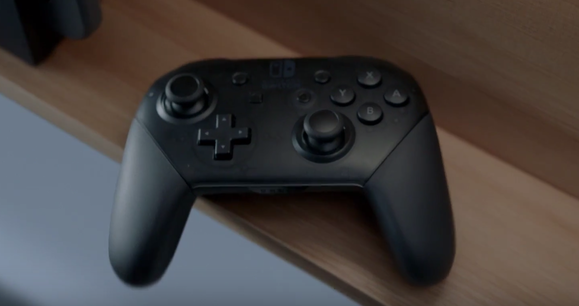
Make it £200 or £220 with one of these controllers and I'll be at the front of the queue on launch day.

I'm sure these 1 TFLOPS is FP16 half-precision... so about 500GFLOPS in FP32.Gonna quote this for the new page. I need to get to bed.

I have a few immediate thoughts after reading through the article:
I see a few different scenarios here:
- Firstly, it's worth noting the difference between Maxwell and Pascal is almost entirely down to the manufacturing process. Maxwell was made on 28nm (and in the case of the TX1, 20nm) whereas Pascal is made on 16nm. The actual architectural difference between the two is minimal, and aside from improved color buffer compression, largely irrelevant for a device like the Switch.
- Despite that, the article never makes any mention of the manufacturing process. I find that extremely strange, as it's obviously the defining difference between the two sets of GPUs.
- In fact, the article gets the difference between the two completely the wrong way around, saying "Nintendo’s box is relatively small, and so it has to fit into the heat profile of a portable device, rather than a set-top box. That’s another reason that explains the older Maxwell technology, as opposed to the Pascal’s state-of-the-art tech." Pascal is literally a more power efficient version of Maxwell, so the incentive would be the other way around.
- The author says "we expect the Nintendo Switch to be more than 1 teraflop in performance", which is notably higher than even those of us who were expecting Pascal were considering (I literally posted earlier today with a 500-750 Gflop estimate). If this is a Maxwell chip, then that would mean at least 4 SMs (512 "CUDA cores") at 1GHz, as they're not going to be able to push much past that on 28/20nm. This is a much larger GPU than most people would have been expecting.
Basically, if you're to take the article as being accurate, then the only worthwhile takeaway is this quote:
- The Switch SoC uses Maxwell at 20nm, and simply has a much larger GPU than anticipated to account for the performance.
- Nintendo looked at the feature-set planned for Pascal when design started, realised that the new features were largely irrelevant, and decided that they would save time and just use a straight-forward die shrink of Maxwell to 16nm instead. That would technically be a Maxwell GPU, but would be almost completely indistinguishable from Pascal in terms of performance.
- The sources are wrong about Maxwell, the 1 Tflop performance, or both.
A Maxwell Tflop is identical to a Pascal Tflop, and it's largely irrelevant to us whether they achieved that by using a larger Maxwell GPU on 20nm/28nm at a lower clock or a smaller Pascal GPU on 16nm at a higher clock.
Maxwell? So $199 (without power cord) confirmed?
I see this thing as a massive upgrade to the 3DS, if the price is right, this could be a hit.
Not surprising Nintendo isn't pushing for power any more, that much is obvious if you look at the last 3 generations of their hardware.

The GameCube was more powerful than the PS2 and on par with the XBox.Not surprising Nintendo isn't pushing for power any more, that much is obvious if you look at the last 3 generations of their hardware.

Nothing new, Switch is a Shield rebranded and customized.
A tablet, nothing more.
GAF, why many people are surprised?

NVIDIA said:Nintendo Switch is powered by the performance of the custom Tegra processor. The high-efficiency scalable processor includes an NVIDIA GPU based on the same architecture as the worlds top-performing GeForce gaming graphics cards.

You guys were seriously expecting Pascal? On a Nintendo console?

Wii 3DS WiiUThe GameCube was more powerful than the PS2 and on par with the XBox.
Nothing new, Switch is a Shield rebranded and customized.
A tablet, nothing more.
GAF, why many people are surprised?
Damn, some posters are talking about Maxwell as if it's the GeForce FX architecture or something. I wonder if they even know what it is.
(Answer: it's the same arch as the GF 960/970/980 line).
Must have been said already, but still :
Still sounds like Pascal to me.
Wow, this thread is a cesspool.
