

-
Hey Guest. Check out your NeoGAF Wrapped 2025 results here!
You are using an out of date browser. It may not display this or other websites correctly.
You should upgrade or use an alternative browser.
You should upgrade or use an alternative browser.
What's up with, like, english nowadays?
- Thread starter Peterthumpa
- Start date
- Status
- Not open for further replies.
It's so bad I started keeping count on how many likes someone uses in a single conversation.
You sound insufferable to have a conversation with.
Well (filler word trigger warning!), you did say that "when we DO hear "like" (almost always) overused in day to day conversations it automatically implies a lower level of intelligence". If you want to walk that back that's fine (it really is, I too post stuff that I end regretting or disagreeing with) but I do believe you vilified the usage of 'like' as a filler word.Zipzo and encephalon stated it nicely, but my post seems to have struck a nerve- I'm not arguing the necessity of filler words, nor vilifying anyone. If, in our daily casual conversations, people used "umm" in place of every single "like" I honestly doubt we'd have a disagreement here. Anyone is free to use it as often as they like, but understand that not everyone else will, and for valid linguistic reasons.
You're also factually wrong, there is no correlation between high usage of filler word and the level of intelligence.
Do tell though, what are the valid linguistics reasons to dissuade people from using filler words?
This, and like others have said, it's filler, which every goddamn language has.Language grows, it evolves. English today and English tomorrow will be different. Look back at Old English and you'll be shocked.
John Kowalski
Banned
You sound insufferable to have a conversation with.
0
Well (filler word trigger warning!), you did say that "when we DO hear "like" (almost always) overused in day to day conversations it automatically implies a lower level of intelligence". If you want to walk that back that's fine (it really is, I too post stuff that I end regretting or disagreeing with) but I do believe you vilified the usage of 'like' as a filler word.
You're also factually wrong, there is no correlation between high usage of filler word and the level of intelligence.
Do tell though, what are the valid linguistics reasons to dissuade people from using filler words?
I think that maybe, in some cases it can be an indication of intelligence but not in any severe degree, and not really in a simplistic sense that if someone says "like" a lot that they must be stupid.
The word "like" I imagine is deployed because a better word doesn't come to their mind. There are words for basically everything though, so you could say that instead of saying "like" and accomplishing no further relaying of information through your phrase, you could have used a word that actually progresses your thought quicker.
That's usually the point at which "like" is said, when someone wants to describe something or explain an idea better.
Someone who is extremely gifted with a large vernacular could fill those "like" gaps with words that possess meaning and keep the sentence momentum going. This is often referred to as someone who is articulate. Someone who is highly articulate is, arguably in a sense, intelligent. It's a small category of intelligence though.
However, being articulate doesn't necessarily mean you are smart, just good with words, and so I'm inclined to agree that if you turn the sock inside out in this example, using like a lot or never doesn't really show any sort of indication of your intelligence level.
All it basically indicates is your proficiency in articulate speech.
Well (filler word trigger warning!), you did say that "when we DO hear "like" (almost always) overused in day to day conversations it automatically implies a lower level of intelligence". If you want to walk that back that's fine (it really is, I too post stuff that I end regretting or disagreeing with) but I do believe you vilified the usage of 'like' as a filler word.
You're also factually wrong, there is no correlation between high usage of filler word and the level of intelligence.
Do tell though, what are the valid linguistics reasons to dissuade people from using filler words?
I haven't made any arguments against filler words in general, just the overuse of "like". "Umm, uhhh, ahhh, mmmmm" etc all have distinct uses and worth, but also have no additional meanings in the english language. "Like" still has a definition and specific uses in the language, but much like "literally" or "gay" has seen a shift in usage and definition. It's not wrong or right, language evolves of course, but until the majority of english speakers adopt the new approach "like" is a word that can easily sound confusing (or frustrating) when used out of place, regardless of how commonplace that may be.
I cant say that there's a 1:1 correlation with intelligence, that's not something I need to or want to prove, but linguistic intelligence is an important factor in interpersonal perceptions.
The thing that frustrates me the most is when people say things like "Get hype!" or "I'm so excite!" I've even seen "This is so excite!"
I'm sorry. There is no other possible reaction when it looks like Cleganebowl is actually going to happen.
get hype
https://en.wikipedia.org/wiki/Filler_(linguistics)
ctr+F → "like"
A lot of languages seem to have "like" as a filler word.
ctr+F → "like"
A lot of languages seem to have "like" as a filler word.
Rubbish King
The gift that keeps on giving

If the message is getting across then w/e
Language is a fluid thing that changes per location and demographic. It's nothing to stress about.
Nah I'd say this is a case of poor language/communication skills, it's not a new trend and people at my school were picked up on it a lot.
You're confusing regional colloquialisms and language evolution with poorly educated illiterates.
How About No
Member
The thing that frustrates me the most is when people say things like "Get hype!" or "I'm so excite!" I've even seen "This is so excite!"

boiled goose
good with gravy
An alarming number of people consistently type "could of", "would of", and "must of". They don't even understand the very basic difference between a preposition and a verb.
What you bring up is peanuts next to that.
"could of", "then" vs "than", and "Affect" vs "Effect" are annoyingly common on GAF.
Drives me nuts.
Nah I'd say this is a case of poor language/communication skills, it's not a new trend and people at my school were picked up on it a lot.
You're confusing regional colloquialisms and language evolution with poorly educated illiterates.
Its too bad poorly educated illiterates don't have your communication skills
what if you were going into surgery and the surgeon said "we're going to liiiiiike, cut you open and like, remove like, your kidney"
I wouldn't give a shit because he's a surgeon not a professional orator.
Nah I'd say this is a case of poor language/communication skills, it's not a new trend and people at my school were picked up on it a lot.
You're confusing regional colloquialisms and language evolution with poorly educated illiterates.
The use of "like" as a discourse marker is not correlative with intelligence or economic status.
Nah I'd say this is a case of poor language/communication skills, it's not a new trend and people at my school were picked up on it a lot.
You're confusing regional colloquialisms and language evolution with poorly educated illiterates.
It has nothing to do with education. At least, no research has shown it does. Saying "people in my school were told off for it" doesn't mean "people who use it are stupid". I'm a professional writer/editor living inner-city with a first class degree (in English and linguistics) and I use 'like' quite a lot. It's harmless. It's a pragmatic marker.
Research has shown, however, that lower intelligence is linked with higher use of pronouns ('it', 'she', 'we', 'they', etc).
I wouldn't give a shit because he's a surgeon not a professional orator.
really? i'd be kinda weirded out.
really? i'd be kinda weirded out.
They spent likely a decade training to be a surgeon, their use of language wouldn't concern me unless I'm being treated at "Budget Memorial Hospital and Funeral Home".
You use it to fill the gaps as you're thinking. You also use it to preface a bit of internal dialog. It's better than saying "then I said to myself..." every time you want to indicate what you were thinking at a given moment. Also, it adds a touch of informality when you're talking with your bros.
They spent likely a decade training to be a surgeon, their use of language wouldn't concern me unless I'm being treated at "Budget Memorial Hospital and Funeral Home".
Hey, now. Don't knock BMH&FH, their lunch buffet has the second best yelp score in the county.
I've noticed my mom use a similar method to fill in gaps with line of thought in her native language but never in English. In English she just pauses to think but in Farsi she uses a word similar to 'like' to serve the same purpose.
I think I mainly use 'umm' which is terrible but I do not engage in much public speaking.
I think I mainly use 'umm' which is terrible but I do not engage in much public speaking.
They spent likely a decade training to be a surgeon, their use of language wouldn't concern me unless I'm being treated at "Budget Memorial Hospital and Funeral Home".
for me overuse of 'like' (which i personally use way too much) signifies that the person isn't exactly sure of what they're saying. they're talking before they have a sentence formulated. that's not something i want from somebody who is about to cut me open. i want to be damn sure that you know what you're doing, and throwing the word "like" into the description of what you're doing doesn't exactly fill me with confidence.
i'm not in the "people who say 'like' are dumb' camp. but people who speak well don't use the word much. good professors don't use it. doctors don't use it. lawyers don't use it. people in political office don't use it. anyone who wants to effectively get a point across doesn't use it.
you can be really intelligent and trying to convince me of something, you may even have a good argument, but if it's filled with 'likes' i'm going to take it less seriously because it seems like it hasn't been well thought out.
Stereogatari
Banned
The Californication of World English.
Incidentally there is a word in Middle Eastern languages ("yani") that is equivelant to the way "like" is used in this context, but it doesn't have the same negative connotation.
Incidentally there is a word in Middle Eastern languages ("yani") that is equivelant to the way "like" is used in this context, but it doesn't have the same negative connotation.
Rubbish King
The gift that keeps on giving
Oh man, you got me good there.Its too bad poorly educated illiterates don't have your communication skills
I didn't mention economic?The use of "like" as a discourse marker is not correlative with intelligence or economic status.
If not education then it's laziness.It has nothing to do with education
There is no reason for people to use it as much as they do and it ultimately costs them respect. It's no biggie, I don't give a shit if you want to sound unintelligent. But this idea that it's an evolution of our language is a crock of shit.
Here's a handy guide from wikihow on how to stop saying like all the time
I wouldn't give a shit because he's a surgeon not a professional orator.
If a surgeon said "we're going to liiiiiike, cut you open and like, remove like, your kidney" to me, I'd either tell them to stop talking like an utter cunt or get me another surgeon because regardless of how good the english, that is simply not how somebody should talk in that setting oh my lord.
I didn't mention economic?
I realize that.
If not education then it's laziness.
There is no reason for people to use it as much as they do and it ultimately costs them respect. It's no biggie, I don't give a shit if you want to sound unintelligent. But this idea that it's an evolution of our language is a crock of shit.
Here's a handy guide from wikihow on how to stop saying like all the time
Your assumptions once again are incorrect. There are no studies that show a link between "like" usage and laziness.
You and others trying desperately to hold onto some locally formalized version of English that you deem superior to any other is, to me, much more lazy than the overuse of discourse markers. It also shows a lack of social and linguistic intelligence. There is no reason to force yourself or others to reduce the use of "like", social and informal discourse is going to change as the needs of communication change and fortunately for future english speakers there is nothing you can do about that.
Like, duh.
Don't hesitate to try and train yourself and perform linguistic tricks, what you do with your communication is up to you, but the elitism you're trying to force on other people is very telling of your character.
Familienoberhauptvogel
Banned
that's what gets you, not would, could, should of?
Itaremustbedangeres
Member
I would of agreed with you OP, but then I realized, like, you know, language evolves and uhhm, so, like, I really enjoy speaking english, but uhhm, yeah, you know, whatevs
I get where you're coming from. It really is weird sometimes, but then again, as others have already pointed out this is a common thing in pretty much every language spoken
Rubbish King
The gift that keeps on giving
I realize that.
Your assumptions once again are incorrect. There are no studies that show a link between "like" usage and laziness.
You and others trying desperately to hold onto some locally formalized version of English that you deem superior to any other is, to me, much more lazy than the overuse of discourse markers. It also shows a lack of social and linguistic intelligence. There is no reason to force yourself or others to reduce the use of "like", social and informal discourse is going to change as the needs of communication change and fortunately for future english speakers there is nothing you can do about that.
Like, duh.
Don't hesitate to try and train yourself and perform linguistic tricks, what you do with your communication is up to you, but the elitism you're trying to force on other people is very telling of your character.
I'm not going to bother trying to reply to your argument, it's clear we will not agree. But that last bit I bolded is a load of wank and if you enjoy making those kind of assumptions by posts I make online on a videogaming forum it shows how your distorted your sense of reality is. Go outside mate.
I'm not going to bother trying to reply to your argument, it's clear we will not agree. But that last bit I bolded is a load of wank and if you enjoy making those kind of assumptions by posts I make online on a videogaming forum it shows how your distorted your sense of reality is. Go outside mate.
Elitism is never a good look. Let me find a wikihow to show you how to improve yourself.
http://www.wikihow.com/Not-Act-Snobbish
Here you go, it has pictures too so if the language is too offensive you can at least look at the pictures.
Elitism is never a good look. Let me find a wikihow to show you how to improve yourself.
http://www.wikihow.com/Not-Act-Snobbish
Here you go, it has pictures too so if the language is too offensive you can at least look at the pictures.
I kinda agree, but holy shit, your post is ironic as fuck...
I kinda agree, but holy shit, your post is ironic as fuck...
I was parodying his linking of a Wikihow on how to stop saying "like" so much.
Also, I'm an asshole.
thechristoph
Sir!
lol r u srs
this is so fucking old ur post is at least a decade too late
in fact i'd say "like" is being used less nowadays
At first I thought that this thread was going to be about the erosion of written communication.
Then the first page was filled with very readable posts. And I was happy.
And then on page two we see this, which I have to read several times to understand.
"lol this aint english clas u jerk its jus the ineternet ur old af" you may say. It is the Internet, yes. The Internet is the most important and powerful innovation in human communication since the written word was invented. And people just piss all over it.
Rubbish King
The gift that keeps on giving
You're goddamn right, and that low effort line of thinking is one of the reasons why the world is becoming more and more (functionality) illiterate.
I mean, now we have people defending the sheer validity of umm uhh like. Next up, "real book snobs, trying to put us audiobookers down".
It's really fucking sad when proper grammar is seen as elitist.

Is it?the world is becoming more and more (functionality) illiterate.
Ahh, so you're not interested in backing up your claim with anything even approaching fact.
Let's try this again:
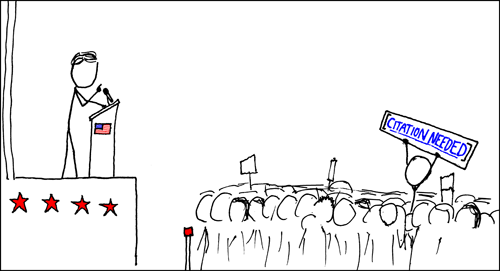
Let's try this again:
J.M. Romeo said:the world is becoming more and more (functionality) illiterate
Cipher Peon
Banned
I think the casualization of language is awesome. People who look at English with a strict sense of rules are dinosaurs (and not even the cool ones, I'd say they have FEATHERS). As long as the point gets across, it doesn't matter to me!
My favorite example of this is the word "literally" which has evolved into the colloquial use of meaning its exact opposite. I had a professor who said that "English is an ever evolving language" which I believe wholeheartedly and now just say whatever I feel like it because I dig it, regardless of if it's used correctly or pronounced correctly. As long as my point gets across in informal conversation, that's what counts.
My favorite example of this is the word "literally" which has evolved into the colloquial use of meaning its exact opposite. I had a professor who said that "English is an ever evolving language" which I believe wholeheartedly and now just say whatever I feel like it because I dig it, regardless of if it's used correctly or pronounced correctly. As long as my point gets across in informal conversation, that's what counts.
To show how I feel about the subject, take this post and multiply it by -1You're goddamn right, and that low effort line of thinking is one of the reasons why the world is becoming more and more (functionality) illiterate.
I mean, now we have people defending the sheer validity of umm uhh like. Next up, "real book snobs, trying to put us audiobookers down".
It's really fucking sad when proper grammar is seen as elitist.
teruterubozu
Member
You're goddamn right, and that low effort line of thinking is one of the reasons why the world is becoming more and more (functionality) illiterate.
I mean, now we have people defending the sheer validity of umm uhh like. Next up, "real book snobs, trying to put us audiobookers down".
It's really fucking sad when proper grammar is seen as elitist.
Functionally, not functionality. Sorry about my grammar snobbery.
Vincent Grayson
Member
Boy, I'd hate to see some of your opinions on AAVE.
edit: Really, it's not the just inherent elitism of prescriptivist bullshit. It's the part where you seem incapable of recognizing the validity of communication that does its job (conveying information to the listener) simply because it does not conform to how someone else told you it's supposed to work.
So long as people are communicating effectively (which, best I can tell, is not in any way impeding by the use of 'like' as illustrated countless times in this thread), there's nothing to be upset about here. Certainly not some ridiculous notion like "the world is becoming more functionally illiterate".
edit: Really, it's not the just inherent elitism of prescriptivist bullshit. It's the part where you seem incapable of recognizing the validity of communication that does its job (conveying information to the listener) simply because it does not conform to how someone else told you it's supposed to work.
So long as people are communicating effectively (which, best I can tell, is not in any way impeding by the use of 'like' as illustrated countless times in this thread), there's nothing to be upset about here. Certainly not some ridiculous notion like "the world is becoming more functionally illiterate".
As long as my point gets across in informal conversation, that's what counts.
in informal conversation the standards different. you can say "me go pee pee" instead of "i need to use the restroom" and people will understand what you're saying. whether or not they think you're dumb because of how you said it is another question.
i think part of people's concern is that if "me go pee pee" becomes acceptable in formal conversation then we've lost something.
Cipher Peon
Banned
While this is understandable, I have no problems against this.i think part of people's concern is that if "me go pee pee" becomes acceptable in formal conversation then we've lost something.
Language is the human communication of ideas and if a phrase is so subjectively better to the point of being adopted by formal vernacular, then who am I to disagree? Granted, you chose a pretty vulgar and ugly way of putting it, but the way I see it, it's only vulgar and ugly because we're not used to it. As long as the information, ideas, intent, and context remain or are preserved through other means, I would just see it as the evolution of language.
If not education then it's laziness.
There is no reason for people to use it as much as they do and it ultimately costs them respect. It's no biggie, I don't give a shit if you want to sound unintelligent. But this idea that it's an evolution of our language is a crock of shit.
Here's a handy guide from wikihow on how to stop saying like all the time
Everything in the link you shared rings of reductive, arbitrary language manipulation. The sort of shit the British Empire did, enforcing the 'Queen's English' (which is falling out of favour hugely nowadays).
Our cultures dictate when and where it's OK to use certain words. As you pointed out in your very own post, you wouldn't expect a surgeon to use the 'like' pragmatic marker while he's giving you a prognosis. That's because it's a marker of informal and young speech. You equally wouldn't expect him to say 'cunt' instead of 'vagina'. These are both examples of lexical selection based on context and 'face'.
And this is fine. It's an unwritten rule. In 50 years, it might be A-OK for your surgeon to say 'like' all the time, because our culture will have normalised to it. Similarly, it might be just as inappropriate as it is today, or moreso. 'Like' might fall out of favour entirely in the next 20 years.
Language is in a constant state of flux and iteration ('evolution' can be misleading because it implies positive progression). Go ahead and fight it all you want, but you're just wasting energy. It's just hot air.
It's really fucking sad when proper grammar is seen as elitist.
There is no such thing as 'proper grammar'. The only thing that's 'proper' (or not) about language is whether it's understood.
If you can understand it clearly, it works. If the meaning isn't clear, or is obstructed, then help the person get it right.
FoxnHurley
Member
I see it as the person's train of thought is stuck in neutral, and their articulators are already in 3rd gear...lol. Shows they have a somewhat limited lexicon as well in my opinion.
I had a stutter as a child, and I would resort to a lot filler words as such "um", "and-uh", and sure enough, "like". I found speaking at a slower rate helped quite a bit with not relying on those aforementioned filler words -- collecting your thoughts and being aware of the syntax required to make the discourse comprehensible to yourself and other participants, if you will.
Public communication courses in high school and college tend to nip such secondary speech behaviors in the bud because you are challenged to present your arguments and speeches to a large audience while following the rhetorical standard of your spoken language.
I had a stutter as a child, and I would resort to a lot filler words as such "um", "and-uh", and sure enough, "like". I found speaking at a slower rate helped quite a bit with not relying on those aforementioned filler words -- collecting your thoughts and being aware of the syntax required to make the discourse comprehensible to yourself and other participants, if you will.
Public communication courses in high school and college tend to nip such secondary speech behaviors in the bud because you are challenged to present your arguments and speeches to a large audience while following the rhetorical standard of your spoken language.
Featheredkitten
Banned
As a (psycho-)linguist, this is like, the most hilarious thread. I'mma share it on facebook so other linguists can share in the hilarity.
...you know, maybe like, someone would want to cite this thread in a paper on sociolinguistic prestige/prescriptivist views of language use or something.
Edit:
Okay wait, I have to reply to this real quick:
Second: syntax building is done as an online process, and unless you're listening to a garden path sentence, it's done so quickly that you don't notice it. Syntax building does not really affect the person saying the words, as their sentence is pretty much already built by the time they say it. Additionally, it's generally (although a little controversial) thought that speech is produced not for ease of the hearer, but for the one producing it.
Third: There is a rather huge difference between rehearsed speech and spontaneous speech, to equate them is super silly. There is no "rhetorical standard" of a "spoken language". Be more elitist, jesus.
...you know, maybe like, someone would want to cite this thread in a paper on sociolinguistic prestige/prescriptivist views of language use or something.
Like, you know? Right? It's like, uh... oh my gawd.
Okay wait, I have to reply to this real quick:
First bolded section: disfluencies have nothing to do with limited lexicon, everyone uses them (these include but are not limited to, "like" "um" "uhh"). In fact, speech without disfluencies actually sounds quite odd.I see it as the person's train of thought is stuck in neutral, and their articulators are already in 3rd gear...lol. Shows they have a somewhat limited lexicon as well in my opinion.
I had a stutter as a child, and I would resort to a lot filler words as such "um", "and-uh", and sure enough, "like". I found speaking at a slower rate helped quite a bit with not relying on those aforementioned filler words -- collecting your thoughts and being aware of the syntax required to make the discourse comprehensive to yourself and other participants, if you will.
Public communication courses in high school and college tend to nip such secondary speech behaviors in the bud because you are challenged to present your arguments and speeches to a large audience while following the rhetorical standard of your spoken language.
Second: syntax building is done as an online process, and unless you're listening to a garden path sentence, it's done so quickly that you don't notice it. Syntax building does not really affect the person saying the words, as their sentence is pretty much already built by the time they say it. Additionally, it's generally (although a little controversial) thought that speech is produced not for ease of the hearer, but for the one producing it.
Third: There is a rather huge difference between rehearsed speech and spontaneous speech, to equate them is super silly. There is no "rhetorical standard" of a "spoken language". Be more elitist, jesus.

Peterthumpa
Member
Do they? There's nothing odd in listening to a news anchor, for example.As a (psycho-)linguist, this is like, the most hilarious thread. I'mma share it on facebook so other linguists can share in the hilarity.
...you know, maybe like, someone would want to cite this thread in a paper on sociolinguistic prestige/prescriptivist views of language use or something.
Edit:Like, you know? Right? It's like, uh... oh my gawd.
Okay wait, I have to reply to this real quick:
First bolded section: disfluencies have nothing to do with limited lexicon, those that use them (these include but are not limited to, "like" "um" "uhh"). In fact, speech without disfluencies actually sounds quite odd.
Featheredkitten
Banned
Do they? There's nothing odd in listening to a news anchor, for example.
Your brain knows that's rehearsed (or read, really) speech homey.
Do they? There's nothing odd in listening to a news anchor, for example.
When they're not reading from autocue, it's very common for anchors' speech to feature disinfluencies. Even with autocue, there are other minor features that crop up.
Note: A news anchor reading from autocue is probably one of the most (super rare) codified and set-in-stone examples you could think of
 public oration in general is usually a different ballgame because as part of the persuasive act of language (specifically in public speaking) they have to show decisiveness and precision.
- Status
- Not open for further replies.