• Hey Guest. Check out your NeoGAF Wrapped 2025 results here!

Who is the oldest game developer still in business?

Peter Molyneux?

Not even close if we're talking about when they first started developing games. Garriott's first game was in either 1979 or 1980 (it's not entirely clear).

It's good to hear Bushnell is working on edutainment though. There are a ton of older edutainment titles that work really well as actual games, but I haven't noticed as much attention being given to those sorts of things lately.
 
For fun someone should find the original 'mission statements' of Activision and EA and post them here so we can read them and laugh (despair) at how much their core values have changed over the decades.

Both were founded with the public stance that they wanted to give the programmers actual credit for their games. Activision was founded by a few programmers who left Atari fed up with never getting credit.
 
Vivendi SA is older than Nintendo, but they only got into the video games business around 1993. They started in the water supply management industry, I believe.
 
Both were founded with the public stance that they wanted to give the programmers actual credit for their games. Activision was founded by a few programmers who left Atari fed up with never getting credit.

The name "electronic arts" essentially describes their original stance.
 
For fun someone should find the original 'mission statements' of Activision and EA and post them here so we can read them and laugh (despair) at how much their core values have changed over the decades.

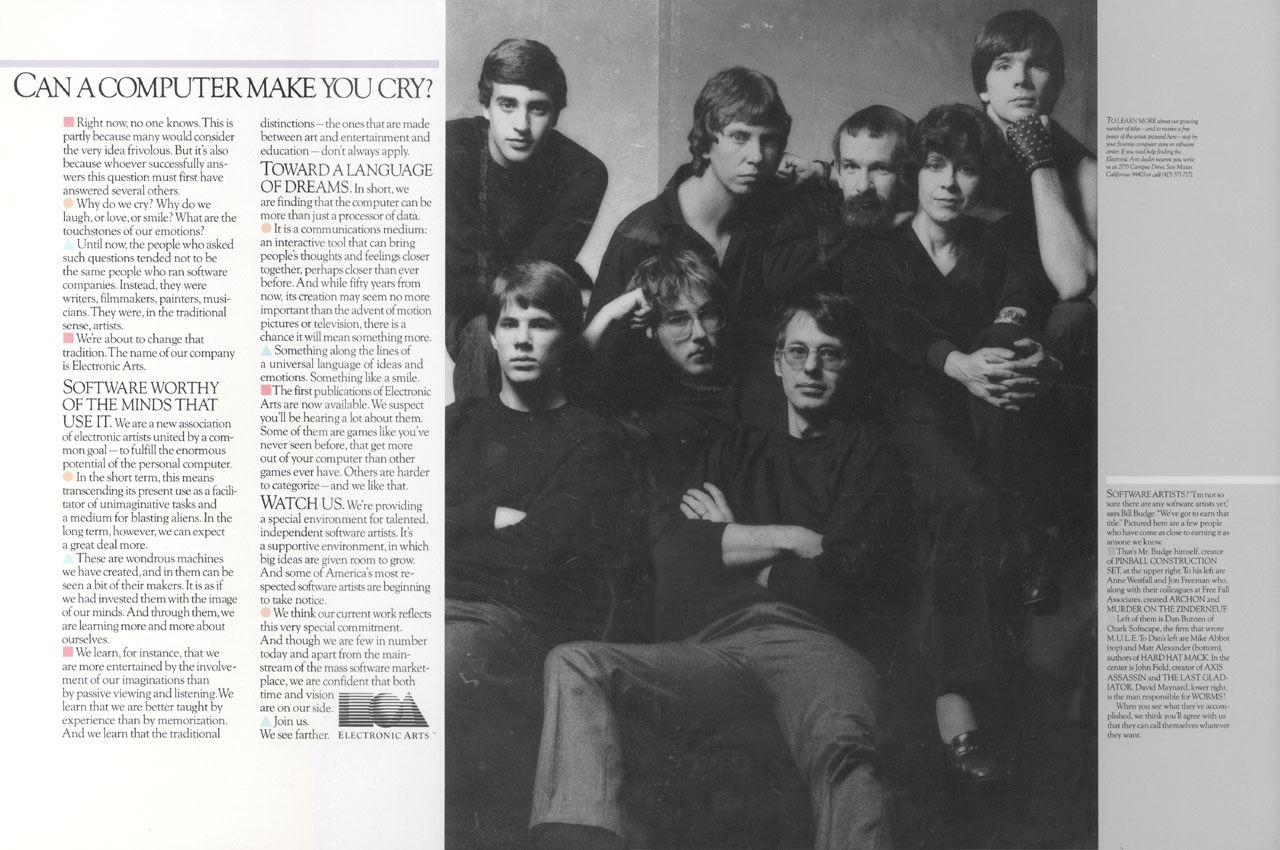
You mean this?

Can a Computer Make You Cry?

Right now, no one knows. This is partly because many would consider the very idea frivolous. But it's also because whoever successfully answers this question must first have answered several others.

Why do we cry? Why do we laugh, or love, or smile? What are the touchstones of our emotions?

Until now, the people who asked such questions tended not to be the same people who ran software companies. Instead, they were writers, filmmakers, painters, musicians. They were, in the traditional sense, artists.

We're about to change that tradition. The name of our company is Electronic Arts.

Software worthy of the minds that use it.

We are a new association of electronic artists united by a common goal—to fulfill the enormous potential of the personal computer.

In the short term, this means transcending its present use as a facilitator of unimaginative tasks and a medium for blasting aliens. In the long term, however, we can expect a great deal more.

These are wondrous machines we have created, and in them can be seen a bit of their makers. It is as if we had invested them with the image of our minds. And through them, we are learning more and more about ourselves.

We learn, for instance, that we are more entertained by the involvement of our imaginations than by passive viewing and listening. We learn that we are better taught by experiences than by memorization. And we learn that the traditional distinctions—the ones that are made between art and entertainment and education—don't always apply.

Towards a language of dreams.

In short, we are finding that the computer can be more than just a processor of data.

It is a communications medium: an interactive tool that can bring people's thoughts and feelings closer together, perhaps closer than ever before. And while fifty years from now, its creation may seem no more important than the advent of motion pictures or television, there is a chance it will mean something more.[6]

Something along the lines of a universal language of ideas and emotions. Something like a smile.

The first publications of Electronic Arts are now available. We suspect you'll be hearing a lot about them. Some of them are games like you've never seen before, that get more out of your computer than other games ever have. Others are harder to categorize—and we like that.

Watch us.

We're providing a special environment for talented, independent software artists. It's a supportive environment, in which big ideas are given room to grow. And some of America's most respected software artists are beginning to take notice.

We think our current work reflects this very special commitment. And though we are few in number today and apart from the mainstream of the mass software marketplace, we are confident that both time and vision are on our side.

Join us. We see farther.

Cry.jpg


http://chrishecker.com/Can_a_Computer_Make_You_Cry?

 
They were bought by blizzard (well blizzard's parent company) weren't they?

Vivendi bought activision. But Activision broke free again from vivendi.

Split from Vivendi

On July 25, 2013, Activision Blizzard announced the purchase of 429 million shares from owner Vivendi for $5.83 billion, dropping the shareholder from a 63% stake to 11.8% by the end of the deal in September. Following the conclusion of the deal, Activision Blizzard became an independent company as a majority of the shares are owned by the public. Bobby Kotick and Brian Kelly own a 24.4% stake in the company. In addition, Kotick remains the President and CEO, with Brian Kelly taking over as the Chairman.[14] On October 12, 2013, shortly after approval from the Delaware Supreme court, the company completed the buyback, along the lines of the original plan.[15] Vivendi sold half its remaining stake in May 22, 2014, reducing its ownership to 5.8%,[16] which subsequently helped finance Vivendi’s takeover of EMI via Universal Music Group.

And the result is..well i can say Blizzard is on a better track now then before.
 
Nintendo was making electronic games as early as 1974 (They had Gunman as well as some weird Duck Hunt style game that people played in converted bowling alleys) so I'm gonna go with them.
 
It just gets routinely dismissed as "for casuals", but there's perhaps unsurprisingly a pretty large market for edutainment (or "serious games" is the modern term for it)

Oh I know about Leapfrog and the like, but how entertaining are those as games? I had the impression that they were mostly cheaply made and more designed to cash in on the licenses they use.
 
WMS Industries (Williams) is pretty old since it started in 1943. They only make stuff like slot machine gambling games now. Does that count?
 
images


What about Taito? They were founded in 1953, and released "Astro Race" in 1973, but that's just going off of a flyer. It's unclear if they released a coin-op before 1973, or any other consumer gaming products.
 
You mean this?
In the short term, this means transcending its present use as a facilitator of unimaginative tasks and a medium for blasting aliens.

Well that's just outright depressing.

Oh I know about Leapfrog and the like, but how entertaining are those as games? I had the impression that they were mostly cheaply made and more designed to cash in on the licenses they use.

Stuff aimed at kids is almost always done on a shoestring budget, because frankly, Kids don't know any better, but gaming has been around long enough that there are decent "serious games" titles that are designed to both educate and entertain for more sophisticated audiences.

I mean, at heart, Brain Training and Wii Fit are both good examples of higher budget mainstream successes in "edutainment".
 
Besides Nintendo, I think Sega and Konami are atleast as old as Activision

Yeah, SEGA's pretty old, they started in the 70's I think. They were an American company that made (or maybe serviced) pinball machines.
 
So to summarize the thread so far, still in the videogame business:

Oldest company that first made games: Nintendo
Oldest company that first made mechanical arcade games: Sega?
Oldest company that first made electronic arcade games: Sega?
Oldest company that first made electronic console games: Activision?
Oldest company that first made PC games: ?
 
Nintendo released the Color TV-Game in 1977, their first video game console, so it has to be them.

Activision was founded in 1979.


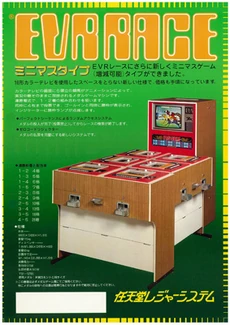
Edit: Seems like Nintendo produced an Arcade Game in 1975 - EVR Race, their very first game (if you don't count the Laser Clay Shooting System from 1973).

230px-EVRRace.jpg
 
Nintendo was making electronic games as early as 1974 (They had Gunman as well as some weird Duck Hunt style game that people played in converted bowling alleys) so I'm gonna go with them.

Didn't Nintendo make pachinko games at some point? What was the time frame around that?

PS. Sega was founded in Honolulu. Neat.
 
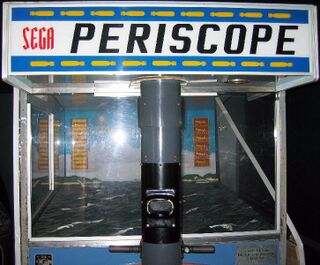
Sega did start in the 40's as a company that repaired pinball machines, juke boxes and the like, but their first coin-op game wasn't until the late 60's, called Periscope. But it was all mechanical, so it's kind of up to you if you want to call that a "video game":

320px-Periscope_machine1.jpg


SegaPeriscope0030.JPG


If you do, it seems like you'd have to count pinball, and mechanical light gun games (like you shoot the sensor on the barrel/cuckoo clock/bottle with a rifle shaped flashlight and they spring apart or whatever).
 
Miyamoto is 61

Genyo Takeda and Makoto Kano are both older than Miyamoto and still work at Nintendo.

Kano worked on board games and go/chess boards before making Game & Watch games.

Takeda made the first electronic horse racing simulators and light gun ranges for Nintendo.
 
Sega did start in the 40's as a company that repaired pinball machines, juke boxes and the like, but their first coin-op game wasn't until the late 60's, called Periscope. But it was all mechanical, so it's kind of up to you if you want to call that a "video game":

320px-Periscope_machine1.jpg


SegaPeriscope0030.JPG


If you do, it seems like you'd have to count pinball, and mechanical light gun games (like you shoot the sensor on the barrel/cuckoo clock/bottle with a rifle shaped flashlight and they spring apart or whatever).
Now this I did not know.
 
Top Bottom